Which Is Nicer, Vienna Or Bratislava?
An honest, fact-based comparison of Vienna and Bratislava for visitors: size, sights, transport links, climate and character, plus how to see both in one trip.
Vienna and Bratislava sit about 55 km apart, straight-line distance, making them two of the closest capital city pairs in Europe. Vienna is the far larger of the two: an imperial metropolis of roughly two million residents. Bratislava, the capital of Slovakia, is an inland city on the Danube of about 468,000 residents, known for Bratislava Castle, St Martin's Cathedral and a pedestrian Old Town. The question of which is nicer has no factual answer. What it can do is set the two cities side by side on the things that can be checked: size, travel time, entry prices, climate and the practical reality of visiting both, and let the trip decide the rest. The comparison pages on Bratislava Travel Guide exist because the pair comes up constantly, and the answer almost always ends with the same advice, which is to do both.
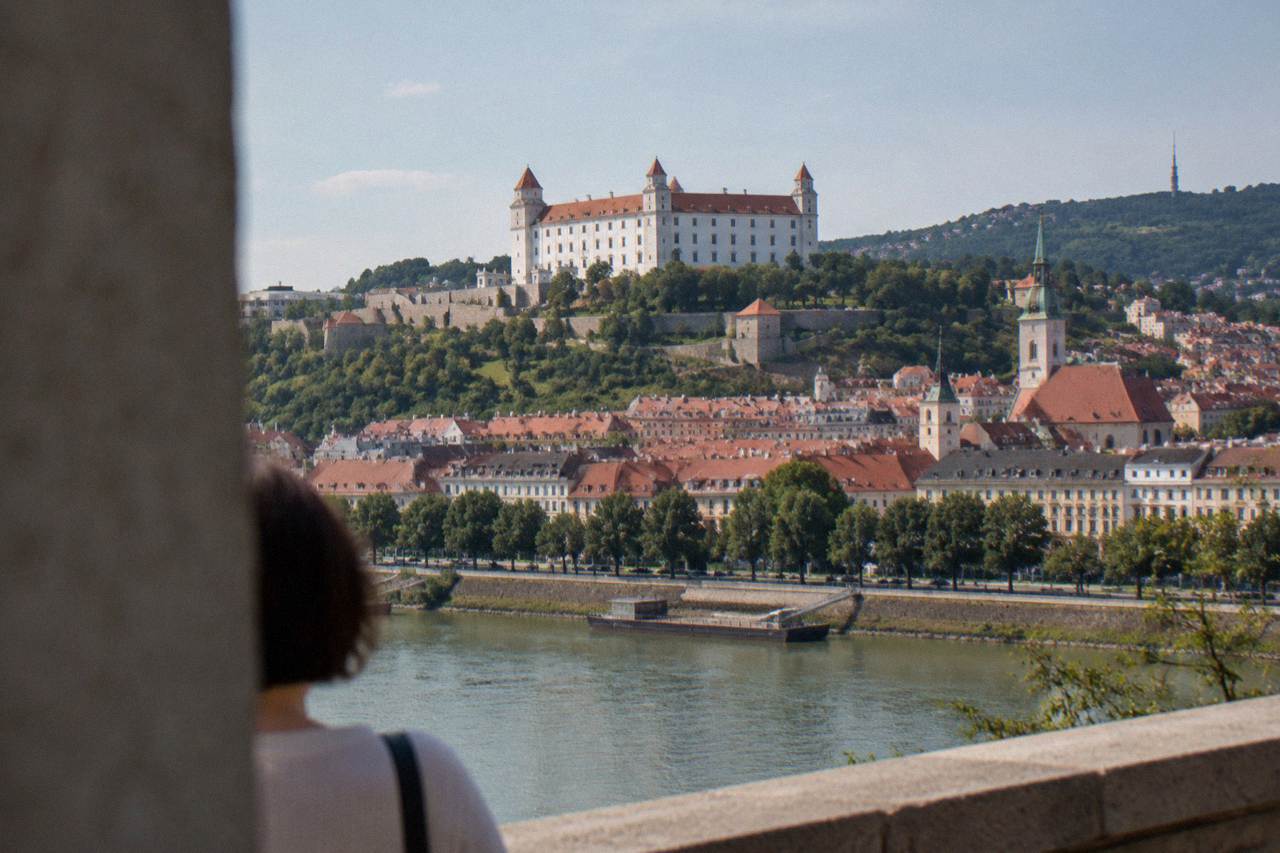
There is no objective answer, because the two cities are not really competing. Vienna offers imperial scale, world-famous museums and opera at metropolitan prices and metropolitan crowds, while Bratislava offers a walkable Old Town, a castle hill, a riverfront and euro prices that run gentler on a short budget. The cities sit about 55 km apart and are linked by an hourly train, so the practical answer is rarely either-or: see Vienna, then spend a day or two in Bratislava and decide which suited you.
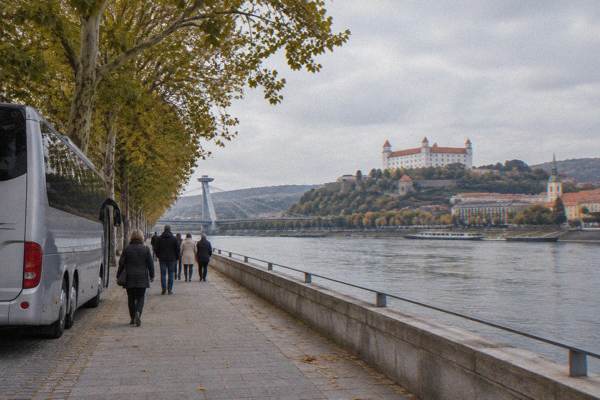
That answer sounds like a dodge until you look at what each city is. Vienna is roughly four times Bratislava's population and operates on a different scale of cultural infrastructure: its state museums, concert halls and palaces are the reason people cross continents for it. Bratislava's attractions are real but concentrated: the castle's Museum of History, St Martin's Cathedral, the Old Town Hall, Michael's Tower, the UFO observation deck above the Danube and the Blue Church are all within or near the pedestrian centre, and the site's own one-day itinerary from Vienna covers the core of them on foot.
Scale is the honest divider. In Vienna, a week is a starting point. In Bratislava, the one-day guide is a realistic format, and the two-day version adds Devin Castle and the wine country of the Small Carpathians without rushing. If the question behind the question is "where should my limited days go," that asymmetry matters more than any beauty ranking, and no beauty ranking would be factual anyway.
How Do The Two Cities Compare On Size And Sights?
Bratislava has about 468,000 residents and Vienna roughly two million, a fourfold difference that shapes everything from museum counts to evening pace. Bratislava's headline sights are Bratislava Castle (Museum of History admission 14 EUR, open daily except Tuesdays), St Martin's Cathedral (nave free, tourist zone 5 EUR), the Old Town Hall (8 EUR, closed Mondays) and Michael's Tower (6 EUR, closed Tuesdays). Vienna's sight list is many times longer, and no single-visit comparison of the two inventories comes out even.
The useful way to read those numbers is as a planning tool, not a verdict. Bratislava's core ticketed sights can be counted on two hands, and several of the best parts of the city cost nothing at all: the castle grounds are open daily from 08:00 to 22:00, the Blue Church charges no entrance fee, and Slavín is an open-air memorial with no gate or ticket. The free things to do in Bratislava page is a genuine itinerary, not a consolation prize.
Vienna plays a different game. Its strength is depth: the museum quarter, the imperial palaces and the concert calendar are the product of centuries as the centre of a large empire. A visitor who wants that specific experience will not find it in Bratislava, and nothing on this site claims otherwise. What Bratislava offers instead is density and ease: sights within walking distance of each other, short queues by the standards of a major capital, and an Old Town you can cross on foot between a morning coffee and lunch.
How Easy Is It To Combine Vienna And Bratislava?
Very easy, and that is the single most useful fact in this whole comparison: the REX8 train runs hourly from Vienna Hauptbahnhof to Bratislava hlavná stanica in 56 minutes for 12.70 EUR one way, with no reservation needed, and a second hourly route, the REX6, reaches Bratislava-Petržalka in about 59 minutes. The two capitals are about 55 km apart, which is why the standard advice is not to choose between them but to visit both in one trip.
The train is the headline, but it is not the only link. The Twin City Liner connects the two centres by boat along the Danube in about 75 minutes during its season, with a 2026 high season running daily each way from 1 May to 2 November. Buses run the corridor too, and the boat-and-bus details are covered on the dedicated Vienna to Bratislava page. For anyone weighing the pair, the practical ceiling on the combined trip is low: an hour each way means a Vienna-based visitor can breakfast at home and lunch in the Slovak capital.
| Connection | Time | Notes |
|---|---|---|
| REX8 train, Vienna Hbf to Bratislava hl. st. | 56 minutes | Hourly, 12.70 EUR one way, no reservation |
| REX6 train, Vienna to Bratislava-Petržalka | about 59 minutes | Hourly, second rail route |
| Twin City Liner boat | about 75 minutes | Seasonal, high season daily to 2 Nov 2026 |
| Straight-line distance | about 55 km | Computed distance between the cities |
One autumn 2026 detail belongs here because it affects rail travel around the Slovak capital: from 1 September to 12 December 2026, reconstruction work near Bratislava's main station means the S50 train starts and ends at Bratislava-Nove Mesto and the R55 service to Trnava is cancelled. The main station itself stays open and the Vienna trains are unaffected, but anyone branching onward by regional train should check the operator's current notices.
What Does Bratislava Do Better Than Vienna?
Bratislava wins on compactness, on quiet, and on cost per hour of visiting: its Old Town is pedestrian and walkable end to end, its headline sights sit minutes apart, its tourist tax is 3.50 EUR per person per night in the Old Town and 3.00 EUR elsewhere, and a 24-hour public transport ticket costs 5.40 EUR on paper or 4.85 EUR in the app covering the whole city network.
None of that makes it nicer as a fact, but it makes it easier, and easier often reads as nicer on a short trip.
The compactness is structural. The castle is a climb from the Old Town, not a commute; the UFO observation deck stands at one end of the Old Town's riverfront; Devin Castle, the city's second great castle site, is a river cruise or bus ride away at the Danube and Morava confluence and stays open all winter, Tuesday to Sunday 10:00 to 16:00 from November to February. The Devin Castle guide covers its hours and its 8 EUR summer and 6 EUR winter admission in full.
There is also the wine country at the city's back door. The Small Carpathian villages of Modra and Pezinok sit about 26 and 20 km away respectively, close enough for a half-day, and Slovak wine itself has its own guide on this site. Vienna has the Heurigen tradition on its own outskirts, and both are real; the difference is that from Bratislava the wine route is a smaller, quieter affair that does not need a full day of planning.
What Does Vienna Do Better Than Bratislava?
Vienna does scale, and the comparison is not close on that axis: its museum landscape, imperial palaces, opera house and concert calendar are the infrastructure of a former imperial capital of millions, and Bratislava, a city of about 468,000, does not attempt to match them. Anyone whose trip is built around world-class collections, classical music at the highest level or grand imperial interiors will find Vienna richer in exactly those things, and should plan accordingly rather than pretend the two cities are interchangeable.
Honesty cuts both ways in this comparison. This site covers Bratislava, but it does not claim the city outdo Vienna. The Bratislava versus Vienna page makes the same point in more detail: Bratislava's case is not quantity, it is that a capital city of this quality sits an hour from Vienna and costs far less to enjoy. The two cities also differ in atmosphere in ways that are matters of taste, not fact.
Where Bratislava can genuinely disappoint is if a visitor arrives expecting a second Vienna. The Old Town is small, the castle museum is one museum, not a quarter of them, and the nightlife and shopping are modest by capital-city standards. Set expectations to "small, pleasant, walkable, inexpensive" and the city over-delivers; set them to "imperial metropolis" and it cannot.
How Do The Two Cities Compare On Weather?
Bratislava's modelled climate normals, ERA5 reanalysis for 1991 to 2020, show a July mean daily high of 26.3 C and a January mean daily low of -3.1 C, with July carrying 75.8 mm of rain and February 33.4 mm across the year's 641.5 mm total; Vienna, 55 km away, has a broadly similar continental pattern, so weather should not decide this comparison and no month reliably separates the two cities.
The Bratislava figures below are modelled reanalysis values for the city's grid cell, not a weather-station record, and they are approximate. What they show is a four-season inland climate: warm summers, cold winters, and rain spread across the year with the higher monthly totals in the warm half.
| Month | Mean daily high | Mean daily low | Rain |
|---|---|---|---|
| Jan | about 3.0 C | about -3.1 C | about 34.9 mm |
| Apr | about 16.0 C | about 5.7 C | about 44.0 mm |
| Jul | about 26.3 C | about 16.6 C | about 75.8 mm |
| Oct | about 15.0 C | about 7.3 C | about 48.5 mm |
For season planning, the site's best time to visit and winter pages go deeper. One dated fact belongs in any Vienna-versus-Bratislava autumn calculation: the Bratislava Christmas market on Hlavné námestie and Hviezdoslavovo námestie runs from 26 November 2026 to 3 January 2027, so a late-season trip can catch both cities in their market format within the same week.
So Which City Should You Actually Visit?
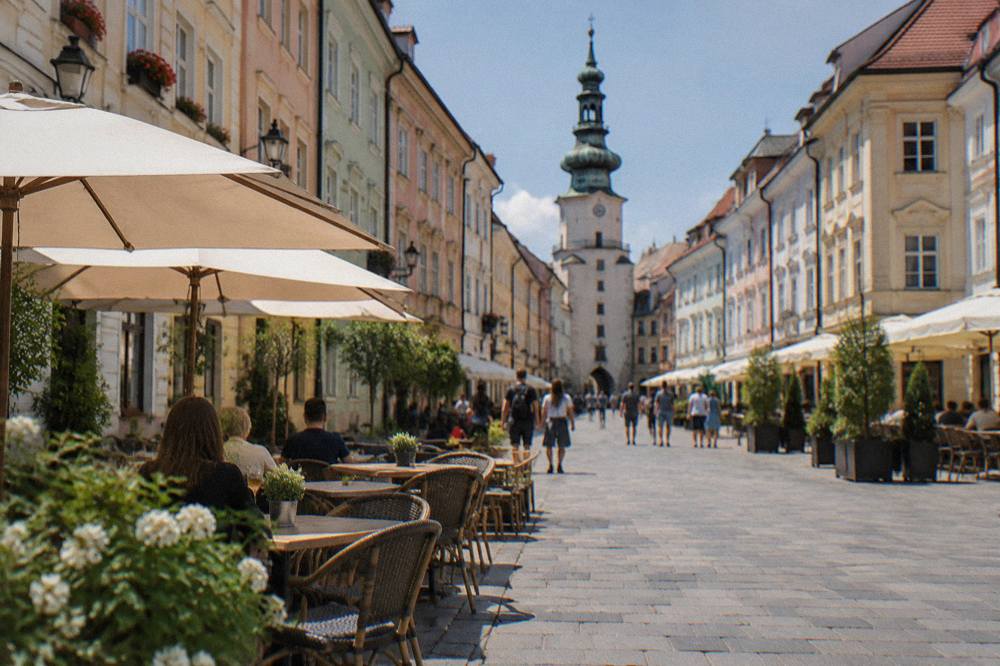
If the trip allows both, do both: the 56-minute, 12.70 EUR train makes Vienna and Bratislava a single combined destination in practice, and each city shows better next to the other. If the choice is forced, choose Vienna for imperial scale, museums and music, and choose Bratislava for a compact, walkable, inexpensive capital with a castle, a river and wine country 20 km away. Neither choice is wrong, and the honest tie-breaker is usually how many days there are.
A forced either-or usually comes down to time. Two days or fewer favours Bratislava, because the city's core rewards a short visit in a way a metropolis cannot: the sights are close, the prices are soft and nothing essential requires queuing or booking far ahead. A week or more favours Vienna, because that is what a week is for there, with Bratislava folded in as the day trip it is perfectly sized to be.
For visitors already based in Bratislava, the argument inverts neatly. Slovakia's own countryside, from Devin Castle to Bojnice Castle about 129 km away and the High Tatras further still, is the reason to stay, and Vienna becomes the easy add-on rather than the main event. The operator's listing for the northern Slovakia day tour linked below is one way to see that half of the equation without renting a car: Check availability.
Common Questions About Vienna Or Bratislava
Which Is Nicer, Vienna Or Bratislava?
There is no factual ranking. Vienna offers imperial scale, major museums and world-class music; Bratislava offers a compact, walkable, inexpensive capital with a castle, a riverfront and wine country nearby. The cities are about 55 km apart with an hourly 56-minute train between them, so travellers can see both and judge for themselves.
Is Bratislava Cheaper Than Vienna?
This site does not publish cross-city price comparisons as fact. What can be stated is what Bratislava itself costs: castle museum admission 14 EUR, a 24-hour transport ticket 5.40 EUR on paper or 4.85 EUR in the app, and a tourist tax of 3.50 EUR per person per night in the Old Town. The detailed cost discussion lives on the is Bratislava cheaper than Vienna page.
Can You Visit Bratislava And Vienna In One Trip?
Yes, easily. The REX8 train runs hourly between Vienna Hauptbahnhof and Bratislava's main station in 56 minutes for 12.70 EUR one way, and a boat connection runs in about 75 minutes in season. Many visitors base themselves in one capital and day-trip to the other.
How Many Days Does Bratislava Need Compared To Vienna?
Bratislava's core fits one full day, with two days adding Devin Castle and the Small Carpathian wine villages. Vienna rewards the better part of a week. That asymmetry, more than any beauty contest, is what should shape a combined itinerary.
Do You Need A Passport To Travel Between Vienna And Bratislava?
Austria and Slovakia are both in the Schengen Area, so there are no routine border checks on the train, but travellers should carry the ID their nationality requires for international travel. The dedicated answer page on this site covers the detail.
Whichever city wins the argument in the end, the practical verdict is hard to beat: an hour of rail separates two European capitals, and the traveller who refuses to choose gets both.