Can You Drink Alcohol In Bratislava Streets?
Drinking outdoors in Bratislava, Slovakia: how open-air drinking works in the Old Town, at the Christmas market and in parks, plus the local habits and etiquette to know before you go.
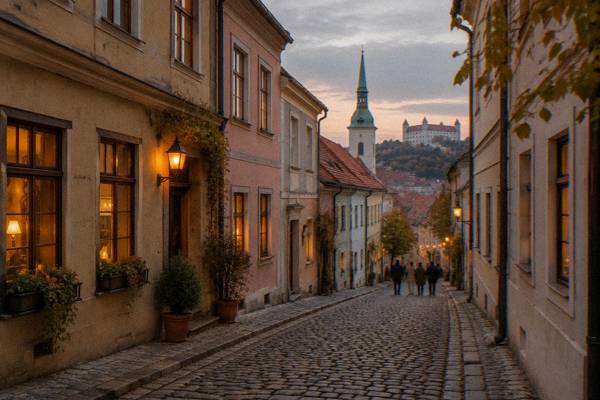
Bratislava, the capital of Slovakia, is an inland city on the Danube of about 468,000 residents, and for much of the year its Old Town runs on outdoor tables: café terraces on Hviezdoslavovo námestie, pub benches on side streets off Hlavné námestie, and, from 26 November 2026, a Christmas market on those same squares serving mulled wine in the open air until 3 January 2027. Against that backdrop, the question of whether you can drink in the street is really a question about where the line sits between a terrace, a market stall and a random stretch of pavement. This page sets out what is known, what is reported, and how the city's drinking culture actually behaves, without inventing a single rule or fine the sources do not carry.
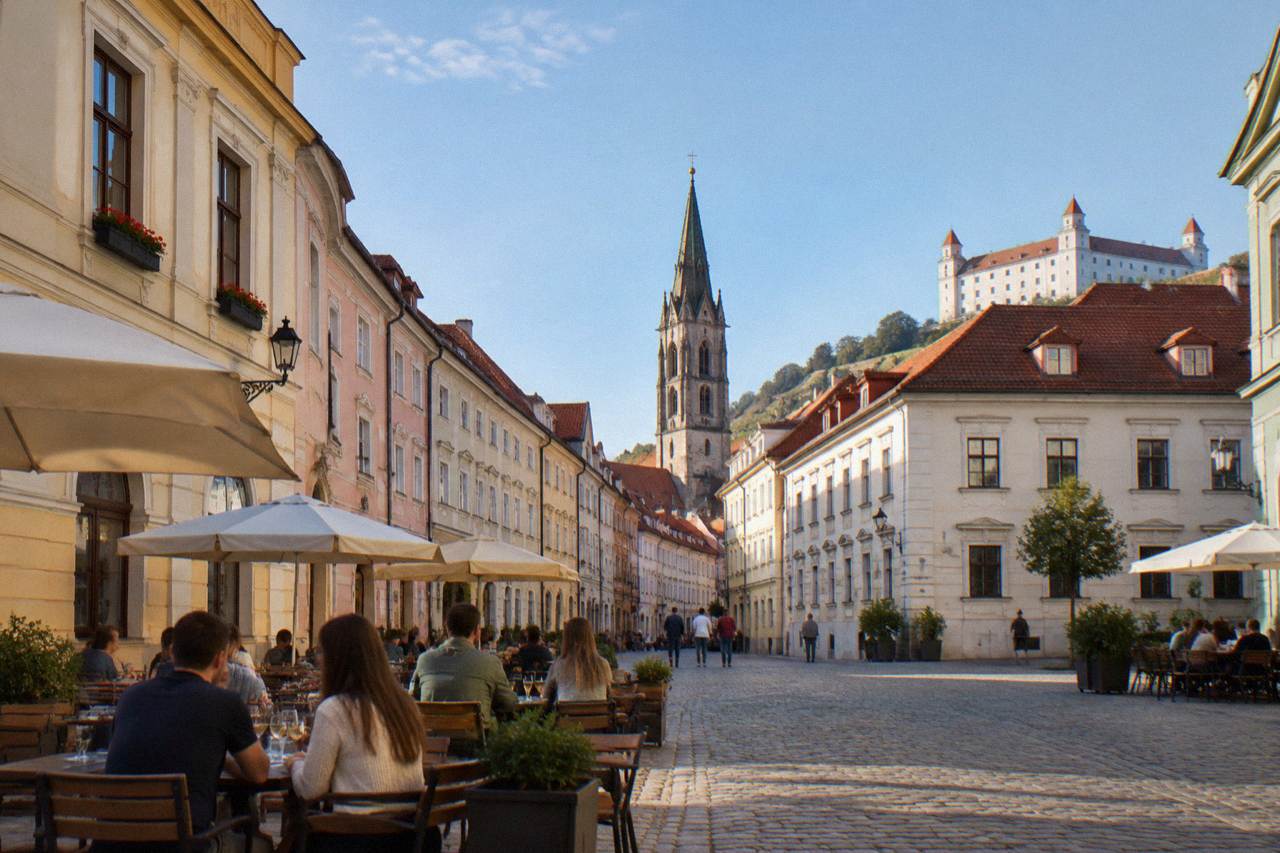
Open-air drinking is a normal, visible part of life in Bratislava rather than a hidden or policed exception, and there is no reported city-wide ban on carrying or sipping a drink outdoors: the Christmas market on Hlavné námestie and Hviezdoslavovo námestie runs from 26 November 2026 to 3 January 2027 with alcohol sold for consumption in the open square, and outdoor terrace seating operates across the Old Town through the warm months. The police act on disorder, not the drink in your hand.
That distinction matters more than any single rule. A city whose main annual event serves hot wine to people standing between the stalls is not a city where an unopened bottle in a bag draws attention. The practical texture is this: buy a beer at a terrace or a market stall and drink it where you stand or sit, and nothing in the reported picture suggests a problem. Slovak beer and wine culture is discussed in more depth on what Slovakia's known drinks are, and the terrace-and-square setup that makes it all work is covered in the guide to the Old Town.
Two honest caveats belong here. Second, behaviour standards apply everywhere: the same rules against disorderly conduct that any European capital enforces apply on Bratislava's streets too. Treat the answer above as the practical, reported reality, not a legal opinion.
Where Open-Air Drinking Is Normal In Bratislava
The places where drinking outdoors is openly part of the programme are the Christmas market on Hlavné námestie and Hviezdoslavovo námestie (26 November 2026 to 3 January 2027), the terrace seating that spreads across Old Town squares and streets in the warm months, and the wine events tied to the Small Carpathian region to the north-east of the city, including the reported release of St Martin's young wine from 11 November each year.
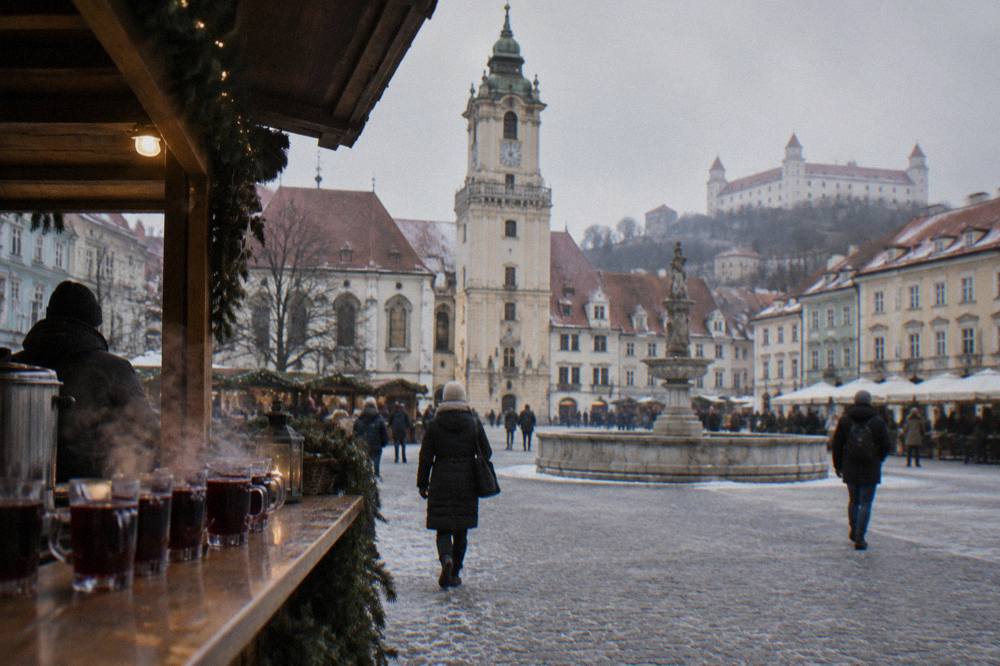
The Christmas market is the clearest case, because its organisers, Bratislavské Vianoce under the city's BKIS cultural body, run stalls on the two main squares where the entire point is to hold a cup of mulled wine or hot mead while walking between them. The market opens on 26 November 2026, with the tree lighting at 18:00, and runs to 3 January 2027. A castle market and a Eurovea market have run in past years, but neither has been announced for 2026, so this page says nothing about them.
In summer the same squares turn into terrace seating, and the culture shifts rather than disappears. Slovakia is a beer country with a wine country attached to it: the Small Carpathians wine route starts practically at the city edge, and Modra and Pezinok are short trips out. Within the city, the November date to know is St Martin's Day, 11 November, when young wine traditionally reaches bars and shops; that timing is reported rather than fixed in an official document, so treat it as a strong custom rather than a schedule.
Want to explore that beer culture with a local guide? Book a craft beer tour here.
| Event or season | Dates | Where | Source |
|---|---|---|---|
| St Martin's young wine release | From 11 Nov 2026 | Citywide, venues and shops | Reported |
| Terrace season | Roughly May to September | Old Town squares and streets | General pattern |
The table is worth reading with the seasons in mind. Outdoor drinking in Bratislava clusters around dated events and warm-month terraces; it is not a year-round park culture in the way some warmer capitals manage. The ERA5 climate normals for Bratislava, modelled for 1991-2020, put the July mean daily high at 26.3 C but the January mean daily low at -3.1 C, so the open-air season has hard limits, which is exactly why the Christmas market sells hot drinks rather than cold ones.
What Slovakia's Drinking Laws Mean For Visitors
Slovakia's alcohol rules that touch visitors are the ordinary European ones: the euro is the currency, so drinks are priced in EUR; the emergency number is 112, with 158 for police; tap water in Bratislava is safe to drink, supplied from underground sources and disinfected only; and the tourist tax is 3.50 EUR per person per night in the Old Town and 3.00 EUR elsewhere.
That last sentence is not a gap being papered over; it is the honest shape of the information. What can be stated is practical. If you are buying alcohol to drink at your accommodation or on a terrace, shops and supermarkets sell it under the normal Slovak retail rules. If you are planning a night around bars rather than streets, the questions shift from legality to logistics: how late things run, how safe the walk home is, and what a night in Bratislava actually looks like. Those are covered from different angles on whether Bratislava is safe at night and on the wider question of what not to miss in Bratislava.
One genuinely local detail: tipping in Slovakia runs to rounding up or about 5 to 10 percent for good table service, per the reported norm. Bar staff and terrace waiters expect the same treatment as restaurant staff, so the drinking culture is a table culture, which naturally pulls consumption toward terraces and away from pavement drinking anyway.
For travellers whose trip is built around the city rather than a single night out, there is also the question of what to do with the daylight hours. The Check availability link for the Čičmany, Bojnice, Orava and High Tatras day tour is one option: it is a guided day trip out of the city, and evenings back in Bratislava can then be as quiet or as lively as the day allows.
How Bratislava's Night Out Compares With Its Neighbours
Bratislava sits about an hour from Vienna by train (the REX8 covers the distance in 56 minutes) and is a common day-trip pairing with both Vienna and Budapest, so its nightlife is often measured against bigger neighbours; the honest comparison is that Bratislava is a smaller, cheaper-feeling, more compact night out, with everything walkable in the Old Town rather than spread across districts.
The walkability point is load-bearing for this page. Because the Old Town is pedestrian and compact, a night out rarely involves transit at all: bars, terraces and squares sit within a few minutes' walk of each other, which means the "street" in the question is usually a pedestrian zone full of people doing exactly what you are doing. Vienna is examined head to head on which city is nicer, Vienna or Bratislava, and the practical cross-border questions, such as whether you need a passport between the two, are answered separately.
The question of whether Bratislava is cheap or expensive handles that angle properly. What can be said here is structural: Slovakia has used the euro since 1 January 2009, so there is no exchange-rate guessing on a night out, and the city's compactness means a taxi is rarely part of the plan.
Sober Mornings And The Day After In Bratislava
The morning-after options in Bratislava are mostly free or cheap and mostly walkable: the castle grounds are open daily from 08:00 to 22:00 year-round at no charge, Slavín is an open-air memorial with no fee, the Blue Church charges nothing for entry, and the Slovak National Gallery is free for everyone on the first Sunday of every month, a policy the gallery announced on 25 September 2026.
This matters because a page about drinking should not pretend the trip is only evenings. The castle's Museum of History inside costs 14 EUR and is closed on Tuesdays, but the grounds themselves, the view platform approach and the Baroque Garden are the free part, and the garden keeps long summer hours, 09:00 to 21:00 in June and July, shrinking to 09:00 to 16:00 in January, February, November and December. Tap water is safe everywhere, per the city utility's published water-quality information, which is the cheapest recovery drink in Europe.
For visitors who want the evening to end somewhere scenic rather than somewhere loud, the Danube riverfront at Eurovea and the walking bridges give the city its best night air, and the UFO observation deck above Most SNP stays open daily until 23:00, with the deck priced at 11.50 EUR on weekday mornings and 12.50 EUR at other times, per the operator's entry-fee page. It is the one late-night viewpoint in the city with a published schedule, and a drink up there is a licensed, seated, unambiguous version of everything this page has been discussing.
Common Questions About Drinking In Bratislava
Can you drink alcohol in Bratislava streets?
Open-air drinking is a normal part of Bratislava life: the Christmas market serves alcohol on the main squares from 26 November 2026 to 3 January 2027, and terrace drinking fills the Old Town in warm months. No city-wide street-drinking ban is reported, and police attention, as reported, goes to public drunkenness and disorder rather than the drink itself.
Is there a fine for drinking in public in Bratislava?
The reported reality is that drinking at terraces, markets and outdoor tables carries no issue, while disorderly behaviour is what enforcement targets.
Where can you drink outdoors in Bratislava?
On the terraces of Hlavné námestie and Hviezdoslavovo námestie, at the Christmas market from late November to early January, at the Christmas-season stalls of the main squares, and at summer terrace seating across the Old Town. The UFO deck above Most SNP serves drinks daily until 23:00.
What is the drinking culture like in Bratislava?
Table-centred and beer-forward, with Slovak wine from the Small Carpathians close behind. St Martin's young wine arrives from 11 November each year by reported tradition, and tipping runs to rounding up or 5 to 10 percent for good table service.
Is Bratislava good for a night out?
Yes, in a compact way: the Old Town is pedestrian, bars and squares sit within a short walk of each other, the euro is the currency, and the whole evening can be done on foot. The safety picture after dark is covered separately on this site.
Do I need cash for bars in Bratislava?
Slovakia uses the euro, and card acceptance in the city is broad, but carrying a small amount of euro cash for market stalls and smaller venues is ordinary practice anywhere in the eurozone.
The short version: drink where the city drinks, on the squares and terraces it has set up for exactly that, keep the behaviour orderly, and the question answers itself. More on the city itself, from its famous sights to how many days it deserves, sits elsewhere on Bratislava Travel Guide.