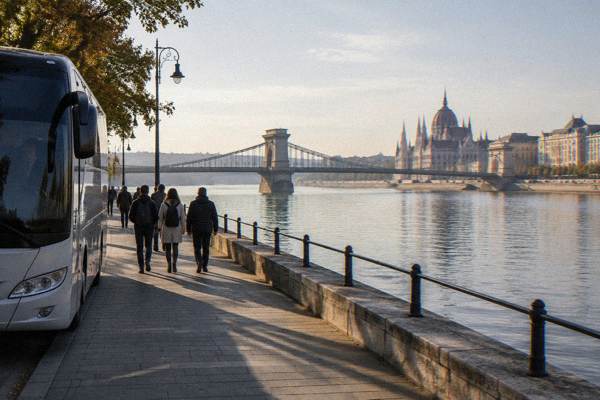
Vienna, Bratislava And Budapest In Five Days
Three capitals on one river, about 55 km and 162 km apart as the crow flies: here is how a five-day Vienna, Bratislava and Budapest trip works in practice.
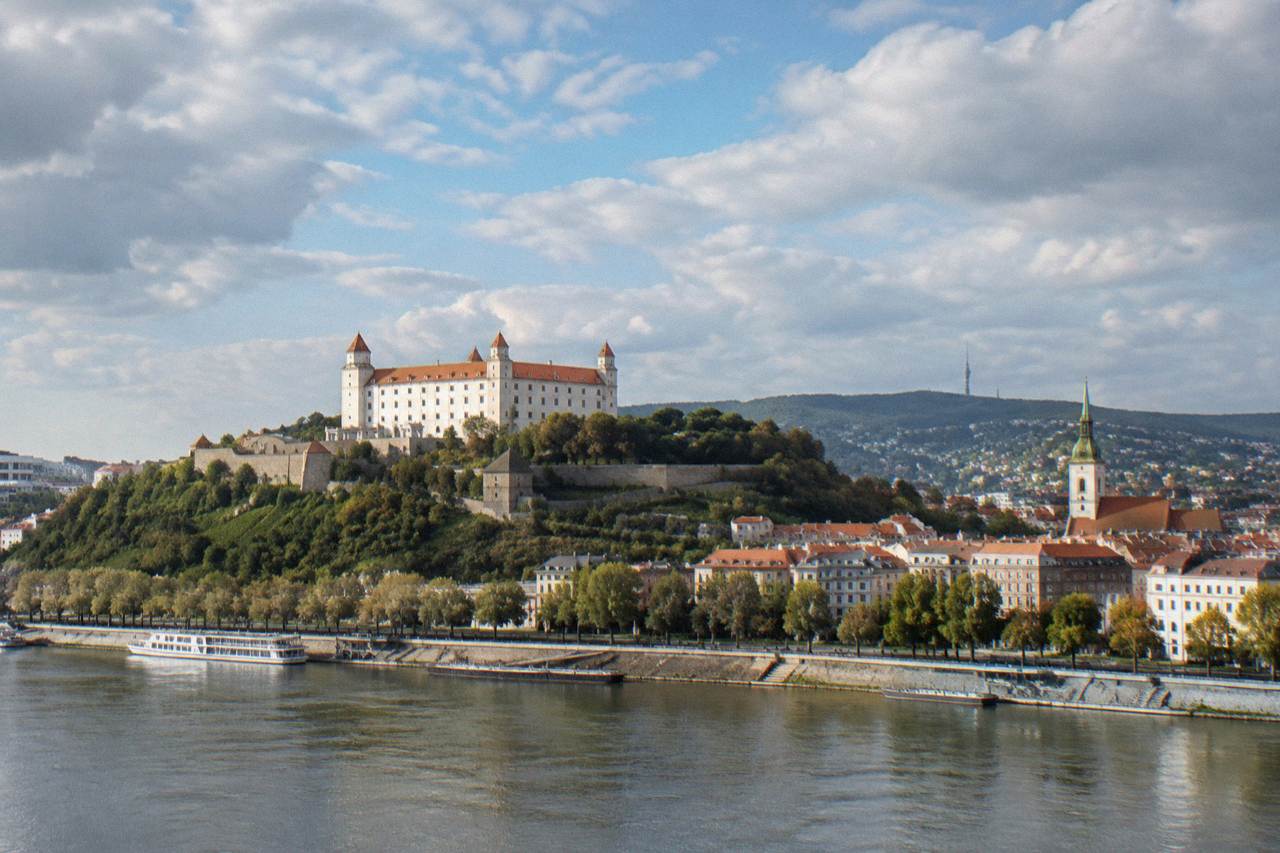
Short answer
Yes, five days covers all three capitals. Spend two nights in Vienna, one or two in Bratislava and one or two in Budapest, linked by the hourly REX8 train from Vienna to Bratislava in 56 minutes for 12.70 EUR and the direct rail link onward to Budapest.
Three capital cities sit on the same river within about 220 straight-line kilometres of each other. Vienna lies about 55 km from Bratislava, and Budapest about 162 km from Bratislava, which makes this the most compressed three-capital run in Europe. Bratislava is the smallest of the three, the capital of Slovakia, an inland city of 468,290 residents (24 June 2026 figure) with a pedestrian Old Town and a castle on a hill, and it works as the hinge of the route rather than a detour. A workable route needs a day-by-day plan, train and bus links between the cities, the actual entry costs at the main sights in Bratislava, and a clear sense of where the five days are tightest. For more on the middle city's own depth, the Bratislava Travel Guide covers the castle, the Old Town and the wine villages in separate pages.
Is Five Days Enough For Vienna, Bratislava And Budapest?
Five days is enough for a first visit to all three capitals if you accept one full day per city plus travel margins: two nights in Vienna, two nights based in or around Bratislava or Budapest, and the fifth day for the return leg. The compression works because Vienna and Bratislava are only about 55 km apart and the direct REX8 train covers the distance in 56 minutes. Budapest is the outlier at about 162 km from Bratislava, so it needs the longest single block of the trip.
The trade-off is depth. Five days across three capitals means each city gets roughly a day and a half of sightseeing at best, and some sights get cut. The question how many days do you need in Bratislava has a short answer in its own right: the historic core is compact and walkable, so Bratislava rewards a tight schedule better than either of its neighbours.
One decision shapes everything else: the direction of travel. Starting in Vienna and ending in Budapest, or the reverse, avoids backtracking. Starting and ending in Vienna turns Budapest into a long day trip, which is possible but eats most of a day in transit and visiting time. Travellers weighing just the two closest cities can compare Vienna and Bratislava directly before committing to the three-city version.
How Should You Split The Five Days Between The Three Cities?
The split that works for a first trip is two days in Vienna, one and a half in Bratislava and one and a half in Budapest, travelling in the evening so each morning starts fresh in a new city, with the Vienna and Bratislava legs taking under an hour by rail. Vienna earns the extra half day because it is the largest of the three; Bratislava compensates by being the fastest to read, with the castle hill, the Main Square and the riverfront all within a short walk of each other.
| Day | City | Base for the night | Core of the day |
|---|---|---|---|
| 1 | Vienna | Vienna | Arrival, historic centre on foot |
| 2 | Vienna | Vienna | Museums and the riverfront, evening train west |
| 3 | Bratislava | Bratislava | Castle, Old Town, cathedral |
| 4 | Bratislava, then Budapest | Budapest | Morning in Bratislava, afternoon train, evening walk |
| 5 | Budapest | Budapest or return | Final morning, departure |
The evening-train trick is what makes the arithmetic fit. The REX8 runs hourly between Vienna Hauptbahnhof and Bratislava hlavná stanica, so a late-afternoon departure lands you in the next city in under an hour without costing a sightseeing morning. The Vienna to Bratislava guide covers every option on that leg, including the boat.
Bratislava's day deserves the full third day of the trip, not the leftover afternoon. The Bratislava Castle museum alone is open 10:00 to 18:00 with last admission at 17:00, and it closes on Tuesdays, which matters if day 3 of your plan lands on one. If the calendar forces that, flip the order and give Bratislava day 4 instead. The deeper planning detail, including a slower two-night version, is in Bratislava in two days.
A guided alternative exists for the two-capital stretch: a Vienna-start day trip that covers Bratislava and Budapest in one organised day, useful for travellers with only three or four days total rather than five. It departs from Vienna, so it suits a Vienna-based plan rather than the linear five-day route above. Check availability for that option, or read the fuller comparison in one day in Bratislava from Vienna.
How Do You Travel Between Vienna, Bratislava And Budapest?
The Vienna to Bratislava leg is a direct hourly train, the REX8, taking 56 minutes for a fixed 12.70 EUR one way with no reservation needed; the Vienna to Budapest leg is a direct train, and the Bratislava to Budapest leg runs as a direct rail link with times and fares to be checked at booking. Buses are the fallback: Slovak Lines runs a direct coach between Vienna city centre and Bratislava Airport in about 70 minutes from 7.90 EUR.
| Leg | Straight-line distance | Best verified option | Time | Fare |
|---|---|---|---|---|
| Vienna Hbf to Bratislava hl. st. | about 55 km | REX8 train, hourly | 56 min | 12.70 EUR |
| Vienna Hbf to Bratislava-Petržalka | about 55 km | REX6 train | 59 min | on the operator's site |
| Vienna city to Bratislava Airport | about 55 km | Slovak Lines coach | about 70 min | from 7.90 EUR |
| Vienna to Budapest | about 55 km plus 162 km | Direct train | check the operator | on the operator's site |
Two practical warnings from the autumn 2026 timetable. First, rail reconstruction around Bratislava hlavná stanica runs until 12 December 2026: the S50 starts and ends at Bratislava-Nove Mesto and the R55 to Trnava is cancelled, though the main station itself stays open and the Vienna trains keep using it.
The boat is a real alternative on the short leg. The Twin City Liner links Vienna and Bratislava on the Danube in about 75 minutes, with its 2026 high season running daily until 2 November and Advent sailings on Fridays to Sundays from 27 November to 20 December. It is a sightseeing ride priced above the train, so treat it as an experience rather than the budget option. Full detail sits in the day trip to Vienna page; the reverse direction, useful on day 5 of a Budapest-first plan, is covered in Bratislava to Vienna.
One question comes up constantly on this route: do you need a passport to go from Vienna to Bratislava? Slovakia and Austria are both in the Schengen Area, and Slovakia has been since 21 December 2007, so there is no routine border control, but a valid ID is still required to carry and to check in for accommodation.
What Does Day Three In Bratislava Actually Look Like?
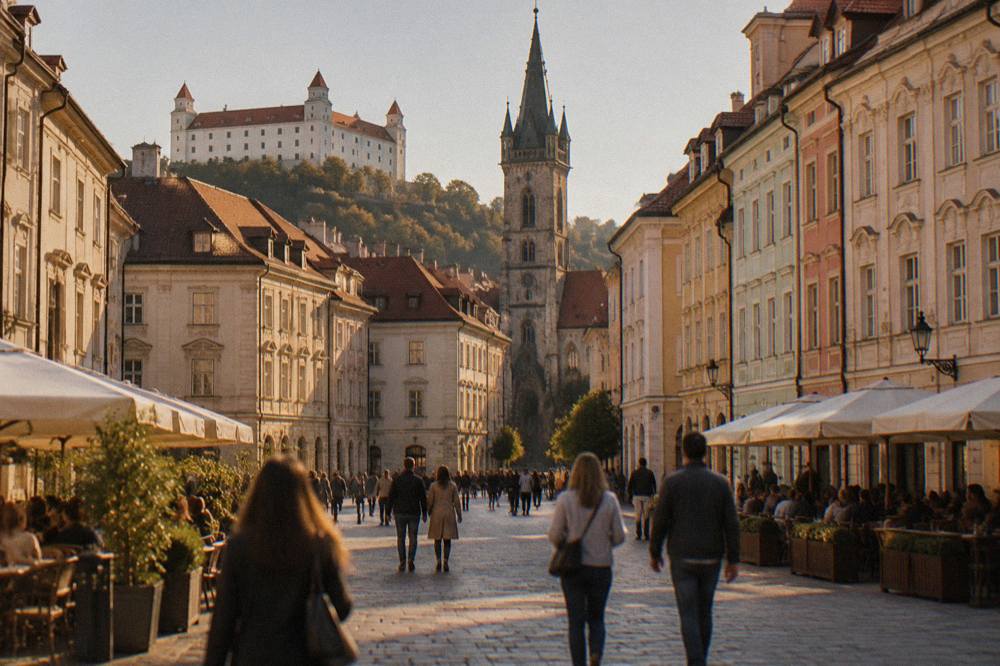
A realistic Bratislava day pairs the castle museum in the morning, the Old Town and St Martin's Cathedral through the middle of the day, and the riverfront or the UFO deck in the evening, with entry costs of 14 EUR at the castle museum, 5 EUR at the cathedral's tourist zone and 11.50 to 12.50 EUR at the UFO deck adding up to about 30 EUR per person before food. The castle grounds themselves are free and open daily 08:00 to 22:00, so a budget version of the day costs almost nothing.
Want someone to walk you through the Old Town's stories? Book a free walking tour here.
| Sight in Bratislava | Entry (adult) | Days closed | Hours |
|---|---|---|---|
| Bratislava Castle, Museum of History | 14 EUR | Tuesday | 10:00 to 18:00, last entry 17:00 |
| Castle grounds and gardens | free | none | daily 08:00 to 22:00 |
| St Martin's Cathedral, tourist zone | 5 EUR | none (services may close it) | Mon to Sat 09:00 to 18:00, break 11:30 to 13:00 |
| Old Town Hall and Apponyi Palace | 8 EUR | Monday | 10:00 to 18:00 |
| Old Town Hall Tower | 4 EUR | Monday | 10:00 to 18:00 |
| Michael's Tower | 6 EUR | Tuesday | 10:00 to 18:00 |
| Primate's Palace | 5 EUR | Monday | posted weekly, roughly 10:00 to 17:00 |
| Blue Church | free | none | limited interior hours, see its parish page |
| UFO observation deck | 11.50 or 12.50 EUR | none | daily 10:00 to 23:00 |
The Tuesday trap is worth repeating because it catches planners: the castle museum and Michael's Tower both close on Tuesdays, while the Old Town Hall and Primate's Palace close on Mondays. Two consecutive days in Bratislava, one a Monday and one a Tuesday, still let you see everything by swapping the order.
The morning belongs to the castle hill. The climb is on foot, and the reward is the Baroque Garden, whose hours shift by month: 09:00 to 16:00 in January, February, November and December, and 09:00 to 21:00 in June and July. The afternoon is the Old Town, which is pedestrian and compact: Hlavné námestie, the Main Square, Michael's Gate and the cathedral sit within a few minutes of each other. The evening option is the UFO deck on the Most SNP bridge, open to 23:00 daily, with the cheaper 11.50 EUR adult ticket applying only on weekday mornings before 13:00.
Travellers who want the middle city explained rather than just walked can look at Bratislava in three days, the slower sibling of the one-day plan, or start from is Bratislava worth a day trip from Vienna if the five-day plan shrinks to three.
What About Food And Drink In The Middle City?
Bratislava's food budget for a day runs lighter than Vienna's or Budapest's at the casual end, and the city's two strongest food experiences are a long guided food walk and a beer-and-food walk, both bookable as products whose prices render on their listings rather than being typed here. Local costs: the euro is the currency (Slovakia adopted it on 1 January 2009), and the tourist tax is 3.50 EUR per person per night in the Old Town and 3.00 EUR elsewhere, capped at 60 nights a year.
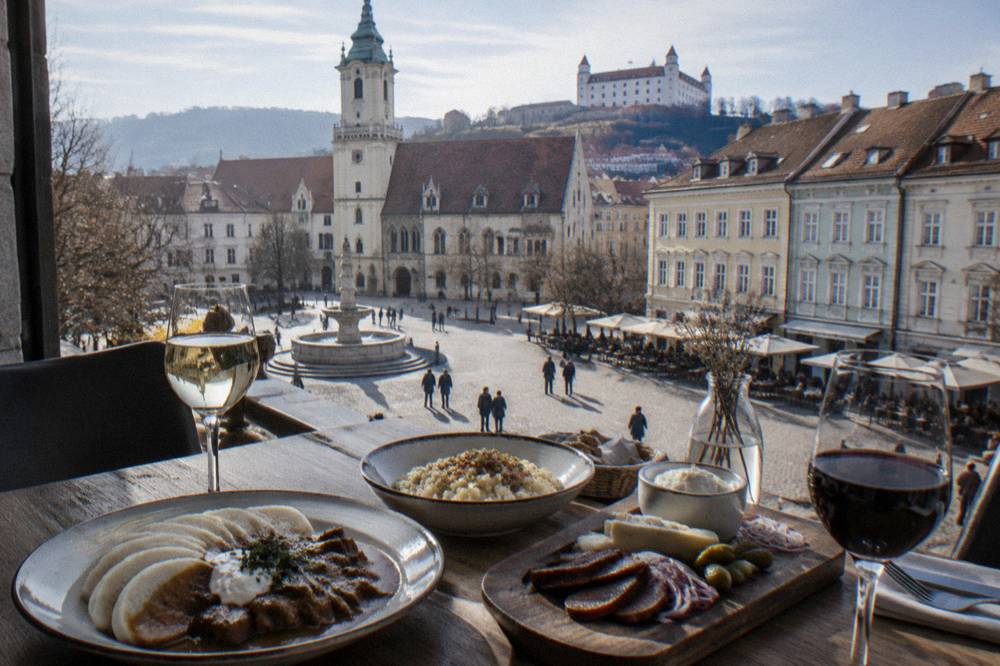
The Small Carpathians wine region starts just outside the city, Modra about 26 km and Pezinok about 20 km away, and Slovak wine reaches the city's lists from there.
For a trip built around eating well, a guided walk does the sorting: it covers the Old Town's kitchens and the stories behind the dishes in one outing. The fuller food picture, dish by dish, sits alongside the rest of what the city offers on things to do in Bratislava's companion coverage on this site.
How Much Does The Whole Five-Day Trip Cost?
Excluding accommodation and flights, a five-day three-capital budget works out to roughly 25 to 39 EUR per person per day in sightseeing and local transport at the top of the range, because the Bratislava CARD covers 23 sights and all IDS BK transport for 30 EUR (24 hours), 36 EUR (48 hours) or 39 EUR (72 hours), while the intercity trains add about 12.70 EUR for the Vienna to Bratislava leg each way. Budapest and Vienna sightseeing budgets sit outside this site's coverage and should be planned from those cities' own pages.
| Item | Cost | Notes |
|---|---|---|
| REX8 train, Vienna to Bratislava | 12.70 EUR one way | fixed fare, no reservation, hourly |
| IDS BK paper single, 30 min, Bratislava | 1.20 EUR | zones 100+101, standing price |
| IDS BK paper single, 60 min, Bratislava | 1.80 EUR | zones 100+101 |
| IDS BK 24 h paper day ticket | 5.40 EUR | zones 100+101 |
| Bratislava CARD, 24 h, with transport | 30 EUR | 23 sights free, prices from 1 Apr 2025 |
| Bratislava CARD, 48 h, with transport | 36 EUR | includes one child under 18 free |
| Bratislava CARD, 72 h, with transport | 39 EUR | all IDS BK zones, night lines included |
| Tourist tax, Old Town | 3.50 EUR per person per night | 3.00 EUR outside the Old Town |
The Bratislava CARD earns its price on a single packed day: the castle museum at 14 EUR, the Old Town Hall at 8 EUR and Michael's Tower at 6 EUR are all free with it, and it includes a daily 14:00 walking tour of the historic centre with a minimum of two people. The card's discount brochure is valid until 31 March 2027. Budget travellers can skip the card entirely: the castle grounds, the Blue Church and Slavín are all free, and the Old Town itself costs nothing to walk.
Which City Deserves The Extra Night?
Bratislava is the city that most rewards the extra night on a five-day run, because its hotel base is the most affordable of the three, its evening scene is walkable from any Old Town address, and the day trips from it, Devin Castle and the Small Carpathians wine villages, need the extra hours that Vienna and Budapest cannot spare. The counter-argument is cultural weight: Vienna and Budapest each have more ticketed sights than a half day can absorb.
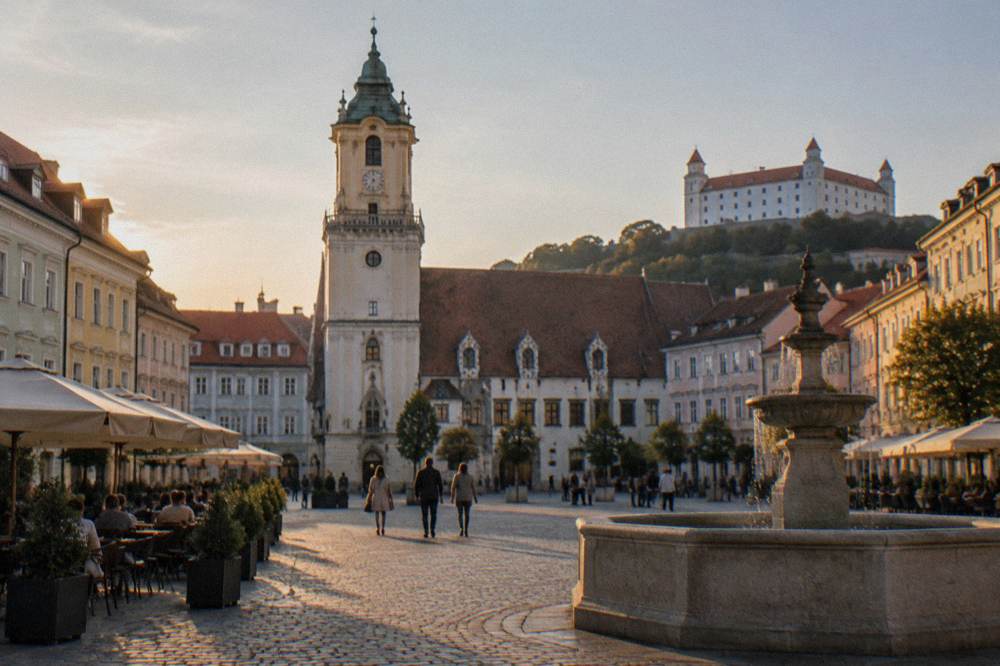
Where to sleep in the middle city is covered in where to stay in Bratislava, which keeps the decision to a couple of districts. The comparison shoppers can read which is nicer, Vienna or Bratislava and the Bratislava versus Budapest breakdown before fixing the night counts.
If the extra night goes to Bratislava, the spare half day reaches Devin Castle at the city's western edge, where admission is 8 EUR in summer season and 6 EUR from November to March, and, contrary to a widespread belief, the site stays open through winter, Tuesday to Sunday 10:00 to 16:00 from November to February. A round-trip river cruise to Devin is also a bookable product on this site's roster. The day trip to Budapest planning page covers the reverse direction, and the dedicated castle page carries the Devin detail.
What Is The Weather Like Across The Five Days?
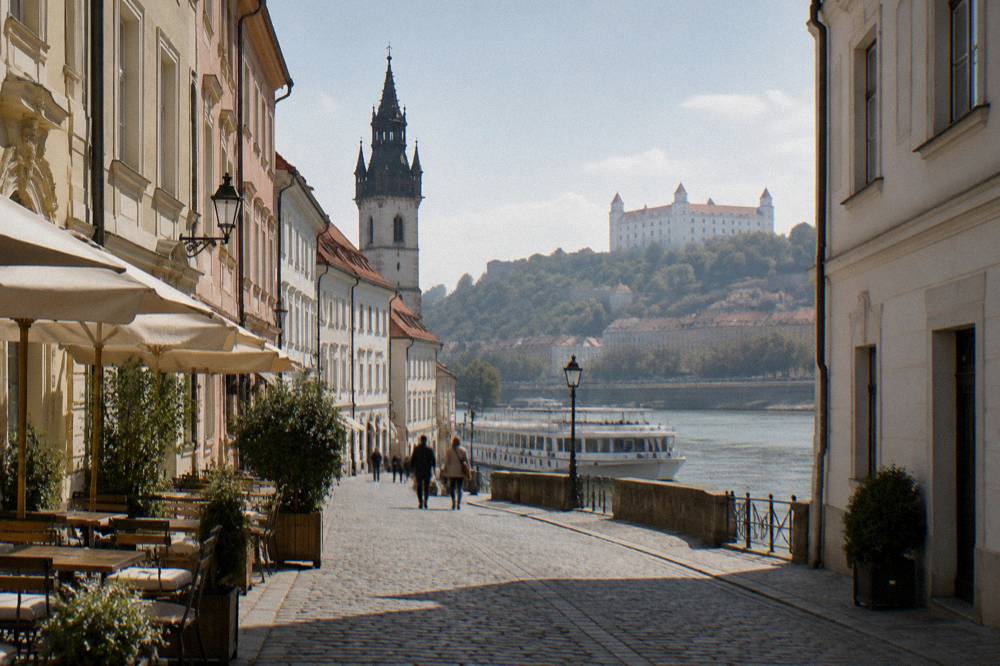
The three cities share a continental climate with modelled ERA5 normals for Bratislava showing July at a mean daily high of 26.3 C and January at a mean daily high of 3.0 C with a mean low of minus 3.1 C, and rain totals that peak in July at 75.8 mm and dip lowest in February at 33.4 mm, so the five-day packing question is really a question of month. These figures are modelled reanalysis values for a Bratislava grid cell, 1991 to 2020, not a station record.
| Month | Bratislava mean high C | Bratislava mean low C | Rain mm |
|---|---|---|---|
| Jan | 3.0 | -3.1 | 34.9 |
| Mar | 10.3 | 1.1 | 42.0 |
| May | 20.4 | 10.6 | 69.1 |
| Jul | 26.3 | 16.6 | 75.8 |
| Sep | 20.8 | 12.0 | 67.1 |
| Nov | 8.9 | 3.0 | 46.3 |
Summer days across all three cities run warm with the highest rain totals of the year; shoulder months trade a few degrees for lighter luggage. December brings a different reason to travel: the main Bratislava Christmas market runs from 26 November 2026 to 3 January 2027 on Hlavné námestie and Hviezdoslavovo námestie, which slots neatly into a winter version of this itinerary. The month-by-month detail, including the traps, is in the best time to visit Bratislava.
Can You Reverse The Route And Start In Budapest?
Yes, the route works in reverse with the same shape: two days in Budapest, the direct train north to Bratislava, a stay there, then the REX8 to Vienna to finish, and the answer to whether Bratislava justifies its stop does not change with direction. The Budapest-first order suits travellers flying home from Vienna, which has the widest long-haul connections of the three.
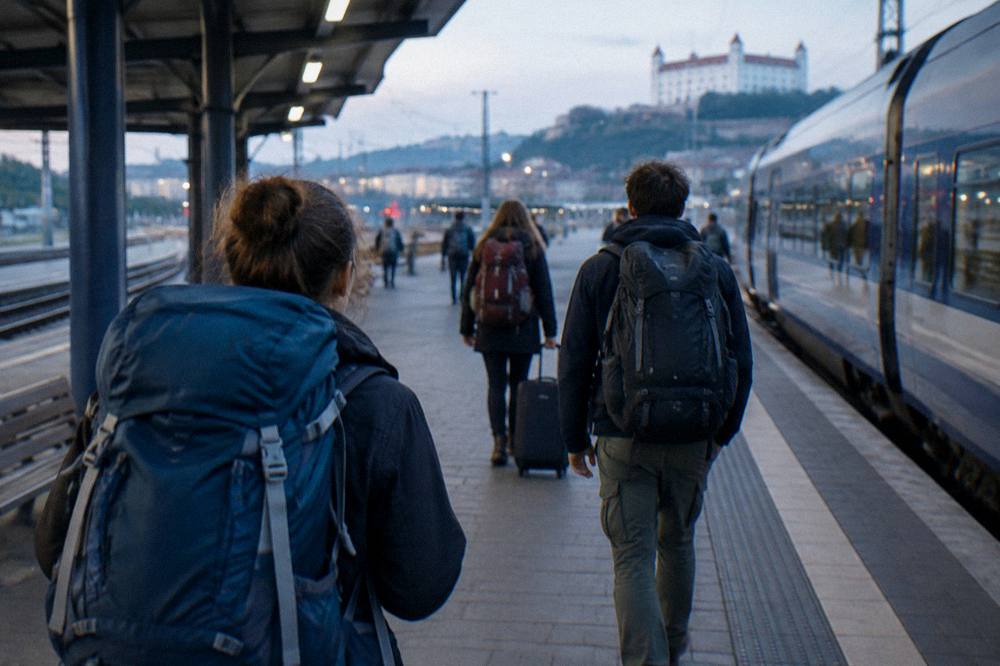
The Budapest legs are planned in Budapest to Bratislava and Bratislava to Budapest, with the day trip to Budapest page covering the sights if the second city gets only a compressed visit. Travellers coming the other way through Vienna's airports should start with Vienna airport to Bratislava; Bratislava's own airport options are in flights to Bratislava.
Direction aside, one rule holds: a tour flagged as starting in Vienna starts in Vienna. The Vienna-start products on this site, including the two-capital day trip that covers Bratislava and Budapest from a Vienna departure, are never Bratislava departures, and the same logic applies to anything starting in Budapest. The one day in Bratislava from Budapest itinerary exists for exactly that plan.
What If You Have A Spare Day Beyond The Three Capitals?
A spare day from the Bratislava base is best spent either west into the Small Carpathians wine country, with Pezinok about 20 km and Modra about 26 km away, or north to the castle belt, with Trnava about 44 km, Nitra about 75 km and Bojnice Castle about 129 km from Bratislava, and a guided castles day trip covering Beckov, Trenčín and Bojnice is bookable as a single product. Vienna itself is close enough to double as the spare day if the five-day plan left it shortchanged.
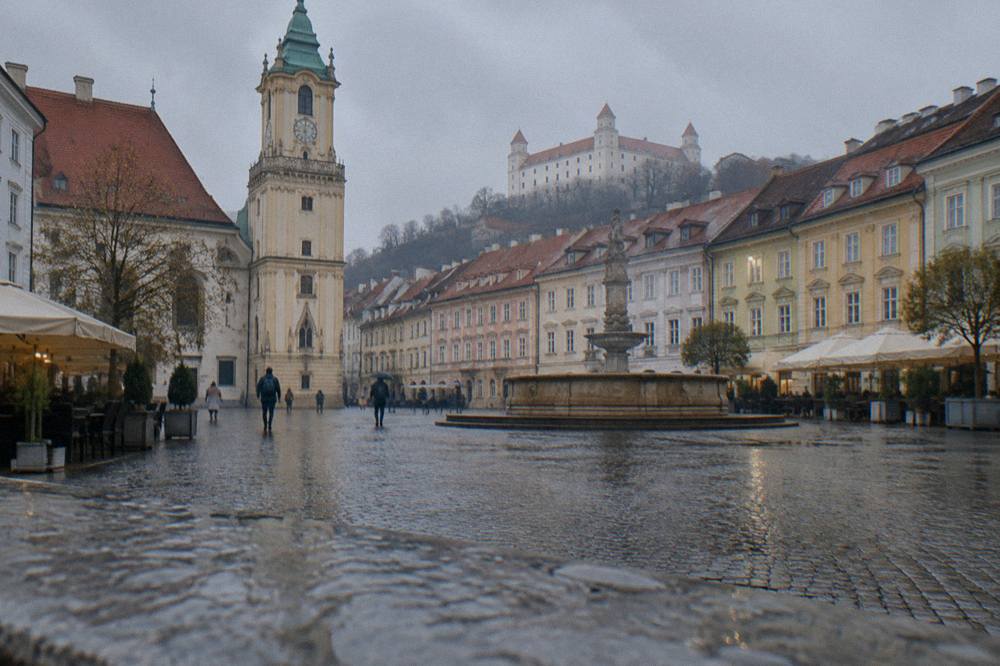
The castle-belt day reaches three fortified sites in one move and is the natural extension for travellers who found Bratislava's single castle too little masonry. Carnuntum, about 19 km away, is the Roman option on the Austrian side, covered in the Carnuntum day trip page. The wine alternative is laid out in this site's Small Carpathians coverage, and the evening return lands back in Bratislava in time for the Old Town.
Common Questions About Vienna, Bratislava And Budapest In Five Days
Is five days enough for Vienna, Bratislava and Budapest?
Yes, for a first visit. Two days in Vienna, one and a half in Bratislava and one and a half in Budapest, with evening trains between them, covers the highlights. Each city loses some depth, and Bratislava is the one that fits a tight schedule best.
How far apart are Vienna, Bratislava and Budapest?
Vienna lies about 55 km from Bratislava and Budapest about 162 km from Bratislava, straight-line distances. The REX8 train covers Vienna Hauptbahnhof to Bratislava in 56 minutes.
What is the best way to get from Vienna to Bratislava?
The hourly direct REX8 train, 56 minutes for a fixed 12.70 EUR one way. The Twin City Liner boat takes about 75 minutes on the river and runs daily in high season until 2 November 2026.
Is Bratislava worth a stop between Vienna and Budapest?
Yes. The Old Town is pedestrian and compact, the castle museum costs 14 EUR with grounds free daily 08:00 to 22:00, and the city's role as the hinge between the two larger capitals adds almost no travel time to the route.
Which day of the week matters for Bratislava sightseeing?
Tuesdays and Mondays. The castle museum and Michael's Tower close on Tuesdays; the Old Town Hall and Primate's Palace close on Mondays. The cathedral closes daily between 11:30 and 13:00.
When is the best month for this five-day trip?
Modelled ERA5 normals for Bratislava put July at a 26.3 C mean high with 75.8 mm of rain and January at a 3.0 C mean high. May and September sit between the extremes; the Christmas market from 26 November 2026 to 3 January 2027 is the winter draw.
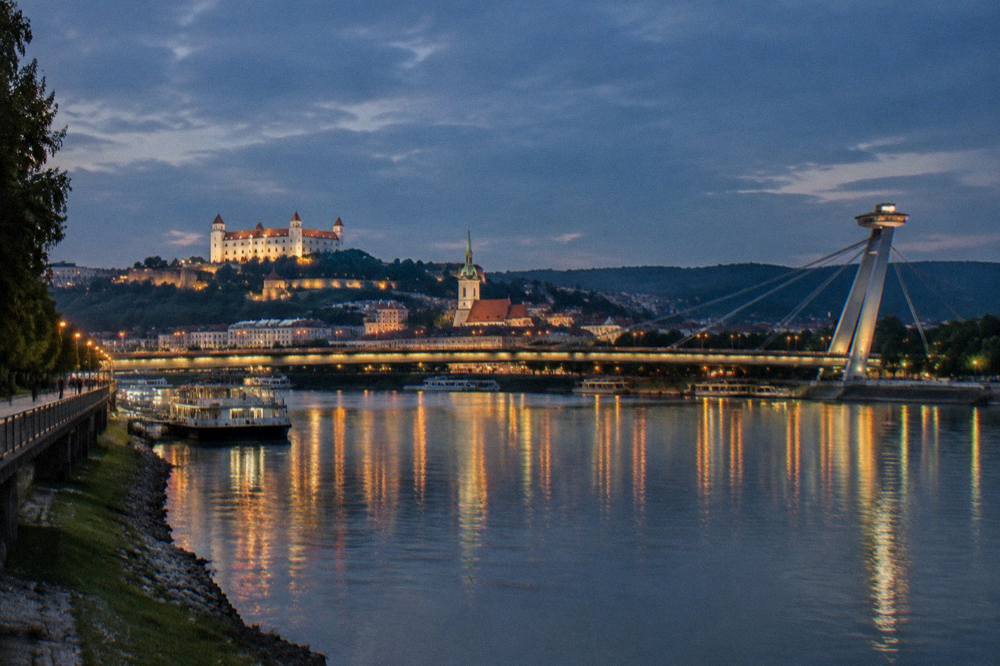
The five-day shape holds together because the distances are small and the middle city is light on its feet. Fix the Tuesday and Monday closures into the calendar first, book the Vienna and Budapest legs before the castle tickets, and let Bratislava's walkable core absorb whatever the timetable leaves over.