Do I Need My Passport To Go From Vienna To Bratislava?
Do you need a passport to travel from Vienna to Bratislava? Slovakia and Austria share one border-free zone, so the crossing works differently from most international trips. Here is what to carry and what checks can happen.
Vienna and Bratislava are two capital cities roughly 55 km apart, straight-line distance, which makes this one of the shortest international hops in Europe. Bratislava is Slovakia's capital, an inland city on the Danube of about 468,290 residents, and the trip between the two is a normal commute for thousands of people every day. Because both countries sit inside the same border-free zone, the question of whether a passport is needed has a different answer than on most international routes, and the details below set out exactly what applies, what to carry, and what the crossing itself looks like by train, bus and boat.
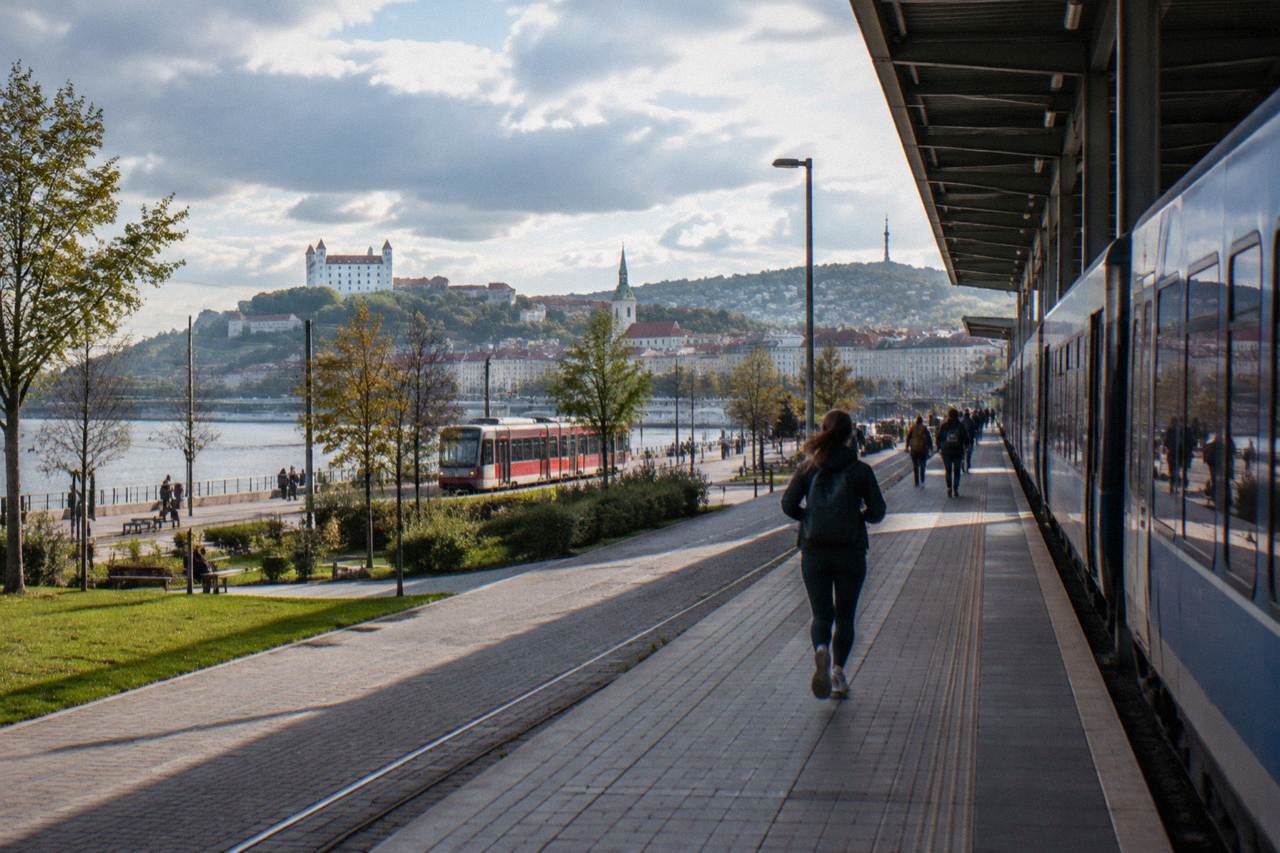
No routine passport check stands between Vienna and Bratislava, because Austria and Slovakia are both part of the Schengen border-free zone, and Slovakia has been reported as a Schengen member since 21 December 2007, so the internal land border is crossed without a passport control point. You should still carry a valid passport or national ID card, because spot checks by police are allowed inside the zone and carriers can ask for ID at any time.
That is the whole answer in one line, but the practical detail matters. Schengen removes systematic border controls between member states, not the legal requirement to hold and carry a travel document. Slovak police have the power to check identity anywhere in the country, and if a check happens on a train between Vienna and Bratislava, a driving licence from outside the European Economic Area will not satisfy it. A passport or an accepted national ID card is the document that works.
For non-EU visitors there is a second layer. Entry into the Schengen zone happens once, at the first external border, and a short trip from Austria into Slovakia is movement inside that zone rather than a new entry. What can be said plainly is that nobody stands at the Marchegg or Bruck crossing stamping books on the Vienna to Bratislava line.
Why Vienna And Bratislava Sit Inside One Border-Free Zone
Both Austria and Slovakia participate in the Schengen Agreement, which removes systematic passport controls at their shared internal border, and Slovakia's membership has been reported as dating from 21 December 2007, so a traveller moving from Vienna to Bratislava crosses a European internal border rather than an external one. The consequence is that trains, buses and boats run straight through without a stop for document checks.
The zone works on trust between member states with a shared external border policy. Once a traveller has legally entered any Schengen country, movement to the others does not involve a new visa or a new entry stamp. For someone flying into Vienna from outside Europe and taking the train to Bratislava the same day, the entry stamp was collected at Vienna airport, and the Slovak border is a line on a map with no booth attached.
Prefer to fly straight into the city? Book a flight to Bratislava here.
There is a caveat that repeats across the zone. Member states can temporarily reintroduce internal border checks for specific events or security reasons, and those measures are announced rather than permanent. This page states no current measure on the Austrian-Slovak border. The practical habit that covers every scenario is to travel with the same document you used to enter the zone, kept in a pocket rather than a suitcase, because a spot check will not wait for you to unpack.
This is also why the route is so well used. Two capitals an hour apart, in one travel zone, sharing a river: day trips in both directions are ordinary. Our Bratislava Travel Guide covers the city end of the line, and the direct train question and the distance breakdown are covered on their own pages.
What ID Should You Carry On The Vienna To Bratislava Route?
Carry a valid passport, or a national ID card if your country's card is accepted in Slovakia, even though no routine check happens on the way, because identity checks by police are permitted anywhere inside the border-free zone and the train operator can refuse travel to a passenger without acceptable documents. A photocopy or a phone photo is not a travel document and will not resolve a check.
The distinction between "no border control" and "no document needed" is where travellers get caught out. The first is a statement about checkpoints; the second does not exist anywhere in the zone. Slovak law expects a foreign visitor to be able to prove identity and legal stay, and hotel check-in in Bratislava will also ask for a passport or ID card as a matter of routine, since accommodation providers register guests.
What each traveller should carry depends on citizenship. EU citizens move on national ID cards. Visitors from further afield move on passports with whatever visa or visa-free status their nationality carries, decided at the external border and not at the Slovak line. The emergency numbers for Slovakia, should a document be lost or a problem arise, are 112 as the general EU number, 158 for police and 159 for municipal police.
There is one document-adjacent point worth adding: travel insurance and the European health insurance arrangement are separate from identity, and neither replaces a passport. Keep the passport on your person on travel days, and store a separate copy of the details page somewhere accessible, which speeds up any consulate conversation if the original goes missing.
Which Route Crosses The Border: Train, Bus Or Boat?
The REX8 train runs hourly from Vienna Hbf to Bratislava hl. st. via Marchegg in 56 minutes with a fare of about EUR 12.70, and the REX6 runs hourly to Bratislava-Petrzalka via Bruck and Kittsee in 59 minutes, while the Twin City Liner boat covers the river crossing in a reported 75 minutes with an economy fare reported at about 34 to 39 EUR, and none of these services passes a passport control point.
The train is the workhorse of the route. Since the October 2025 electrification of the Marchegg line, the REX8 does the journey in 56 minutes, hourly, with no reservation needed and a fixed fare of about EUR 12.70 each way; a combined return ticket that includes a day of Bratislava public transport is also sold at a higher price. The REX6 serves Bratislava-Petrzalka station across the river from the centre, in 59 minutes. Both trains cross the border at speed, and the only sign of it is a small signpost outside the window.
| Route | Service | Time | Fare | Border check |
|---|---|---|---|---|
| Vienna Hbf to Bratislava hl. st. | REX8, hourly via Marchegg | 56 min | about EUR 12.70 one way | None routine |
| Vienna Hbf to Bratislava-Petrzalka | REX6, hourly via Bruck and Kittsee | 59 min | about EUR 12.70 one way | None routine |
| Vienna to Bratislava by river | Twin City Liner | about 75 min, reported | about EUR 34 to 39 economy, reported | None routine |
| Vienna city to Bratislava Airport (BTS) | Slovak Lines direct coach | about 70 min | from EUR 7.90 | None routine |
The boat is the scenic option rather than the fast one. Twin City Liner's 2026 season runs with three daily departures each way in high season from 1 May to 2 November, winter cruises at weekends from 7 February, and Advent sailings Friday to Sunday from 27 November to 20 December. The 75-minute journey time and the 34 to 39 EUR economy fare are reported figures, so confirm current prices when booking. The crossing still sits inside the border-free zone, so the deck offers river views, not a border post.
One 2026 timetable change matters to anyone connecting onward from Bratislava by rail. Between 1 September and 12 December 2026, reconstruction works mean the S50 service starts and ends at Bratislava-Nove Mesto, running hourly, and the R55 service between Bratislava and Trnava is cancelled. The main station stays open throughout. This does not affect arrivals from Vienna, but it changes onward plans, and the best way to make the trip is laid out on its own page.
Guided products exist on both directions of this route, and one useful category is the Vienna-start day tour, which departs from Vienna and should never be mistaken for a Bratislava departure. The Demanovska Cave and Orava Castle day trip, by contrast, starts from Bratislava and runs into northern Slovakia, a natural extension once the passport question is settled and the city itself has been seen; Check availability if that fits your dates.
Is Bratislava Worth The Trip Once You Are Across?
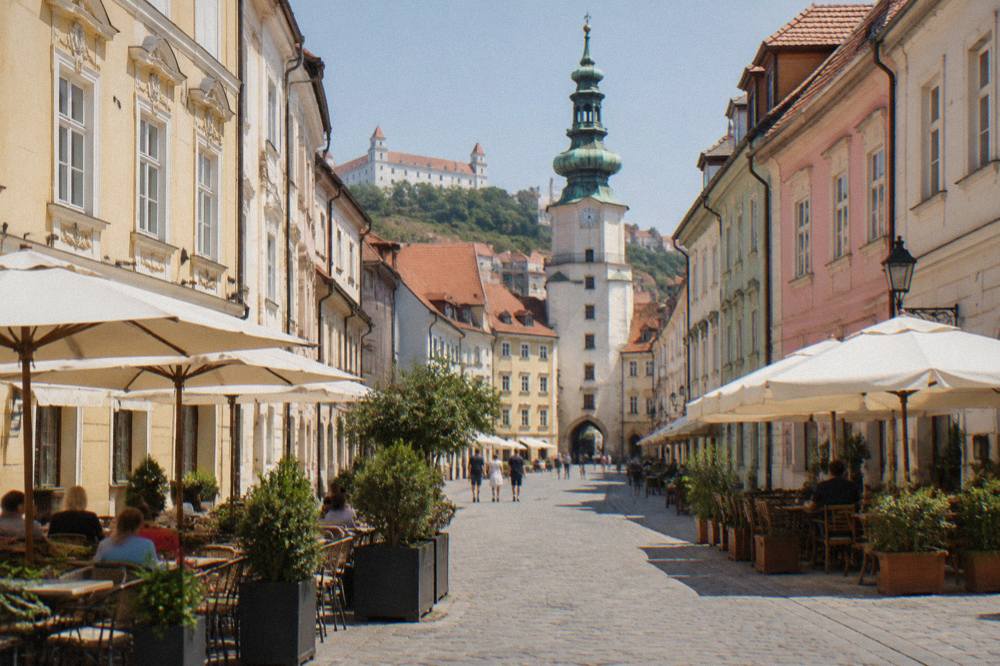
Bratislava recorded 1,188,915 visitors staying in accommodation in 2024, up 3.2 percent on 2023, with 67 percent of them from abroad, and the city's core sights, Bratislava Castle, St Martin's Cathedral and the pedestrian Old Town squares, are all reachable on foot from the main station area, which is why the hour-long crossing from Vienna supports a same-day visit without an overnight.
The castle's Museum of History charges EUR 14 for basic admission and is open daily except Tuesdays, with the castle grounds free and open daily from 08:00 to 22:00. St Martin's Cathedral charges EUR 5 for its tourist zone, covering the treasury, crypts and gallery, with tourist hours Monday to Saturday 09:00 to 18:00 around a midday break. The Old Town Hall, closed Mondays, charges EUR 8 with a separate EUR 4 tower ticket. None of these sights asks for a passport at the door, only a ticket.
Money is frictionless on arrival. Slovakia adopted the euro on 1 January 2009, so an Austrian euro is a Slovak euro, and cards are widely taken. The tourist tax, charged through accommodation, is EUR 3.50 per person per night in the Old Town district and EUR 3.00 elsewhere in the city, capped at 60 nights per taxpayer per year. None of this requires document planning beyond the passport already in your pocket.
How long to give the city is its own question, answered in full on how many days you need in Bratislava, and the case for the day trip itself is made on is Bratislava worth a day trip from Vienna. For the comparison-minded, which is nicer, Vienna or Bratislava takes the question head on, and the full Vienna to Bratislava guide covers the route in depth.
What Can Still Go Wrong At An Internal Border?
Police identity checks are permitted anywhere inside the border-free zone, member states can temporarily reintroduce internal border controls for stated reasons, and a carrier can refuse boarding to a passenger without acceptable documents, so the realistic risks on the Vienna to Bratislava route are a spot check without your passport in reach, a lost document in a foreign city, or a missed connection caused by the 2026 engineering works around Bratislava's main station rather than any border formality.
The first two risks are managed the same way: keep the passport on your body, keep a copy of the details page separately, and know the emergency numbers, 112 general, 158 police. If a document is lost in Slovakia, the home consulate is the route to a replacement, and the sooner the loss is reported the smoother that process runs. The things to be careful of in Slovakia page covers the wider practical picture.
The third risk is timetable-shaped, not document-shaped. With the S50 cut back to Bratislava-Nove Mesto and the R55 cancelled until 12 December 2026, a returning traveller building a tight connection through regional rail should check the live timetable rather than an old one. Trains from Vienna themselves are unaffected.
Cost surprises are unlikely. The Vienna versus Bratislava price comparison shows the Slovak capital as the cheaper of the two for a visitor, and paying for city transport once you arrive is explained on how to pay for public transport in Bratislava, where a paper single costs EUR 1.80 and the app version EUR 1.60 at standing prices.
Common Questions About The Vienna To Bratislava Trip
Do I Need My Passport To Go From Vienna To Bratislava?
No routine passport check applies, because Austria and Slovakia share the Schengen border-free zone, but carry a valid passport or accepted national ID card anyway, since police spot checks are allowed inside the zone and operators can ask for documents.
Is There A Border Control On The Train Between Vienna And Bratislava?
No. The REX8 crosses at Marchegg and the REX6 at Bruck and Kittsee without stopping for document checks. Temporary internal controls can be reintroduced by member states for stated reasons, so keep your passport reachable rather than buried in luggage.
Can I Use A National ID Card Instead Of A Passport?
If your country issues a national ID card accepted in Slovakia, yes. EU citizens travel on ID cards. Visitors whose countries do not issue accepted ID cards need a passport, and visa conditions depend on nationality, so check official entry information for your own case.
How Long Does The Train From Vienna To Bratislava Take?
The REX8 runs hourly from Vienna Hbf to Bratislava hl. st. via Marchegg in 56 minutes, with a fare of about EUR 12.70 one way. The REX6 runs hourly to Bratislava-Petrzalka in 59 minutes.
Do I Need To Change Money In Bratislava?
No. Slovakia adopted the euro on 1 January 2009, and Austria uses the same currency, so no exchange is needed between the two cities.
Can I Do Vienna To Bratislava As A Day Trip?
Yes, with the cities about 55 km apart and an hourly 56-minute train each way. Sights such as Bratislava Castle and the Old Town are walkable from the centre, and the castle grounds stay open daily until 22:00.