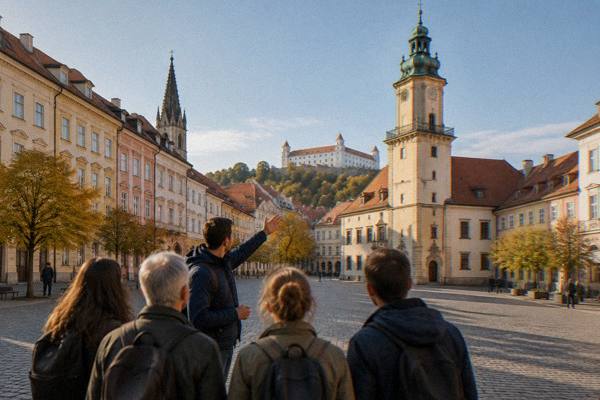
Trnava: The Little Rome Of Slovakia
Trnava sits about 44 km north-east of Bratislava, and its density of church towers earned it the nickname Little Rome. This guide covers how the day trip works from the Slovak capital, what the rail works of autumn 2026 change, and what else you can pair with the town.
Short answer
Trnava is about 44 km from Bratislava by straight-line distance, reachable as a short day trip by train or bus, though the R55 service to Trnava is cancelled from 1 September to 12 December 2026 during reconstruction around Bratislava hlavná stanica, so check ZSSK before travelling.
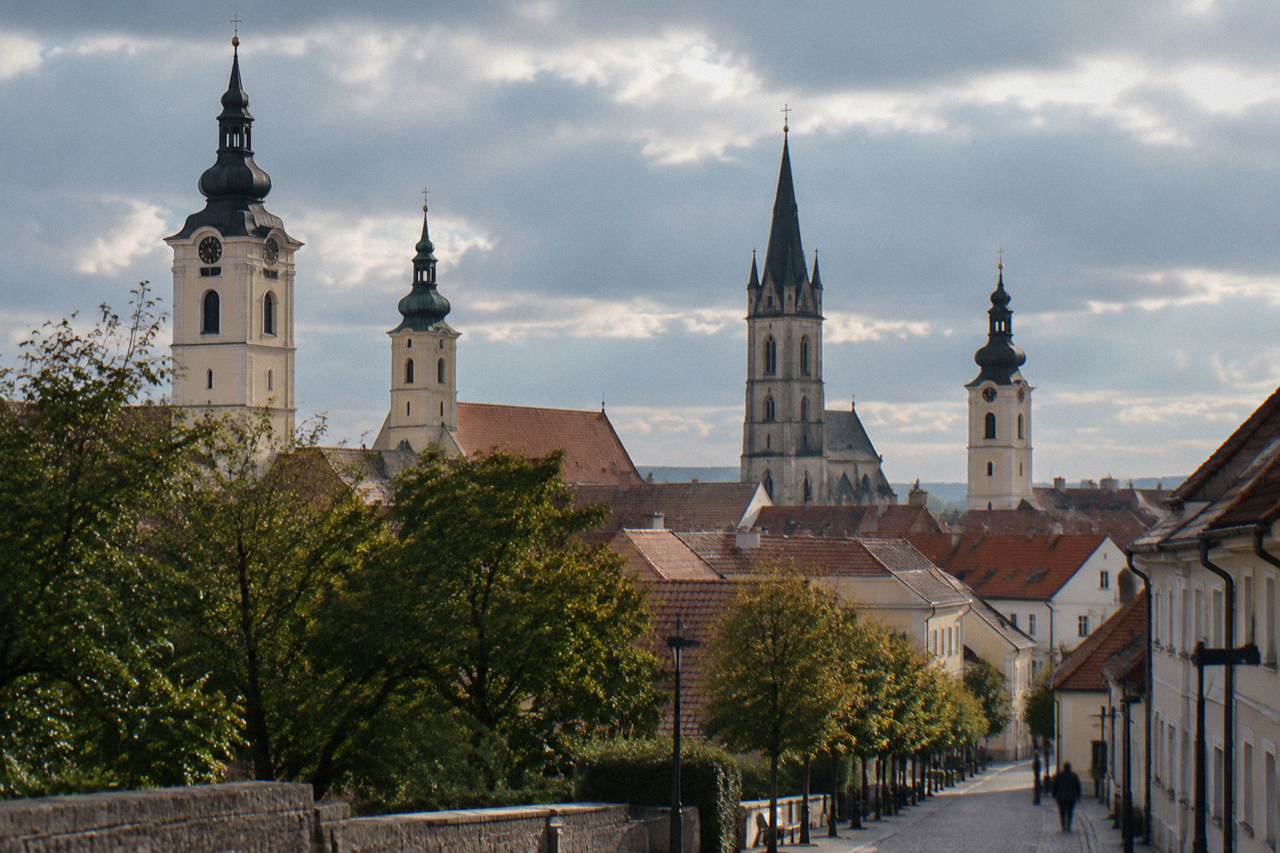
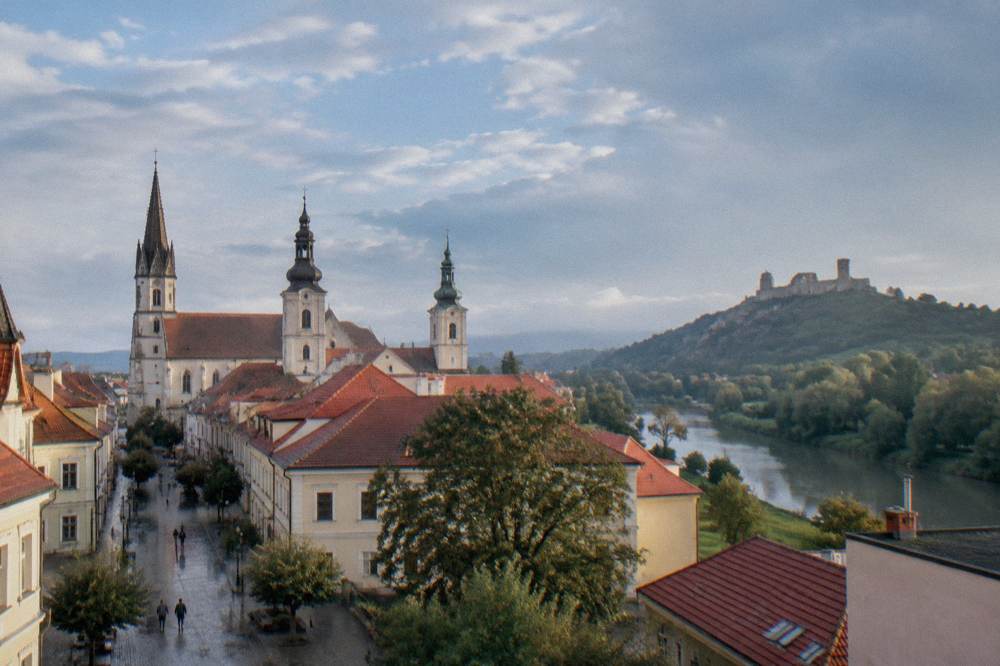
Trnava lies about 44 km north-east of Bratislava, close enough that the Slovak capital's residents treat it as an easy half-day or full-day escape, and its skyline of church towers inside a compact historic core is what earned the town its long-standing nickname, Little Rome. This page sets out what the sources actually say about getting there, what the autumn 2026 rail works change, and how the town fits alongside the other day trips that radiate from Bratislava.
Where Is Trnava And Why Is It Called The Little Rome Of Slovakia?
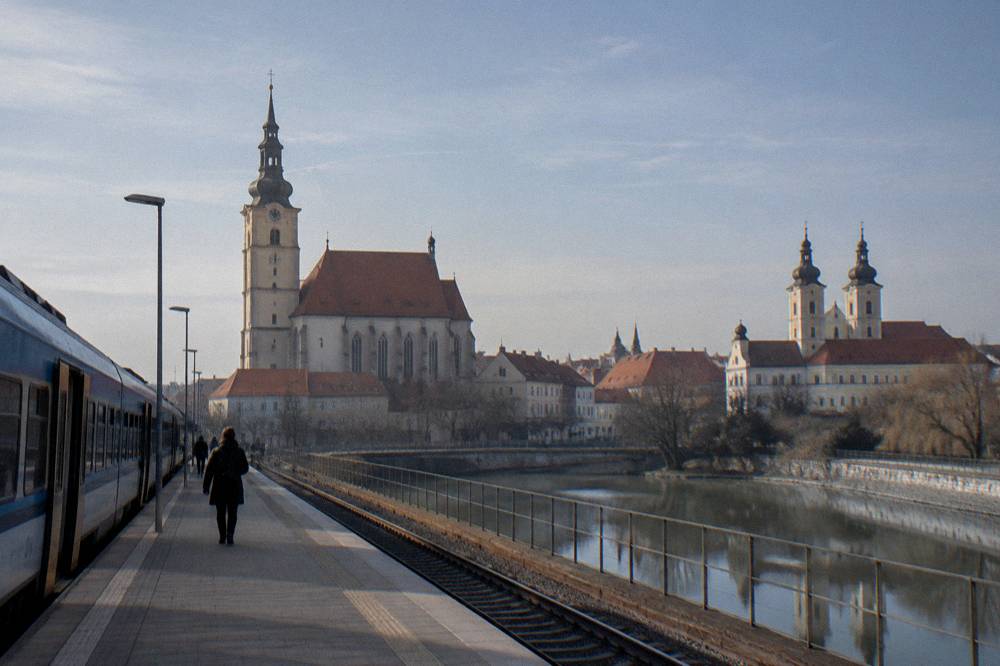
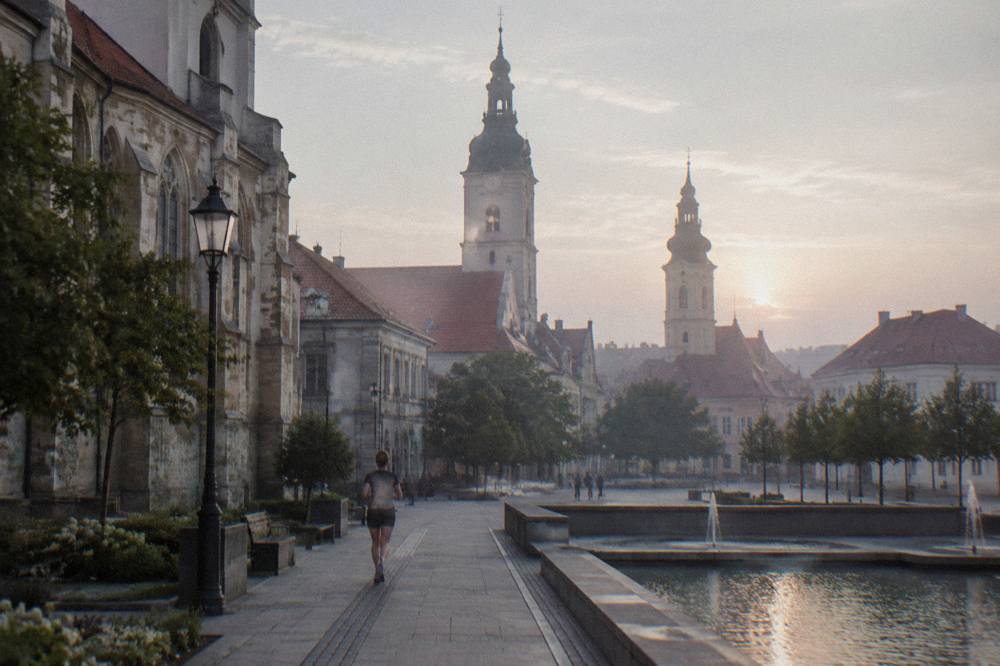
Trnava is a town in western Slovakia about 44 km north-east of Bratislava, measured as a straight-line distance, and the nickname Little Rome refers to the number of church towers packed inside its small historic centre, a compactness that makes the whole town walkable once you arrive. The town sits inland, far from any coast, and shares the euro currency and Schengen membership of the rest of Slovakia.
Slovakia adopted the euro on 1 January 2009, so a day trip from Bratislava involves no currency change, and the country has been in the Schengen Area since 21 December 2007, which is reported though not printed on every official page. Trnava's nickname is the town's own long-standing label, not a marketing invention of the travel industry, and it is the single most useful thing to know when planning the visit: the sights cluster together, and the walk between them is short.
The comparison with Rome is about density, not scale. Bratislava itself, for context, is the capital of Slovakia, an inland city on the Danube of about 468,290 residents as of 24 June 2026, with its own pedestrian Old Town around Hlavné námestie and Hviezdoslavovo námestie, and the contrast between the capital and a town of Trnava's size is part of what makes the trip worthwhile. Where Bratislava spreads along the river, Trnava concentrates everything inside a core you can cross on foot.
How Do You Get From Bratislava To Trnava?
Trnava is about 44 km from Bratislava in straight-line distance, and the practical options are train or bus, but there is a specific autumn 2026 problem: from 1 September to 12 December 2026 reconstruction around Bratislava hlavná stanica means the R55 service between Bratislava and Trnava is cancelled and the S50 starts and ends at Bratislava-Nove Mesto, so the timetable you find in spring does not match the one running now. Check ZSSK before you travel.
The rail works are the single biggest planning item for this trip in late 2026. The main station in Bratislava stays open, but the pattern of services through it changes, and a traveller who assumes the direct regional train to Trnava still runs as printed in an older timetable will be wrong until 12 December 2026. The changes affect not just Trnava but the whole corridor west of it.
If you decide to drive or take a long-distance coach instead, the same distance applies, roughly 44 km as the crow flies, with road distance longer.
Before leaving Bratislava, the ticket you buy for city transport matters if you connect across the capital. The standing IDS BK paper single for zones 100 and 101 is 1.20 EUR for 30 minutes or 1.80 EUR for 60 minutes, and the app versions are 1.09 EUR and 1.60 EUR.
| Ticket (zones 100+101) | Paper EUR | App / eTicket EUR |
|---|---|---|
| Single, 30 min | 1.20 | 1.09 |
| Single, 60 min | 1.80 | 1.60 |
| Day, 24 h | 5.40 | 4.85 |
| Day, 72 h | 10.70 | 9.68 |
For orientation inside Bratislava on the way to the station, the Bratislava train station guide covers the station area, and the Bratislava public transport guide explains the ticketing system in full.
What Do You Actually See In Trnava On A Day Trip?
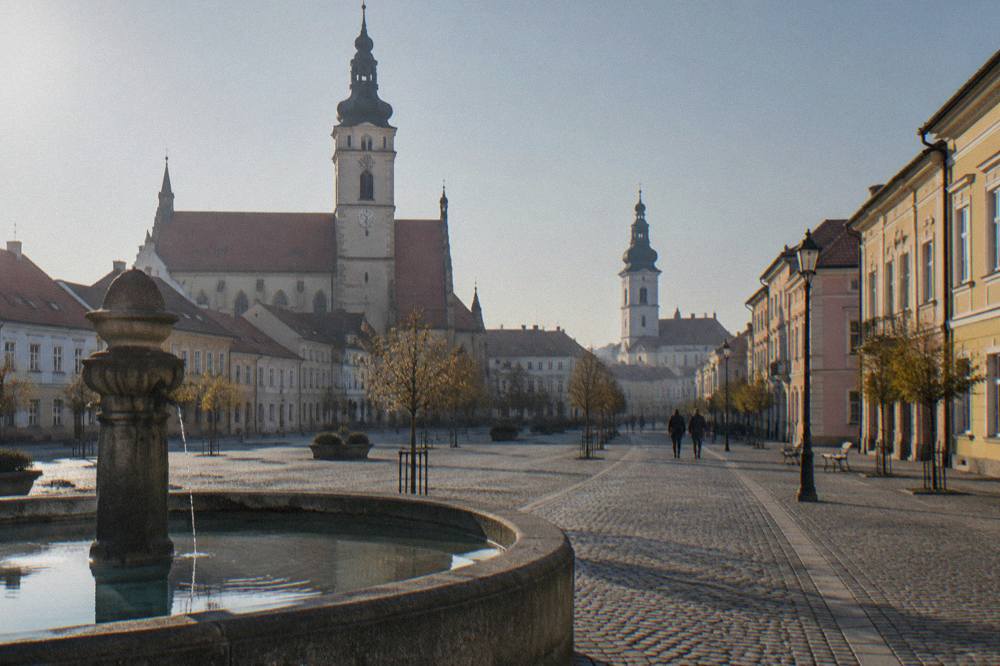
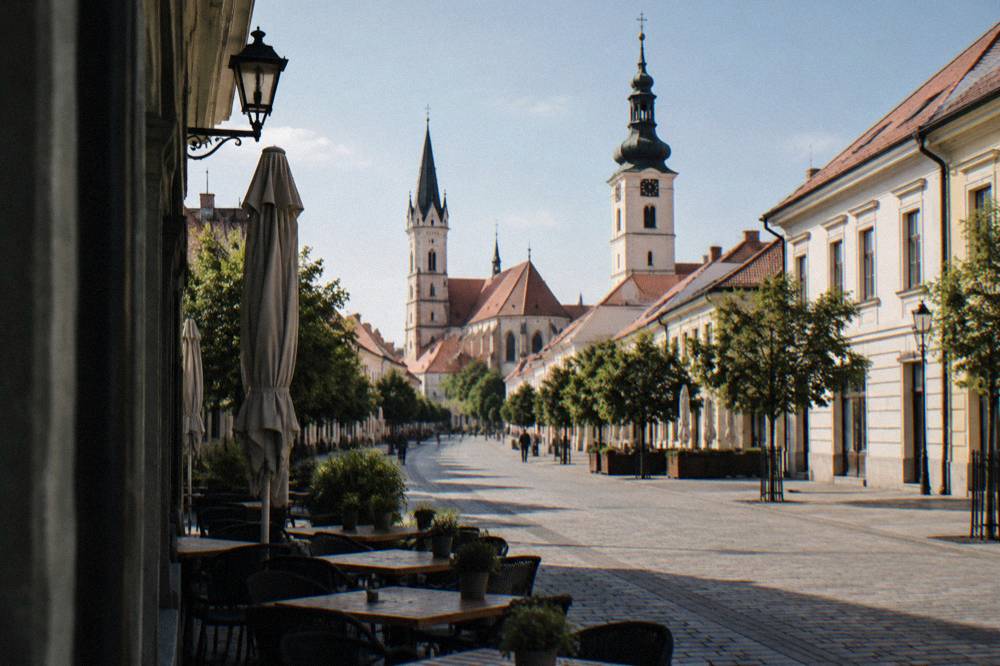
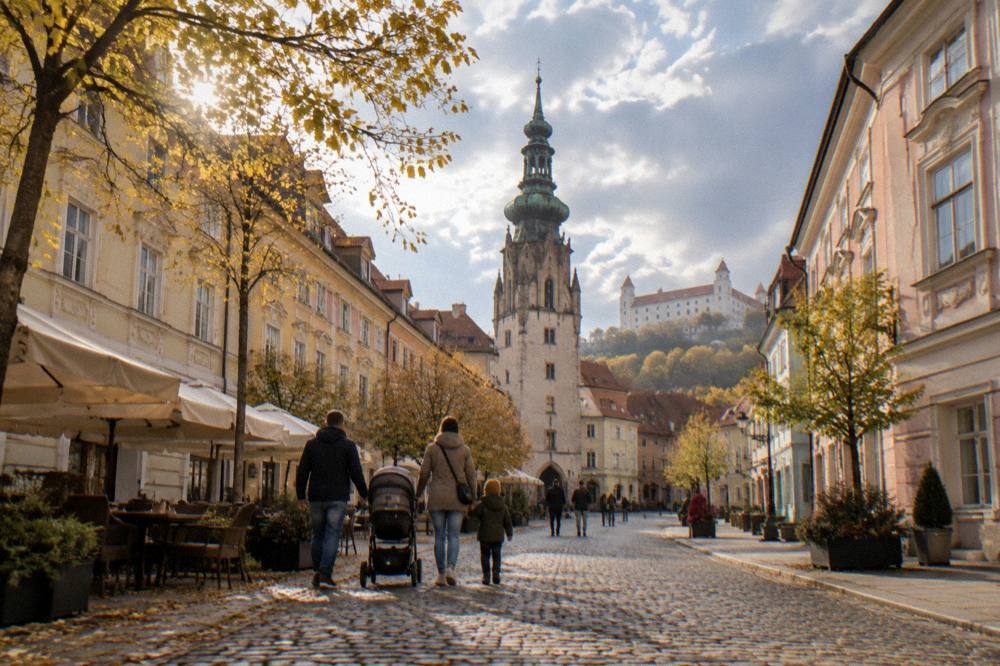
The visit itself is a walking one: Trnava's draw is its concentration of churches and its historic town core inside a small radius, so the practical plan is to arrive, walk the centre, and return, with no single ticketed blockbuster sight comparable to Bratislava Castle and no hop-on network. The town is a destination for wandering, and the sources carry no opening hours or admission prices for individual Trnava sights.
That last sentence needs unpacking honestly. Many competing guides list Trnava church opening times and museum prices copied from each other. This site only prints figures it can support for that exact subject, and for Trnava's individual buildings those figures do not exist. What the pack does verify is the town's distance, its nickname, and its place in the regional rail map, and the honest guide builds the day around those.
A sensible structure, using only what is known: arrive mid-morning after the rail or coach journey, spend the middle of the day walking the historic core where the church towers cluster, eat in the town, and return to Bratislava by late afternoon or early evening. Slovakia's eating culture is covered without prices in the what to eat in Bratislava guide, and the same dishes and drinking customs apply across western Slovakia.
Weather shapes the walk more than it would shape a museum day, so it helps to know the modelled picture for the region. The climate figures below are ERA5 reanalysis values for the 1991-2020 period, modelled for the Bratislava grid cell, not a station record, and Trnava, 44 km away in the same lowland region, sits under broadly similar conditions, though only the Bratislava figures are computed.
| Month | Mean high C | Mean low C | Rain mm |
|---|---|---|---|
| January | 3.0 | -3.1 | 34.9 |
| April | 16.0 | 5.7 | 44.0 |
| July | 26.3 | 16.6 | 75.8 |
| October | 15.0 | 7.3 | 48.5 |
July carries 75.8 mm of rain in the modelled normals and January a mean low of -3.1 C; neither figure is a forecast, and neither licenses a claim about which month is best, only about what the 30-year model shows. Pack for the walk, not for a museum.
Can You Combine Trnava With Castles On A Guided Day Trip From Bratislava?
Yes, but not as a scheduled combination of your own making on public transport in one day: the practical route is a guided castle day trip from Bratislava, and the relevant product covers Beckov Castle, Trenčín and Bojnice Castle, three of western Slovakia's major fortified sights, with Trnava sitting on the same western corridor so some travellers treat the town and the castles as either-or choices for a single spare day rather than a combined itinerary.
Beckov and Trenčín lie along the Váh valley north-west of Trnava, and Bojnice Castle is about 129 km from Bratislava by straight-line distance, the farthest of the set. The guided product handles the distances and the driving, which matters because the rail works of autumn 2026 make self-drive or guided logistics more attractive than train-hopping across this corridor. You can read what the product covers and check dates on Check availability, and the internal page for the three castles day trip gives the full breakdown. The wider story of the region's fortifications is in the Bojnice Castle day trip guide and the Trenčín Castle day trip guide.
For travellers who would rather stay in the capital or pair Trnava with city sightseeing, the alternatives below cover the other side of the day-trip decision: a castle-and-walk product with family pricing, and a fully guided city and castle walk in Bratislava itself.
How Does Trnava Compare With The Other Day Trips From Bratislava?
Trnava, at about 44 km, sits in the middle band of Bratislava's day-trip range: closer than Nitra at about 75 km and far closer than Bojnice Castle at about 129 km, but farther than the Small Carpathians wine towns of Pezinok at about 20 km and Modra at about 26 km, and incomparably farther than Devin Castle, which sits at the city's own western edge inside the public transport network.
Distance is the honest way to rank these trips because it is the figure the pack computes reliably. What each destination offers differs: the wine route towns are a Small Carpathians wine route trip built around tastings, Nitra is another historic town inland, and Devin is close enough to be a half-day within the Devin day trip orbit. Vienna, about 55 km away, and Budapest, about 162 km, are separate cities in other countries, covered in the Vienna and Budapest day trip guides, and should never be folded into a Slovakia itinerary as if they were suburbs.
| Day trip destination | Straight-line km from Bratislava |
|---|---|
| Pezinok | 20 |
| Modra | 26 |
| Devin day trip area | within the city's west |
| Trnava | 44 |
| Vienna | 55 |
| Nitra | 75 |
| Bojnice Castle | 129 |
The straight-line figures are computed distances, and road or rail routes always run longer. What the table shows is the decision logic: Trnava is a genuine short-range day trip, short enough for a half day, long enough that you would not squeeze a second town into the same afternoon comfortably, unless that second stop is on the way back. The full index of guides sits on Bratislava Travel Guide.
What Should You Know Before Leaving Bratislava For The Day?
Three practical facts matter: the standing IDS BK tickets in the capital cost 1.20 EUR for a 30-minute paper single and 1.80 EUR for 60 minutes, the tourist tax in Bratislava is 3.50 EUR per person per night in the Old Town and 3.00 EUR elsewhere at a maximum of 60 nights a year, and emergency numbers across Slovakia are 112 for the EU universal line, 150 fire, 155 ambulance and 158 police, with 159 for the municipal police.
None of these is dramatic, but each one lands on a day-tripper. The transport ticket matters on the way to the station. The tourist tax appears on your Bratislava hotel bill regardless of where you spend the day, and it is set by the city's own published ordinance. The emergency numbers apply in Trnava exactly as in the capital, and 112 works across the European Union.
Money is simple: Slovakia has used the euro since 1 January 2009, and there is no border or currency step between Bratislava and Trnava. If your day trip instead crosses into Austria, the Vienna day trip guide covers that corridor, where Austria also uses the euro, so even the international trips from Bratislava involve no money changing.
For travellers cramming more than sightseeing into a Bratislava stay, the capital's own sights have closure days that shape a week's rhythm, and a Trnava day is a natural filler for the days when the big city museums shut.
| Sight in Bratislava | Closed on |
|---|---|
| Bratislava Castle, Museum of History | Tuesday |
| Michael's Tower | Tuesday |
| Old Town Hall | Monday |
| Devin Castle | Monday, open all winter |
From November to February it runs Tuesday to Sunday, 10:00 to 16:00, with last entry at 15:15. The castle museum and Michael's Tower in the city are the Tuesday closures; the Old Town Hall is the Monday one.
Is Trnava A Good Day Trip For Families And Slow Travellers?
Trnava suits families precisely because it is a walking town with no long transfers, no border, and no ticketed blockbuster that demands a timed slot, and the same qualities suit slow travellers: about 44 km from Bratislava, reachable with a single change of scene rather than a multi-leg journey, and completable at a child's pace. No family facilities or admission data are available for Trnava's individual sights, so the case rests on logistics, not attractions.
The family angle in the wider region is better documented in the capital. The Bratislava with kids guide covers the zoo and the child-friendly side of the city, and for families who want a guided structure rather than self-directed wandering, the castle walk product with free child places appears in the picks band above. The free things to do in Bratislava guide lists the no-cost sights in the capital, and the same principle, walking and looking rather than paying per sight, is what a Trnava day runs on.
Slow travellers should note the seasonality of the region's calendar. St Martin's young wine arrives from 11 November, also reported, and it is the seasonal marker for the whole western Slovakia lowland, Trnava included.
What About A Trnava Visit On A Winter Or Christmas Trip?
Winter works as a Trnava season because the trip is short and the town is compact, and the modelled climate normals show January with a mean high of 3.0 C and December with 40.0 mm of rain for the Bratislava grid cell, figures that describe a cold, damp but manageable walking climate; the Bratislava Christmas market runs 26 November 2026 to 3 January 2027 on Hlavné námestie and Hviezdoslavovo námestie, and a Trnava day slots neatly before or after the market period.
The market closes only on 24 and 25 December. What is not announced is any castle or riverside Christmas market for 2026, any New Year's Eve programme, and any Trnava-specific winter event. The honest winter plan is a daylight walk in Trnava and the evening market back in the capital, with the Bratislava Christmas market guide and the Bratislava in winter guide carrying the detail.
Rail works still bite in early winter: the Trnava-relevant cancellations run to 12 December 2026, so an Advent trip falls squarely inside the disruption window and the operator's live timetable is the only reliable one. After 12 December the winter schedule change takes over, and again the live check beats anything printed in advance.
How Do You Plan The Whole Day, Hour By Hour?
A workable shape is: leave Bratislava mid-morning after buying the 1.80 EUR 60-minute single or a day ticket to reach the station, arrive in Trnava around midday, walk the historic core through the afternoon with a long lunch, and return to Bratislava by early evening, reserving the evening for the Old Town or, in season, the Christmas market; every transfer inside Bratislava runs on IDS BK, and the only fixed constraint is the R55 cancellation to 12 December 2026.
The hour-by-hour detail of the trains is deliberately absent. The pack gives no Bratislava to Trnava timetable, and an invented one would be worse than none. What can be fixed is the structure: the trip is short enough that a late start costs only a church or two, not the day, and the return leg has no last-train cliff edge in a corridor this busy, though confirming the final departure on the operator's own site before dinner is simple prudence anywhere in Slovakia.
Budget-wise, the day is cheap by design. The city transport fares in Bratislava are the table above, the Trnava walk itself costs nothing at street level, and the only spending beyond food is optional. For comparison, the Bratislava CARD, which covers transport and 23 sights in the capital, runs at 30 EUR for 24 hours with transport, 36 EUR for 48 hours and 39 EUR for 72 hours, and is a capital-city product rather than a regional one, so it does not apply to a Trnava day.
Common Questions About A Trnava Day Trip From Bratislava
How far is Trnava from Bratislava?
About 44 km in straight-line distance, computed from the coordinates of both places. Road and rail routes run longer than the straight line.
Is there a direct train from Bratislava to Trnava right now?
From 1 September to 12 December 2026, reconstruction around Bratislava hlavná stanica means the R55 service between Bratislava and Trnava is cancelled and the S50 starts and ends at Bratislava-Nove Mesto. Check the operator's live timetable before travelling.
Why is Trnava called the Little Rome of Slovakia?
Because of the density of church towers packed inside its small historic centre. The nickname is a long-standing label for the town, not a modern marketing coin.
Can you visit Trnava and Bojnice Castle in one day from Bratislava?
Doing both independently by public transport in one day is not a realistic plan. The practical alternative is a guided castle day trip covering Beckov, Trenčín and Bojnice, with Trnava saved for a separate walking day.
Do you need euros for a Trnava day trip?
Yes, Slovakia has used the euro since 1 January 2009, and there is no currency change between Bratislava and Trnava.
Is Trnava walkable?
Yes. The town's sights cluster inside a compact historic core, which is the whole basis of the Little Rome nickname, and the visit is a walking one once you arrive.
Before the closing picks, one last orientation point: the itineraries for one, two and three days in Bratislava are the natural companions to this page, because a Trnava day is usually carved out of a longer Bratislava stay rather than travelled for alone.
Flying in for a longer Bratislava stay? Book a flight to Bratislava here.
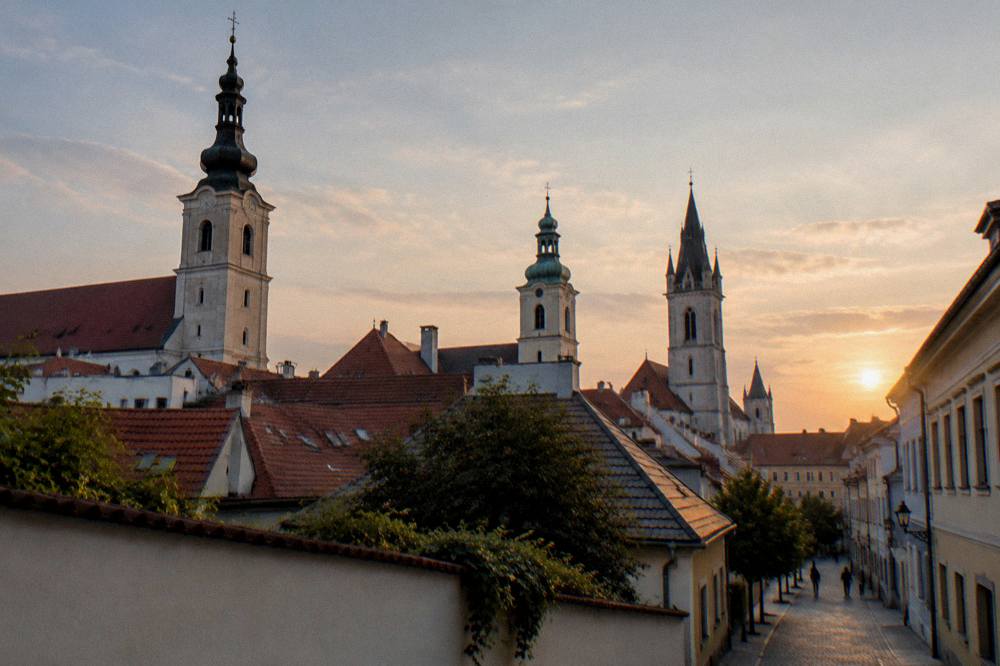
Trnava earns its place on a Bratislava itinerary through simplicity: 44 km, a walkable core, no border, no currency step, and a nickname that tells you exactly what the day holds.