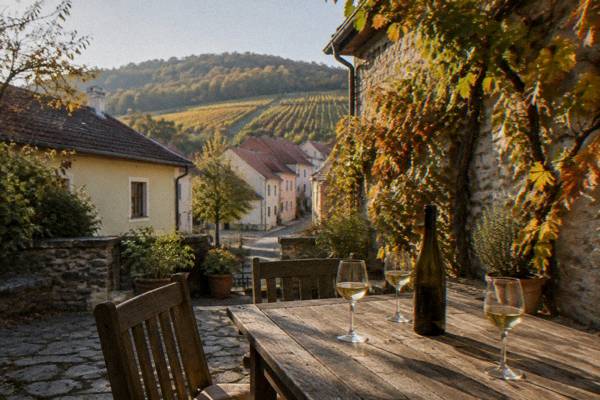
Small Carpathians Wine Route: Modra, Pezinok And Cellar Visits
The Small Carpathians wine route runs through the hills northeast of Bratislava, with Modra and Pezinok as its best-known stops and cellar visits as the reason to go.
Short answer
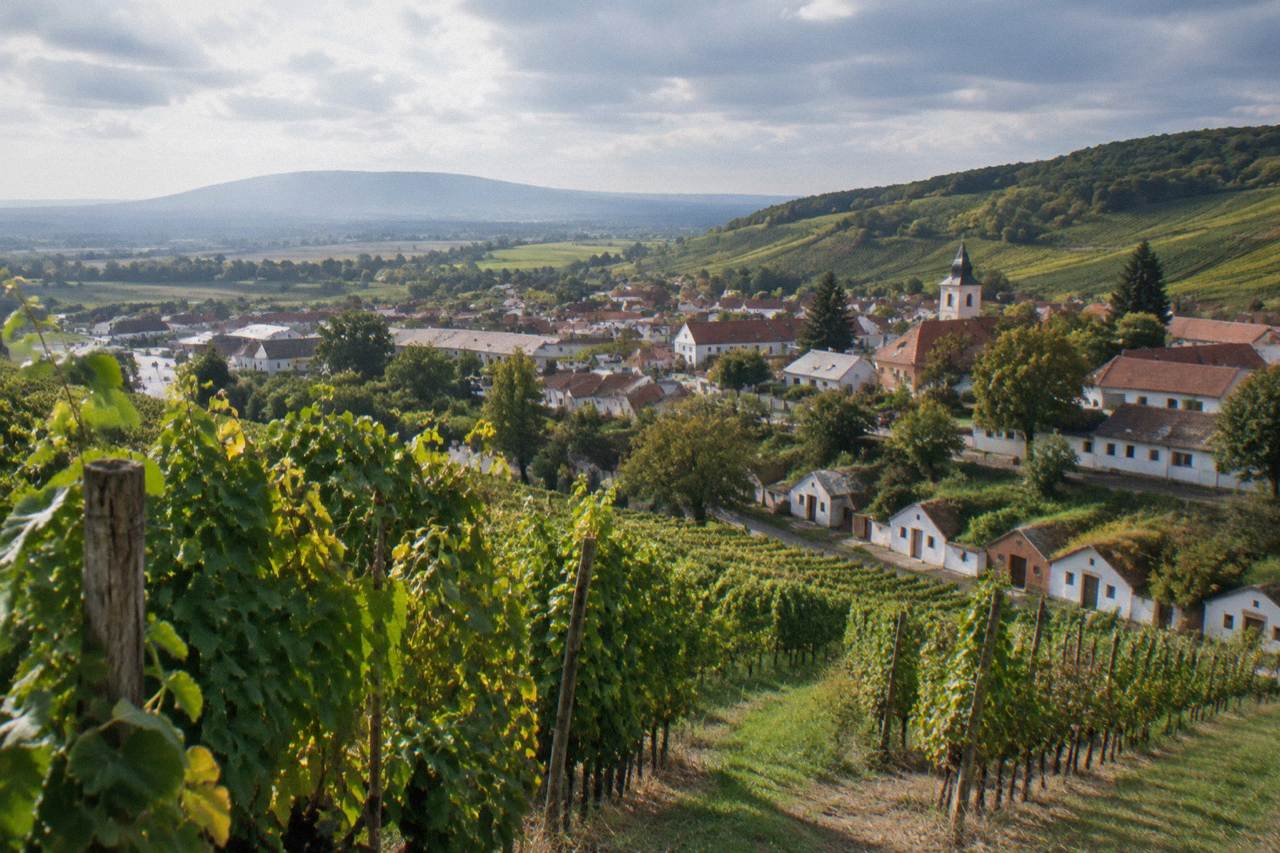
The Small Carpathians wine route is a day trip of roughly 20 to 26 km from Bratislava to the wine villages of Pezinok and Modra, where family wineries pour local Slovak wines in their own cellars.
The Small Carpathians wine route begins at the edge of Bratislava, the capital of Slovakia, and runs northeast through a line of wine villages where families have grown grapes on the hills for generations. The route works in a simple way, the two main stops each have their own character, a cellar visit is a relaxed and personal affair, and the day can be built without a car if you do not want to drive after tasting. The full destination picture, from castle hill to the Old Town, sits on the Bratislava things to do overview.
What Is The Small Carpathians Wine Route?
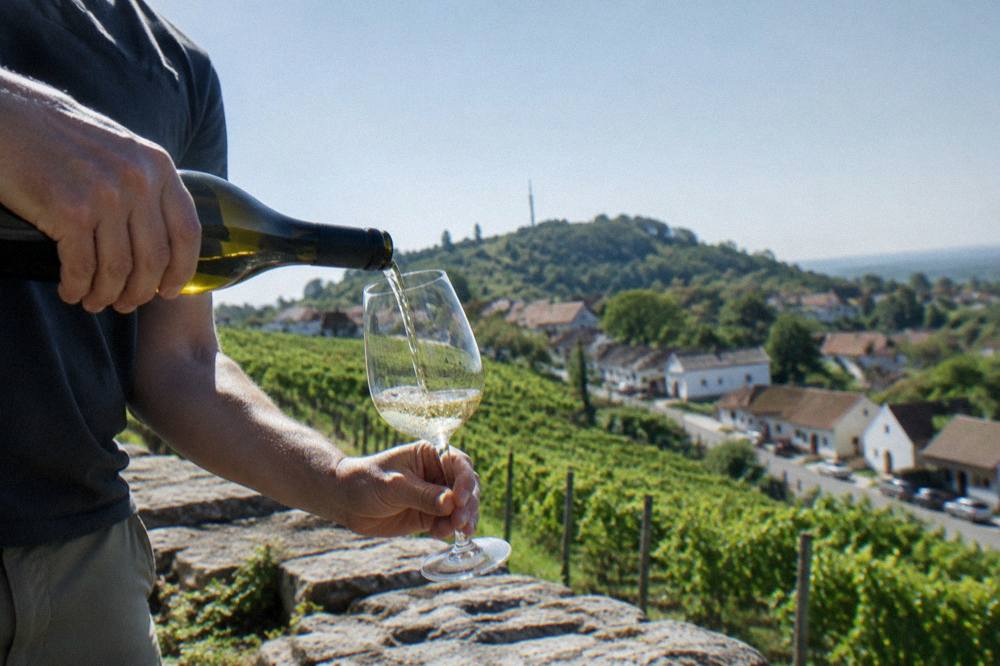
The Small Carpathians wine route is a string of wine villages along the hills northeast of Bratislava, in Slovakia, anchored by Pezinok about 20 km from the city and Modra about 26 km, where small producers grow grapes on the slopes and pour their wine in their own cellars. It is a day trip measured in tens of minutes of travel rather than hours, which is what makes it work as a single afternoon or a full day depending on how many stops you build in. The route's character comes from its scale: family operations, town cellar doors, and walking distance between a tasting room and a square.
The hills give the route its name, and the towns at their feet give it its structure. Pezinok and Modra are the two stops this page focuses on because they carry the most cellar doors between them and both sit close enough to Bratislava that a late return is never a problem. The dedicated site guide to Slovak wine covers the national picture, while the town pages for Modra and Pezinok go deeper on each stop than a route overview can.
A useful way to think about the day: the route is short, the wine is local, and the limiting factor is not distance but how you get between tastings safely. That single constraint shapes most of the planning advice below, from tour options to the order of stops. Everything else, the season you choose, the cellars you book and the castle you bolt onto the end of the day, is adjustment around that one fixed point.
How Do You Get From Bratislava To Modra And Pezinok?
Pezinok sits about 20 km from Bratislava and Modra about 26 km, straight-line distances, which puts both towns within an easy half-day reach by car, and the order that makes sense is Pezinok first, Modra second, because Pezinok is the nearer of the two on the way out from the city. Both towns also appear on organised wine tours from Bratislava, which removes the driving question entirely. The straight-line figures come from computed place data, not from any single operator's schedule.
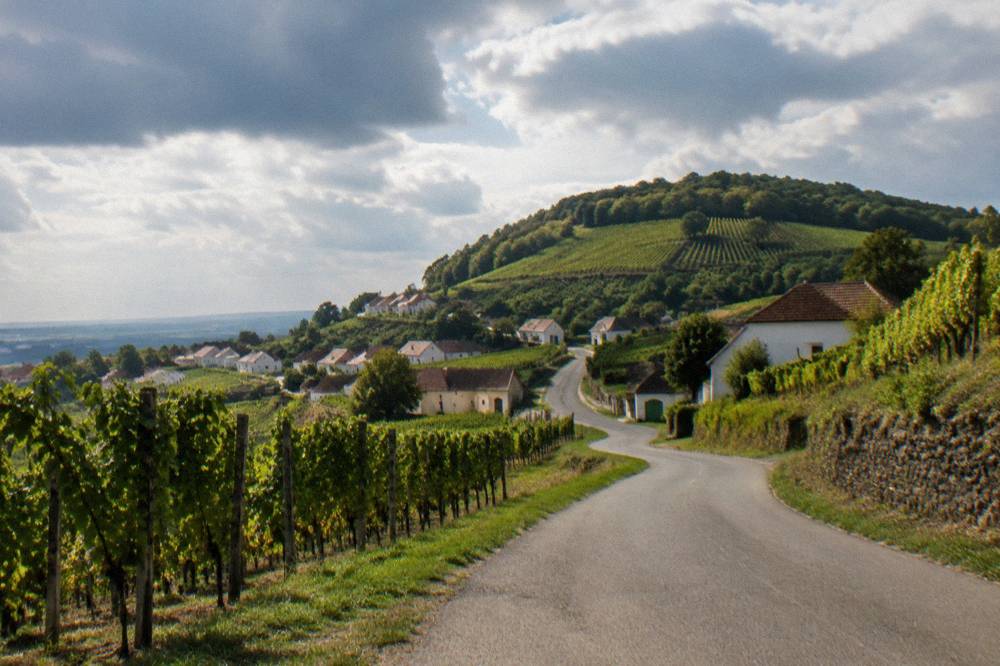
For anyone driving, the route is a simple out-and-back along the towns at the foot of the hills, and a sober driver is non-negotiable once tastings are involved. For anyone who would rather not drive at all, a booked tasting in Modra that starts and ends in Bratislava covers the logistics in one reservation. The private tasting at a family-operated Modra winery is this site's featured pick for the route, and you can read more on the Small Carpathians wine tour page.
The table below puts the route's stops in distance context against other day trips from Bratislava, using the same computed straight-line kilometres for all of them.
| Day trip destination | Straight-line distance from Bratislava |
|---|---|
| Pezinok | about 20 km |
| Modra | about 26 km |
| Trnava | about 44 km |
| Nitra | about 75 km |
| Vienna | about 55 km |
What Does A Cellar Visit On The Route Actually Involve?
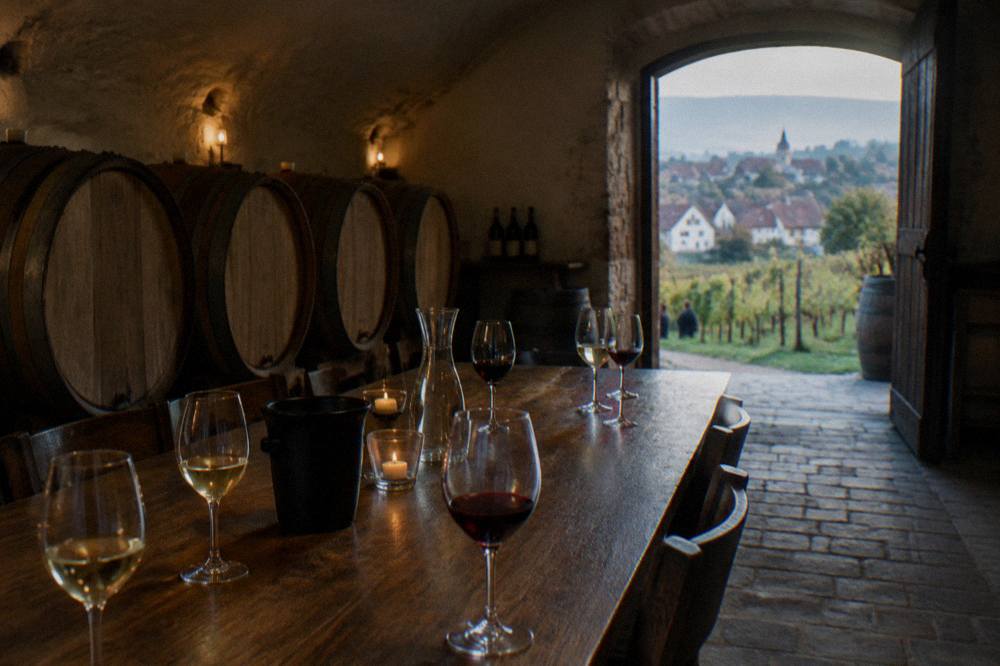
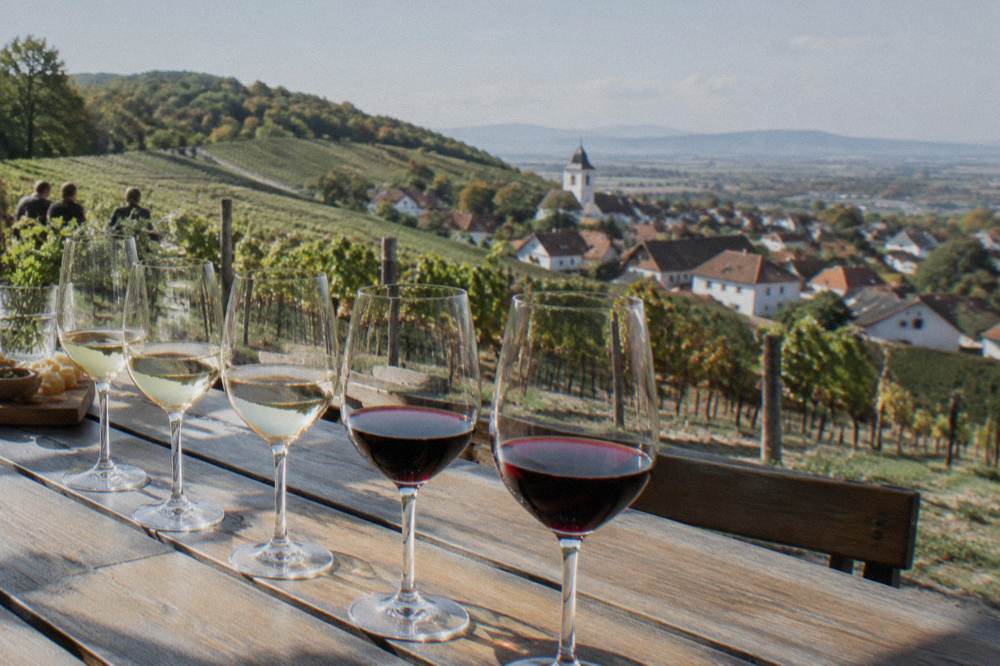
A cellar visit on the Small Carpathians route means tasting wine inside the producer's own premises, usually a vaulted cellar at or below ground level, poured by the family or staff who make it, with the tasting structured around several wines served in sequence rather than a single glass at a bar. What varies between cellars is scale: some are working family wineries with a handful of tables, others are larger operations with regular opening hours. Tasting fees, where they exist, are set by each cellar, so check at the door or when booking rather than expecting a fixed route-wide price.
The format rewards a little structure. Booking ahead matters more on weekends than midweek, and a private tasting, like the Modra family-winery option this page features, guarantees the table and the time slot rather than leaving it to arrival order. A tasting in the dark, an audioguided format also offered in Bratislava itself, is a different experience again: the wines arrive without sight cues, which changes how the tasting reads.
What the cellars pour is Slovak wine from the surrounding slopes. The honest way to approach it is without expectations imported from bigger wine regions: the point of the route is proximity, that wine grown a few hundred metres from the cellar can be tasted a few hundred metres from where it grew. November brings the reported release of St Martin's young wine from 11 November, a light young wine served in the season's first weeks, though each venue decides its own programme around it.
Is Modra Or Pezinok The Better Base For The Day?
Pezinok is the closer stop at about 20 km from Bratislava and Modra the farther at about 26 km, so the honest answer is that they are near enough to each other that choosing one as a base matters less than choosing how many cellars you want to reach: one town suits a half day, both suit a full one. The practical difference is the drive out: Pezinok arrives first from Bratislava, Modra a few kilometres beyond it, which fixes the natural order of the day regardless of which town you sleep in, if you sleep in either.
Both towns carry the route's core offer, cellar doors within a compact town area, so the choice between them comes down to which specific wineries you want rather than a big difference in character. The dedicated Modra guide and Pezinok guide break down each town stop by stop. A full-day plan that does both towns, with lunch between, is the version that uses the route properly; a half-day plan should pick one town and one or two cellars and accept the shorter version.
A note on timing within the day: tastings are the sort of activity that slides, and a cellar that is generous with its pours turns a scheduled hour into two. Building the day with slack, rather than a tight list of five cellars, is the difference between a route that feels like a holiday and one that feels like a commute between tasting rooms. Whoever is pouring will usually talk through each wine as it arrives, and that conversation is where the value of a small-scale route shows itself. The rest of the planning pages sit on Bratislava Travel Guide.
Can You Do The Wine Route Without A Car?
Yes, and for many visitors it is the better way: a booked wine experience that handles the transport, or a single-town plan built around one reservation in Modra or Pezinok, removes the conflict between drinking and driving that defines this route. The trade-off is freedom. A self-driven day lets you stop at whichever cellar has its door open; a booked day trades that spontaneity for a guaranteed table, a set tasting and a return to Bratislava that does not depend on anyone's wine count.
The booked options that fit the route best are the private Modra winery tasting, which pairs the cellar visit with the travel question being answered in one place, and, for a day that mixes wine with something else, a Bratislava-based walking tour on the morning or evening either side of it. The site's featured winery pick can be checked here: Check availability.
For travellers who want to build the whole day from the city without a car, the pattern that works is a morning in Bratislava, a tasting reservation in the early afternoon, and the evening back in the Old Town. The Bratislava walking tour guide covers the city half of that plan. No bus timetable for the towns sits in the site's facts for these routes, so the car-free plan should rest on a booked experience rather than a printed departure time.
What Should You Know About Slovak Wine Before A Cellar Tasting?
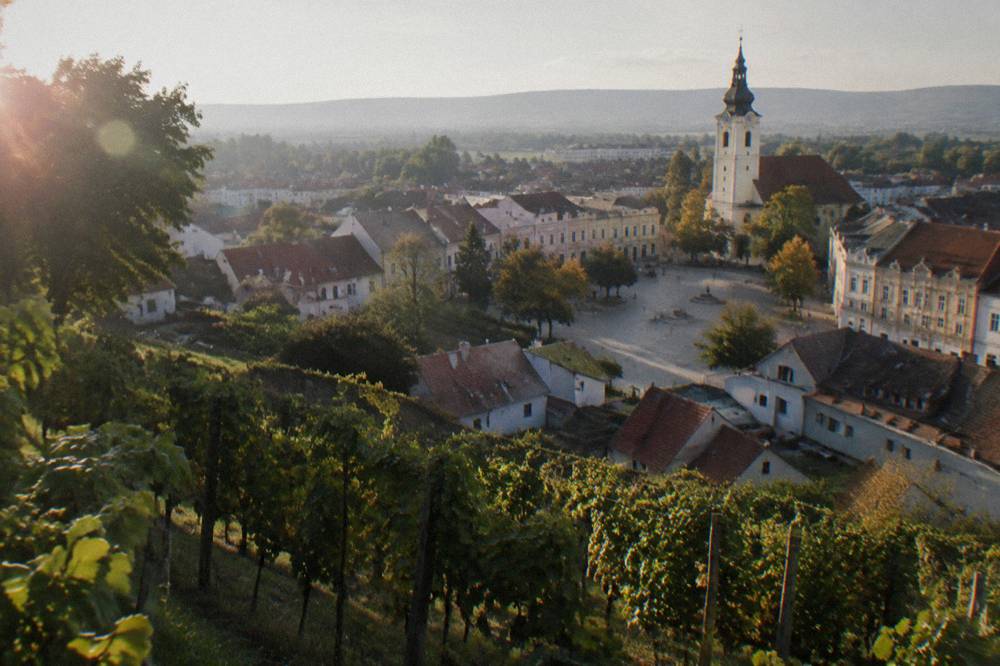
Slovak wine from the Small Carpathians is produced at a small scale by families and cooperatives rather than exported in volume, which means the wines you taste in a Modra or Pezinok cellar are mostly wines you cannot buy at home, and the tasting is often the only place to encounter them. Both still and sparkling wines are made in Slovakia, and cellars typically pour a run of whites and reds from their own production. What a tasting costs is set cellar by cellar, so treat any figure you are quoted at the door as the price.
A few orientation points help. The seasonal rhythm matters: the harvest is in autumn, the young wine arrives in November, and the cellar calendar across a year includes periods when producers are busiest in the vines or the winery. The country's money is the euro, adopted on 1 January 2009, so everything on the route, from a tasting fee to lunch, is priced in EUR with no conversion to think about. The wider national context, grape to glass, sits in the Slovak wine guide.
For visitors linking the route to a longer stay, Bratislava itself carries a wine-tasting scene that does not require leaving the city at all, from sommelier-led tastings to the tasting-in-the-dark format. The route's advantage over those is the place: drinking wine in the town where it was made, a short drive from the capital, is the whole proposition.
If a tasting in the city sounds tempting, book a wine tasting with sommelier here.
What Can You Combine With A Wine Route Day Trip From Bratislava?
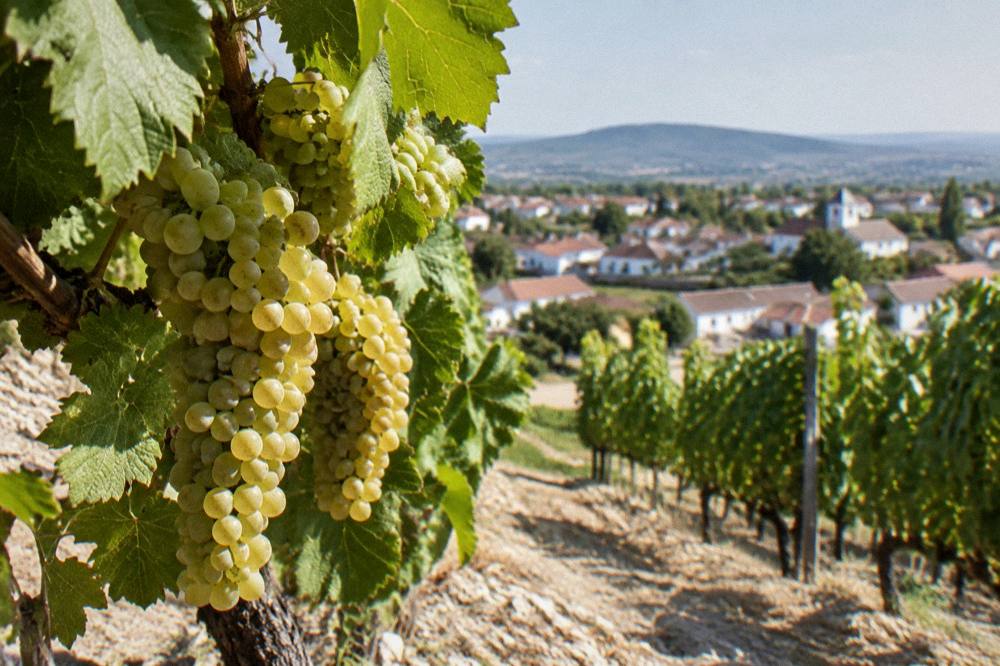
The strongest pairings with the wine route are Červený Kameň Castle, which sits in the same Small Carpathians area within reach of Modra and Pezinok, and a return through Trnava at about 44 km from Bratislava, both of which turn a tasting afternoon into a full day out without adding hours of driving. The castle option is covered on the site's Červený Kameň Castle page, and Trnava has its own day trip guide.
The other natural combination runs in the opposite direction, before the wine rather than after it: a morning in Bratislava's Old Town, castle or both, then the route in the afternoon. The Old Town and Castle walking tour is the pick that fits that shape. A river-and-castle morning on the Danube followed by a cellar afternoon is a full and very Bratislava day, and it needs no more planning than one morning booking and one afternoon reservation.
Distances for the wider day-trip field around the route, all straight-line and computed:
| Combination stop | Distance context |
|---|---|
| Pezinok to Bratislava | about 20 km |
| Modra to Bratislava | about 26 km |
| Trnava to Bratislava | about 44 km |
| Nitra to Bratislava | about 75 km |
When Is The Best Time Of Year For The Small Carpathians Wine Route?
The warm months from May to September bring the route its most reliable cellar-visit weather, with modelled ERA5 climate normals for the Bratislava area showing monthly highs of 20.4 C in May rising to 26.3 C in July, while late autumn adds the November young-wine release reported from 11 November, so the choice is between terrace weather and vintage-season atmosphere. The figures below are modelled reanalysis values for 1991-2020, not a station record.
| Month | Mean high C | Mean low C | Rain mm |
|---|---|---|---|
| May | 20.4 | 10.6 | 69.1 |
| Jun | 24.1 | 14.5 | 73.6 |
| Jul | 26.3 | 16.6 | 75.8 |
| Aug | 26.2 | 16.4 | 66.8 |
| Sep | 20.8 | 12.0 | 67.1 |
| Oct | 15.0 | 7.3 | 48.5 |
| Nov | 8.9 | 3.0 | 46.3 |
Read the table plainly: July carries 75.8 mm of rain in the modelled normals and a 26.3 C mean high, October 15.0 C and 48.5 mm, November 8.9 C. None of that argues for or against a month, because a cellar visit is an indoor activity at its core and the hills are pleasant in every one of these windows. The seasonal decision is really about what surrounds the tasting: vineyard walks and town squares want the warm half of the year, the young-wine moment wants November.
One more seasonal note for visitors stretching the trip across a border: the wine route pairs easily with a Vienna stay, about 55 km away, and the site's Vienna day trip page covers that side of the map, as the Budapest page does for the Hungarian capital about 162 km off.
How Much Should You Budget For A Small Carpathians Wine Day?
Local costs on the route are in euros, like all of Slovakia: Bratislava charges a city tourist tax of EUR 3.50 per person per night in the Old Town and EUR 3.00 elsewhere, capped at 60 nights per taxpayer per year, and tasting fees at individual cellars are set by each cellar and confirmed at the door or at booking, while prices for bookable wine experiences appear only in the live listings below. No route-wide per-glass or per-tasting price exists.
What can be stated with figures is the city-side context. The tourist tax rows matter only if you sleep in Bratislava before or after the route. Public transport in the city itself, useful for reaching the morning half of a combined day, runs on IDS BK tickets: a 30-minute paper single is 1.20 EUR, a 60-minute single 1.80 EUR, and a 24-hour paper day ticket 5.40 EUR, with cheaper eTicket versions at 1.09, 1.60 and 4.85 EUR respectively.
| Item | Figure | Where it applies |
|---|---|---|
| Tourist tax, Old Town | EUR 3.50 per person per night | Bratislava Stare Mesto, max 60 nights a year |
| Tourist tax, other districts | EUR 3.00 per person per night | Rest of Bratislava |
| IDS BK 30 min single | 1.20 EUR paper / 1.09 EUR eTicket | Bratislava city transport |
| IDS BK 60 min single | 1.80 EUR paper / 1.60 EUR eTicket | Bratislava city transport |
| IDS BK 24 h day ticket | 5.40 EUR paper / 4.85 EUR eTicket | Bratislava city transport |
The one figure this page can state about the route itself is the featured Modra winery experience's live price, which the listing renders and this text never types. Everything else on the budget question comes down to lunch, which the towns provide at unpretentious town prices, and to how many cellars you stack into one afternoon. A reasonable rule for a first visit is two cellars in one town, or three across both, with food somewhere in the middle.
Common Questions About The Small Carpathians Wine Route
How far is the Small Carpathians wine route from Bratislava?
Pezinok sits about 20 km from Bratislava and Modra about 26 km, straight-line distances, which puts the whole route within a short drive of the city.
What are the main towns on the Small Carpathians wine route?
Modra and Pezinok are the two main stops, both wine villages at the foot of the Small Carpathians hills northeast of Bratislava, each with cellar doors in a compact town area.
Can you visit Small Carpathians wineries without a car?
Yes. A booked wine experience that handles transport is the simplest car-free option, and the private tasting at a family-operated Modra winery is the featured pick on this page.
What does a cellar visit involve on the wine route?
A cellar visit means tasting several wines in sequence inside the producer's own cellar, poured by the family or staff who make them. Fees, where charged, are set by each cellar, so confirm at booking or at the door.
When is the wine season in the Small Carpathians?
The warm months from May to September suit terrace and vineyard weather, autumn is the harvest, and St Martin's young wine is reported to arrive from 11 November each year.
Can you combine the wine route with a castle visit?
Yes. Červený Kameň Castle sits in the same Small Carpathians area within reach of Modra and Pezinok, and Trnava, about 44 km from Bratislava, works as a return stop on a full day.