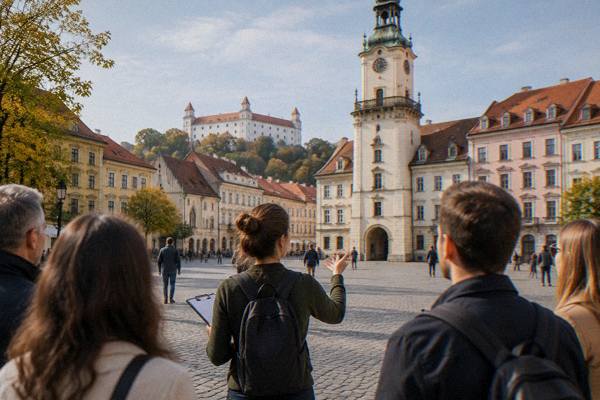
Money In Bratislava: Euro, Cards, Atms And Tipping
Slovakia has used the euro since 1 January 2009, cards are widely accepted, and the local costs that matter to a visitor, transport tickets, attraction entry and the nightly tourist tax, are all fixed published figures.
Short answer
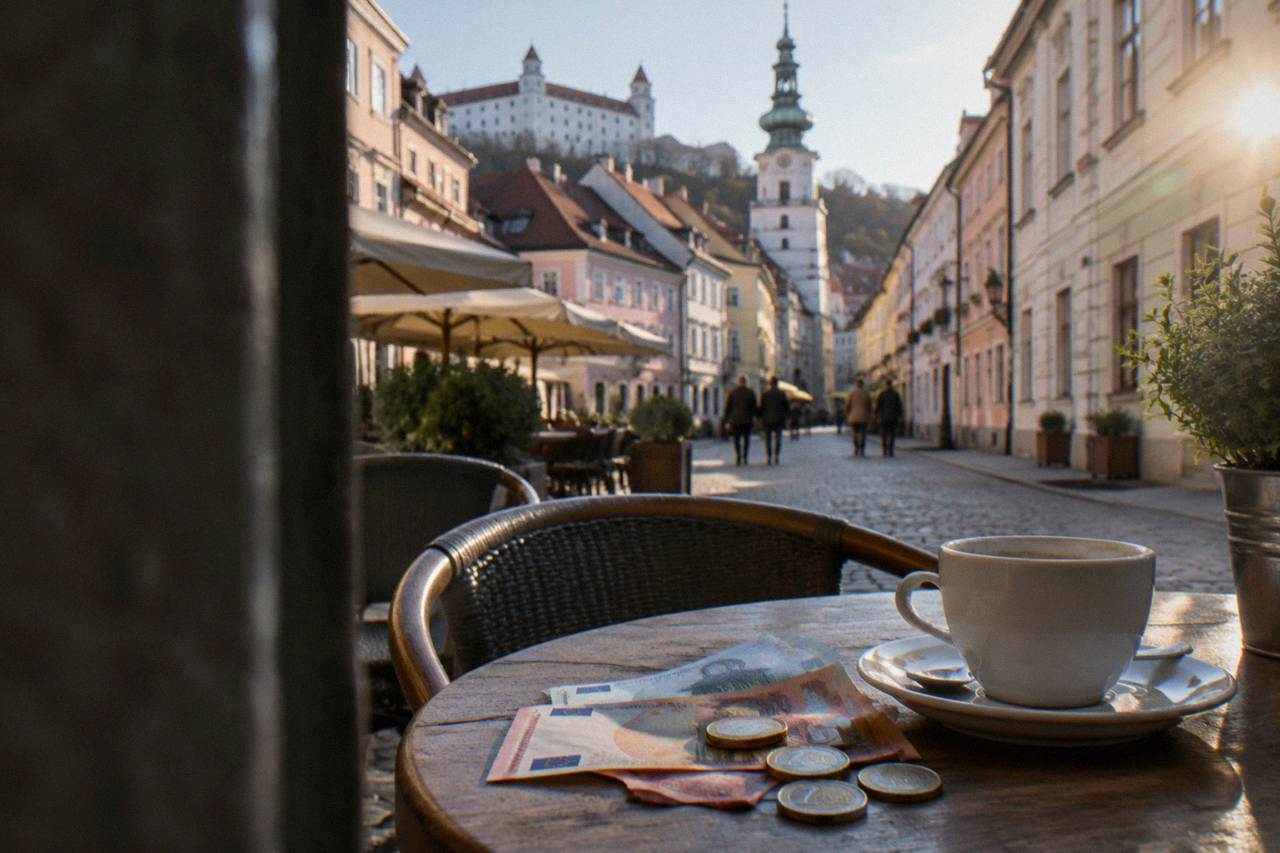
Bratislava uses the euro. A 60-minute IDS BK paper single costs 1.80 EUR, the castle museum is 14 EUR, the tourist tax is 3.50 EUR per night in the Old Town, and tipping is a round-up or 5 to 10 percent for good table service, as reported.
Slovakia adopted the euro on 1 January 2009, so every price a visitor meets in Bratislava, from a tram ticket to a castle admission, is quoted in the same currency used across the eurozone. That single fact removes most of the money friction travellers expect in Central Europe: no exchange math on arrival, no leftover crowns, and card terminals that work with the same cards they work with in Vienna or Berlin. What still deserves attention is the set of published local figures: how much the IDS BK transport tickets cost, what the main sights charge at the door, the nightly tourist tax added to a hotel bill, and what the Bratislava CARD actually covers.
What Currency Does Bratislava Use?
Bratislava, the capital of Slovakia, uses the euro (EUR), which Slovakia adopted on 1 January 2009, and every local price in the city is quoted in euros with no parallel local currency. Prices are not converted on this site: a castle ticket is printed by its own museum as 14 EUR, a transport single as 1.20 EUR, and the two figures stand exactly as their publishers state them.
The euro changeover is old enough now that no visitor-facing business in the city operates any other way. The National Bank of Slovakia's own page on the euro in Slovakia confirms the adoption date, and the country sits in the Schengen Area, so a traveller arriving overland from Vienna or Budapest crosses no currency border at all. For planning, that means a budget drafted in euros before departure is the same budget on the ground. The same applies to anyone combining the city with its neighbours: the Vienna day trip from Bratislava and the Budapest route guides cover the journeys, and both end inside the eurozone or a short ride from it.
What the euro does not do is make the city expensive by definition. The published entry prices in the table further down sit mostly between 4 and 14 EUR, and the Bratislava on a budget guide covers the free side of the city, from the castle grounds, open daily 08:00 to 22:00 at no charge, to the Blue Church, which charges no entrance fee at all. Emergency numbers round out the practical layer: 112 is the universal EU number, with 155 for ambulance and 158 for police, and none of them costs anything to call.
Should You Pay By Card Or Cash In Bratislava?
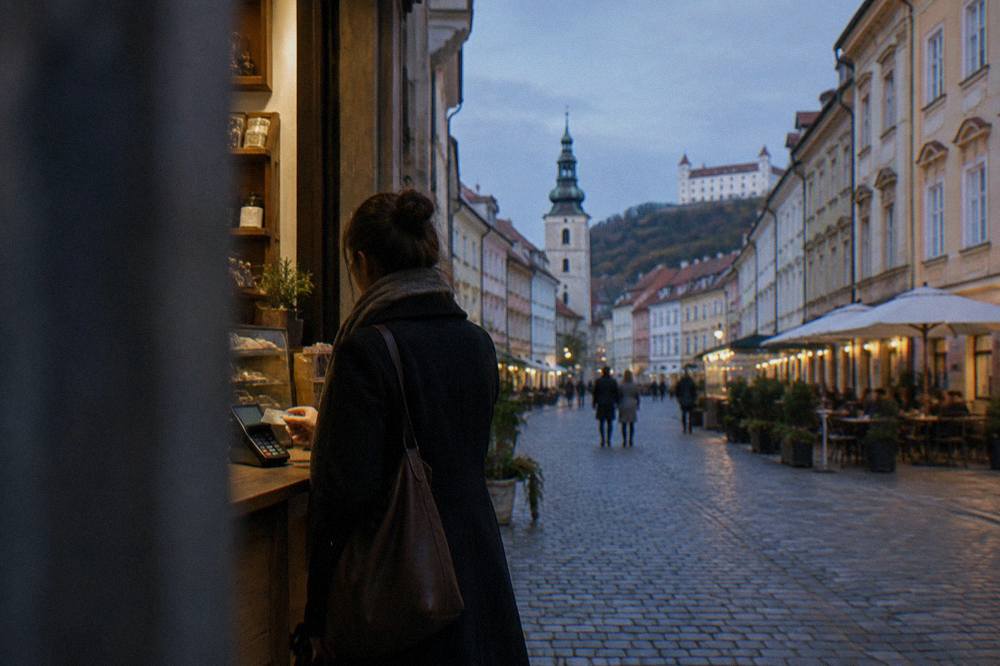
Cards are accepted for essentially every ticket a visitor buys in the centre: IDS BK tickets come from machines, an app and validators, museum tills take card payment, and the Bratislava CARD is bought online before travel. Carrying some euro cash is still sensible for market stalls, small café rounds and church donation boxes, but no published price in the city assumes cash only.
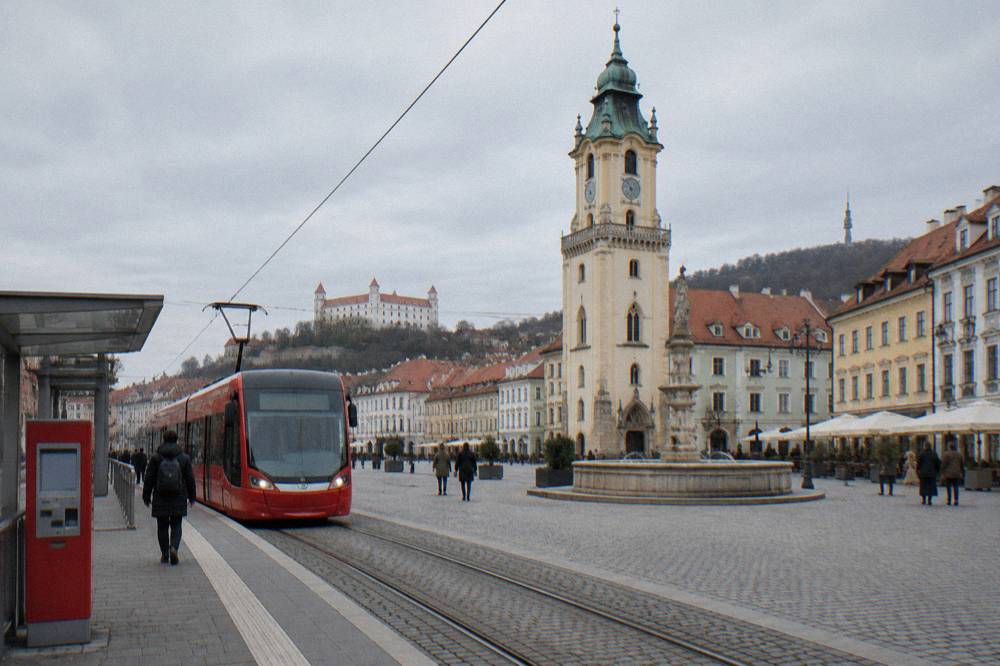
The transport system makes the case on its own. The IDS BK tariff page lists tickets for sale through the IDS BK app, by SMS, at machines and stops, at DPB, ARRIVA and ZSSK offices, at newsagents and on vehicles with validators, and the app gives a 10 percent discount on singles. A visitor who never handles a coin can ride all week. Airport arrivals land in the same system: bus 61 between the airport and the main station takes a standard zones 100 and 101 ticket, and the Bratislava airport guide explains the ticket options on arrival.
Cash earns its place at the edges. The Blue Church takes optional donations, St Martin's Cathedral charges 5 EUR for its tourist zone at the door, and at the Christmas market, which in 2026 runs from 26 November to 3 January on Hlavné námestie and Hviezdoslavovo námestie, stalls have historically worked faster with coins and small notes. The Christmas market guide covers the dates and hours; the market's own organiser pages carry the detail. Tap water is another line item a visitor can delete entirely: Bratislava's supply comes from underground sources and is disinfected and monitored by the water company, so a refillable bottle replaces a running bottled-water cost.
How Much Do Attractions Cost In Bratislava?
The headline figures from the sights' own pages: the castle's Museum of History is 14 EUR, Devin Castle is 8 EUR from April to October and 6 EUR from November to March, the Old Town Hall exhibitions are 8 EUR, Michael's Tower is 6 EUR, Primate's Palace is 5 EUR, St Martin's tourist zone is 5 EUR, the UFO deck is 11.50 or 12.50 EUR depending on time, and Danubiana is 12 EUR.
Each of those comes from the venue's own admission page. The castle museum is open Wednesday to Monday, 10:00 to 18:00, closed on Tuesdays, while the castle grounds stay open daily and free. Devin Castle's own site gives the full seasonal tariff including reduced rates of 4 and 3 EUR and family tickets, and it stays open all winter, Tuesday to Sunday 10:00 to 16:00 from November to February, with only the indoor exposition closed in the winter season.
| Sight | Adult price | Notes from the venue's own page |
|---|---|---|
| Bratislava Castle, Museum of History | 14 EUR | Open Wed to Mon 10:00 to 18:00, closed Tuesdays; grounds free daily 08:00 to 22:00 |
| Devin Castle | 8 EUR Apr to Oct, 6 EUR Nov to Mar | Reduced 4/3 EUR; family 2+3 18/14 EUR; open Tue to Sun, closed Mondays |
| Old Town Hall and Apponyi Palace | 8 EUR | Reduced 4 EUR; family 2+3 18 EUR; tower sold separately at 4 EUR; closed Mondays |
| Michael's Tower | 6 EUR | Reduced 4 EUR; open Mon, Wed to Sun 10:00 to 18:00, closed Tuesdays |
| Primate's Palace | 5 EUR | Reduced 2.50 EUR; under 18 free; hours posted weekly, Mondays closed |
| St Martin's Cathedral tourist zone | 5 EUR | Treasury, crypts and gallery; nave itself free |
| UFO observation deck | 11.50 EUR Mon to Fri 10:00 to 13:00, 12.50 EUR other times | Open daily 10:00 to 23:00; Day and Night ticket +3.50 EUR |
| Danubiana art museum | 12 EUR | Seniors and students 6 EUR, family 25 EUR, under 6 free |
| Blue Church | Free | Donations optional |
Two patterns in that table save real money. First, the closed days differ: the castle museum and Michael's Tower close on Tuesdays, while the Old Town Hall closes on Mondays, so a two-day visit can sequence around them. Second, a combined ticket question runs through the whole list, and that is exactly what the Bratislava CARD, covered further down, answers with free entry to 23 sights.
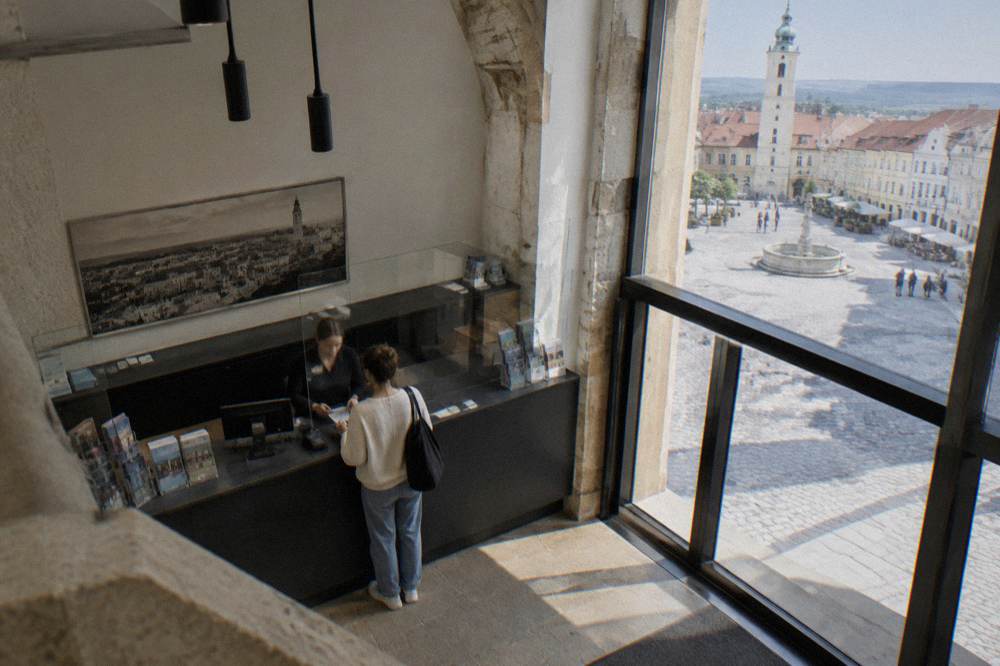
The sight that sits farthest from the centre also carries its own price logic. Danubiana charges 12 EUR at the door per its own contact page, and the Danubiana guide on this site covers the museum itself; the Devin Castle guide does the same for the riverside fortress and its seasonal tariff. Reduced rates recur across the table: students, seniors and children from 6 to 15 qualify at most City Museum sites, Primate's Palace admits under-18s free, and Devin Castle admits children under 6 free, so a family itinerary should be priced per child rather than assumed at the adult rate.
What Does Public Transport Cost In Bratislava?
A standing IDS BK paper single for zones 100 and 101 costs 1.20 EUR for 30 minutes or 1.80 EUR for 60 minutes, with a 24-hour paper day ticket at 5.40 EUR and a 72-hour at 10.70 EUR; the eTicket and app versions are cheaper at 1.09, 1.60, 4.85 and 9.68 EUR respectively, per the IDS BK tariff pages.
The tariff also lists a 90-minute, three-zone paper single at 2.40 EUR, a network 24-hour paper ticket at 8.60 EUR and an app 168-hour ticket at 16.20 EUR basic or 8.10 EUR reduced. Airport arrivals use the same zones: bus 61 between the airport and the main station needs a standard zones 100 and 101 ticket, and the Bratislava public transport guide covers the network in depth.
| IDS BK ticket, zones 100+101 | Paper | eTicket / app |
|---|---|---|
| Single, 30 minutes | 1.20 EUR | 1.09 EUR |
| Single, 60 minutes | 1.80 EUR | 1.60 EUR |
| 24 hours | 5.40 EUR | 4.85 EUR |
| 72 hours | 10.70 EUR | 9.68 EUR |
| 168 hours | not listed as paper | 16.20 EUR basic, 8.10 EUR reduced |
The figures in the table above are the standing tariffs that apply outside that window. Reduced paper singles also exist at 0.60 EUR for 30 minutes and 0.90 EUR for 60 minutes for those who qualify.
What Is The Tourist Tax In Bratislava?
The city charges a tourist tax of 3.50 EUR per person per night for stays in the Old Town (Staré Mesto) district and 3.00 EUR per person per night in the other districts, capped at 60 nights per taxpayer per year, under the rate in force since 1 July 2023 and published by the City of Bratislava.
The tax is collected through the accommodation, so a hotel bill shows it as a line rather than a payment at a desk. For a two-person, three-night stay in the centre that is 21 EUR added to the bill, a figure worth building into any nightly budget before comparing areas. The where to stay in Bratislava guide covers the districts; the 0.50 EUR nightly difference between the Old Town and the rest of the city is one input among them. Long stays are protected by the 60-night annual cap, though that threshold is far beyond a typical visit.
| Stay | Per person per night | Notes |
|---|---|---|
| Old Town (Staré Mesto) accommodation | 3.50 EUR | Rate in force since 1 July 2023 |
| All other districts | 3.00 EUR | Same bylaw |
| Maximum chargeable nights | 60 per taxpayer per year | City of Bratislava tourist tax page |
Do You Tip In Bratislava?
Tipping in Slovakia is reported as appreciated but not compulsory: round up the bill or leave 5 to 10 percent for good table service, with smaller round-ups for taxis, delivery and hotel staff. No official tourism body publishes a mandatory rate, so the figure here is a reported norm rather than a rule, and nobody is obliged to follow it.
That is the whole honest picture. The rounding habit is the base case: a bill a few cents below a round figure is commonly settled at the round figure. In restaurants and pubs, 5 percent is a normal floor for acceptable service and 10 percent the reported upper end for service that earns it, per the sources that track Slovak norms.
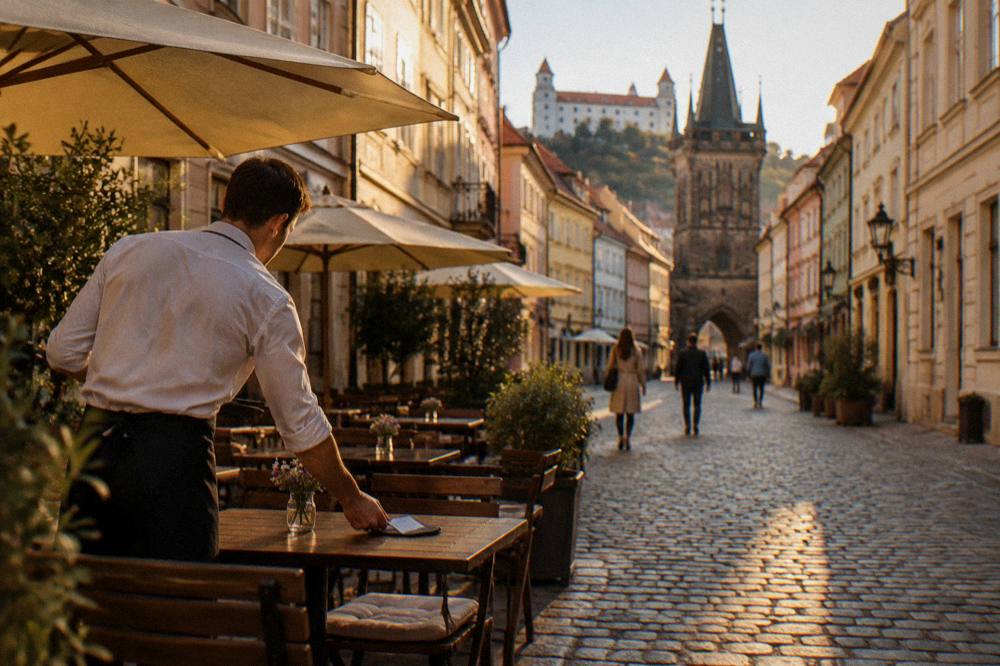
Two practical notes follow. First, tell the waiter the tip when paying by card rather than leaving cash on the table, since adding it at the terminal is the usual route where a terminal allows it. Second, nobody tips at museum desks or transport kiosks; the 5 to 10 percent norm belongs to table service, and the restaurants guide and pubs guide cover where the norm applies. Guided walks sit in between: nothing requires a tip on a booked, prepaid tour, and on the food side the what to eat in Bratislava guide covers the dishes the tipping norm travels with.
Is The Bratislava CARD Worth The Money?
The Bratislava CARD with transport costs 30 EUR for 24 hours, 36 EUR for 48 hours and 39 EUR for 72 hours, and includes unlimited IDS BK transport across all zones plus free entry to 23 sights, including the castle museum at 14 EUR, Devin Castle and the Old Town Hall, plus a free daily 14:00 walking tour of the historic centre.
The arithmetic is straightforward because the entry prices are published. A day holding the 24-hour card that visits the castle museum (14 EUR), the Old Town Hall (8 EUR) and Michael's Tower (6 EUR) has already covered 28 EUR of admissions before counting any transport, and the card brochure lists discounts of 20 to 50 percent at further sites including the UFO deck and boat cruises. One child under 18 also travels free with the holder.
| Bratislava CARD with transport | Price | What the official card pages include |
|---|---|---|
| 24 hours | 30 EUR | All-zone IDS BK transport, 23 free sights, 14:00 walking tour, one child under 18 free |
| 48 hours | 36 EUR | Same inclusions |
| 72 hours | 39 EUR | Same inclusions; brochure discounts valid to 31 March 2027 |
The walking tour inclusion carries a minimum of two people, and the card's discount brochure runs to 31 March 2027, both stated on the official card pages. The full sight list and purchase route are on the Bratislava pass guide, which compares the card against buying tickets one by one. The all-zone transport inclusion also matters beyond the centre, since the card's transport covers IDS BK services at any distance, and a cardholder who has already paid for the castle museum inside the card effectively books Devin Castle's riverside grounds into the same day at no marginal cost.
How Do Tour Prices And Bookings Work In Bratislava?
Every product price, rating and duration on this site renders from the operator's live listing rather than from a typed figure, so the numbers stay current and no page on this site quotes a tour price from memory; bookings carry free cancellation on the listings, and the euro prices a visitor pays locally, tickets, tax and tips, are the ones printed in the tables above.
That split matters in practice. Local costs are fixed tariffs published by the city and the venues, and they are stable enough to budget against. Product costs move with demand and season, and the honest way to present them is through the live listing. The Bratislava Travel Guide site applies that rule everywhere, including the food and pub pages where tasting and touring dominate.
One example of the paid-product side deserves a mention here because it overlaps with the money question of getting value from a single booking. The Northern Slovakia guided day tour, which this site features, bundles transport and guiding for a day outside the city in one booking, and its Check availability link shows the live price. The Northern Slovakia day tour page on this site describes what it covers. For visitors pairing city days with rural ones, the budget question is whether a card plus local tickets beats bundled tours, and the answer depends on how many of the 23 card sights a stay actually uses.
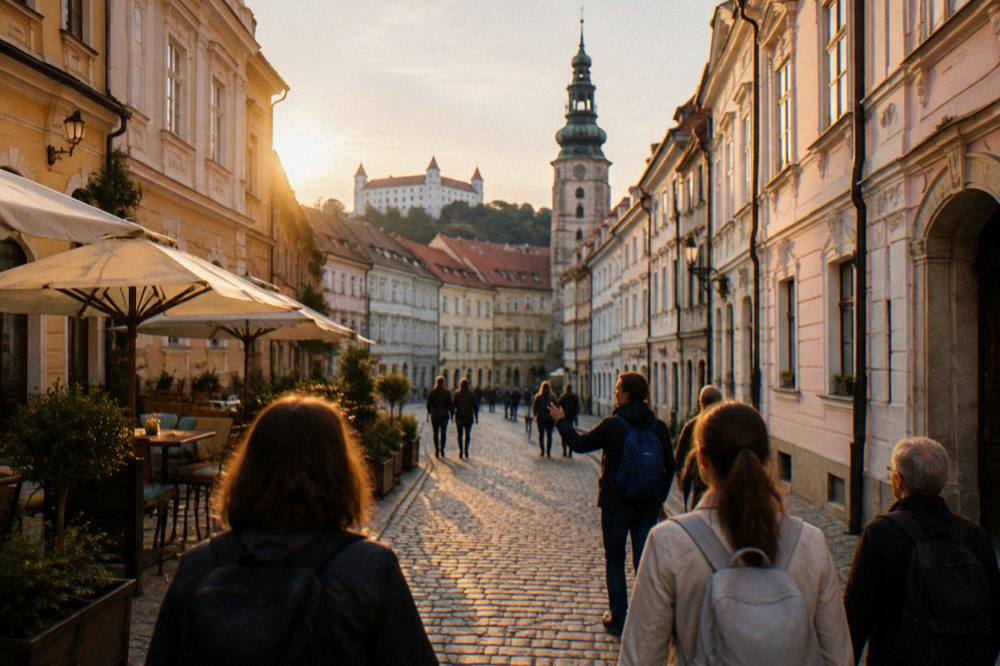
The free side of the ledger is bigger than many expect. The castle grounds, the Blue Church, Slavín, an open-air memorial, and the pedestrian Old Town squares all cost nothing, and the free things to do in Bratislava guide lists them alongside the scheduled sights. A realistic money plan for the city therefore has three layers: the fixed tariffs in the tables above, the tourist tax line on the accommodation bill, and whatever live product prices the booking pages show on the day.
Common Questions About Money In Bratislava
What Currency Does Bratislava Use?
Bratislava uses the euro. Slovakia adopted the euro on 1 January 2009, and every published price in the city, from a 1.20 EUR transport single to a 14 EUR castle museum ticket, is quoted in EUR.
Should I Take Cash Or Card To Bratislava?
Card is enough for transport, museums and the Bratislava CARD, all of which sell through machines, apps and tills. Carry some euro cash for market stalls, small cafés and church donations, but no published visitor price in the city assumes cash only.
What Is The Tourist Tax In Bratislava?
The tax is 3.50 EUR per person per night in the Old Town district and 3.00 EUR elsewhere, capped at 60 nights per taxpayer per year, under the rate the City of Bratislava has published since 1 July 2023. It appears as a line on the accommodation bill.
Do You Tip In Bratislava?
Tipping is reported as a round-up or 5 to 10 percent of the bill for good table service, with smaller round-ups for taxis and hotel staff. It is a social norm, not a legal or contractual obligation.
Is The Bratislava CARD Worth It?
The card with transport costs 30 EUR for 24 hours and includes free entry to 23 sights and all-zone IDS BK transport. A day visiting the castle museum, the Old Town Hall and Michael's Tower covers 28 EUR of published admissions before transport is counted, so the card pays for itself on a sight-heavy itinerary.
How Much Is Public Transport In Bratislava?
Standing IDS BK paper singles cost 1.20 EUR for 30 minutes and 1.80 EUR for 60 minutes, with a 24-hour paper day ticket at 5.40 EUR. App and eTicket versions are cheaper, and the app gives a 10 percent discount on singles.