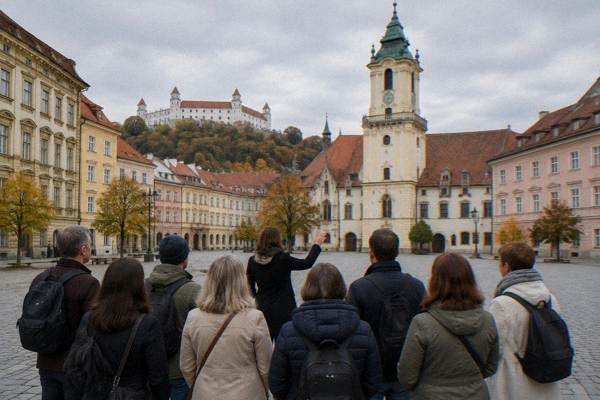
Is Bratislava Worth Visiting?
Is Bratislava worth visiting? A fact-based answer on what the Slovak capital offers, what it costs, and who it suits best.
Bratislava, the capital of Slovakia, sits on the Danube and holds about 468,290 residents (24 June 2026, published for the municipal elections). It is an inland city with a pedestrian Old Town, a hilltop castle and a cathedral that crowns the skyline, and it answers a fair question plainly: yes, for the right traveller. In 2024 the city's accommodation counted 1,188,915 visitors, up 3.2 percent on 2023, with 67 percent arriving from abroad, per Bratislava Tourist Board figures based on Statistical Office data. Those numbers describe a city people return to, not one they merely pass through between Vienna and Budapest.
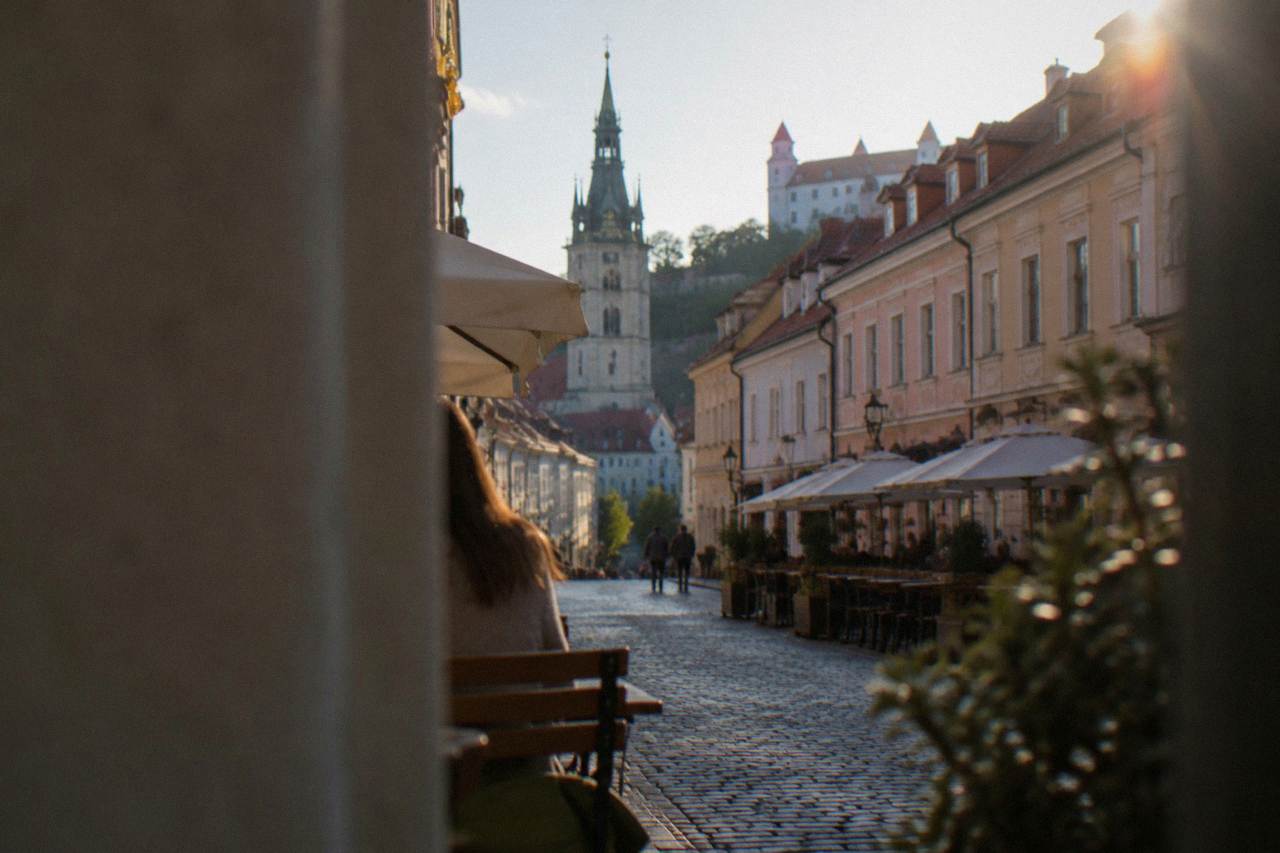
Yes, Bratislava is worth visiting if you want a walkable capital where the core sights sit within fifteen minutes of each other on foot, admission prices run lower than most western European capitals, and the Danube, a castle hill and a wine region sit on the edge of town. It is not worth it for anyone expecting a metropolis on the scale of Vienna or Prague, or a seaside, because the city offers neither.
The honest framing is size. This is a city of under half a million people whose Old Town, Hlavné námestie and Hviezdoslavovo námestie among its central squares, is fully pedestrian. A first visit organised around the main things to do in Bratislava covers Bratislava Castle, St Martin's Cathedral, Michael's Gate, Primate's Palace and the UFO observation deck without a single taxi ride. The city is close to two other capitals: the REX8 train reaches Vienna Hauptbahnhof from Bratislava hlavná stanica in 56 minutes for a 12.70 EUR fare, so the two cities work as a pair rather than rivals.
Slovakia adopted the euro on 1 January 2009, so there is no exchange friction for most European travellers. The tourist tax is 3.50 EUR per person per night in the Old Town district and 3.00 EUR elsewhere, capped at 60 nights per taxpayer per year. Emergency services run on the standard European numbers, 112 as the universal line, and the tap water is supplied from underground sources, so the practical frictions that complicate some city breaks simply do not apply here.
What Do You Actually Get For Your Money In Bratislava?
The paid core is cheap by capital-city standards: Bratislava Castle's Museum of History lists 14 EUR, the Old Town Hall and Apponyi Palace 8 EUR, St Martin's Cathedral tourist zone 5 EUR, and Primate's Palace 5 EUR, with the castle grounds free daily from 08:00 to 22:00. The UFO deck, at 95 metres on Most SNP, is listed at 11.50 to 12.50 EUR depending on time of day.
Those are the standing published figures, and they stack into a full sightseeing day for well under 50 EUR per person before food. Free entries widen the picture further: the Blue Church charges nothing, the Slavín memorial is an open-air site, and the Slovak National Gallery admits everyone free on the first Sunday of each month, an arrangement announced on 25 September 2026. The castle's Baroque Garden carries no separate fee and keeps seasonal hours, 09:00 to 21:00 in June and July, 09:00 to 16:00 in the winter months.
| Sight | Adult entry | Closed day |
|---|---|---|
| Bratislava Castle, Museum of History | 14 EUR | Tuesday |
| Old Town Hall and Apponyi Palace | 8 EUR | Monday |
| St Martin's Cathedral, tourist zone | 5 EUR | none listed |
| Primate's Palace | 5 EUR | Monday |
| Michael's Tower | 6 EUR | Tuesday |
| UFO observation deck | 11.50 to 12.50 EUR | none |
One detail saves repeated disappointment: the castle museum and Michael's Tower close on Tuesdays, while the Old Town Hall and Primate's Palace close on Mondays. Planning the week around those two days keeps every door open. Devin Castle, at the confluence side excursion from the city, stays open all winter, Tuesday to Sunday 10:00 to 16:00 from November to February, with winter admission at 6 EUR against 8 EUR in summer, per the castle's own admission page. Only its indoor exposition closes in the winter season.
A few smaller figures round out the picture. The castle keeps an underground garage at 3 EUR per hour, halved for museum visitors up to three hours, which matters for anyone driving in. The Old Town Hall tower sells as a separate 4 EUR single ticket. St Martin's reduced ticket is 2.50 EUR, with under-15s free, and the cathedral keeps tourist hours Monday to Saturday 09:00 to 18:00 with a break from 11:30 to 13:00, closing for services. These are small numbers, but they add up to a city where the entire paid inventory costs less than a single ticket to some European mega-attractions.
Is Bratislava Worth More Than A Day Trip From Vienna?
For most itineraries the answer is yes, one overnight at least, because the evening and morning are when the Old Town empties of excursion traffic and the city reads differently, and because the paid sights, the Danube riverfront and the Small Carpathians wine villages to the north cannot fit a single daylight window. The 56-minute REX8 train fare of 12.70 EUR makes a day trip easy, which is exactly the trap.
The day-trip version of Bratislava is real and pleasant: whether Bratislava is worth a day trip from Vienna is a separate question with its own answer, and how many days you need in Bratislava works out to more than one for anyone who wants wine, Devin or the view towers. A day visitor sees the Main Square, the castle exterior and maybe the deck. A visitor with a night adds the UFO deck after dark, the Danube promenade at Eurovea, and a morning at the castle museum before the Tuesday closure or the Monday closures catch them out.
There is also a river option that reframes the trip entirely. The Twin City Liner runs its 2026 high season with three daily departures each way from 1 May to 2 November, with Advent sailings Friday to Sunday from 27 November to 20 December, per the operator's 2026 timetable page. Arriving by water rather than rail turns the transfer itself into part of the visit, and it pairs naturally with a deck drink at the UFO the same evening.
What Is The Weather Like, And When Should You Go?
Modelled ERA5 reanalysis for 1991-2020 puts July's mean daily high at 26.3 C and January's mean daily low at -3.1 C, with July carrying 75.8 mm of rain and February 33.4 mm, so the city is visitable year-round with the right clothes. The Christmas market window, 26 November 2026 to 3 January 2027, gives winter a purpose beyond the weather.
These are modelled climate normals for a grid cell over the city, not a station record, and they describe a genuinely four-season inland capital. Summer days average above 24 C from June through August. Winter means highs near 3 to 4 C in December and January. The market on Hlavné námestie and Hviezdoslavovo námestie runs daily, closed only 24 and 25 December, per the organiser's page. Autumn carries its own hooks: Bratislava Jazz Days runs 23 to 25 October 2026 at Incheba Expo Arena, and St Martin's young wine traditionally appears from 11 November. Other pages covering the same trip are gathered on Bratislava Travel Guide.
| Month | Mean high C | Mean low C | Rain mm |
|---|---|---|---|
| January | 3.0 | -3.1 | 34.9 |
| April | 16.0 | 5.7 | 44.0 |
| July | 26.3 | 16.6 | 75.8 |
| October | 15.0 | 7.3 | 48.5 |
| December | 3.7 | -1.7 | 40.0 |
If timing is flexible, the best month to visit Bratislava depends more on what you want, wine against Christmas market against river deck, than on any dramatic weather swing. Spring months sit in the middle of the range, April at a 16.0 C mean high with 44.0 mm of rain, and they carry the advantage of full opening hours at seasonal sites such as the Devin river cruise season and the castle's Baroque Garden before the summer schedule extends it to 21:00 in June.
Who Should Skip Bratislava?
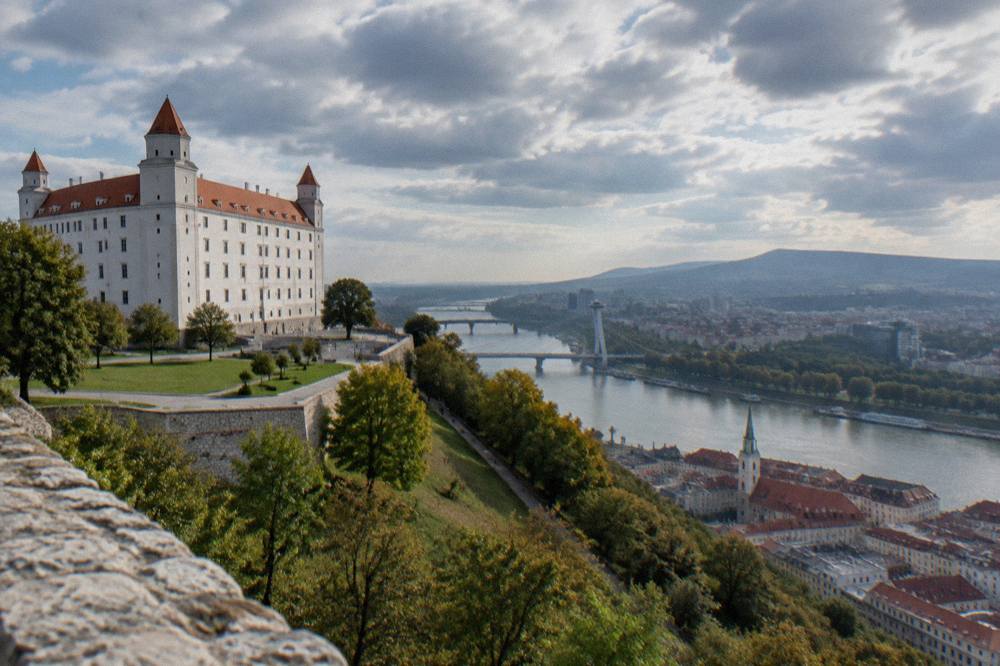
Anyone measuring capitals by sheer monument count should temper expectations: Bratislava has one castle, one cathedral tower worth climbing and a compact Old Town you can cross in twenty minutes, and it does not offer a seaside, a metropolis-scale museum quarter or the inventory of Vienna or Prague an hour or more away. It suits short, dense, affordable visits rather than a week of blockbuster sightseeing.
That is a description, not a ranking. Vienna is 56 minutes away by hourly train, and the comparison questions, which is nicer, Vienna or Bratislava and Prague or Bratislava, each turn on what a traveller wants from scale. Bratislava's strengths are concentration and cost: the whole sight list above sits in or beside the pedestrian core, and a Bratislava CARD with transport, 30 EUR for 24 hours from the official pricing valid since 1 April 2025, bundles unlimited IDS BK public transport with free entry to 23 sights and a daily 14:00 walking tour of the historic centre. Against 14 EUR castle admission alone, the arithmetic favours heavy sightseeing days.
The card also covers the 48-hour and 72-hour versions at 36 EUR and 39 EUR with transport, and the discounts in its brochure run to 31 March 2027, so a decision made now holds for the whole validity window. One child under 18 travels free with a card holder, which changes the calculation for families weighing a family visit against self-guided wandering.
The city also works as a base. The Small Carpathians wine villages such as Modra and Pezinok sit a short trip north, Devin Castle downstream, and for anyone with a full day, the Čičmany, Bojnice, Orava and High Tatras day tour covers northern Slovakia's castles and mountains in one guided loop, Check availability if that shape of day appeals.
If a full day in northern Slovakia appeals, book a High Tatras day tour here.
What Makes Bratislava Different From Other Capitals?
A coronation city turned provincial town turned capital again, Bratislava layers a medieval core, communist-era blocks in Petržalka and a rebuilt castle into a walkable space of under half a million people, and it prices its sights in euros at rates that feel a decade behind Vienna an hour up the rail line. The 2024 count of 1,188,915 overnight visitors, 85 percent of the 2019 record, says demand recovered without the city changing shape.
Practicalities stay simple. English coverage in the centre is broad enough that whether you can speak English in Bratislava is rarely the sticking point, the city rates as safe at night in the core, and transport runs on a flat zonal ticket system. Getting in from the airport takes bus 61 to the main station in about 25 to 30 minutes on the same zonal tickets, so even the arrival leg costs little more than a single. The autonomous verdict most itineraries support: two nights, three if wine or Devin figure in, is the sweet spot that answers the question with a yes.
Common Questions About Visiting Bratislava
Is Bratislava Worth Visiting?
Yes, for short, dense, affordable visits: a walkable Old Town, a 14 EUR castle museum, free castle grounds and a Danube setting, all in a city of about 468,290 residents. It is not a week-long blockbuster destination, and it is not on the sea.
Is Bratislava cheap compared with other capitals?
Local costs are in euros since 1 January 2009, and entry prices such as 8 EUR for the Old Town Hall or 5 EUR for Primate's Palace sit below the typical western European capital rate. See the fuller breakdown in the cost guide.
How many days does Bratislava need?
Two nights covers the Old Town, castle, cathedral and UFO deck comfortably; three allows Devin Castle and the Small Carpathians wine villages.
Which sights are closed on which days?
The castle museum and Michael's Tower close on Tuesdays; the Old Town Hall and Primate's Palace close on Mondays. Devin Castle stays open through winter, Tuesday to Sunday.
Is Bratislava walkable without a car?
Yes. The Old Town is pedestrian, the core sights sit minutes apart on foot, and IDS BK tickets at 1.20 EUR for a 30-minute single cover everything beyond walking range.
Does the Bratislava CARD pay off?
Often, on heavy sightseeing days. The 24-hour version with transport costs 30 EUR and includes free entry to 23 sights, unlimited IDS BK transport and a daily 14:00 walking tour, against a 14 EUR castle ticket alone.