What Should I Be Careful Of In Slovakia?
Practical cautions for visitors to Slovakia and Bratislava: safety, emergency numbers, tourist tax, transport ticketing, museum closing days and money rules, from local sources.
Slovakia is one of Europe's calmer destinations, and Bratislava, its capital, is an inland city of about 468,290 residents (city statistics, 24 June 2026) strung along the Danube. The honest answer to what deserves caution here is not crime but small practical rules: which day each museum closes, how you validate a tram ticket before boarding, what the city tourist tax adds to a hotel bill, and which emergency number to call if something does go wrong. None of these are dramatic. All of them are easy to get wrong on day one, and each one is cheap to get right.
This page gathers the cautions that local sources actually support, from the city's own tax page to the transport tariff and the museums' posted hours. For the questions that usually sit beside this one, see Is Bratislava Safe At Night? and Where Not To Go In Bratislava; the short version of both is that ordinary city sense covers almost everything.
The main things to be careful of in Slovakia are practical rather than dangerous: keep emergency numbers at hand (112 for all services), carry euros since Slovakia adopted the currency on 1 January 2009, buy and validate a ticket before boarding Bratislava trams and buses, expect a tourist tax of EUR 3.50 per night in the Old Town, and check each museum's closing day, because the castle museum and Michael's Tower shut on Tuesdays while the Old Town Hall shuts on Mondays.
The safety baseline is genuinely unremarkable, and that is the point. The numbers worth saving are 112 for the universal EU emergency line, 150 for fire, 155 for ambulance, 158 for police and 159 for the municipal police, all confirmed on the Slovak emergency-number register. Tap water in Bratislava is supplied from underground sources, disinfected and monitored by the utility, and is safe to drink.
Money needs less vigilance than in the pre-euro era. Slovakia has used the euro since 1 January 2009, so there is no local currency to master, and card payment is ordinary in the capital. Two costs do surprise people at checkout. The tourist tax, in force since 1 July 2023, is EUR 3.50 per person per night in the Old Town district and EUR 3.00 elsewhere in the city, capped at 60 nights per taxpayer per year; it is charged on accommodation, not on anything you buy on the street.
The other money question, tipping, has no official Slovak rulebook. Reported local practice is to round up or leave roughly 5 to 10 percent for good restaurant service, with small rounding for taxis and hotel staff; treat that as custom rather than obligation and confirm on the spot, since no official tourism source states a norm.
Which Museum Days Catch Visitors Out In Bratislava?
The trap is assuming all Bratislava museums close on the same day: the SNM Museum of History at Bratislava Castle is open Wednesday to Monday and closed Tuesdays, Michael's Tower is likewise closed Tuesdays but open Mondays, and the Old Town Hall runs the opposite pattern, open Tuesday to Sunday and closed Mondays, so a Monday visitor and a Tuesday visitor each lose a different sight.
The pattern matters because the big three indoor sights sit within a short walk of each other, and many visitors plan them for a single day. Split them. The castle's Museum of History keeps hours of 10:00 to 18:00 with last entry at 17:00 on its open days, while the castle grounds themselves are open daily 08:00 to 22:00 year-round, so a Tuesday is still fine for the hill and the views. Devin Castle, out at the western edge, closes on Mondays and keeps a winter schedule of 10:00 to 16:00 from November to February with last entry at 15:15; it does not shut for the winter, a common and wrong assumption, though its exposition and exhibition are closed in the winter season.
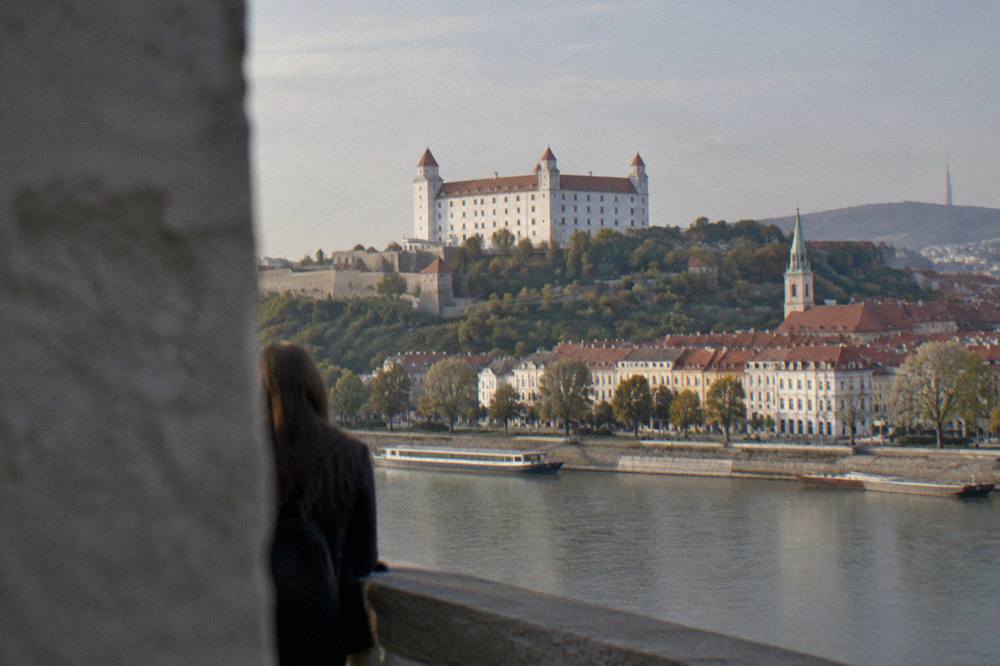
A guide removes most of this planning friction, which is one reason a walk is the standard first move in the city. The Story of Bratislava city and castle walking tour threads the Old Town and castle district with a local guide; Check availability on the operator's live listing.
The closing-day picture in one table:
| Sight | Closed | Open hours (current) |
|---|---|---|
| Bratislava Castle, Museum of History | Tuesdays | Wed to Mon 10:00 to 18:00, last entry 17:00 |
| Michael's Tower | Tuesdays | Mon, Wed to Sun 10:00 to 18:00 |
| Old Town Hall | Mondays | Tue to Sun 10:00 to 18:00 |
| Devin Castle | Mondays | Nov to Feb 10:00 to 16:00, last entry 15:15 |
| Castle grounds | Never | Daily 08:00 to 22:00 |
How Do You Avoid Transport Fines In Bratislava?
Buy a ticket before you board and validate it on the vehicle: standing IDS BK paper singles in the city zones cost 1.20 EUR for 30 minutes and 1.80 EUR for 60 minutes, app versions are cheaper at 1.09 and 1.60 EUR, and inspectors issue on-the-spot fines to passengers riding without a validated ticket, so the cheapest mistake in Bratislava is also the most common one.
That is the standing tariff, from the IDS BK price pages, and it is the one to plan around. Day tickets soften the arithmetic for a full day of moving around: the paper 24-hour ticket for the city zones is 5.40 EUR and the 72-hour version 10.70 EUR, with the app versions at 4.85 and 9.68 EUR. The Bratislava CARD, covered below, bundles transport differently again.
Airport arrivals take bus 61, which runs between the airport and the main station in roughly 25 to 30 minutes, with the N61 night service covering the same route late evening. Tickets come from machines, the app, SMS or newsagents, and the same fare zones apply. For the fuller picture, see How Do I Pay For Public Transport In Bratislava?.
Two further cautions belong to 2026. Rail reconstruction around the main station runs to 12 December 2026: S50 trains start and end at Bratislava-Nove Mesto rather than the main station, and the R55 service to Trnava is cancelled, so a through connection you remember from an older timetable may no longer exist. And if you rent a bike, nextbike Bratislava, which arrived in July 2026, is a separate commercial operator, not the long-running city system Slovnaft BAjk; the two have different apps and accounts, and mixing them up means a bike that will not unlock.
What Should You Watch For Around Borders, Trains And Day Trips?
Slovakia has been in the Schengen Area since 21 December 2007, reported by official summaries, so there are normally no passport checks on the Vienna or Budapest routes, but you should still carry ID because checks can be reinstated, and you should not assume any specific national rule on visas: entry requirements vary by nationality and belong to official government sources, not to a travel article.
Bratislava sits close to the Austrian and Hungarian borders, and Vienna is about an hour away by train: the REX8 runs hourly from Vienna Hauptbahnhof to Bratislava main station in 56 minutes. Crossing is routine. The question visitors actually ask, whether a passport is needed from Vienna, is answered on Do I Need My Passport To Go From Vienna To Bratislava?, and the honest general answer is: carry the document your nationality requires for international travel, because Schengen status removes routine checks, not the legal requirement to hold documentation.
Day trips add their own cautions. Castle itineraries such as the Beckov, Trencin and Bojnice route spend most of the day outside the capital, so they reward checking what is included before committing. Within the country, the ordinary risks of any day of walking apply: the Old Town is pedestrian and best on foot, while the castle is a climb, so shoes and water matter more than any safety concern.
What Should You Know About Weather, Water And Health?
Bratislava's climate is moderate: modelled ERA5 reanalysis for 1991 to 2020 puts July's mean daily high at 26.3 C and January's mean daily low at minus 3.1 C, with July also carrying the year's highest monthly rainfall at 75.8 mm, so the cautions are heat and thunderstorms in summer and ice underfoot in winter rather than anything severe.
Those figures are modelled climate normals for a grid cell over the city, not a station record, and they describe averages rather than forecasts. September still averages 67.1 mm of rain, so a late-summer visit deserves a light rain layer as much as a July one. On health, the tap water is safe to drink throughout Bratislava, supplied from underground sources and monitored by the utility. The emergency numbers above cover medical help: 112 reaches all services and 155 is the ambulance line specifically.
One seasonal note worth internalising for winter planning: the main Christmas market on Hlavné námestie and Hviezdoslavovo námestie runs 26 November 2026 to 3 January 2027, with the 24 and 25 December closure the detail that catches arrivals planning a Christmas Day wander.
Where Does The Bratislava CARD Change The Arithmetic?
The Bratislava CARD with transport costs 30 EUR for 24 hours, 36 EUR for 48 hours and 39 EUR for 72 hours, includes unlimited travel across all IDS BK zones and free entry to 23 sights including the castle museum, Devin Castle and the Old Town Hall, so for a packed sightseeing schedule it can beat the individual ticket stack, while a slow visit may do better paying as it goes.
The card also includes a daily 14:00 walking tour of the historic centre, needs a minimum of two people, and lets one child under 18 travel free with the holder, per the official card pages. The caution runs the other way too: a visitor who walks the castle grounds free of charge, sits in the Old Town and takes two tram rides will spend far less than 30 EUR, so the card rewards density rather than relaxation. Compare it against the ticket table above before buying, and check the current discount brochure, whose partners run to 31 March 2027.
For everything the card does not cover, the free side of the city is real: the castle grounds, the Blue Church and Slavin, the open-air war memorial, all cost nothing to stand in.
Common Questions About Being Careful In Slovakia
What Should I Be Careful Of In Slovakia?
Practical rules more than dangers: carry euros, validate tram tickets before boarding, know that the tourist tax adds 3.50 EUR per person per night in Bratislava's Old Town, save the emergency numbers 112, 155 and 158, and check each museum's closing day before planning a walking route.
Is Bratislava safe for visitors?
Bratislava is an ordinary European capital with standard emergency services (112 for all services, 158 for police) rather than any specific threat pattern. Usual city caution around valuables applies. More detail sits on the night safety page.
Can you drink tap water in Bratislava?
Yes. The city's water utility supplies groundwater that is only disinfected and monitored under Slovak drinking-water rules, and it is safe to drink.
What is the emergency number in Slovakia?
112 reaches all services across the EU. The dedicated lines are 150 for fire, 155 for ambulance, 158 for police and 159 for the municipal police.
Do you need to tip in Slovakia?
There is no official rule. Reported local practice is rounding up or leaving roughly 5 to 10 percent for good restaurant service, with small rounding for taxis and hotels; treat it as custom, not obligation.
What day are Bratislava museums closed?
It varies by sight, which is the trap. The castle's Museum of History and Michael's Tower close on Tuesdays; the Old Town Hall closes on Mondays; Devin Castle closes on Mondays but stays open through winter on reduced hours.
The pattern across all of this is that Slovakia punishes assumptions, not carelessness. Check the closing day, buy the ticket, carry the card and the euro, and the rest of the visit looks after itself. More on what the city offers sits on Bratislava Travel Guide, starting with Is Bratislava Worth Visiting? and What Not To Miss In Bratislava.