Is Bratislava Safe? Scams, Night Areas And Real Risks
Bratislava is a walkable inland capital where the practical risks are small and the planning details, closed days, tickets and emergency numbers, are what actually catch visitors out. This page sets out what the sources say.
Short answer
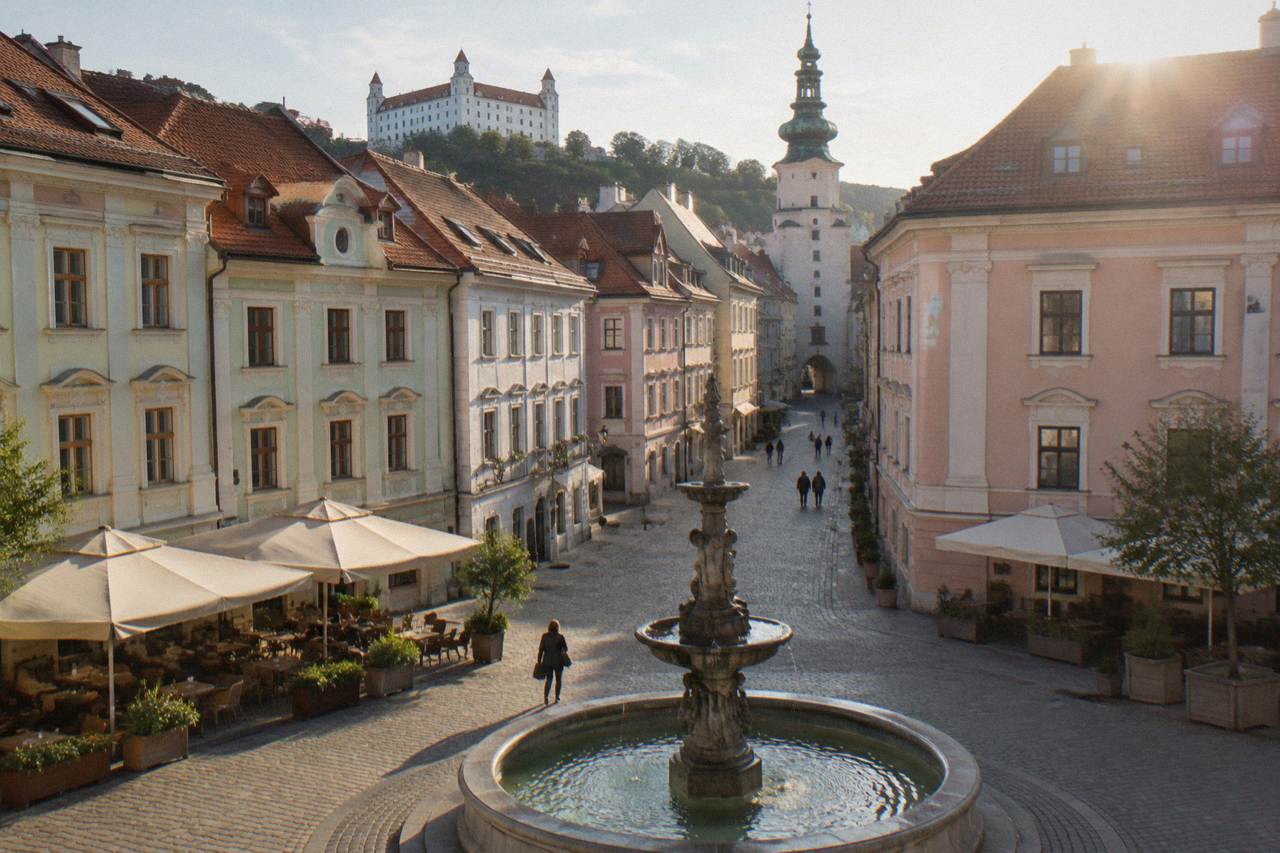
Bratislava is Slovakia's capital, an inland city of about 468,000 residents on the Danube. Emergency numbers are 112, 158 for police and 155 for ambulance, tap water is reported safe, and the main hazards are ordinary city ones. The details that matter are planning facts: which museums close Tuesdays, what transport tickets cost and how the Christmas crowds change the Old Town.
Bratislava, the capital of Slovakia, is an inland city of about 468,000 residents on the Danube, and the honest answer to the safety question starts with geography and scale rather than drama. The city has a pedestrian Old Town, a castle on a hill and a tram-and-bus network that runs on euros. What the sources actually publish about risk is modest: emergency numbers, safe drinking water, transport ticket prices and opening days. This guide reports those figures, area by area and hour by hour, so the safety question becomes a planning question you can answer before you fly.
Is Bratislava Safe For Visitors?
Yes, in the sense the sources support: Bratislava is an inland European capital where the published practical risks are ordinary city ones, and the numbers that matter are logistical. Emergency services run on 112, with police on 158 and ambulance on 155, tap water is reported safe by the utility that supplies it, and no official page publishes a warning against visiting any part of the city. What catches visitors out is not crime but closed doors.
The city's own pages, from the castle authority to the transport operator, publish hours, prices and seasonal changes, and none of them frame the city as hazardous. Slovakia is in the Schengen Area and has used the euro since 1 January 2009, so there is no border friction or currency conversion to manage on a visit from elsewhere in the eurozone or Schengen.
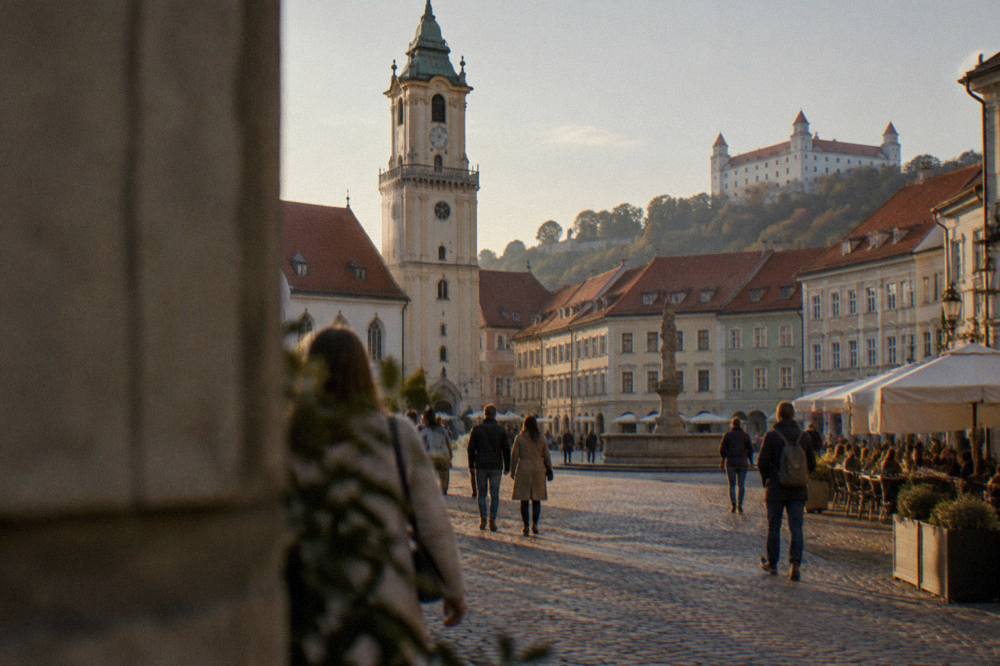
That said, safety on a short trip is mostly about not wasting time or being caught somewhere closed. The Museum of History at Bratislava Castle is closed on Tuesdays, Michael's Tower is also closed on Tuesdays, while the Old Town Hall is the one closed on Mondays. Plan around those days and the biggest disappointment of a Bratislava trip disappears. The pedestrian core is compact and the castle is a climb, so comfortable shoes matter more than vigilance.
What Are The Real Risks In Bratislava?
The real, documentable risks in Bratislava are small and practical: turning up at a museum on its closed day, misreading a transport ticket, paying tourist tax you did not budget for, or standing on an icy castle hill in winter when the mean January low is about minus 3 degrees. No published source for the city lists a scam pattern, a no-go district or a crime wave.
Start with the closed-day map, because it is the one place the sources speak plainly. The castle museum runs Wednesday to Monday 10:00 to 18:00 and rests on Tuesdays; the castle grounds themselves are open daily 08:00 to 22:00, year-round, for free. Devin Castle, at the Danube and Morava confluence, does not close for winter at all: it runs Tuesday to Sunday 10:00 to 16:00 from November to February, with only the interior exposition closed in the winter season. Believing the wrong version of that fact is how people miss a sight entirely.
| Sight | Closed Day | Standing Hours | Ticket (EUR) |
|---|---|---|---|
| Bratislava Castle, Museum of History | Tuesday | Wed to Mon 10:00 to 18:00 | 14 |
| Michael's Tower | Tuesday | Mon, Wed to Sun 10:00 to 18:00 | 6 |
| Old Town Hall (City Museum) | Monday | Tue to Sun 10:00 to 18:00 | 8, tower 4 |
| Devin Castle | Monday | Nov to Feb 10:00 to 16:00 | 6 winter, 8 summer |
| Primate's Palace | Monday (weekly posting) | Tue to Sun 10:00 to 17:00 | 5 |
Then there is the money side. The tourist tax is 3.50 EUR per person per night in the Old Town district and 3.00 EUR elsewhere, capped at 60 nights per taxpayer per year, effective since 1 July 2023 and unchanged for 2026. Hotels collect it, so a four-night Old Town stay for two people carries 28 EUR of tax that no amount of caution prevents. Budgeting it is the safe move.
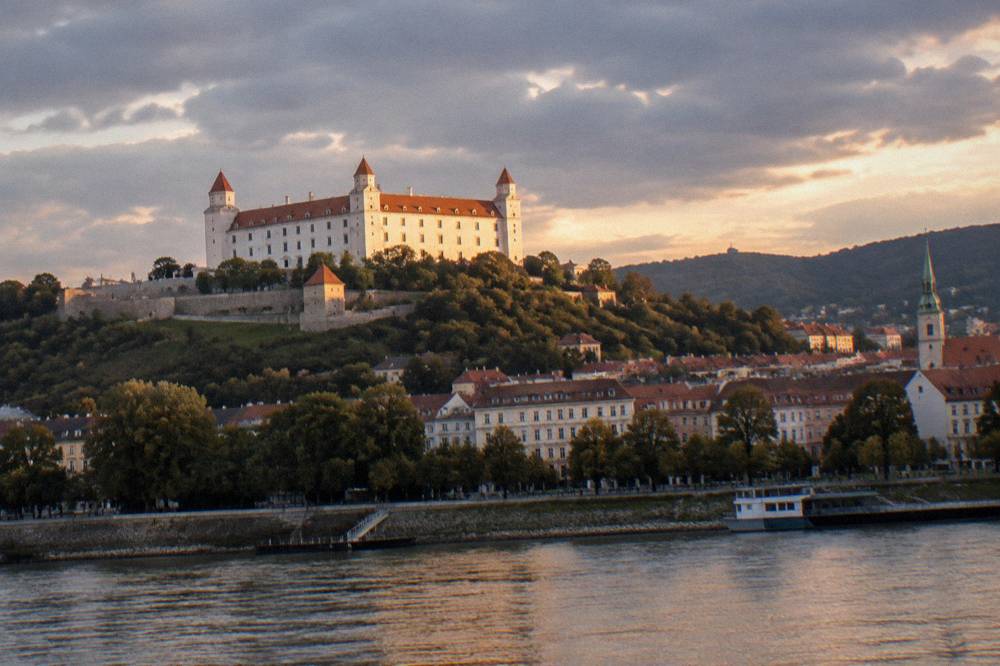
Weather is the last real risk, and it is modelled, not guessed. The ERA5 reanalysis for Bratislava, 1991 to 2020, puts the mean July daily high at 26.3 degrees and the mean January daily low at minus 3.1 degrees, with July carrying 75.8 mm of rain. Winter brings ice to the castle hill and the Old Town's cobbles, so footwear and layering are genuine safety equipment here, in the boring and effective sense.
Which Areas Of Bratislava Need More Care After Dark?
No official source designates any Bratislava district as off-limits, and the honest area-by-area answer is about character, not crime: the pedestrian Old Town and the riverfront stay busy and lit into the evening, Petrzalka across the Danube is a large residential estate with little for a visitor at night, and the station area and periphery simply have fewer reasons to be there late. Care after dark is the ordinary kind: keep to lit streets and watch for trams.
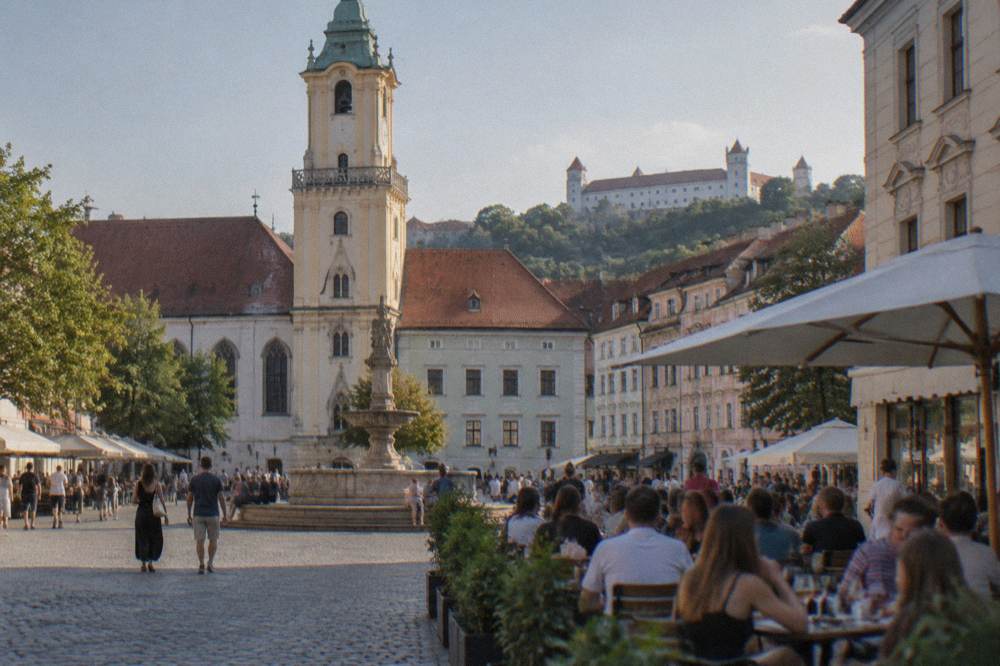
The Old Town, Hlavné námestie, Hviezdoslavovo námestie and the lanes between them, is the part of the city built for evening foot traffic, with restaurants and bars doing the work of street lighting. The nightlife guide on this site covers where the evening actually happens, and the night itinerary page walks the same streets in order.
Petrzalka, the panel-estate district south of the Danube, is home to a large share of the city's population and is on every tram line across the river, but it is not an evening destination for a visitor. The station area guide covers what to expect around the main railway station, which matters this autumn in particular: from 1 September to 12 December 2026, reconstruction around Hlavná stanica means the S50 train starts and ends at Bratislava-Nove Mesto and the R55 to Trnava is cancelled, so late arrivals should check their final stop before travelling.
For the late hours, the night bus network exists and the N61 connects the main station to the airport overnight. A solo traveller or a group coming back from the pubs can plan the return before leaving, which is the single most effective night-safety step in any European city. The dedicated answer page on night safety goes deeper on this question.
How Safe Is Bratislava Public Transport And Getting Around?
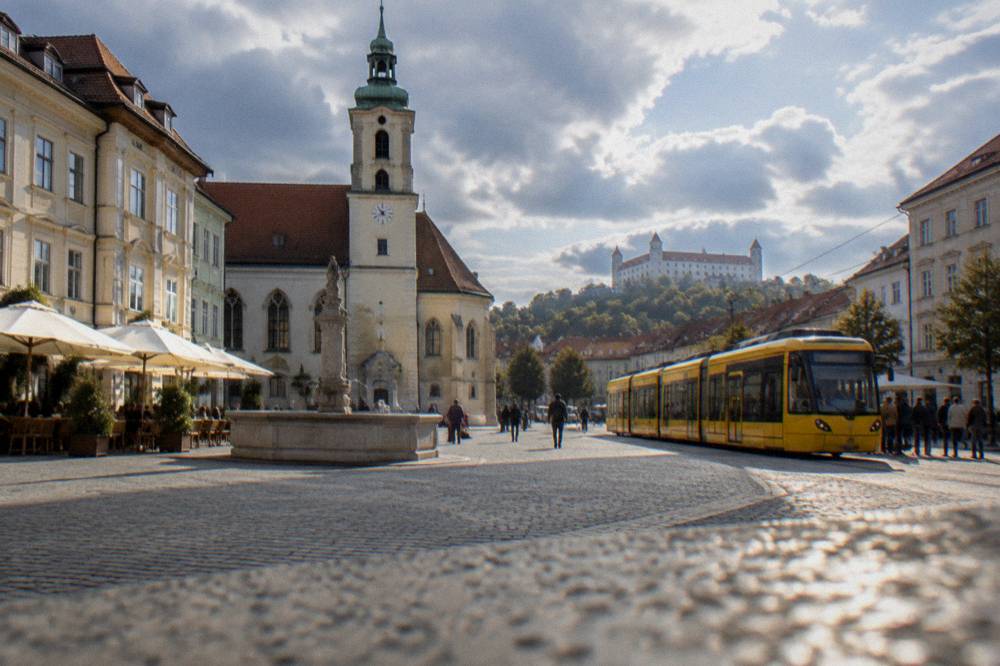
Public transport in Bratislava is safe: it is a single integrated IDS BK network of trams, trolleybuses and buses with published fares, a 30-minute paper single at 1.20 EUR, a 60-minute at 1.80 EUR. The risk on the network is a fare check with the wrong ticket, not anything else.
Buy before you board. Paper singles and day tickets come from machines at stops, from IDS BK offices or via the app, and the app versions are slightly cheaper: a 30-minute eTicket is 1.09 EUR and a 60-minute is 1.60 EUR. Day tickets are the better tool for a full day of sightseeing, and the full price ladder is worth knowing before you travel.
| IDS BK Ticket (Zones 100+101) | Paper (EUR) | eTicket / App (EUR) |
|---|---|---|
| 30-minute single | 1.20 | 1.09 |
| 60-minute single | 1.80 | 1.60 |
| 24-hour | 5.40 | 4.85 |
| 72-hour | 10.70 | 9.68 |
| 168-hour | not listed | 16.20 |
The airport connection is simple: bus 61 links the airport to Hlavná stanica in roughly 25 to 30 minutes, with the N61 covering the night hours, and the ticket is a standard IDS BK single. From 3 October 2026 a new trolleybus line 32 connects Dlhé diely to Trnavské mýto, replacing bus 64, one of several small network changes worth a glance at the operator's site before a visit.
The Bratislava CARD bundles the safety of simplicity: 24 hours with transport is 30 EUR, 48 hours 36 EUR, 72 hours 39 EUR, and it covers all IDS BK zones including night lines, one child under 18 free with the holder, free entry to 23 sights and a daily 14:00 walking tour of the historic centre. For a visitor who does not want to think about validation or ticket machines, it removes an entire category of small risk. The public transport guide has the full network detail.
Are Taxis, Money And Tourist Traps A Concern In Bratislava?
Money in Bratislava is euros, prices at museums and transport are published in EUR, and the documented tourist-trap risks are thin: the published figures show honest, posted prices everywhere from the castle's 14 EUR museum ticket to the 3.50 EUR tourist tax. Ride-hailing apps including Bolt and Uber are reported to operate in the city, and the safe practice is the standard one of agreeing or booking the fare before the ride.
Slovakia adopted the euro on 1 January 2009, so there is no exchange-rate trap inside the city. The costs a visitor actually faces are printed and stable: St Martin's Cathedral's tourist zone is 5 EUR, the UFO observation deck is 11.50 EUR on weekday mornings and 12.50 EUR otherwise, Danubiana is 12 EUR, and the Kamzík VEZA deck is reported at 7 EUR. When every door has a posted price, the classic overcharge loses its room to work. The full index of guides sits on Bratislava Travel Guide.
| Sight | Adult Ticket (EUR) | Notes |
|---|---|---|
| St Martin's Cathedral tourist zone | 5 | Nave free, tourist zone paid |
| Primate's Palace | 5 | Under 18 free, audio guide included |
| UFO observation deck | 11.50 to 12.50 | Under 111 cm free |
| Danubiana | 12 | Closed Mondays |
| Kamzík VEZA deck | 7 (reported) | Closed Mondays |
On tap water: the utility BVS supplies groundwater that is only disinfected, monitored and reported safe to drink. Refilling a bottle is both free and routine, which also makes it the cheapest safety measure in the city. Restaurant and bar spending is covered on the food and pub pages, where prices and neighbourhoods are discussed for the evening hours.
Is Bratislava Safe At Night For Solo Travellers And Groups?
Night safety in Bratislava rests on the same bones as day safety: a compact pedestrian centre, a published night bus network including the N61 to the airport, emergency numbers 112 and 158 that work citywide, and evening opening hours that run late at the UFO deck, daily until 23:00. No source marks a district as unsafe at night, and the sensible solo-traveller playbook is ordinary city practice.
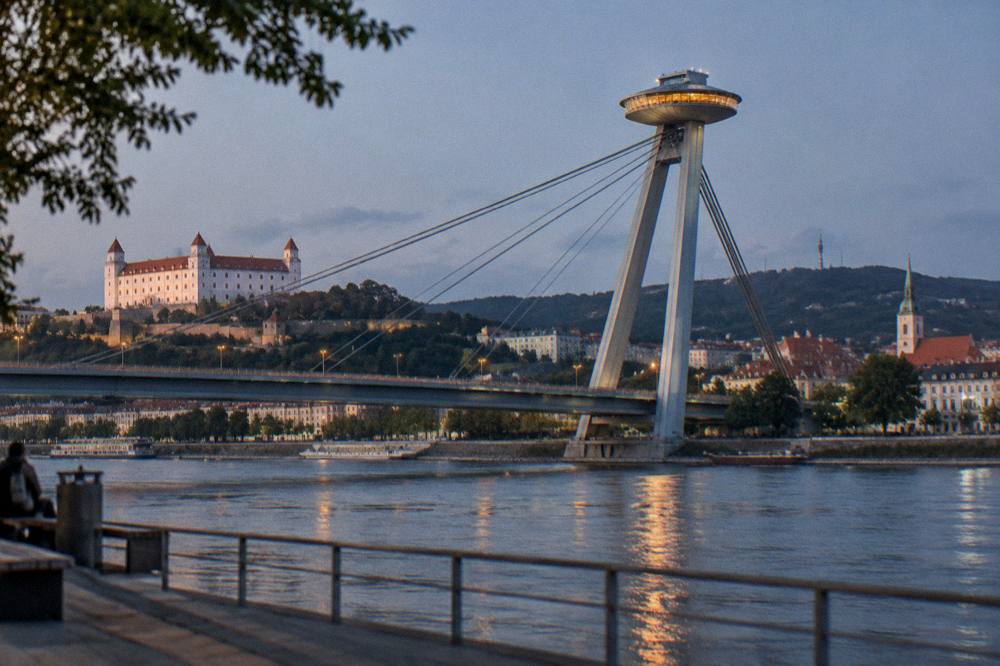
The evening city is well-lit where it matters. Hviezdoslavovo námestie and the streets around it carry the restaurant and theatre trade, and the UFO observation deck on Most SNP stays open daily from 10:00 to 23:00, so the riverfront has foot traffic well into the night. The nightlife guide covers the bars and the pub culture in detail, including the stag-party question that gets its own treatment.
For a solo traveller, three habits carry most of the weight. Plan the tram or night bus route back before the second drink. Keep the hotel address written down, since Slovak place names are easier to show than to pronounce at midnight. And keep 112 in mind as the universal number, with 158 for police and 155 for ambulance if a specific service is needed. Groups have it easier: the Old Town is small enough that a split group finds itself again within a few blocks.
The Christmas season changes the night map. The main market on Hlavné námestie and Hviezdoslavovo námestie runs 26 November 2026 to 3 January 2027, with the lighting ceremony at 18:00 on opening day, and the market squares draw evening crowds through the whole period, closed only 24 and 25 December. Late December evenings therefore have more people on the street, not fewer.
Is Bratislava Safe For Families, US Citizens And First-Time Visitors?
For families, the picture is friendly: children under 15 enter St Martin's Cathedral tourist zone free, under 18 enter Primate's Palace free, under 111 cm ride the UFO deck free, and one child under 18 travels free on transport with a Bratislava CARD holder. US citizens face no special published risk; the standard Schengen entry rules apply, and the emergency number 112 works for everyone regardless of nationality.
Family logistics are where Bratislava is easy. The castle grounds are free and open 08:00 to 22:00 daily, the Baroque Garden keeps seasonal hours that stretch to 21:00 in June and July, and the zoo is included among the 23 free sights on the Bratislava CARD. A day built around free grounds and one paid museum interior is a low-stress, low-cost family day. The Bratislava with kids angle extends to the wider itinerary pages.
US citizens get their own detailed answer on this site, and nothing in the published sources suggests they need different precautions from any other visitor. Slovakia sits in Schengen, the eurozone, and the same 112 emergency system as the rest of the EU. The practical US-specific notes are entry and insurance ones, not street-safety ones.
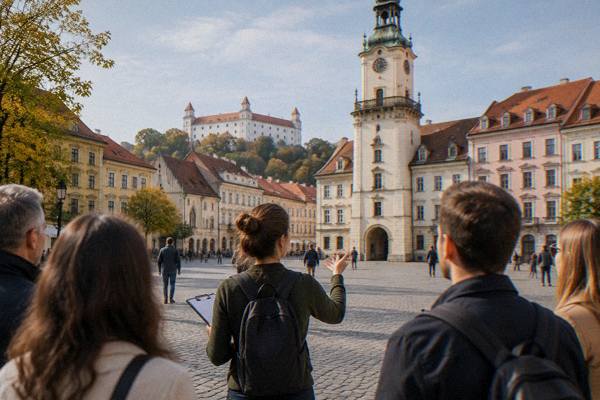
First-time visitors should anchor on the walkable core. A short guided walk is a safe first hour in the city, and the Old Town and Castle walking tour or the small-group highlights walk both cover the layout quickly. For a day out of the city entirely, the three-castles day trip to Beckov, Trenčín and Bojnice is described on its own page and can be checked through Check availability on the operator's live listing.
What Should You Do In An Emergency In Bratislava?
Call 112 for any emergency in Bratislava; it is the universal EU number and operators handle it in English as standard practice across the union. For a specific service, 158 is the police, 155 the ambulance, 150 the fire brigade and 159 the municipal police. These numbers work from any phone, and they are the only numbers a visitor needs to memorise.
Beyond the phone, the practical emergency kit is small. The Visit Bratislava tourist line runs weekdays 9:00 to 16:00 on +421 918 573 172 for non-urgent help. Tap water is reported safe, so dehydration has a free fix anywhere in the city. Pharmacies, hospitals and the walk-in system are covered by the 112 dispatcher when needed, which is what the number exists for.
| Emergency | Number |
|---|---|
| Universal EU emergency | 112 |
| Police | 158 |
| Municipal police | 159 |
| Ambulance | 155 |
| Fire brigade | 150 |
Two situational notes round this out. Winter ice on the castle hill and Old Town cobbles is the most likely cause of a minor injury between November and February, when the mean daily low sits between minus 3.1 and 3.0 degrees, so footwear is the preventive measure.
How Do You Plan A Safe Trip To Bratislava Start To Finish?
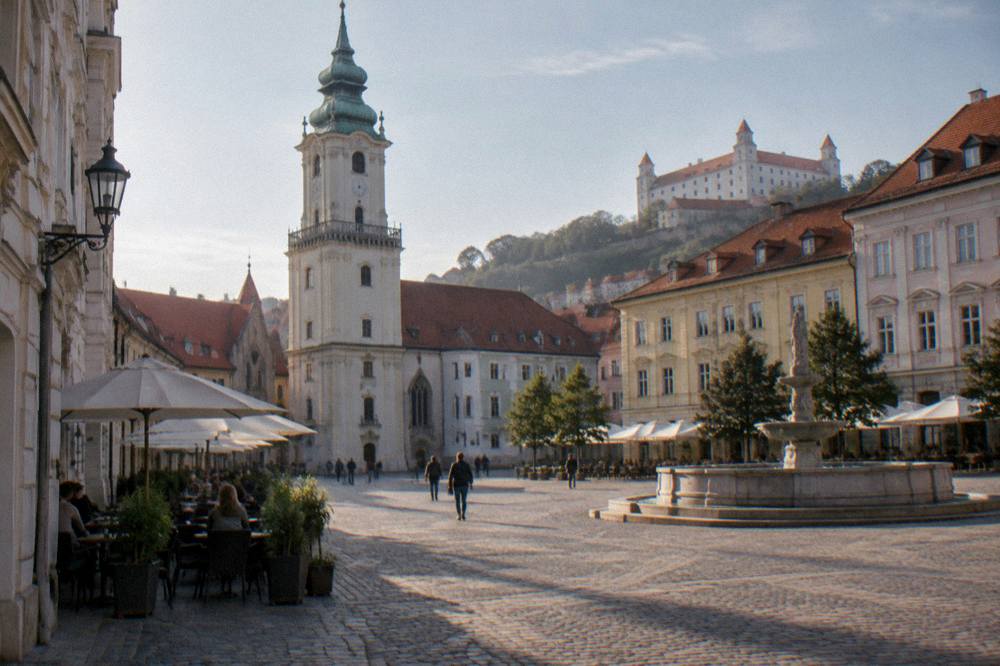
A safe Bratislava trip plans backwards from three facts: which sights close on which day, how the transport ticketing works, and what the evening looks like in the area you choose to stay in. Book a room inside the Old Town or the immediate centre, buy tickets before boarding, keep 112 in mind and give the castle hill sensible shoes. Everything else on the safety file is detail, and this site carries that detail page by page.
Choose the base first; the where-to-stay guide covers the districts, and the difference between the Old Town at 3.50 EUR per person per night in tourist tax and elsewhere at 3.00 EUR is a real line in the budget. Then set the arrival: the airport guide covers bus 61, the train-station guide covers the autumn works, and the Vienna transfer pages cover the REX8, which covers Vienna Hauptbahnhof to Bratislava in 56 minutes for 12.70 EUR.
For the days themselves, the itineraries on this site, one day, two days, three days, with kids, in the rain, in winter, do the sequencing, and the main things-to-do page is the full index. A safe trip is a scheduled one: Tuesday is the day for Devin Castle or the grounds-only castle visit, Monday belongs to Michael's Tower and the Old Town Hall's closed day is the day to be elsewhere.
And when the city is fully seen, the day-trip pages extend the same logic across Slovakia and the neighbours: castles at Bojnice, wine in the Small Carpathians, or Vienna an hour away. The risks do not change, because they were never dramatic to begin with. Bratislava rewards the visitor who read the opening hours.
Common Questions About Safety In Bratislava
Is Bratislava safe at night?
The published sources describe a compact, pedestrian-friendly centre with evening trade on the main squares and a night bus network including the N61 to the airport. No official source designates any district as unsafe. Standard city precautions apply, and the full answer is on the night safety page.
Is Bratislava safe for solo travellers?
Yes, on the same evidence: emergency numbers 112, 158 and 155 work citywide, the centre is walkable and lit, and the transport network runs on published fares. Planning the return route before an evening out is the main precaution.
Can you drink tap water in Bratislava?
The water utility BVS reports that Bratislava's tap water comes from groundwater sources, is only disinfected and is monitored for quality. It is reported safe to drink.
What is the emergency number in Bratislava?
112 is the universal EU emergency number. Police are 158, municipal police 159, ambulance 155 and the fire brigade 150.
Are there areas to avoid in Bratislava?
No official source marks any district as off-limits. The practical note is character-based: Petrzalka is a residential estate with little evening draw for visitors, and the station area is best passed through with normal attention. The Old Town and riverfront carry evening foot traffic.
Is Bratislava safe for US citizens?
Nothing in the published sources singles out US visitors. Slovakia is in Schengen and the eurozone, and entry rules rather than street safety are the US-specific question, covered on the dedicated page.