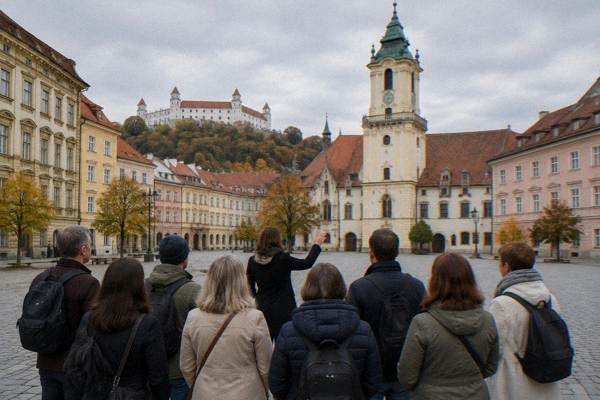
Is Bratislava The Capital Of Slovakia?
Yes, Bratislava is Slovakia's capital: an inland city on the Danube of about 468,000 residents, with euro prices, a castle-topped skyline and Vienna under an hour away by train.
Bratislava is Slovakia's capital, and that single fact answers a question travellers ask more often than you would expect, usually right after they have booked a ticket to Vienna and noticed another capital city sitting barely an hour down the Danube. Bratislava is an inland city, not a coastal one, with 468,290 residents on 24 June 2026 according to the population figure the city published for its municipal elections. Slovakia adopted the euro on 1 January 2009, so every local cost in this article is in EUR, and the country has been reported to be in the Schengen Area since 21 December 2007. What follows is a plain rundown of what the capital is, what it costs to see, and how it fits into a Central European trip. For the wider picture, the Bratislava Travel Guide homepage covers the destination end to end, and a companion piece on why Bratislava is famous digs into the city's reputation.
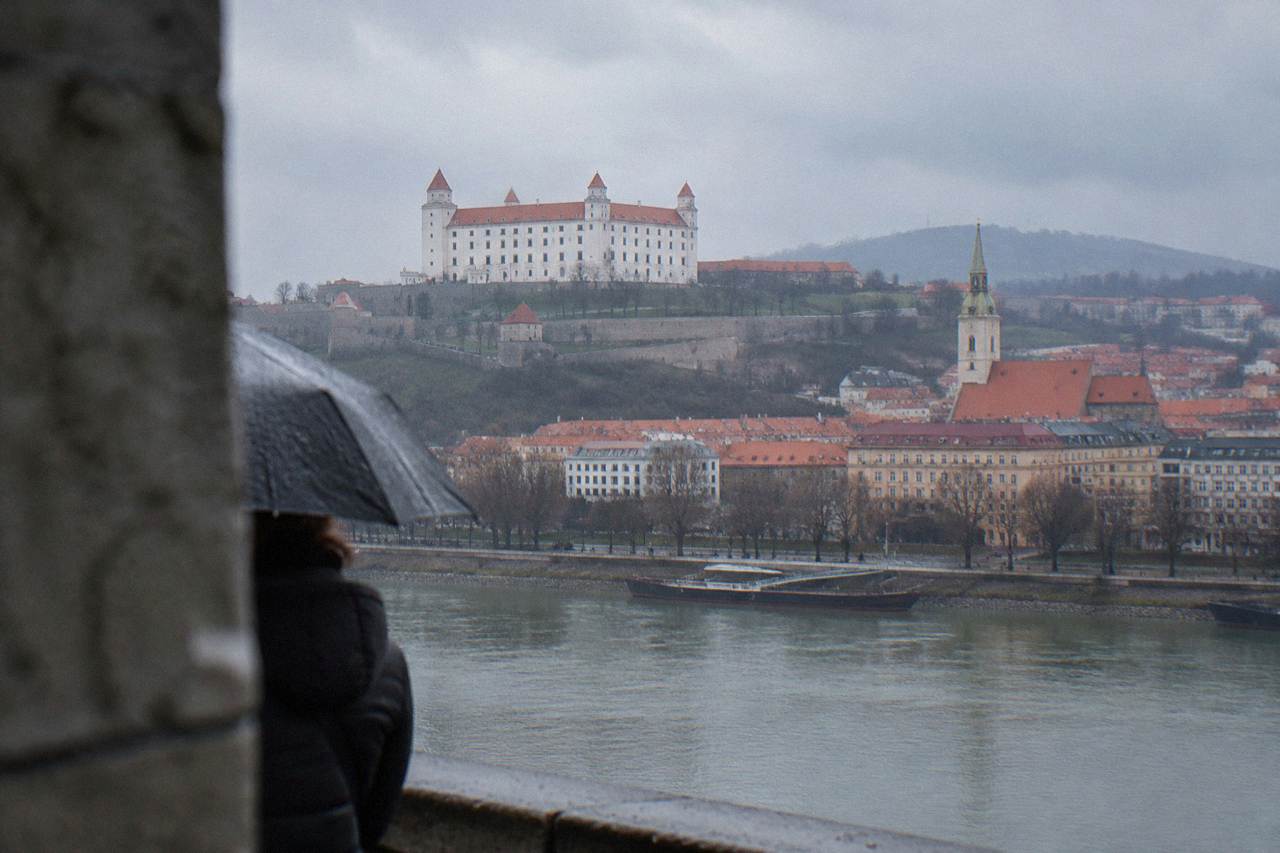
Yes, Bratislava is Slovakia's capital. It is an inland city on the Danube with 468,290 residents on 24 June 2026, according to the population figure published by the city itself, and it is the country's principal city, known for Bratislava Castle, St Martin's Cathedral and a pedestrian Old Town. Slovakia uses the euro since 1 January 2009, so every local price here is quoted in EUR.
That is the whole answer, but the useful context is short. Slovakia is one of the two successor states that emerged from the split of Czechoslovakia, and Bratislava has served as the capital of the independent Slovak republic since that state came into being. The city sits on the Danube close to the Austrian and Hungarian borders, which is why so many visitors reach it as a detour from Vienna rather than as a primary destination. The location question gets its own treatment elsewhere on this site.
| Question | Answer | Basis |
|---|---|---|
| Capital of Slovakia? | Yes, Bratislava | Country fact |
| Population | 468,290 (24 June 2026) | City statistics |
| Currency | Euro, since 1 January 2009 | National Bank of Slovakia |
| Setting | Inland, on the Danube | Destination fact |
| Neighbouring capitals | Vienna, about 56 minutes by direct train | Reported rail figure |
| Schengen membership | Reported since 21 December 2007 | Reported |
What Is The Capital Of Slovakia Known For?
Bratislava is known for Bratislava Castle and its Museum of History, St Martin's Cathedral, the pedestrian squares of the Old Town, the UFO observation deck on the Most SNP bridge, and Devin Castle at the edge of the city, all within a capital you can cross largely on foot. The castle grounds open daily from 08:00 to 22:00 year-round, and the Museum of History inside costs 14 EUR for an adult, closed on Tuesdays.
The castle is the headline. Its grounds are free and open every day of the year from 08:00 to 22:00, while the SNM Museum of History inside opens 10:00 to 18:00, Wednesday to Monday, with last admission at 17:00 and Tuesday as its closed day. The Baroque Garden on the same hill keeps seasonal hours, 09:00 to 16:00 in the winter months and as late as 21:00 in June and July. St Martin's Cathedral charges 5 EUR for its tourist zone of treasury, crypts and gallery, with a daily break from 11:30 to 13:00. Devin Castle, out where the city ends, is 8 EUR from April to October and 6 EUR from November to March, and unlike many European castles it stays open through the winter, Tuesday to Sunday 10:00 to 16:00 from November to February, with only its interior exposition closed in the winter season.
| Sight | Adult price (EUR) | Closed day | Key hours |
|---|---|---|---|
| Bratislava Castle, Museum of History | 14 | Tuesday | Wed to Mon 10:00 to 18:00 |
| Castle grounds | Free | None | Daily 08:00 to 22:00 |
| St Martin's Cathedral tourist zone | 5 | None stated | Daily with 11:30 to 13:00 break |
| Old Town Hall and Apponyi Palace | 8 | Monday | Tue to Sun 10:00 to 18:00 |
| Michael's Tower | 6 | Tuesday | Mon, Wed to Sun 10:00 to 18:00 |
| Primate's Palace | 5 | Monday | Posted weekly, mostly 10:00 to 17:00 |
| Devin Castle | 8 summer / 6 winter | Monday | Hours vary by month |
| UFO observation deck | 11.50 or 12.50 (reported) | None | Daily 10:00 to 23:00 |
| Blue Church | Free | None | Short prayer-window hours |
A word on the closed days, because they trip people up: the castle museum and Michael's Tower close on Tuesdays, while the Old Town Hall and Primate's Palace close on Mondays, so a two-day visit that lands wrong can miss half the list. The Blue Church of St Elizabeth charges nothing, though its interior opens only in short windows around services, Monday to Wednesday and Saturday from 06:30 to 07:30, Thursday and Friday from 17:30 to 19:00, and Sunday mornings and evenings.
Where Is Bratislava And How Do You Reach The Slovak Capital?
Bratislava sits inland on the Danube, in the far west of Slovakia close to the Austrian and Hungarian borders, and the usual way in is either the direct REX8 train from Vienna Hauptbahnhof, reported at 56 minutes and 12.70 EUR one-way, or bus 61 from Bratislava's own airport to the main station, a ride reported at roughly 25 to 30 minutes. Vienna's airport also connects by direct coach in about 70 minutes from 7.90 EUR.
The Vienna link is the one that shapes most itineraries. The REX8 runs hourly to Bratislava hlavná stanica, with a parallel REX6 service to the Petržalka district reported at 59 minutes, and a return ticket option that bundles a day of Bratislava public transport. Inside the city, the IDS BK network sells paper singles at 1.20 EUR for 30 minutes and 1.80 EUR for 60 minutes, with cheaper eTicket versions in the app. Rail works also mean that until 12 December 2026 some regional trains start and end at Bratislava-Nove Mesto rather than the main station. The direct train question is covered in full on its own page.
Because Slovakia has been reported to be in the Schengen Area since 21 December 2007, arriving from Vienna involves no hard border in the usual sense, though identity documents rules differ by nationality and are a matter for official sources rather than a travel article. Emergency numbers are worth knowing anywhere in the country: 112 as the universal EU number, 150 for fire, 155 for ambulance, 158 for police and 159 for municipal police.
Is The Slovak Capital Expensive?
Bratislava prices its main sights between free and 14 EUR, charges a tourist tax of 3.50 EUR per person per night in the Old Town and 3.00 EUR elsewhere, and sells a 24-hour public transport ticket for 5.40 EUR on paper or 4.85 EUR in the app, which makes it a moderately priced capital by European standards, with the Bratislava CARD at 30 EUR for 24 hours bundling transport with free entry to 23 sights.
At 30, 36 and 39 EUR for 24, 48 and 72 hours with transport, it includes the castle museum at 100 percent discount, Devin Castle, the Old Town Hall, Michael's Tower and Primate's Palace among its 23 free sights, plus a daily 14:00 walking tour of the historic centre, with current brochure discounts valid until 31 March 2027. Against a 14 EUR castle ticket, a 6 EUR tower and a day of transport, the 24-hour card pays for itself on an ambitious museum day. The cost question has the fuller breakdown, and the budget angle extends to food and drink, where the desk's constraints deliberately print no venue prices: general guidance only, tasting fees and menus vary, check the room.
How Many Days Do You Need In The Slovak Capital?
Two full days cover the capital's core comfortably, with one day for the Old Town, the castle hill and the riverfront and a second for Devin Castle and one deeper museum or tasting, while three days allow a day trip out of the city entirely, and the answer scales with pace: a fast visitor can compress the essentials into a single long day, though the Tuesday and Monday closures punish a tight schedule.
The reason two days work is the closed-day pattern described above plus the geography: the Old Town is a walk, the castle is a climb, and Devin Castle sits at the city's edge, reached by river cruise in season or by public transport. The how many days question gets its own itinerary treatment, and travellers deciding whether the city justifies the detour at all can start with whether Bratislava is worth visiting. Practical extras worth folding into any answer: tap water in Bratislava is safe to drink according to the utility that supplies it, and tipping runs to rounding up or 5 to 10 percent for good table service, though that figure is reported rather than official.
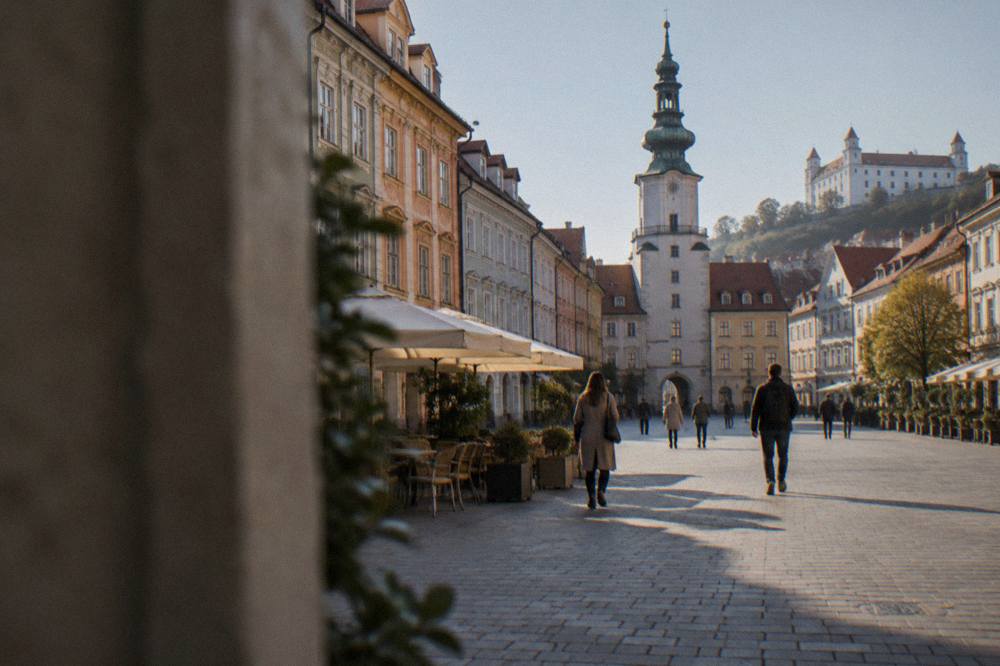
Can The Slovak Capital Serve As A Base For The Rest Of The Country?
Yes, Bratislava works well as a base for seeing Slovakia, because the country's headline regions, including castle towns like Bojnice and the High Tatras mountains, are reachable on organised day tours that depart from the capital, and the rail network fans out from the main station, though this autumn's works reroute some regional services to Bratislava-Nove Mesto until 12 December 2026, so check the operator's live timetable.
This is where the related tour on this page earns its place. The Northern Slovakia guided day tour from Bratislava covers a long loop of the country's north in a single outing, and travellers who want a structured look at Slovakia beyond the capital can Check availability on the operator's live listing. Alternatives on the same roster visit Bojnice Castle and Banská Štiavnica, the three-castle route of Beckov, Trenčín and Bojnice, or the Demänovská Cave with Orava Castle. For contrast, wine travellers can stay closer to the city with tastings in the Small Carpathians villages, and the history of Bratislava explains how this city on the Danube ended up as a capital in the first place.
Ready to see Slovakia's north in a single outing? Book a guided Northern Slovakia day tour here.
What Is The Best Time Of Year To Visit The Capital?
The modelled ERA5 climate normals for Bratislava, 1991 to 2020, show July averaging 26.3 C daytime highs against 75.8 mm of rain and January averaging 3.0 C highs with lows around minus 3.1 C, so the capital is warm in summer, cold but manageable in winter, and genuinely usable year-round, since the castle grounds stay open daily from 08:00 to 22:00 in every month.
Those figures are reanalysis values for a grid cell, not a station record, and they carry the usual modelled caveat, but the pattern they describe is straightforward: a warm June-to-August stretch, a mild shoulder season in April, May, September and October, and a cold November-to-February period with daytime highs near or below 4 C. Winter visitors get the Christmas market, which the organiser's own page dates 26 November 2026 to 3 January 2027 on Hlavné námestie and Hviezdoslavovo námestie, and St Martin's young wine is reported to arrive from 11 November. The best month question weighs the calendar in more detail.
Common Questions About The Capital Of Slovakia
Is Bratislava The Capital Of Slovakia?
Yes. Bratislava is Slovakia's capital, an inland city on the Danube with 468,290 residents on 24 June 2026 according to the city's own published figure, using the euro since 1 January 2009.
Is Bratislava A Big Capital City?
It is a compact one. The population figure published by the city on 24 June 2026 is 468,290, which places it among the smaller European capitals, and its historic core is largely pedestrian.
Is Bratislava The Same City As Vienna Or Budapest?
No. Vienna and Budapest are separate capital cities reached on a day trip from Bratislava, with Vienna about 56 minutes away by direct train, a figure reported for the REX8 service from Vienna Hauptbahnhof.
What Currency Does The Slovak Capital Use?
The euro, since Slovakia adopted it on 1 January 2009. Local costs such as castle admission and public transport tickets are priced in EUR.
Is Bratislava On The Sea?
No. Bratislava is an inland city on the Danube river. Its water-based sightseeing is river cruising, not seaside.
Do You Need A Passport To Enter Bratislava From Vienna?
Slovakia has been reported to be in the Schengen Area since 21 December 2007, so there is no routine hard border on that route, but document rules vary by nationality and belong to official sources rather than a travel guide.