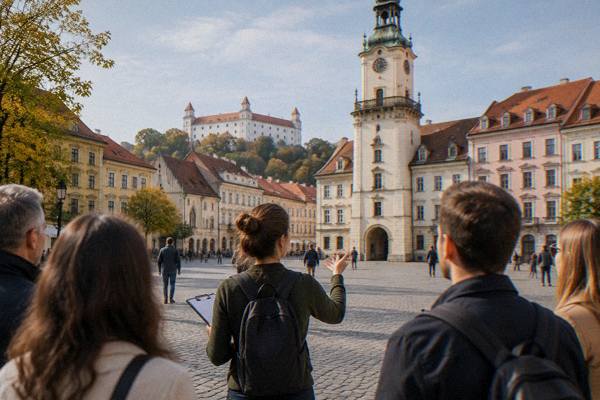
Is Slovakia A Poor Or Rich Country?
Is Slovakia a poor or rich country? A sourced look at what the figures visitors actually meet in Bratislava say: the euro, local ticket prices, tourist tax and 2024 visitor numbers.
Slovakia is neither a poor country nor a rich one by the standards visitors actually notice, and Bratislava, its capital, shows both faces at once: an inland city of about 468,290 residents (city statistics, 24 June 2026) that pays in euros, charges 3.50 EUR a night in tourist tax in the Old Town, and recorded 1,188,915 overnight visitors in 2024, a 3.2 percent rise on 2023, with 67 percent of them from abroad. Those are the numbers. Anything about wages or national income belongs to statisticians, and this page sticks to what a visitor can check on the ground.
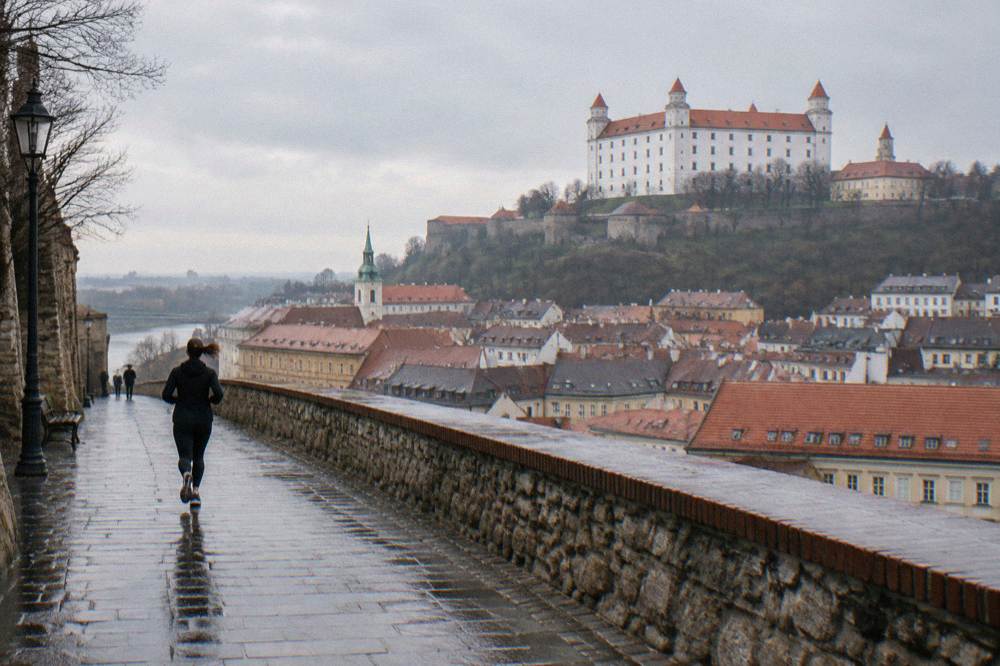
The question people usually mean when they type it is simpler: will Bratislava feel expensive? Compared with Vienna, an hour away by train, the answer is generally no, and the Bratislava Travel Guide price rows below make that concrete. For the broader judgement on the country, start with the one economic fact every visitor touches on day one: Slovakia adopted the euro on 1 January 2009, per the National Bank of Slovakia, and is reported to have been in the Schengen Area since 21 December 2007.
By the measures a traveller meets, Slovakia is a middle-income eurozone country: not wealthy next to Austria, an hour up the rail line, but far from poor in its capital, which drew 1,188,915 overnight visitors in 2024, three quarters of the record year of 2019, and where a full museum ticket costs 14 EUR and a 30-minute bus or tram ride 1.20 EUR on paper. The city's own statistics office counted 468,290 residents in June 2026. None of that reads as hardship, and none of it reads as Vienna either.
The visitor economy is the clearest wealth signal this page can print with sources. A city that added 3.2 percent overnight visitors in 2024, whose top five source markets are all high-spending European countries, and which charges the same currency as Munich and Milan, is not a bargain-basement destination. At the same time, the price rows further down show the gap that remains between Bratislava and its western neighbour: castle admission at 14 EUR, a river panorama cruise from a token-rendered price, a paper transport single at 1.20 EUR.
What the page will not do is print a GDP figure, a wage average or a poverty rate. Those numbers are not on this page, and an invented one is worse than none. For the feeling of the place, read the rows and then read why Bratislava is famous: a coronation city, a castle on a hill, and a post-communist capital that rebuilt its visitor trade to 85 percent of its 2019 record.
What Do The Euro And Tourist Tax Mean For Prices In Bratislava?
Slovakia has used the euro since 1 January 2009, so every price in Bratislava is a euro price with no conversion maths, and the city adds a tourist tax of 3.50 EUR per person per night for stays in the Old Town district and 3.00 EUR elsewhere, capped at 60 nights per taxpayer per year. Both rates have applied since 1 July 2023 under the city's published tax rules. The tax is collected through accommodation, not at the border.
The euro matters for the poor-or-rich question more than it first appears. A country does not join a common currency by being destitute, and the euro removes the old mental arithmetic that used to make central European capitals feel artificially cheap or expensive depending on the exchange rate of the week. What you see printed on a Bratislava ticket is what you pay.
The practical layer is cheap and simple. A paper 30-minute single on the city's IDS BK network costs 1.20 EUR, a 60-minute single 1.80 EUR, and a paper 24-hour ticket 5.40 EUR; the app versions undercut those at 1.09, 1.60 and 4.85 EUR.
Between the euro, the modest tax and the cheap transport, the cost structure of a Bratislava day lands closer to a regional Slovak or Czech city than to Vienna, which is exactly why the two are so often paired. The Vienna versus Bratislava comparison usually ends with the same conclusion: Vienna for splendour, Bratislava for value.
How Much Do Bratislava's Sights Actually Cost?
The headline sights are modestly priced in euros: Bratislava Castle's Museum of History is 14 EUR, Devin Castle 8 EUR in summer and 6 EUR in winter, the Old Town Hall exhibitions 8 EUR, Michael's Tower 6 EUR, Primate's Palace 5 EUR, and the Blue Church is free, so a full sightseeing day can be assembled for the price of a single big-city museum elsewhere. Every figure below comes from the venue's own published price page.
| Sight | Adult price (EUR) | Closed day |
|---|---|---|
| Bratislava Castle, Museum of History | 14 | Tuesday |
| Devin Castle (April to October) | 8 | Monday |
| Devin Castle (November to March) | 6 | Monday |
| Old Town Hall and Apponyi Palace | 8 | Monday |
| Michael's Tower | 6 | Tuesday |
| Primate's Palace | 5 | Monday |
| St Martin's Cathedral tourist zone | 5 | none listed |
| Blue Church | free | none listed |
Read the closed-day column carefully, because it is the trap visitors fall into: the castle museum and Michael's Tower close on Tuesdays, while the Old Town Hall and Devin Castle close on Mondays. Devin Castle stays open all winter, Tuesday to Sunday 10:00 to 16:00 from November to February, with last entry at 15:15; only its interior exposition is closed in the winter season.
Reduced prices exist across most of these venues, for children, students and seniors, and family tickets at Devin Castle run at 18 EUR for two adults and three children in summer. The city also sells the Bratislava CARD, at 30 EUR for 24 hours with transport included, prices valid since 1 April 2025, which covers free entry to 23 sights including the castle museum, Devin Castle and the Old Town Hall. Whether the card pays off depends on pace; three paid sights plus transport in a day generally does it.
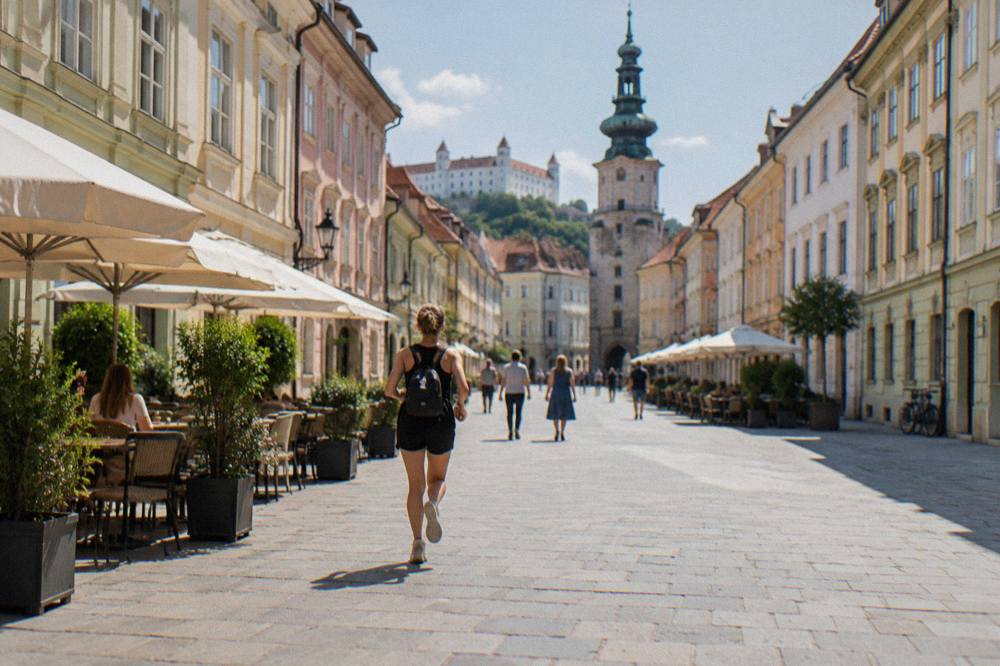
For travellers who want the sights unpacked rather than just entered, the featured Check availability option on this page is the castle walk listed in the picks above, whose own listing carries the price and rating. The full Bratislava walking tour guide covers the same ground in depth for anyone comparing formats.
Do Visitor Numbers Say Anything About Wealth In Bratislava?
They say the city sells itself comfortably: 1,188,915 overnight visitors in 2024, up 3.2 percent on 2023, 85 percent of the 2019 record, with 67 percent arriving from abroad and August the peak month at 116,171 visitors, per Bratislava Tourist Board figures based on Statistical Office of the Slovak Republic data. November 2024 alone grew 18 percent year on year, which points at a Christmas-market season pulling its weight.
A city does not build a 1.2-million-visitor year on being either poor or uninteresting. The source-market list is the detail worth dwelling on: Czechia, Germany, Poland, Austria and the United Kingdom, all countries whose travellers have choices, all within a short flight or train ride, several of them richer per head than Slovakia. They come because the product is good and the prices are fair, not because it is the only option.
The seasonal shape also matters. August peaks, November grows fastest, and the Christmas market, which runs 26 November 2026 to 3 January 2027 on Hlavné námestie and Hviezdoslavovo námestie per the organiser's own site, is the anchor of the winter shoulder. None of this is the behaviour of a destination trading purely on being cheap.
Where Does The Country's Wealth Show And Hide On A Visit?
It shows in the euro, the modernised transport network and the rebuilt Old Town, and it hides about an hour outside the capital: the Small Carpathian wine villages, the castles up the country, and the northern mountains, all reachable on organised day trips from Bratislava at prices that undercut equivalent western European tours, per each operator's live listing. The city-region divide is real, and the day-trip roster is where a visitor sees it most plainly.
The modelled climate also shapes the value question. ERA5 reanalysis for 1991 to 2020 puts July's mean daily high at 26.3 C and January's mean daily low at -3.1 C, with July's rainfall at 75.8 mm and February's at 33.4 mm. Those are modelled normals, not a station record, and they describe a four-season city where the visitor trade flexes with the calendar rather than running flat all year, which is typical of a middle-income European capital rather than a year-round mass resort.
For the country-wide picture, a day trip is the fastest education on offer: the Bojnice Castle and Banská Štiavnica trip and the Devin Castle river cruise in the picks above both leave from the capital and show two entirely different sides of Slovakia within a day's radius. Anyone with more time can compare notes in how many days you need in Bratislava before committing.
Common Questions About Slovakia's Wealth And Bratislava
Is Slovakia A Poor Or Rich Country?
By visitor-facing measures it sits in the middle: a eurozone member since 2009 whose capital recorded 1,188,915 overnight visitors in 2024 and charges moderate euro prices for its main sights, from a free Blue Church to a 14 EUR castle museum ticket. It is cheaper than Austria next door and steadier in price than non-euro neighbours.
Is Bratislava expensive compared with Vienna?
Generally it is the cheaper of the two for comparable sightseeing and local transport, with paper singles at 1.20 EUR and major museum tickets between 5 and 14 EUR. The gap is covered in detail on the page about whether Bratislava is cheap or expensive.
What currency does Slovakia use?
The euro, adopted on 1 January 2009. Every price in this article is a euro price, with no conversion needed, and card payment is normal in the capital.
How much is the tourist tax in Bratislava?
3.50 EUR per person per night in the Old Town district and 3.00 EUR elsewhere in the city, capped at 60 nights per taxpayer per year, rates in force since 1 July 2023.
Do many foreign visitors come to Bratislava?
Yes: 67 percent of the 1,188,915 overnight visitors recorded in 2024 came from abroad, led by Czechia, Germany, Poland, Austria and the United Kingdom.
The honest summary is that Slovakia earns neither label. It is a euro-using, Schengen-area country whose capital rebuilt its visitor trade to 85 percent of its 2019 record, prices its sights in modest euros, and rewards a day of walking better than most cities twice its size. Whether that reads as rich depends on the yardstick, and the rows above are the yardstick.