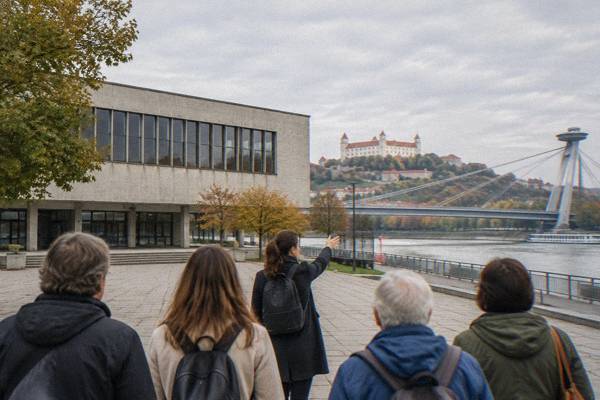
What Did Bratislava Used To Be Called?
Bratislava's earlier names explained: Prešporok, Preßburg and Pozsony, why the city carried three of them, and how the name Bratislava was adopted after the First World War.
Bratislava, the capital of Slovakia, did not carry that name for most of its recorded life. The city on the Danube answered to Prešporok in Slovak, Preßburg in German and Pozsony in Hungarian, all three in use at the same time, because the town sat at a meeting point of languages and states. The name Bratislava was adopted after the First World War, when the city became part of the new Czechoslovak state, and the older names did not vanish overnight. They survive in railway stations, restaurant names, wine labels and family memories across the region, which is why the question of what Bratislava used to be called has more than one answer, and why each answer opens a window onto a different chapter of the city's past. This page sets out the names in order, explains who used which one and when, and shows where the old names still surface in the modern city. For the wider picture of the city today, start with things to do in Bratislava.
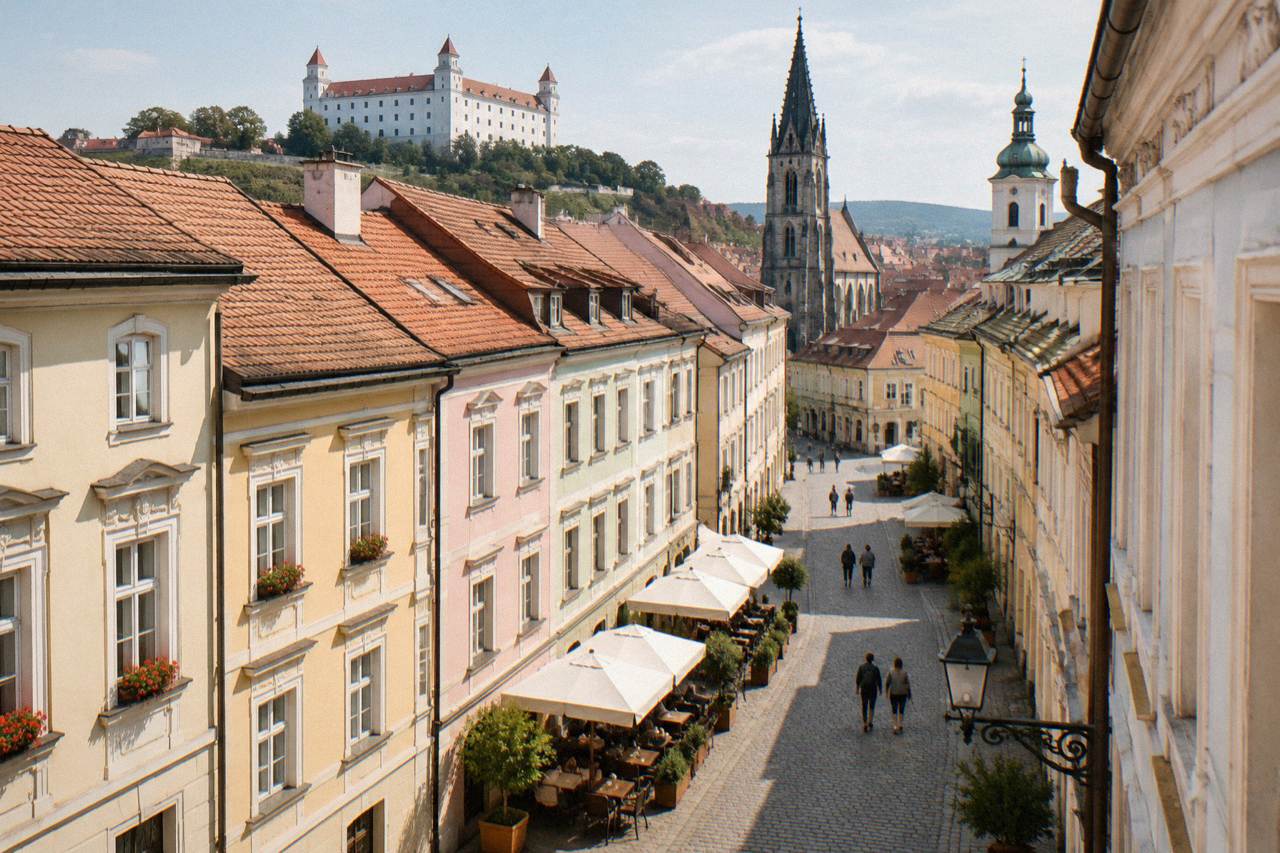
Before the Czechoslovak era the city was called Prešporok in Slovak, Preßburg in German and Pozsony in Hungarian, and the name Bratislava itself was officially adopted when the city joined the new Czechoslovak state after the First World War. Latin documents used forms such as Posonium. Each name belonged to a language community that lived in and governed the same town, so the honest answer is that Bratislava used to be called three things at once, and the choice of name depended on who was writing.
That threefold naming is not unusual for a Central European city, but Bratislava's case is unusually layered because the town changed political hands repeatedly while its population stayed mixed. A German-speaking burgher, a Hungarian administrator and a Slovak peasant from the surrounding villages could all be describing the same place on the same day with three different words. The names also mutated in spelling across centuries of handwritten records, so a single archival search turns up dozens of variants of each one.
The practical consequence for a visitor is that older maps, postcards, guidebooks and museum labels do not always make it obvious that they describe Bratislava at all. A pre-Czechoslovak map of "Pressburg" and an old engraving of "Pozsony" show the same castle, the same cathedral square and the same Danube frontage that a visitor walks today.
| Language | Historical name | Typical form seen on maps and documents |
|---|---|---|
| Slovak | Prešporok | Prešporok, Prešporek |
| German | Preßburg | Pressburg, Presburg |
| Hungarian | Pozsony | Poson, Posonium in Latin contexts |
| Latin | Posonium | Posonium, Pisonium |
Why Did One City Carry Three Names?
Bratislava carried three names because it was a multilingual town inside the Kingdom of Hungary, with a German-speaking burgher class, a Hungarian administration and a Slovak-speaking rural hinterland, and each group used its own word for the same place. Documents were kept in Latin and later in Hungarian, commerce ran in German, and the surrounding villages spoke Slovak, so no single name ever achieved a monopoly before the modern era.
The German name, Preßburg, reflects the centuries in which the town's urban life was dominated by German-speaking settlers and their descendants, a pattern common across the towns of the region. The Hungarian name, Pozsony, mattered most administratively, because the city was a royal seat in the Kingdom of Hungary and gave its name to the county around it, Pozsony County, on maps of the Hungarian half of the empire. The Slovak name, Prešporok, was the everyday word in the villages and later in the growing Slovak national movement, which is the community whose name finally won out.
Language and politics were inseparable here. When intensified Hungarian-language administration spread across the kingdom in the decades before the First World War, the official weight tilted toward Pozsony. When the empire collapsed and the city joined Czechoslovakia, the political ground shifted again, and this time the Slovak name, in a new form, took over completely. For a deeper look at how the city presents itself now, see why Bratislava is famous.
The renaming of the Czechoslovak era was not simply a translation. The Slovak form of the old name would have been Prešporok, but the new authorities chose Bratislava instead, a form reconstructed from early medieval records and championed by Slovak scholars who wanted a name with Slavonic roots rather than one derived from the German and Hungarian forms. The choice was symbolic: a new state, a new capital city on the Danube, and a name that pointed away from Vienna and Budapest and toward the Czechoslovak project. Some of the early spellings proposed and debated at the time did not survive, and the spelling Bratislava settled quickly into official use.
| Period | Political frame | Name most likely on official documents |
|---|---|---|
| Medieval records | Kingdom of Hungary | Posonium (Latin), later Pozsony forms |
| Habsburg era | Kingdom of Hungary under Habsburg rule | Pozsony in Hungarian administration, Preßburg in German civic use |
| Late imperial era | Hungarian administration era | Pozsony |
| Czechoslovak era | Czechoslovakia | Bratislava |
Visitors who want to feel that layered past on foot usually start in the Old Town, where the street pattern predates every modern border change. A private guide can connect the names to the stones, and the private Bratislava walking tour is one option that covers the historic core at a pace that suits questions about what you are looking at.
Want to hear the stories behind those old names? Book a free walking tour here.
Where Do The Old Names Still Appear In Bratislava?
The old names survive in the names of railway stops, businesses and wine producers around the city, most visibly in the main railway station's Slovak name, Bratislava hlavná stanica, whose historical predecessor name Prešporok still echoes in local usage, and in cafés, hotels and shops that trade on Preßburg or Pozsony nostalgia. The visitor's practical takeaway is simple: seeing Prešporok or Pozsony on a sign in modern Bratislava almost always means a deliberate nod to the city's past, not a different place.
The railway is the clearest case. Anyone arriving by train, and anyone planning the journey described in how to get from Vienna to Bratislava, will notice that Slovak place names in the station signage follow Slovak spelling throughout, a direct legacy of the Czechoslovak settlement and of the language policy that followed it. Old postcards and timetable facsimiles sold as souvenirs in the Old Town show the German Preßburg forms of exactly the same station and squares.
Wine is the second place the old world shows through. The Small Carpathian wine country begins at the edge of the city, and some producers in villages like Modra and Pezinok still reach for historical branding that predates the modern name. A traveller comparing the region's offering can read more in the site's Small Carpathians wine tour guide.
The layered naming also explains a quirk that confuses first-time visitors: older English-language guidebooks sometimes call the city Pressburg, and antiquarian prints sold in the souvenir shops on Hlavné námestie are labelled Pozsony. Neither is a printing error. Both are the city, seen through the last two of its three historical names. The wider set of guides lives on Bratislava Travel Guide.
How Does The Name Change Connect To Bratislava's Sights?
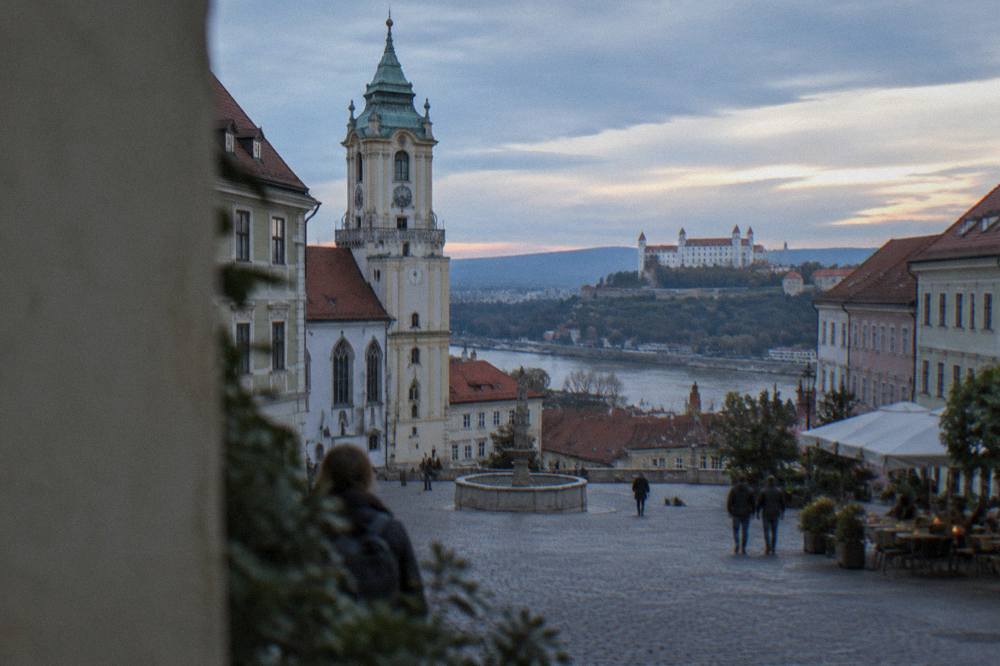
The sights a visitor sees today were all built and used under the older names: Bratislava Castle and St Martin's Cathedral served the city when it was Pozsony and Preßburg, and every coronation, siege and rebuilding in the city's history happened before the name Bratislava existed. Reading the names alongside the monuments turns a sightseeing walk into a timeline, because the stones predate the spelling by centuries.
St Martin's Cathedral is the clearest example. The building's role in the coronation history of the Kingdom of Hungary belongs entirely to the Pozsony era, and the name on any period document connected with those events will be the Hungarian or Latin one. The castle likewise appears in records under the older forms throughout its military and royal history. A modern walking tour that tells the city's story has to switch names constantly, jumping between Preßburg burghers, Pozsony administrators and Prešporok villagers to describe one small area of ground.
The castle's practical details today are straightforward: the castle grounds are open daily from 08:00 to 22:00, and the Museum of History inside is open 10:00 to 18:00 every day except Tuesday, with basic admission at 14 EUR. Full sightseeing logistics are in the site's Bratislava Castle guide. The point for this page is that nothing in that visitor information would have been recognizable to a resident of Preßburg, who knew the hill, the river and the square but not the city's modern name.
For travellers using the city as a base, the renaming story repeats itself across Slovakia, where towns carried German, Hungarian and Slovak names in parallel for centuries. A day trip beyond the capital makes that pattern visible, and the guided Čičmany, Bojince, Orava and High Tatras day tour from Bratislava is a way to see it. Check availability if that itinerary fits your dates.
Does Anyone In Bratislava Still Use The Old Names?
No living resident uses Prešporok, Preßburg or Pozsony as the city's everyday name today; Bratislava is the universal modern name in Slovak and in every other language, and the old names appear only as deliberate historical references on signs, menus, postcards and heritage projects. The renaming of the Czechoslovak era is now generations behind the city, and the current name carries no political charge for daily life.
Where the old names do surface, they are commercial or nostalgic choices, not living speech. A café calling itself something rooted in the city's past is making the same choice an Irish pub makes in any city: signalling atmosphere. The genuinely scholarly home for the old names is the archive and the museum, and the City Museum's exhibitions at the Old Town Hall, open Tuesday to Sunday and closed Mondays, are where the pre-Czechoslovak city is documented in its own words.
For visitors weighing the city against its neighbours, the name history is actually a useful frame. Bratislava's story is one of a small city repeatedly reabsorbed by larger powers, then choosing a fresh identity when Czechoslovakia was founded, which is a different arc from Vienna's or Budapest's. That comparison is drawn out in which is nicer, Vienna or Bratislava, and the budget side of the contrast is covered in is Bratislava cheap or expensive.
Common Questions About Bratislava's Old Names
What Did Bratislava Used To Be Called?
Bratislava was called Prešporok in Slovak, Preßburg in German and Pozsony in Hungarian before the name Bratislava was adopted after the First World War, with Latin documents using forms such as Posonium. All three living names described the same city at the same time.
When Did The City Officially Become Bratislava?
The name Bratislava was officially adopted after the First World War, once the city became part of the new Czechoslovak state. The form was a scholarly reconstruction chosen in preference to simply Slovakizing the older name Prešporok.
Why Do Old Maps Say Pressburg?
Pressburg is the German name, Preßburg, which the city carried through the centuries when German-speaking burghers dominated its civic life. Maps and prints made in the German-speaking world before the Czechoslovak era used this name as a matter of course.
Is Pozsony The Same City As Bratislava?
Yes. Pozsony is the Hungarian name for the same city, used officially during the centuries of Hungarian administration, and it still appears on historical materials and in Hungarian usage today.
Do The Old Names Matter For A Visit Today?
Only as colour. Every sign, ticket and timetable in the modern city uses Bratislava, and the old names show up on souvenirs, heritage signage and some business names as deliberate historical references. Recognizing them simply makes the older maps and prints in the shops easier to read.
Where Can I See The Old City Documented?
The City Museum exhibitions at the Old Town Hall, open Tuesday to Sunday and closed Mondays, present the city's documented past, and period prints and postcards sold in the Old Town show the same squares and castle under the older names.