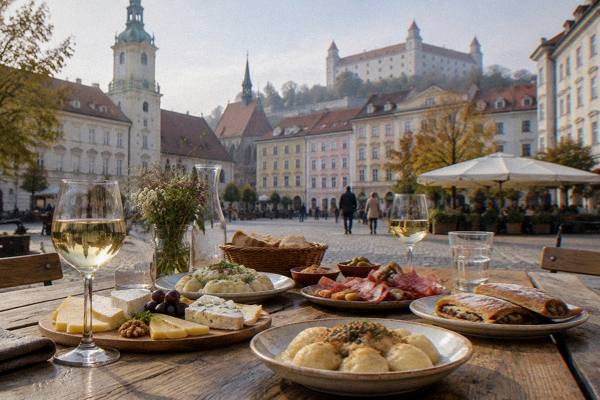
Bratislava Cafés: Specialty Coffee And Historic Rooms
Bratislava's café life runs through a pedestrian Old Town where a coffee stop and a castle visit fit in the same afternoon, and where every price on the street is in euros.
Short answer
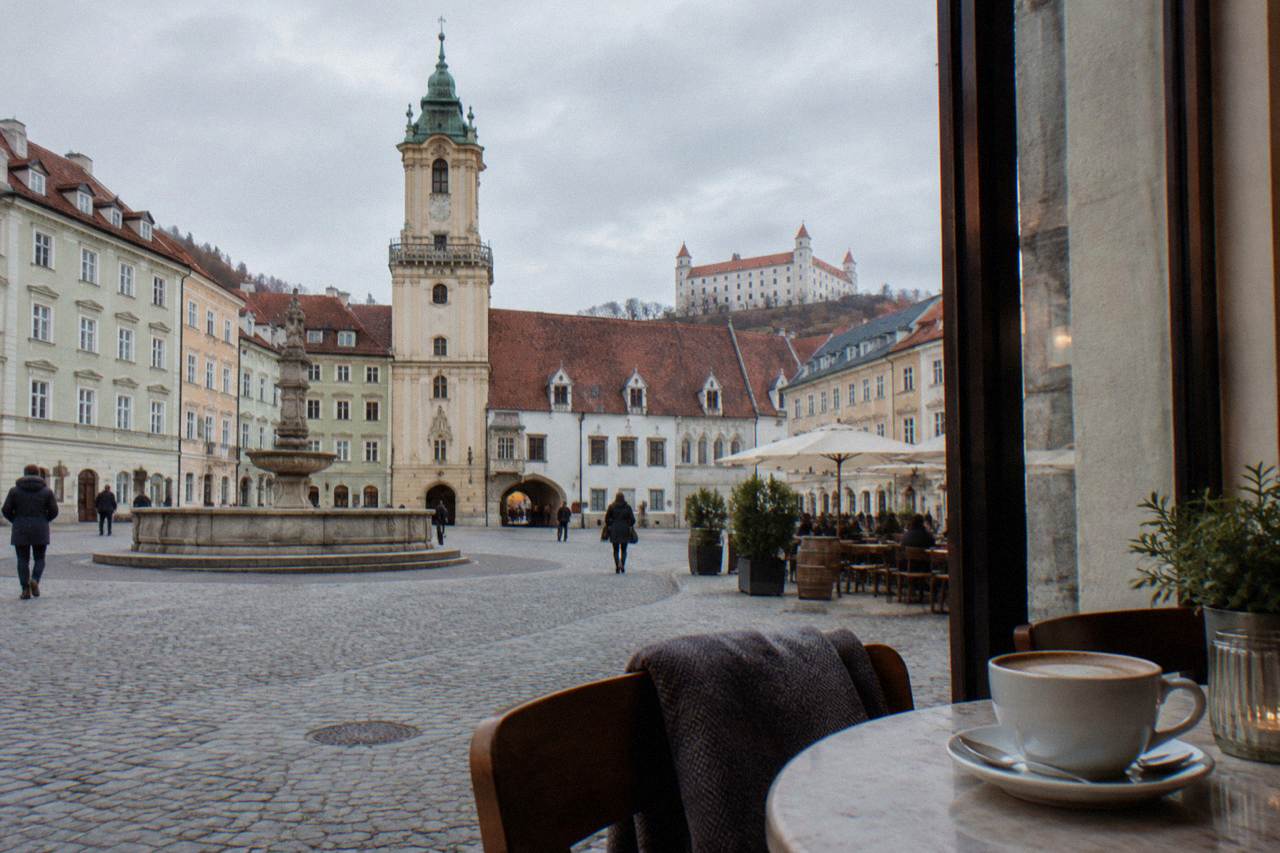
Bratislava's café scene sits inside a walkable Old Town: specialty espresso near Hlavné námestie, historic museum rooms within minutes on foot, and local costs in euros. This page covers how café culture works in the city, which sights sit closest to your table, opening days, tickets and how a walking tour with castle entry fits a coffee-focused day.
Bratislava, the capital of Slovakia, is an inland city on the Danube of about 468,000 residents, and its café life is shaped by that geography more than by any single famous room. The Old Town is pedestrian, compact and built for the pattern this page describes: a coffee in the morning, a museum or a cathedral at midday, a second coffee somewhere quieter in the afternoon. Slovakia adopted the euro on 1 January 2009, so every local cost in this guide, from a tram ticket to a castle admission, is printed in euros.
Venues are not ranked. The facts behind this site carry no restaurant prices, no pint prices and no café opening hours, so instead of inventing them, this guide covers what can be stated: how the café scene is organised geographically, which historic rooms sit closest to it, what the surrounding sights cost and when they open, and how a coffee-focused day fits together with Bratislava Travel Guide's wider coverage of the city.
What Is The Café Scene Like In Bratislava?
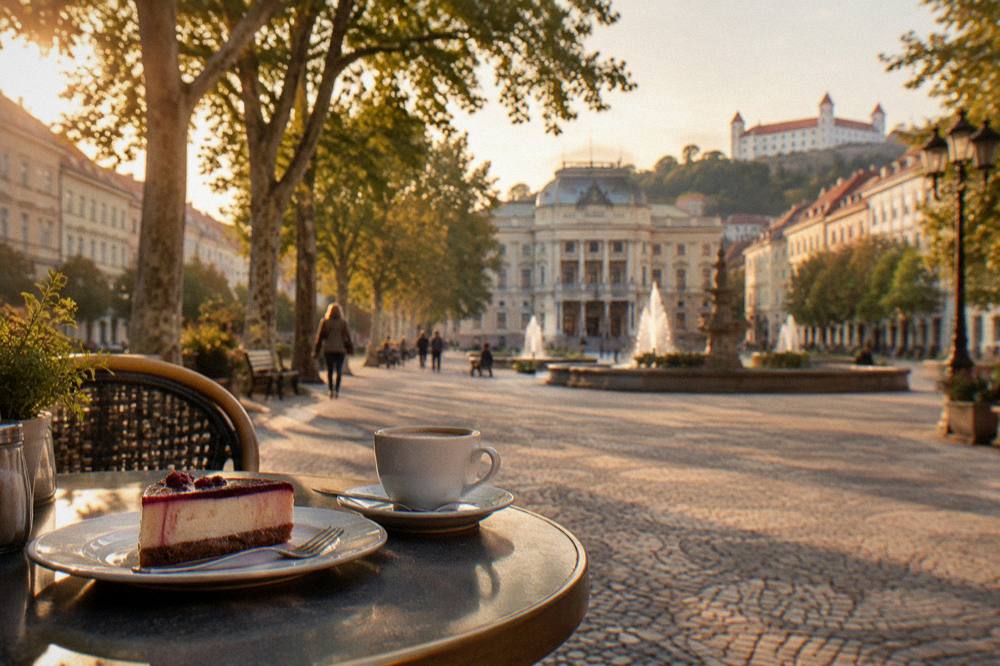
Bratislava's café culture is an Old Town phenomenon: a dense, walkable core around Hlavné námestie and Hviezdoslavovo námestie where coffee sits at the centre of the day, bracketed by historic sights that are all reachable on foot without a car or a taxi. The city is not large, about 468,000 residents, and the pedestrian streets of the centre mean a café table, a cathedral and a castle hill can share one afternoon. Prices on the street are in euros, and the local rhythm is European: a slower table culture rather than a takeaway-only scene.
The pattern to plan around is simple. Coffee in Bratislava belongs to the morning and the mid-afternoon pause, and the middle of the day belongs to the sights. The castle grounds are open daily 08:00 to 22:00 year-round, and the Museum of History inside is open Wednesday to Monday 10:00 to 18:00, closed Tuesdays. That leaves the early morning and the late afternoon free for the table, which is exactly how the locals' day tends to run.
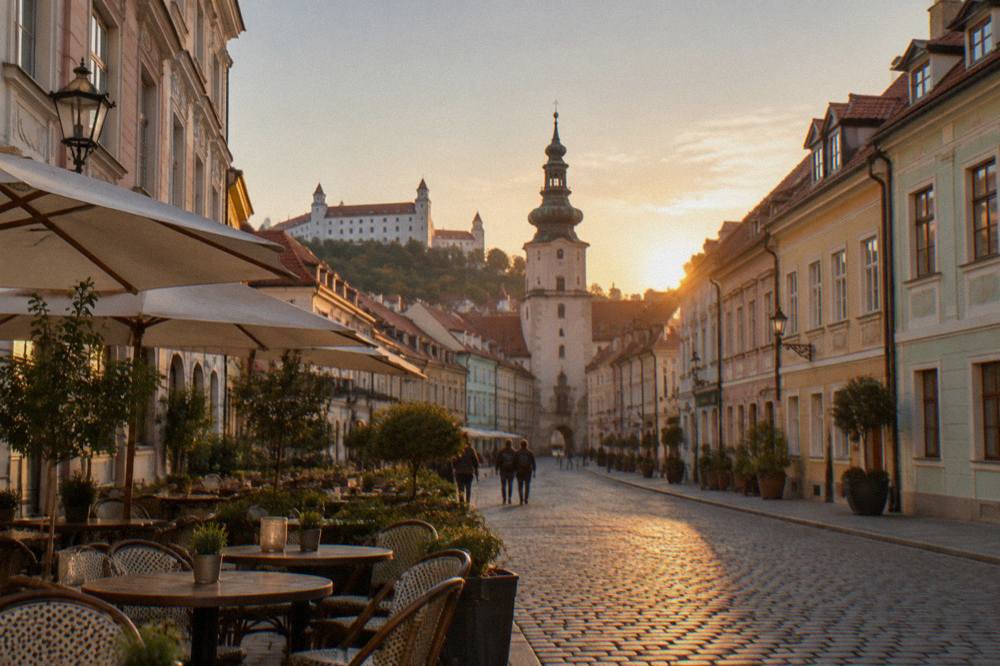
Rain matters here more than heat. The modelled ERA5 reanalysis for Bratislava, covering 1991 to 2020, puts July rain at 75.8 mm and February at 33.4 mm, so the wet months are the summer ones and café interiors earn their keep from May through September. A rainy-day plan is easy to build around coffee: the Bratislava in the rain itinerary covers the indoor half of the city in detail.
One more thing shapes the scene: the city's size. At 468,290 residents as of 24 June 2026, Bratislava is a capital that behaves like a mid-sized town, and the café zone reflects that. Nothing in the core is more than a short walk from anything else, the castle hill is the one real climb, and the riverfront closes the loop at the southern edge. Visitors arriving for a weekend do not need to plan a transport day around coffee, only a walking one.
Where Do Locals Drink Coffee In The Bratislava Old Town?
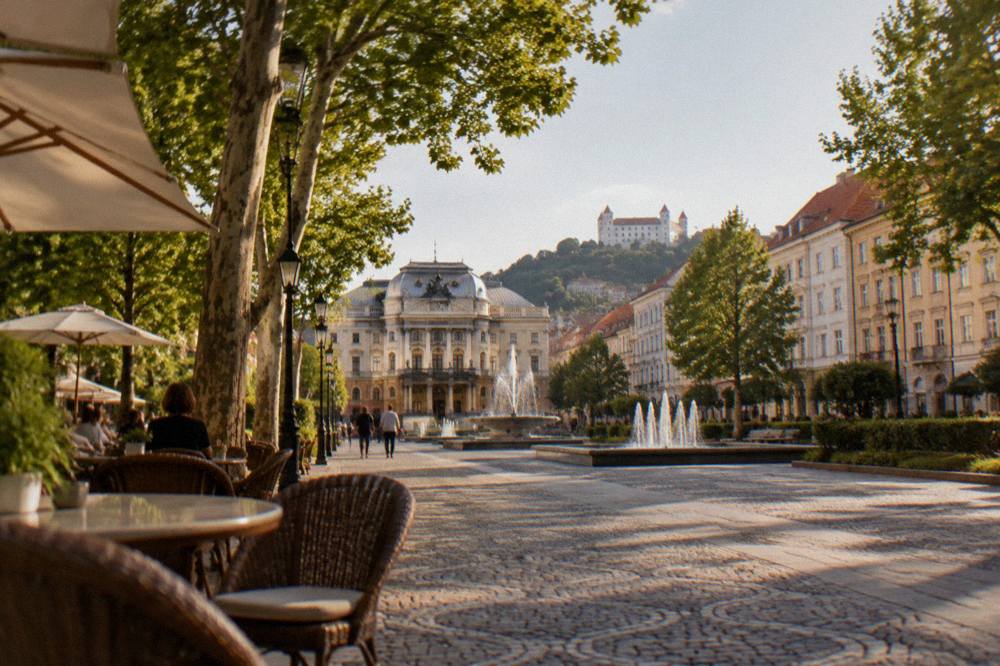
The centre of gravity is the pedestrian zone between Hlavné námestie, the Main Square, and Hviezdoslavovo námestie, with the streets running up toward Michael's Gate and down toward the Danube riverfront, all within a walk of a few minutes across flat ground. This is where the day's first coffee happens, where the outdoor season runs from spring through early autumn, and where every major historic room in the city sits within easy reach of a table.
The useful mental map has three zones. The Main Square and Hviezdoslavovo námestie hold the squares themselves, the Old Town Hall and the cafés around them. The Michael's Gate end of Michalská street marks the northern edge of the café zone, with the tower and its exhibition right there. And the southern edge runs down to the riverfront and the Eurovea stretch, where the modern half of the city begins. A coffee-focused walk can cover all three in a loop.
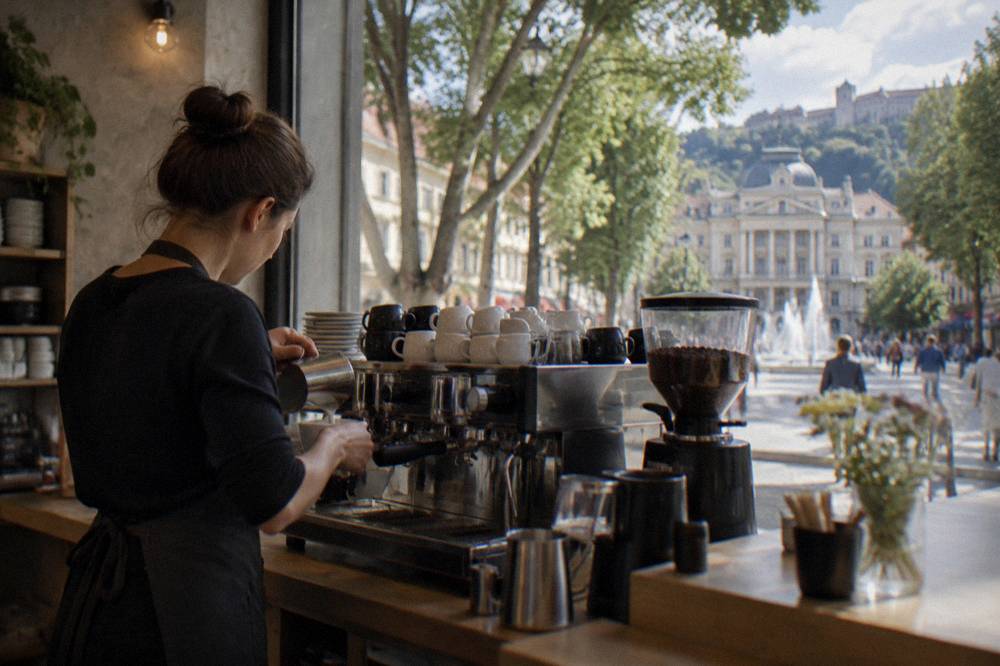
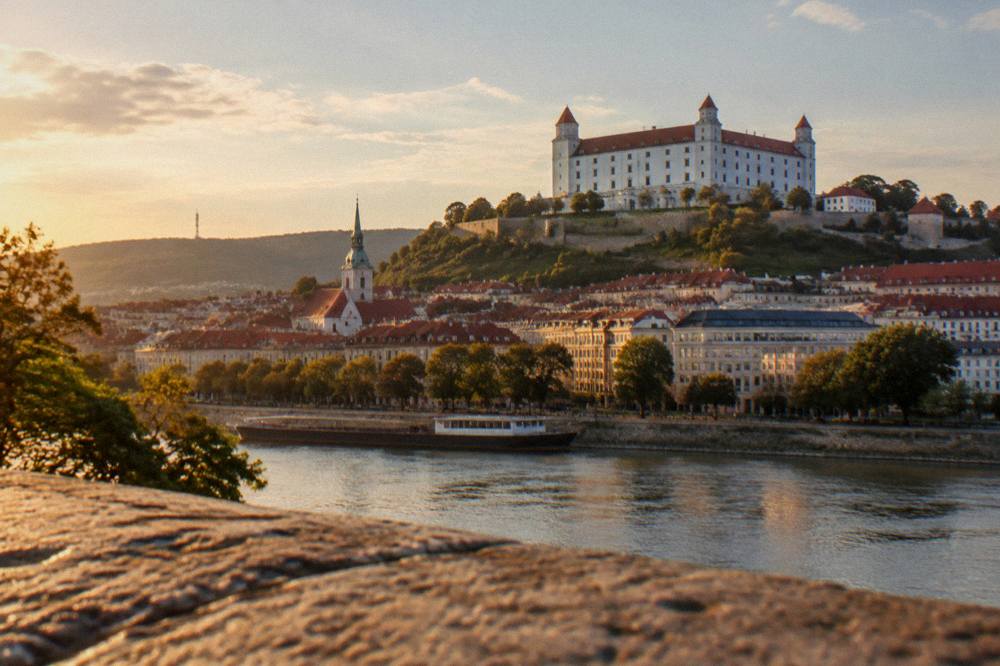
None of this needs a car or a taxi. The Old Town is on foot, and a guided walk is one of the practical ways to see the whole loop with the history attached. The site's featured tour for this page is the guided walking tour with castle entry ticket, which covers the Old Town and the castle in one ticketed walk, a natural companion to a day built around coffee stops. For a broader view of the city's walkable layout, the is Bratislava a walkable city explainer is the site's overview page.
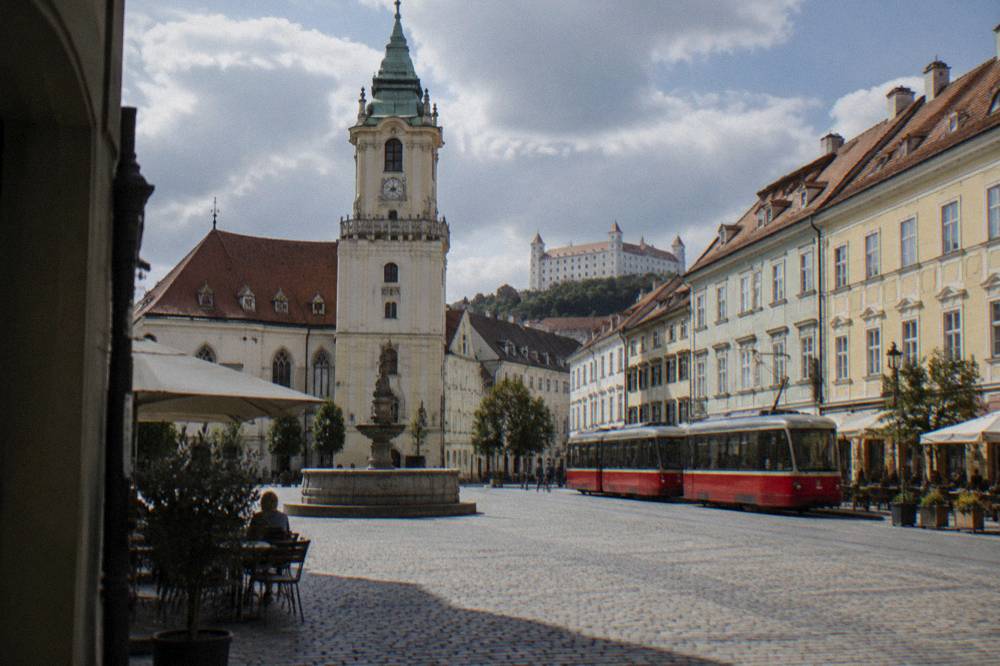
The squares deserve a note of their own, because they anchor the whole scene. Hlavné námestie, the Main Square, is the historic heart, with the Old Town Hall on its edge and its tower ticket a separate 4-euro admission. Hviezdoslavovo námestie sits closer to the river and the Slovak Philharmonic's Reduta, and between the two squares the pedestrian streets carry the bulk of the tables. Anyone planning a coffee morning should simply start at one square and drift toward the other.
Which Historic Rooms Sit Within Walking Distance Of Bratislava Cafés?
Five of the city's main historic interiors, the Old Town Hall, Michael's Tower, Primate's Palace, St Martin's Cathedral tourist zone and the castle's Museum of History, all sit inside the walkable core, with admissions from 4 to 14 euros and a shared pattern of one closed weekday each. A café day and a culture day are the same day in Bratislava, because the distance between the table and the ticket desk is a short walk.
The admissions break down like this:
| Historic room | Basic admission | Reduced | Notes |
|---|---|---|---|
| Bratislava Castle, Museum of History | 14 EUR | not published on fetched pages | Open Wed to Mon 10:00 to 18:00, closed Tuesdays |
| Old Town Hall and Apponyi Palace | 8 EUR | 4 EUR | Family 2+3 is 18 EUR; tower separately 4 EUR |
| Michael's Tower exhibition | 6 EUR | 4 EUR | Family tickets from 8 EUR |
| Primate's Palace | 5 EUR | 2.50 EUR | Under 18 free; audio guide included |
| St Martin's Cathedral tourist zone | 5 EUR | 2.50 EUR (reported) | Nave itself is free |
Two closure days matter when planning the loop, and they are not the same day. The castle museum and Michael's Tower are closed on Tuesdays; the Old Town Hall is closed on Mondays; Primate's Palace posted hours for one October week as Monday closed and Friday afternoon only. St Martin's Cathedral closes its tourist zone daily between 11:30 and 13:00 and on Sunday mornings, because it is a working church first. Build the coffee stop into the closed window rather than around it.
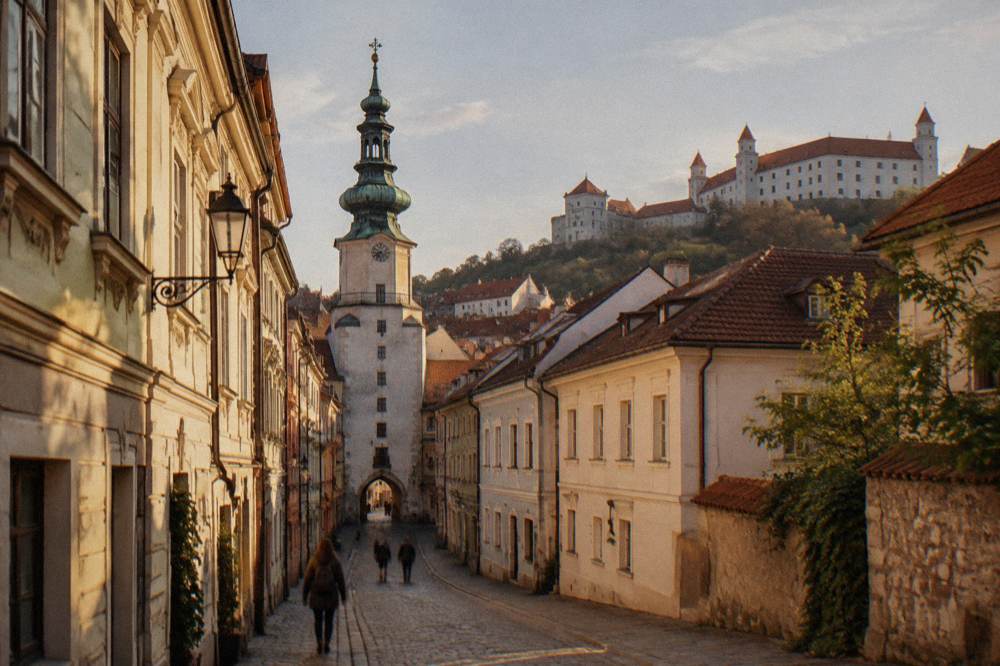
The city's own pass changes the arithmetic for anyone planning to enter several of these rooms. The Bratislava CARD, in the version with transport, costs 30 euros for the shortest validity, 36 for the middle validity and 39 for the longest validity, and includes free entry to 23 sights including the castle museum, the Old Town Hall, Michael's Tower and Primate's Palace, plus a daily 14:00 walking tour of the historic centre. The site's Bratislava museums guide compares what the pass covers in depth.
How Much Does A Coffee Day In Bratislava Cost Beyond The Cup?
The fixed costs around a café day in Bratislava are the tourist tax of 3.50 euros per person per night in the Old Town and 3.00 elsewhere, a 30-minute public transport single at 1.20 euros on paper or 1.09 in the app, and the sight admissions in the table above, while the coffee itself carries no price on this site and is paid in euros on the street. That is the honest budget shape: the surroundings are priced and published, the cup is not.
The transport fares, from the IDS BK price pages for zones 100 and 101:
| Ticket | Paper | App / eTicket |
|---|---|---|
| Single, 30 minutes | 1.20 EUR | 1.09 EUR |
| Single, 60 minutes | 1.80 EUR | 1.60 EUR |
| Day ticket, 24 hours | 5.40 EUR | 4.85 EUR |
| Day ticket, 72 hours | 10.70 EUR | 9.68 EUR |
| Week ticket, 168 hours | 16.20 EUR | 16.20 EUR basic, 8.10 reduced |
The table above shows the standing prices. The public transport guide covers tickets, validators and the airport bus in full.
The tourist tax is charged per accommodation, not per coffee, and it caps at 60 nights per taxpayer per year. For a two-night Old Town stay for one person that is 7 euros in total, added to the hotel bill. Nobody planning a café weekend needs to budget for it separately, but it explains part of the difference between quoted room rates and the final invoice. The budget guide works through the rest of the low-cost picture.
For visitors staying outside the Old Town, the same tax runs at 3.00 euros per person per night, and transport into the café zone is covered by the same single and day tickets in the table. The app versions are consistently cheaper than paper for both singles and day tickets, so a phone with the IDS BK app installed saves a little on every trip in from the outer districts.
What Food And Drink Pair With Coffee Culture In Bratislava?
Bratislava's food culture pairs coffee with a central European cake-and-pastry tradition, moves to wine in the afternoon and evening, and marks the year with the reported release of St Martin's young wine on 11 November.
The structure of the eating day matters to a café plan. Coffee and pastry belong to the morning; the main meal of the day sits at midday; and the evening runs toward beer pubs and wine bars rather than more espresso. Slovakia's wine identity is real and regional, tied to the Small Carpathians villages outside the city, and the site's Slovak wine guide and the what to eat in Bratislava guide cover both halves properly.
For visitors who want the wine half of the day as an organised experience rather than a self-guided search, the city has a tasting offer that fits the profile of this page, a guided tasting held entirely in the dark, which the roster lists among its wine-tasting products. The dark-format tasting and the food walks in the roster are the two bookable products closest in spirit to café culture, and both are in the picks band further down.
Beyond coffee and wine, the evening belongs to the pubs, and the beer and pubs guide covers that half. Tipping, per the reported Slovak norm, is a round-up or 5 to 10 percent for good table service, which applies to café tables with table service as much as to restaurants.
When Are Bratislava Cafés And Sights Open Through The Year?
Sight opening hours in Bratislava follow a stable pattern, castle grounds daily 08:00 to 22:00 year-round, museums roughly 10:00 to 18:00 with one closed weekday each, and the café season tracking the weather, which the modelled ERA5 normals put between 3.0 and 26.3 degrees of average daily high depending on month. Winter shrinks the outdoor tables and moves the day indoors; summer does the reverse.
The month-by-month normals, ERA5 reanalysis for 1991 to 2020, modelled rather than a station record:
| Month | Mean high C | Mean low C | Rain mm |
|---|---|---|---|
| March | 10.3 | 1.1 | 42.0 |
| April | 16.0 | 5.7 | 44.0 |
| May | 20.4 | 10.6 | 69.1 |
| June | 24.1 | 14.5 | 73.6 |
| July | 26.3 | 16.6 | 75.8 |
| August | 26.2 | 16.4 | 66.8 |
| September | 20.8 | 12.0 | 67.1 |
| October | 15.0 | 7.3 | 48.5 |
The closed-weekday map, which decides which day of a café weekend loses its museum half:
| Sight | Closed day | Open hours |
|---|---|---|
| Castle Museum of History | Tuesday | Wed to Mon 10:00 to 18:00, last entry 17:00 |
| Michael's Tower | Tuesday | Mon, Wed to Sun 10:00 to 18:00 |
| Old Town Hall | Monday | Tue to Sun 10:00 to 18:00 |
| Primate's Palace | Monday (posted weekly) | 10:00 to 17:00, Fri afternoons only in posted week |
| Devin Castle | Monday | Nov to Feb 10:00 to 16:00, Oct 10:00 to 17:00 |
A Tuesday visitor loses the castle museum and Michael's Tower but keeps the Old Town Hall. A Monday visitor loses the Old Town Hall but keeps the castle. Devin Castle stays open through the winter, Tuesday to Sunday 10:00 to 16:00 from November to February, with admission at 6 euros in the winter season against 8 euros from April to October. The best time to visit guide and the weather guide carry the full seasonal picture.
Winter adds one more draw that pairs directly with café culture: the main Christmas market on Hlavné námestie and Hviezdoslavovo námestie runs 26 November 2026 to 3 January 2027, right inside the café zone, so the December version of this day alternates between a heated table and the stalls on the square. The Christmas market guide covers dates, hours and what to expect.
Is Bratislava A Good Base For A Coffee-And-Castles Day Trip?
Bratislava works as a base for pairing café mornings in the Old Town with castle day trips further afield, because the city sits about an hour from Vienna by train, the REX8 covers the route in 56 minutes for 12.70 euros one way, and the roster carries full-day castle circuits into western and northern Slovakia for travellers who want more than the one castle on the hill. The coffee-and-castles combination is one of the city's most practical formats.
The day-trip logic splits in two. Vienna, Budapest and the other capitals are covered on this site as separate routes, and the Vienna link in particular is fast and cheap enough that a Vienna coffee morning and a Bratislava afternoon is a real day. The Vienna day trip guide covers that direction, and the Vienna to Bratislava guide covers the reverse for visitors basing themselves in Austria.
The other direction runs into Slovakia itself, to castle towns that make the Bratislava café scene feel like the warm-up act. The three-castles day trip below is the roster's western-Slovakia circuit, and it pairs naturally with a first-morning coffee in the Old Town before the coach leaves.
For a stay rather than a day, the accommodation side of the plan is covered in the where to stay guide, which sets out the Old Town against the riverside and the outer districts, with the tourist tax difference between the Old Town's 3.50 euros and the 3.00 euros elsewhere built into the comparison.
Common Questions About Bratislava Cafés
Is Bratislava good for coffee?
Bratislava has a compact pedestrian Old Town where café tables, historic rooms and the castle all sit within a short walk of each other, which makes a coffee-focused day unusually easy to plan. The city is inland, on the Danube, and prices on the street are in euros.
How much does coffee cost in Bratislava?
The surrounding cost base consists of a 30-minute transport single at 1.20 euros on paper or 1.09 in the app, castle museum admission at 14 euros, and a tourist tax of 3.50 euros per person per night in the Old Town.
Which day of the week are Bratislava sights closed?
The castle's Museum of History and Michael's Tower are closed on Tuesdays. The Old Town Hall is closed on Mondays. Primate's Palace posts its hours weekly and was closed Monday in the posted October week. Devin Castle is closed Mondays but stays open through the winter.
Can you visit Bratislava Castle and still have a relaxed café day?
Yes, the format fits: the castle grounds are open daily 08:00 to 22:00 and the museum 10:00 to 18:00, leaving early morning and late afternoon for the table. The featured walking tour with castle entry ticket covers both the Old Town and the castle in one booked walk, and Check availability on the operator's live listing.
When is the best season for café terraces in Bratislava?
The modelled ERA5 normals put July average highs at 26.3 degrees and January at 3.0, with July also carrying the highest monthly rain total at 75.8 mm. Terrace weather runs from spring through early autumn; winter moves the café day indoors toward the museums and the Christmas market, which runs 26 November 2026 to 3 January 2027.
Do you tip in Bratislava cafés?
The reported Slovak norm is a round-up or 5 to 10 percent for good table service, applying wherever there is table service. It is appreciated rather than mandatory.