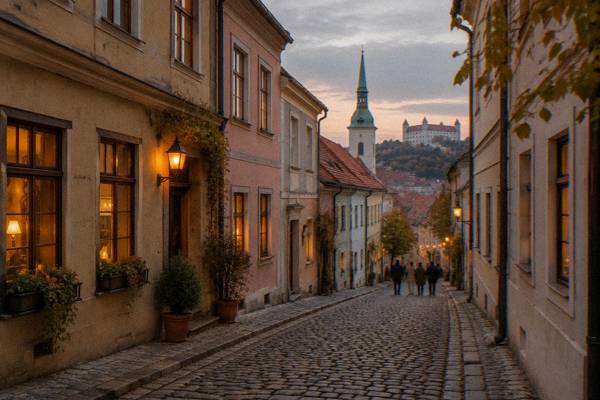
Beer And Pubs In Bratislava: Slovak Lagers And Craft Taprooms
Slovakia brews lagers the Czech way, and Bratislava drinks them in pubs, cellars and a growing set of craft taprooms. This guide covers the styles, the customs, the money and the seasons.
Short answer
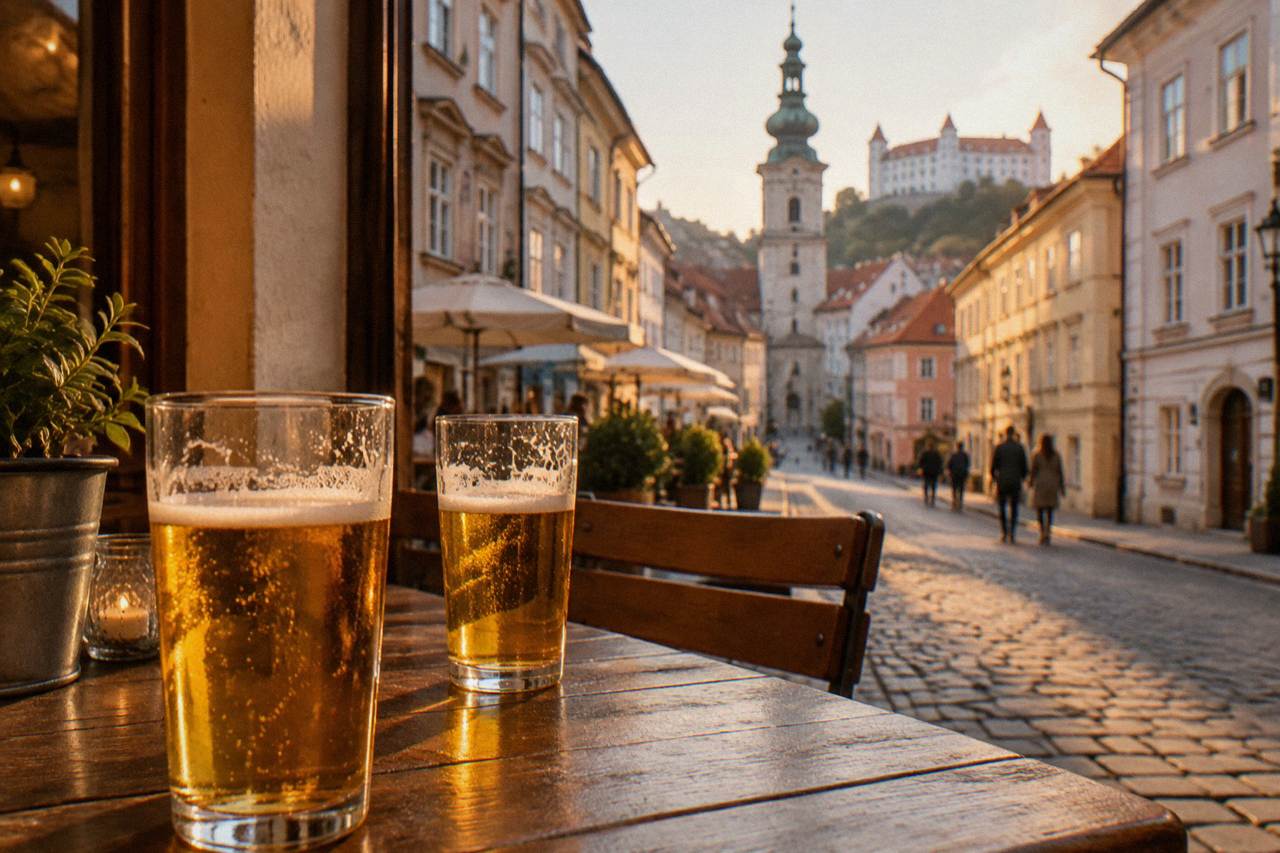
Slovak beer culture centres on pale lager served on tap, with darker and cut mixes alongside a newer craft scene of taprooms in and around the Old Town. Prices are in euros, tap water is safe, and guided beer and food walks cover the ground for visitors who want context with the pints.
Bratislava, the capital of Slovakia and an inland city on the Danube, drinks beer the way the middle of Europe drinks beer: bottom-fermented lager, served cold, in pubs where the tap is the point of the room. The country has adopted the euro, so everything on this page is priced in EUR, and nothing here carries a made-up price. The city's beer identity sits between two bigger neighbours, Vienna about an hour away by train and Budapest further down the Danube, and the local scene has its own vocabulary, its own customs and, more recently, a layer of small craft breweries and taprooms that did not exist a generation ago. This page, from the Bratislava Travel Guide desk, lays out the styles to order, how the pubs work, what the seasons do to a beer trip, and how a guided walk fits in.
What Is Slovak Beer, And What Should You Expect From A Pint In Bratislava?
Slovak beer is lager country: bottom-fermented, cold-conditioned and overwhelmingly pale, in the same brewing family that made the Czech Republic famous, with Slovakia producing its own long-standing national brands alongside a newer wave of small craft breweries. A pint in Bratislava means a draught lager served cold, ordered by the half-litre or the smaller tenth-litre-and-a-bit measures, in pubs, cellars and taprooms across the Old Town and beyond.
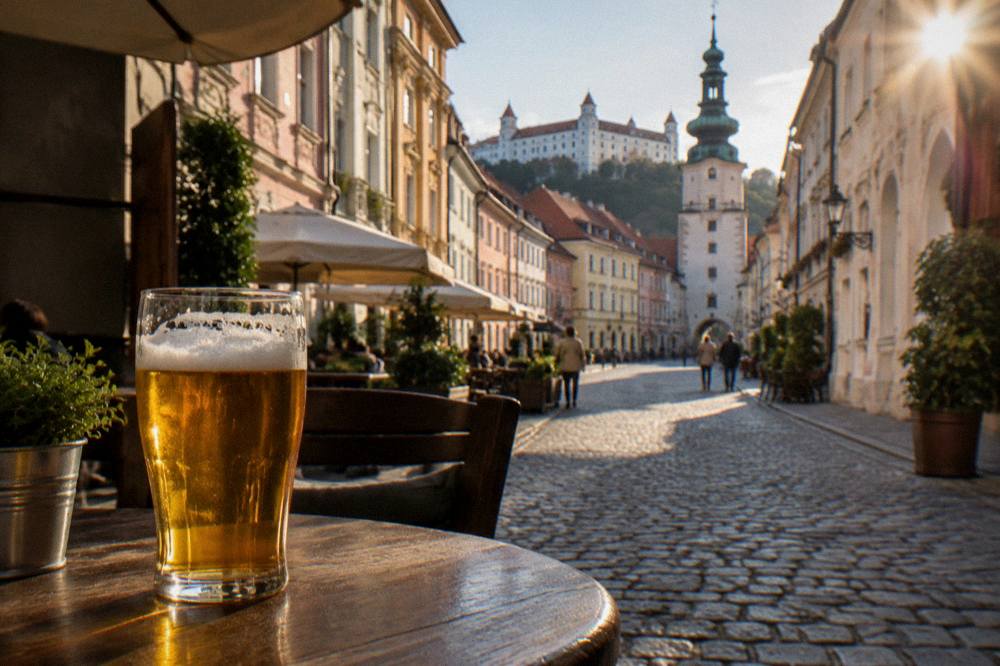
The context matters for expectations. Slovakia is a eurozone country, using the euro since 1 January 2009, so a pub visit involves no currency maths for anyone coming from the euro area. The city itself has about 468,000 residents, compact enough that the beer district and the sightseeing district overlap: the pedestrian Old Town around Hlavné námestie and Hviezdoslavovo námestie holds most of the pubs a first-time visitor will walk past, and everything further out sits on the public transport network described later in this guide.
What the desk can say about the beer itself is structural rather than romantic. The dominant tradition is the plzeň-style pale lager, the brewing method shared across this whole region, and the Slovak market has been served for decades by large national lager brands before the craft wave added variety. The tap water is safe to drink, supplied from underground sources and only disinfected, per the water company's published water-quality information, which matters on a long pub evening more than it might seem.
Which Beer Styles And Words Should You Know Before Ordering In Bratislava?
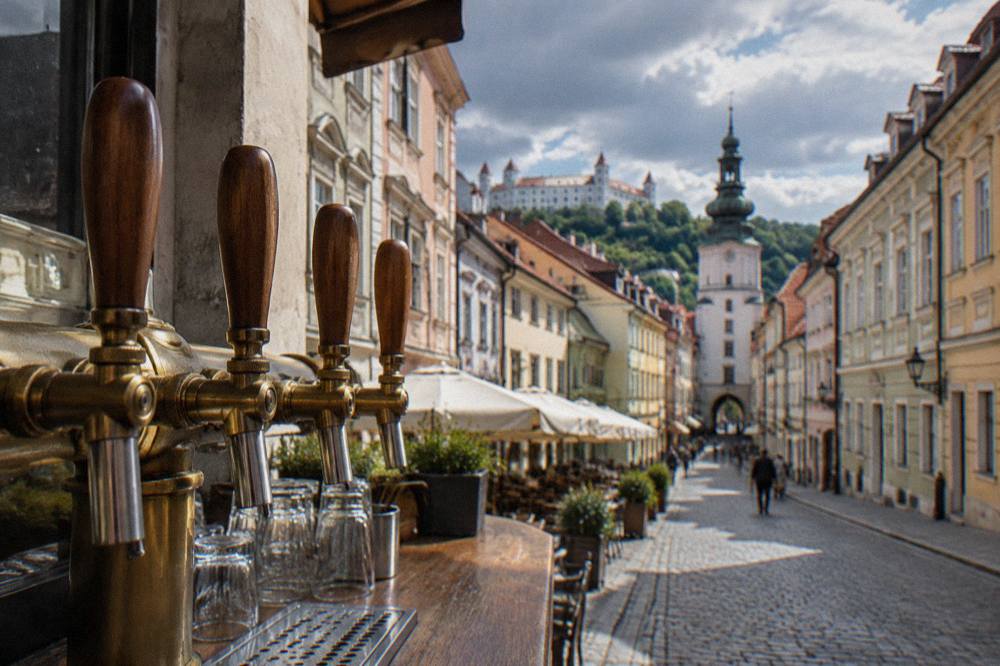
The words that matter on a Slovak beer menu are svetlé, a pale lager, tmavé, a dark lager, polotomavé or polotmavé, an amber half-dark lager, and rezané, a "cut" beer mixing pale and dark lagers in one glass, while craft taprooms add the international vocabulary of IPAs, stouts and sours on top of that lager base. Knowing four words gets a visitor through almost any traditional pub card in the city.
The language is the short version of the culture. Slovak pub vocabulary is close to Czech, and the same logic applies: order by colour and by size, and the tap handles do the rest. A traditional pub in the Old Town will pour the big national pale lagers by default; a taproom a few streets away will list a dozen of its own and guest brews. Neither is the wrong choice, they are different rooms.
For visitors who want the vocabulary widened beyond beer, the local drinking culture also runs on wine: the Small Carpathians wine region starts at the edge of the city, and the Slovak wine guide covers it, with young St Martin's wine traditionally released from 11 November, a date reported but not centrally confirmed for every venue. A basic Slovak greeting and a few courtesy words make pub interactions smoother, and the language guide collects them; the question of how to say hi in Slovak has its own short answer page.
What a visitor pays for a beer in Bratislava is covered in the dedicated pint price answer page, and recommendations by name belong to a guided walk, where a local operator stands behind them.
How Do Pubs And Taprooms In Bratislava Actually Work?
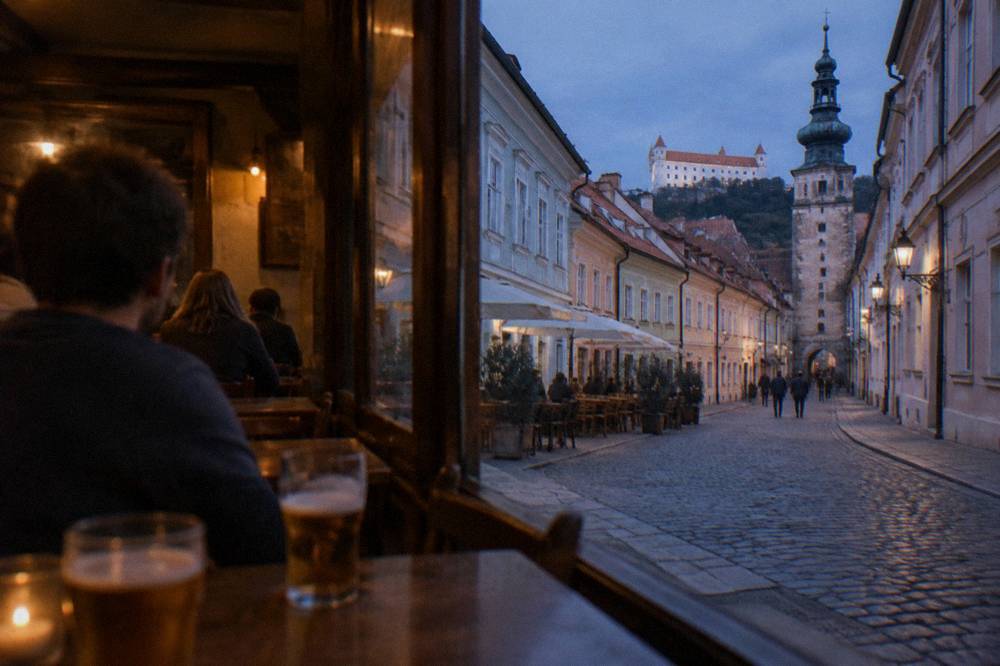
A traditional Bratislava pub runs on table service with a tab: you sit, the server brings beer, often without asking again between rounds, and you pay at the end by asking for the bill, while craft taprooms work more like the international model, order at the bar, pay per round, and taste flights are common, with both types concentrated in and around the pedestrian Old Town so a beer evening needs no car and no plan beyond comfortable shoes.
The tab habit is the single biggest cultural difference for visitors from order-at-the-bar countries. In a classic Slovak pub the beer keeps arriving because the server assumes a fresh round is welcome until the bill is requested, and the request for the bill is the signal that ends the evening. Anyone pacing themselves should say so early, it is normal and unremarkable. In the craft taprooms the model flips: order at the counter, pay as you go, and choose from a printed or chalkboard card that lists styles and strengths.
Tipping follows the general Slovak pattern, reported in travel guidance as rounding up or leaving 5 to 10 percent for good table service, appreciated rather than obligatory. Cash and cards both circulate; the euro is the only currency. Smoking rules and opening hours vary by venue, so an evening plan should not depend on a specific room being open late.
Practical money facts that frame a night out:
| Practical item | Figure | Note |
|---|---|---|
| Currency | EUR | Euro since 1 January 2009 |
| Tourist tax, Old Town | 3.50 EUR per person per night | 3.00 EUR in other districts, at most 60 nights |
| Tipping | Round up or 5 to 10 percent | Reported norm for good table service |
| Tap water | Safe to drink | Groundwater supply, disinfected and monitored |
| Emergency number | 112 | 155 ambulance, 158 police |
Is Bratislava Good For Craft Beer, And Where Does The Scene Sit?
Yes: Bratislava has a real craft beer scene layered over the lager mainstream, built on small breweries and taprooms pouring their own and each other's beer, concentrated in and near the Old Town and reachable entirely on foot or by a short tram ride, and the scene is young enough that a guided walk with a local still buys access a first visit would miss. The craft wave is the newest chapter of a beer culture that was lager-only for decades.
What the desk can say about the scene is its shape, not a ranked list. Craft brewing arrived in Slovakia after the long post-socialist decades of consolidated industrial lager, and Bratislava, as the capital and the richest visitor market, took the largest share of it. The taprooms pour international styles, IPAs, stouts, wheat beers and sours, beside the domestic pale lagers, and the better ones take the lager tradition seriously rather than replacing it. A visitor who wants both the tradition and the new wave in one evening does not need to cross the city; the walking radius of the centre covers it.
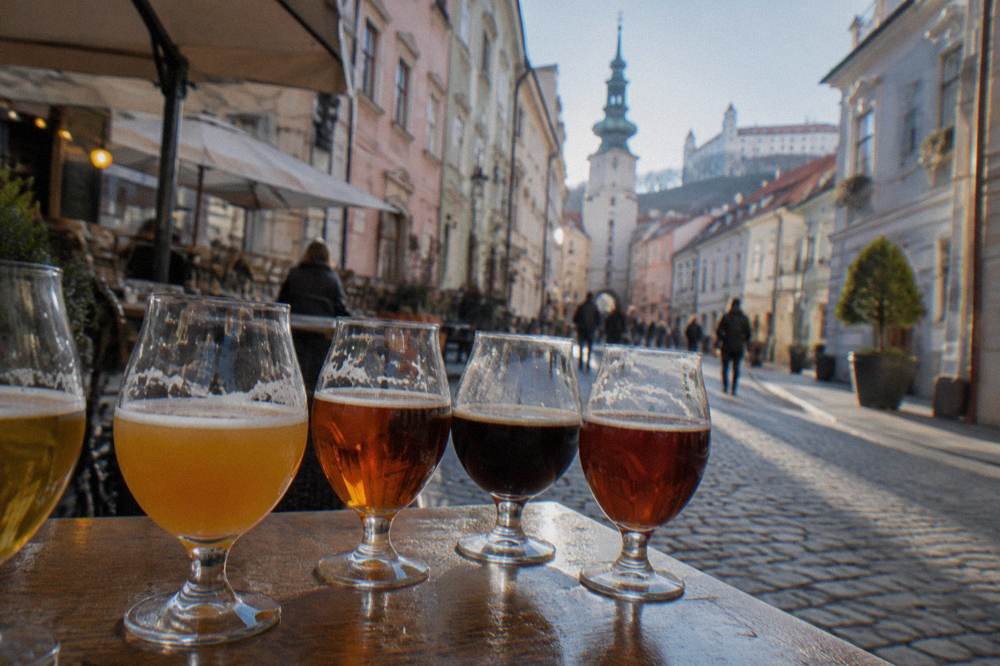
The most efficient introduction is a guided one. The private craft beer tour covers brewing styles and taproom stops with the operator's own guide, and the listing carries the price, rating and duration. For visitors weighing it against going alone, the trade is simple: an evening walking the Old Town finds good beer by accident, and a walk with a guide finds it on purpose, with the styles explained between stops. Check availability against your dates before committing an evening.
Beer also anchors a wider food-and-drink scene: the food guide pairs the beer vocabulary with the dishes that sit beside it, and beer walks that fold in food stops are listed among the city's tours.
What Should You Know About Drinking Rules, Streets And Safety In Bratislava?
Drinking in Bratislava is regulated the normal European way: alcohol is sold in pubs, restaurants and shops, the emergency number is 112, and the city's centre is a compact, walkable, pedestrian-first district where a beer evening needs no car, while the specific question of drinking alcohol in public streets has its own rules and its own answer page.
The parts the desk can stand behind are the unglamorous ones. The emergency numbers are 112 for the universal EU line, 155 for an ambulance and 158 for police. The tourist tax, paid through accommodation, is 3.50 EUR per person per night in the Old Town district and 3.00 EUR elsewhere, capped at 60 nights. Slovakia is in the Schengen Area, reported in the same breath as its euro membership, so EU visitors move freely and everyone else should check the entry requirements context on the arrival pages.
The pedestrian Old Town is the safety story that matters for a beer evening. The historic centre around Hlavné námestie and Hviezdoslavovo námestie is a walking district, the main sights sit within minutes of each other, and the tram and bus network described below covers anything further out. A late evening finishes on foot or on night public transport, and the night-time safety picture is covered in the nightlife guide.
When Is The Best Season For Beer In Bratislava?
There is no bad beer season in Bratislava, but the calendar changes the room: summer moves drinking to terraces, autumn brings the St Martin's young wine moment from 11 November and the Christmas market from 26 November 2026 to 3 January 2027, and winter compresses the scene into the cellar pubs of the Old Town, with July averaging modelled daily highs of 26.3 C and January 3.0 C per the ERA5 climate normals for 1991 to 2020.
The climate frame, from ERA5 reanalysis for a grid cell over Bratislava, 1991 to 2020, modelled rather than a station record:
| Month | Mean daily high C | Mean daily low C | Rain mm |
|---|---|---|---|
| Jan | 3.0 | -3.1 | 34.9 |
| Feb | 5.5 | -2.3 | 33.4 |
| Mar | 10.3 | 1.1 | 42.0 |
| Apr | 16.0 | 5.7 | 44.0 |
| May | 20.4 | 10.6 | 69.1 |
| Jun | 24.1 | 14.5 | 73.6 |
| Jul | 26.3 | 16.6 | 75.8 |
| Aug | 26.2 | 16.4 | 66.8 |
| Sep | 20.8 | 12.0 | 67.1 |
| Oct | 15.0 | 7.3 | 48.5 |
| Nov | 8.9 | 3.0 | 46.3 |
| Dec | 3.7 | -1.7 | 40.0 |
The event calendar gives the beer year its landmarks, with the dates for each:
| Period | What runs | Dates held by this desk |
|---|---|---|
| Late September | Bratislava Music Festival | 23 Sep to 11 Oct 2026 |
| Late October | Bratislava Jazz Days, Incheba Expo Arena | 23 to 25 Oct 2026 |
| 11 November | St Martin's young wine release | Reported traditional date |
| Late November | Main Christmas market opens, Hlavné námestie and Hviezdoslavovo námestie | 26 Nov 2026 to 3 Jan 2027 |
| Winter | Devin Castle stays open, Tue to Sun 10:00 to 16:00 | November to February |
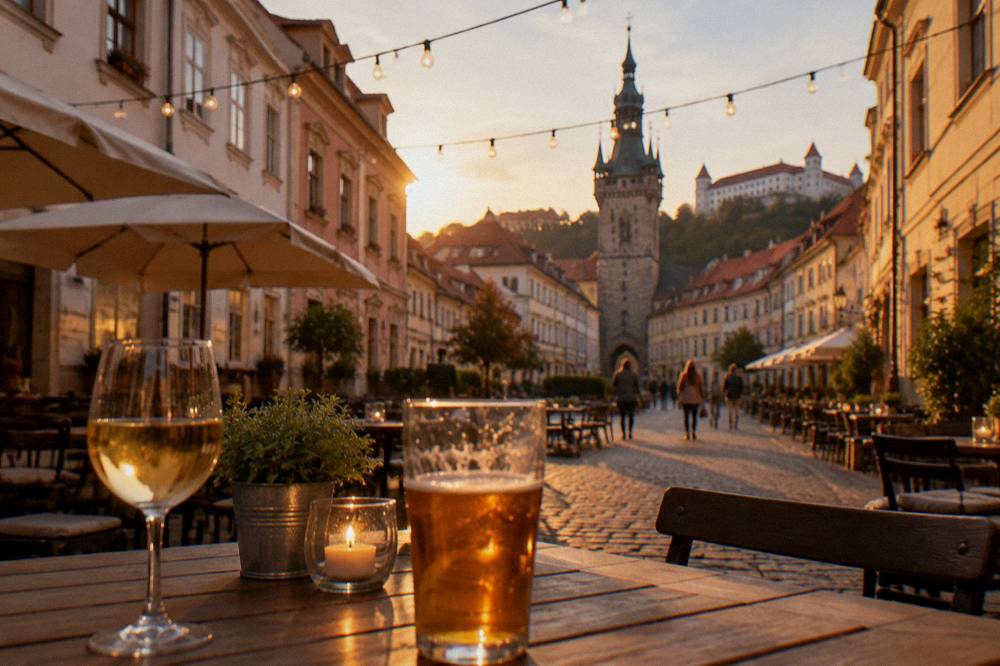
Autumn is the season the desk would flag for a drink-focused visit: the jazz and classical festivals fill late September and October, the young-wine date lands on 11 November, and the Christmas market opens on 26 November 2026 and runs to 3 January 2027, closed only 24 and 25 December per the organiser's reporting. The Christmas market guide and the winter guide carry the detail, and the month-by-month question has its own page on the best month to visit.
How Do You Get Home After An Evening In The Pubs In Bratislava?
Public transport is the answer: the IDS BK network covers the whole city with trams, trolleybuses and buses, standing paper singles cost 1.20 EUR for 30 minutes and 1.80 EUR for 60 minutes, day tickets run from 5.40 EUR for 24 hours, and the night network runs on top of that, all in zones 100 and 101 that cover the centre a beer evening lives in.
The fare table for zones 100 and 101:
| Ticket | Paper EUR | App / eTicket EUR |
|---|---|---|
| 30 min single | 1.20 | 1.09 |
| 60 min single | 1.80 | 1.60 |
| 24 h | 5.40 | 4.85 |
| 72 h | 10.70 | 9.68 |
It ends, and the standing prices above are the ones to plan on. The network itself keeps evolving: a new trolleybus line 32 connecting Dlhé diely to Trnavské mýto started on 3 October 2026, replacing bus 64.
The fuller transport picture, including the public transport guide and the station context in the train station guide, covers arrivals as well as evenings. Visitors coming from Vienna for the evening, about 56 minutes on the REX8 train from Wien Hbf to Bratislava hl. st., have the Vienna to Bratislava page. Anyone planning a longer stay should weigh the Bratislava CARD against single tickets: 24 hours with transport is 30 EUR, 48 hours 36 EUR, 72 hours 39 EUR, including 23 free sights and a daily 14:00 walking tour, with a child under 18 travelling free with the holder.
Can A Guided Beer Or Food Walk Replace Finding Pubs On Your Own In Bratislava?
A guided walk does not replace wandering, it front-loads it: the beer and food walks in this roster put a local operator's room-by-room knowledge behind an evening, covering the lager tradition, the craft wave and the food that goes with them, while the city's general walking tours cover the same ground without the drink focus, and the honest split is that a visitor with one evening takes the walk and a visitor with three takes both.
To let a local guide lead the evening, book a beer and food tour here.
The choice is really about what an evening is for. Going alone, the Old Town is small, the pubs sit close together and the worst outcome is a mediocre first pint. Going with a guide, the rooms are pre-selected by someone who answers for them, the styles arrive explained, and the walk doubles as a history of the city told through its drinking culture. The craft beer walk discussed above is the drink-specialist option; the options below show the wider spread, from a general city and castle walk to a private tour on a visitor's own schedule.
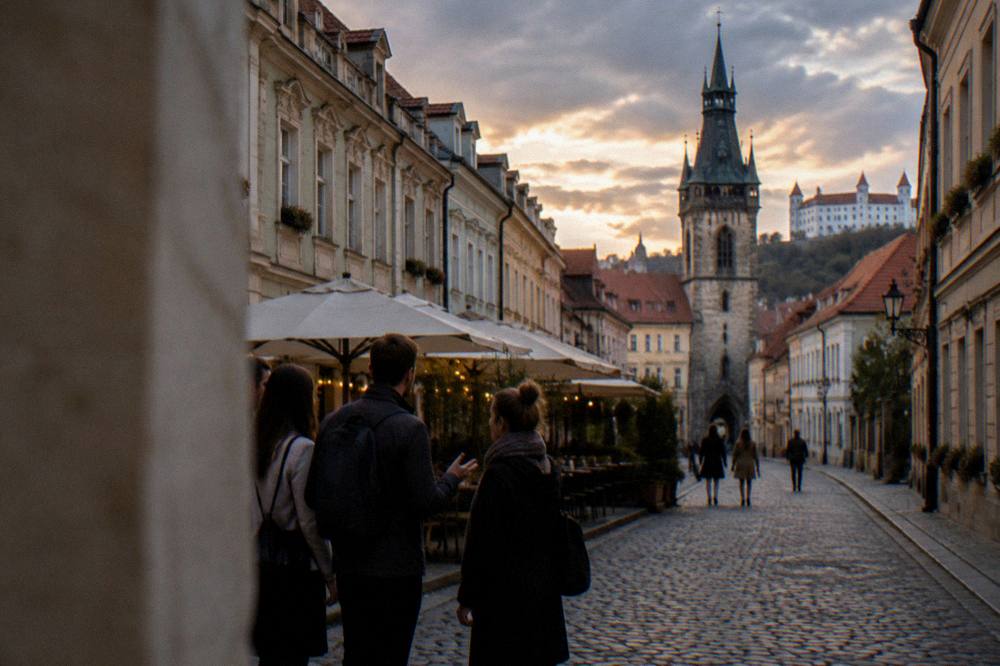
Food belongs in the same sentence as beer here. The traditional dishes that pair with lager are covered in the food guide, and the walks that combine tasting stops with a tour of the centre fill the same slot as a restaurant choice with a city tour attached. For visitors who build a whole day around eating and drinking rather than museums, a food walk in the morning and a taproom evening is a full and legitimate Bratislava itinerary, described further in the things to do overview.
What Does A Beer-Focused Day In Bratislava Look Like?
A realistic beer day in Bratislava runs: morning sightseeing on foot through the Old Town and up to Bratislava Castle, whose grounds are open daily 08:00 to 22:00 for free, an afternoon of food and taproom stops in the centre, and an evening on a guided beer walk or moving between pubs on foot, with the only ticket decisions being the castle museum at 14 EUR if the history matters and the transport day ticket at 5.40 EUR if the legs give out.
The skeleton, hour by hour, using only what the desk holds:
| Time | Activity | Verified anchor |
|---|---|---|
| Morning | Old Town on foot, Hlavné námestie and Hviezdoslavovo námestie | Pedestrian centre |
| Late morning | Castle grounds, free, daily 08:00 to 22:00 | Museum of History 14 EUR, closed Tuesdays |
| Afternoon | Lunch and the food vocabulary | Food guide pairing |
| Late afternoon | Craft taproom stops in and near the centre | Scene described above |
| Evening | Guided beer walk, or pubs on foot | Tab service, tip 5 to 10 percent reported |
The castle detail matters more than it looks on a beer page, because the hill walk is the day's exercise and the grounds are free, so the expensive part of the day stays optional. The Museum of History inside the castle is open Wednesday to Monday 10:00 to 18:00, closed Tuesdays, adult admission 14 EUR, and the Baroque Garden keeps seasonal hours, 09:00 to 16:00 in November and December, 09:00 to 21:00 in June and July.
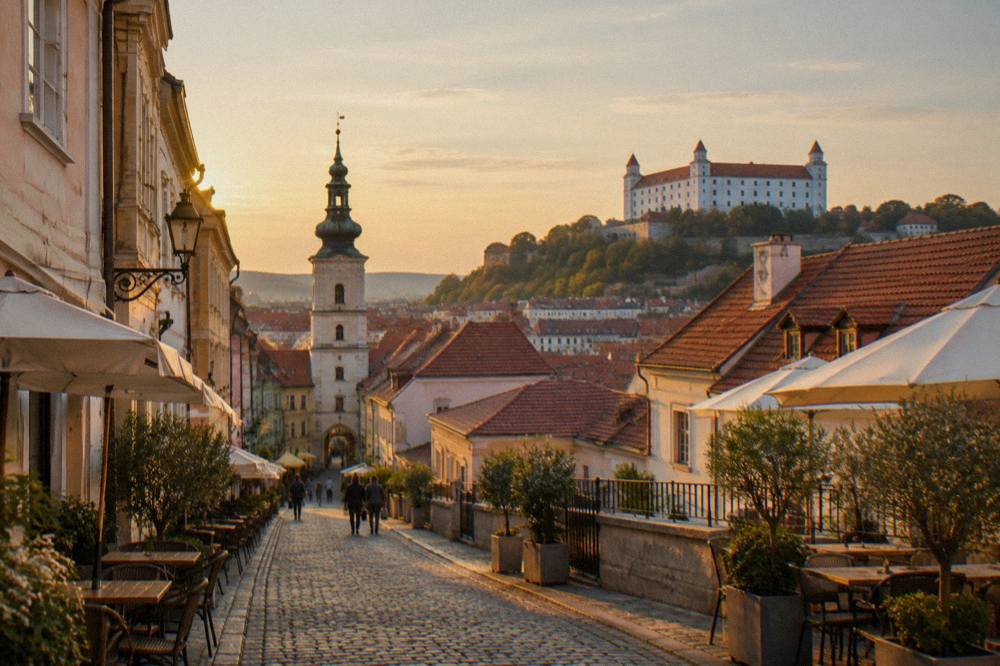
Two-day and three-day versions of this plan spread the same ingredients thinner and add Devin Castle, reachable by river cruise, or the Small Carpathians wine villages, where the region's open-cellar traditions run on dates the desk cannot confirm for 2026, so nothing is promised here. The wine side of that trip is covered in the Slovak wine guide.
Common Questions About Beer And Pubs In Bratislava
How much is a pint of beer in Bratislava?
The dedicated answer page at /answers/how-much-is-a-pint-of-beer-in-bratislava/ tracks the question, and all local costs are in euros.
What beer words should I know in a Bratislava pub?
Svetlé is a pale lager, tmavé is dark, polotmavé is amber half-dark, and rezané is a cut mix of pale and dark in one glass. Craft taprooms use the international style names.
Do you tip in pubs in Slovakia?
Reported guidance says round up or leave 5 to 10 percent for good table service. It is appreciated rather than obligatory.
Can you drink tap water in Bratislava?
Yes. The supply comes from underground sources, is disinfected and monitored, and the water company publishes its quality data.
Is Bratislava walkable for a pub evening?
Yes. The historic centre is a pedestrian district, the main squares sit minutes apart, and public transport covers anything beyond walking range, with night services running overnight.
When does the Christmas market run in Bratislava?
The main market on Hlavné námestie and Hviezdoslavovo námestie runs 26 November 2026 to 3 January 2027, closed 24 and 25 December, per the organiser's reporting.