Languages And Phrases In Bratislava: English, Slovak And A Few Words
Slovak is the official language of Bratislava, and English carries a visitor through most of the Old Town. This page sets out what the language situation actually looks like, which Slovak words earn their place in your pocket, and where a phrasebook still matters.
Short answer
Slovak is the official language of Slovakia and the language of Bratislava's streets, signs and menus. English is widely used in tourism settings in the city centre, and a handful of Slovak words, hello, thank you, please and goodbye, cover nearly every everyday courtesy.
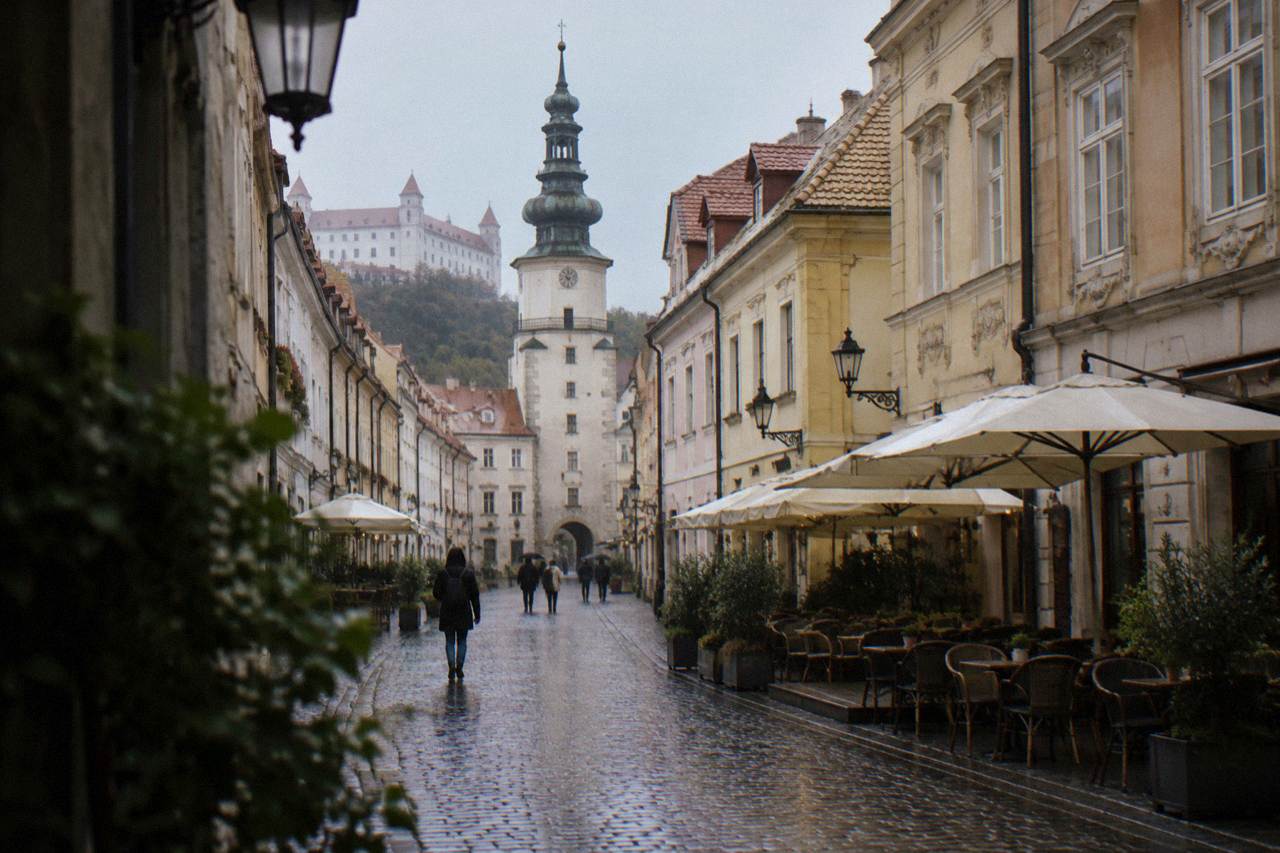
Bratislava is Slovakia's capital, an inland city on the Danube of about 468,000 residents, and Slovak is the language its streets, trams, museum labels and menus are written in. That single fact shapes a visit more than many travellers expect, because the city is compact, walkable and firmly geared to visitors, yet it remains a Central European capital where the everyday language of the person behind the counter is not English. The good news, and the reason this page exists, is that the gap between those two realities is small and easy to bridge with a dozen words. The longer answer to can you speak English in Bratislava is covered in its own article, and it pairs with the deeper detail on Bratislava Travel Guide's practical pages, from public transport to where to stay.
What Language Is Spoken In Bratislava?
Slovak is the official language of Slovakia and the language of Bratislava: street names, tram announcements, museum labels, menus and tickets are in Slovak, and the city's roughly 468,000 residents go about their day in it. Visitors interact with it constantly but rarely need to produce it, because Bratislava's tourist infrastructure works in English as a second language across tickets, walking tours and the main sights. The practical task for a visitor is recognition, not conversation.
The city sits close to the Austrian and Hungarian borders, and Vienna is about an hour away by train, so neighbouring languages surface in the region's general character, but Slovak is what is printed on the signage a visitor actually reads. Slovakia adopted the euro on 1 January 2009, so prices appear in EUR alongside Slovak words, and a phrase like "vstupné" (admission) next to a euro figure is the standard pattern on sight tickets.
Recognition vocabulary is the highest-value investment. A visitor who can read "otvorené" (open), "zatvorené" (closed), "vstup" (entry), "výstup" (exit) and "toalety" (toilets) can decode most of the signage in the Old Town without a phrasebook. Add "zľava" (discount) and "predané" (sold out) and the set covers market stalls and ticket windows too.
None of this is hard-won knowledge. Slovak belongs to the West Slavonic family alongside Czech, and the writing system uses the Latin alphabet with diacritics rather than a different script, which is the single biggest reason a first-time visitor can make immediate progress: the letters are familiar even when the words are not, and the sounds follow rules that hold from one street name to the next.
Do People Speak English In Bratislava?
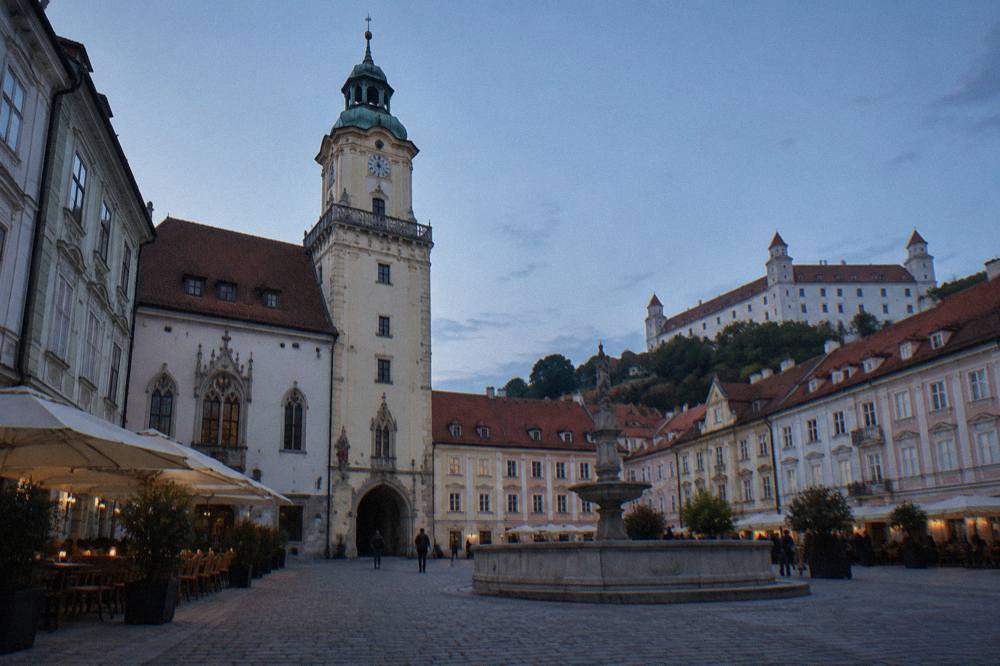
English functions as the default second language of Bratislava's visitor economy: the castle museum, walking tours, river cruises, hotels in the centre and restaurants around Hlavné námestie operate in English without friction, and guided products listed on this site are delivered in English. Outside the visitor core, in residential districts, on local buses and in smaller shops, English coverage thins and Slovak becomes the working language. No rule promises English anywhere; politeness in Slovak covers the gaps.
The pattern is the ordinary one for a Central European capital of this size. Czech is mutually intelligible with Slovak, so Czech visitors are effectively served by the local language itself.
For the practical mechanics of a trip, English is generally sufficient at the airport bus, at the main station's ticket machines, and at the main sights covered on this site, including Bratislava Castle's Museum of History, which opens Wednesday to Monday 10:00 to 18:00 and is closed Tuesdays. A guided walk is the most language-efficient first activity in the city, because a guide carries the translation layer for you.
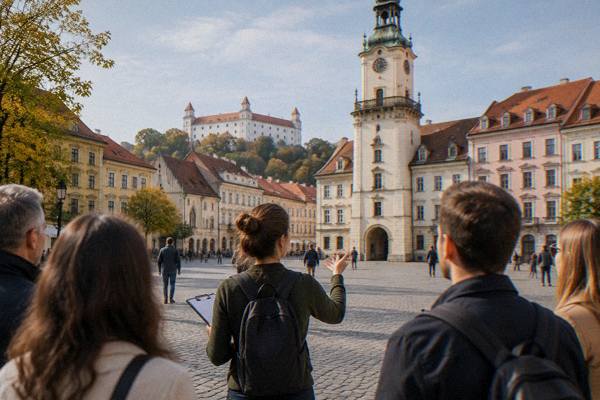
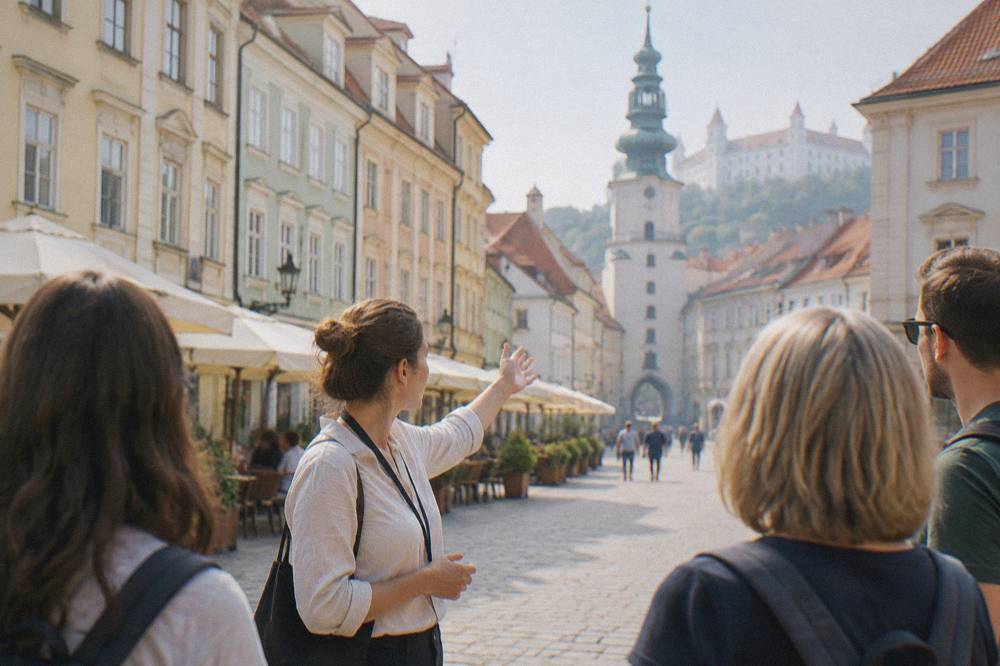
A city-and-castle walk in English does double duty as orientation and language support: the guide reads the plaques, explains the names and unpicks the diacritics while you take the photographs. It also sets the tone for the rest of the stay, because the vocabulary a guide repeats through the walk, square, street, castle, cathedral, tends to be exactly the vocabulary that appears on the signage a visitor meets alone afterwards.
How Do You Say Hello And Thank You In Slovak?
"Dobrý deň" means good day and is the standard greeting, "ďakujem" means thank you, "prosím" means please and doubles as "you're welcome", and "dovidenia" means goodbye; these four words, plus "prepáčte" for excuse me or sorry, are the courtesy core of Slovak and cover nearly every interaction a visitor has. Learning them takes minutes and they are noticed. Slovaks do not expect visitors to speak Slovak; a greeting attempted in Slovak before switching to English is routine good manners in the region.
The short how to say hi in Slovak answer is "ahoj" for an informal hi, used with people you know, and "dobrý deň" in shops, ticket windows and restaurants. The table below is the working set.
| English | Slovak | Where you use it |
|---|---|---|
| Good day / hello | Dobrý deň | Shops, ticket windows, restaurants |
| Hi (informal) | Ahoj | Casual settings, with people you know |
| Good morning | Dobré ráno | Mornings, informal to neutral |
| Good evening | Dobrý večer | Evenings, restaurants, hotels |
| Thank you | Ďakujem | Everywhere, always |
| Please / you're welcome | Prosím | Handing over money, receiving thanks |
| Excuse me / sorry | Prepáčte | Getting attention, apologising |
| Goodbye | Dovidenia | Leaving shops, restaurants |
| Yes / no | Áno / Nie | Anywhere |
| I don't understand | Nerozumiem | When English runs out |
| Do you speak English? | Hovoríte po anglicky? | The pivot question |
| Cheers | Na zdravie | Pubs and tastings |
"Prosím" is the workhorse. It opens a request, answers a thank you, and accompanies anything handed over a counter, and hearing it said back to you is a sign the courtesy has landed.
A note on register, because it matters more in Slovak than in English: the language distinguishes a formal "you" ("vy", as in "hovoríte") from an informal one ("ty"), and the phrases in the table above are all in the formal form, which is the safe choice for every stranger, server and ticket-seller a visitor meets. The informal is for peers and friends, and no visitor needs to judge that line; defaulting to formal everywhere is correct and never read as stiff.
What Do Slovak Menus And Signs Mean?
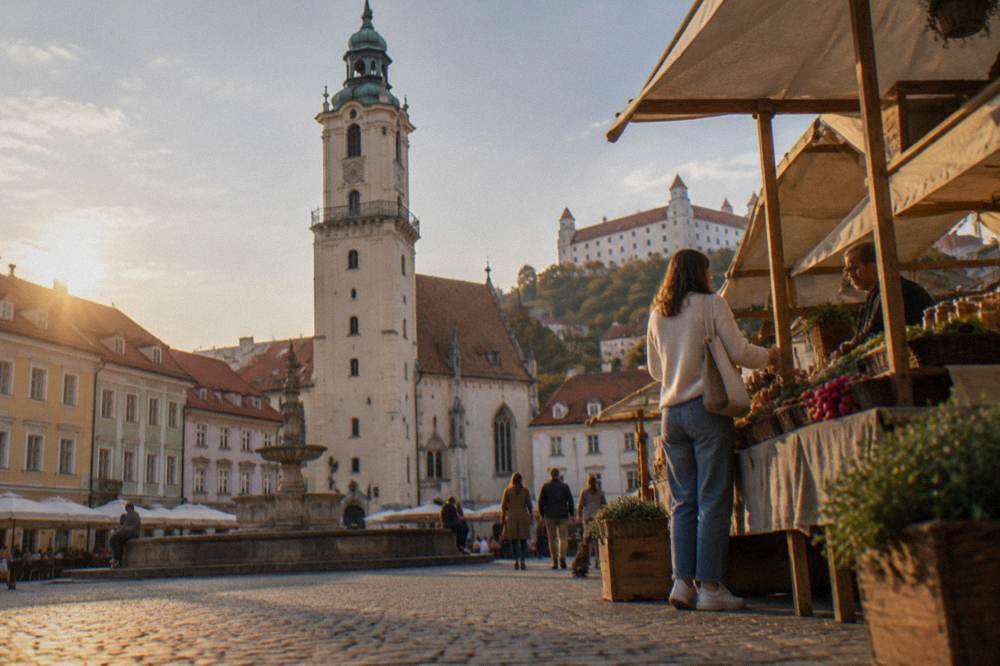
Slovak menus pair local dish names with euro prices, and the recurring vocabulary decodes quickly: "polievka" is soup, "hlavné jedlo" is the main course, "dezert" is dessert, "účet" is the bill and "voda" is water; street signage leans on "ulica" for street, "námestie" for square and "zámok" or "hrad" for castle. A dozen food and navigation words make menus and street corners readable. The food side of a trip, from what to eat in Bratislava through Slovak wine, is where this vocabulary earns its keep fastest.
| Slovak | English | Context |
|---|---|---|
| Polievka | Soup | Menu section |
| Hlavné jedlo | Main course | Menu section |
| Predjedlo | Starter | Menu section |
| Dezert | Dessert | Menu section |
| Raňajky | Breakfast | Menus, cafés |
| Účet | The bill | Asking to pay |
| Voda (neperlivá / perlivá) | Water (still / sparkling) | Standard ordering |
| Pivo | Beer | Pubs, see beer and pubs in Bratislava |
| Víno | Wine | Wine bars, tastings |
| Ulica | Street | Street signs |
| Námestie | Square | Square names |
| Hrad / zámok | Castle | Sight signage |
| Otvorené / zatvorené | Open / closed | Shop doors |
| Vstup / výstup | Entry / exit | Buildings, stations |
Seasonal signage follows the calendar. Around 11 November, the reported release date of St Martin's young wine, the word to watch for is "mladé víno", and from 26 November 2026 to 3 January 2027 the main Christmas market on Hlavné námestie and Hviezdoslavovo námestie brings its own stall vocabulary, where "med" (honey), "sviečka" (candle) and "klobása" (sausage) do most of the work.
One habit makes the menu table go further: read the whole card before choosing, because Slovak menu structure is predictable, drinks first, starters, soups, mains, desserts, and the section headings repeat from venue to venue. A visitor who has decoded one menu has effectively decoded them all, and the dish names themselves become part of the pleasure of the meal rather than a barrier in front of it.
How Does Slovak Pronunciation Work?
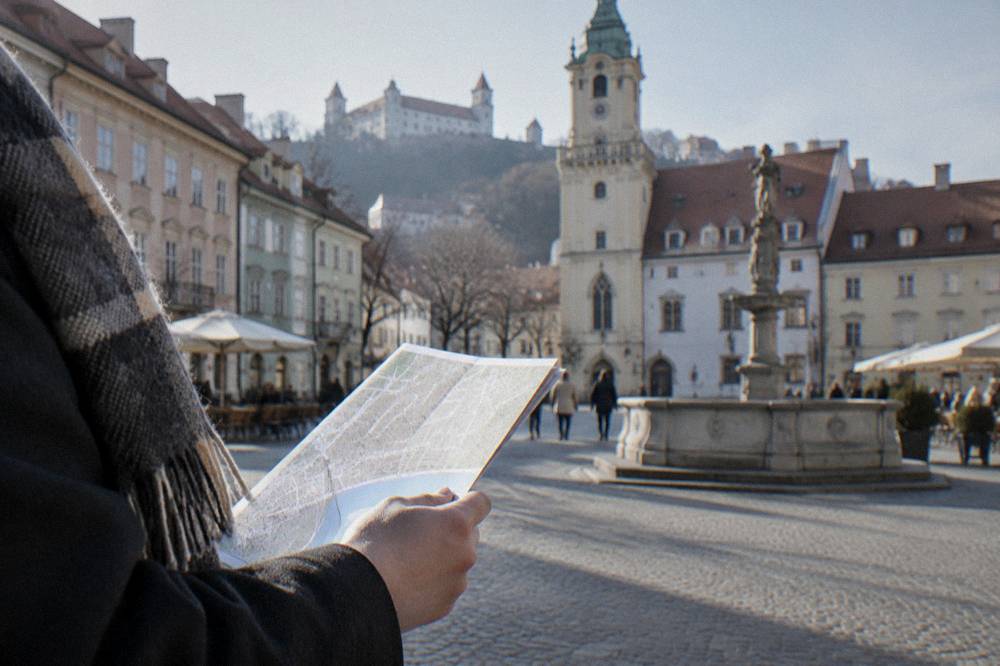
Slovak is written phonetically and its rules are stable: every letter is pronounced, "c" sounds like ts, "č" like ch, "š" like sh, "ž" like the s in measure, "ch" is a throaty kh sound, and the accent marks (ť, ď, ň, ľ) soften the letter beneath them, so once you know roughly a dozen letter values you can read Slovak street names and dish names aloud with reasonable accuracy. Vowels are clean, and length marks (á, é, í, ó, ú, ý) simply stretch the vowel.
The payoff is practical rather than academic. Bratislava's place names stop being noise once the rules click: "Hlavné námestie" reads roughly HLAHV-neh NAHM-ess-tyeh, "Hviezdoslavovo námestie" becomes hviez-doh-SLAH-voh-voh NAHM-ess-tyeh, and "Michalská" is MEE-khahl-skah. Diacritics are not decoration; they change sounds, which is why this site's convention keeps them in place names rather than stripping them.
| Written | Sounds like | Example |
|---|---|---|
| c | ts | Cumil (the sewer worker statue) |
| č | ch in church | Čičmany |
| š | sh | Štiavnica |
| ž | s in measure | Železná studnička |
| ch | kh in Bach | Michalská |
| j | y in yes | Janík |
| ľ | soft l | Ľudovít |
| ť, ď, ň | soft t, d, n | Devín-adjacent names |
| á, é, í, ú, ý | long vowels | námestie |
| dz, dž | j in jump | medzi |
Two habits shorten the learning curve. Read every letter, including the final ones, because Slovak does not swallow endings the way English does. And stress sits on the first syllable, reliably, which alone makes a read-aloud attempt sound closer to the mark.
Perfection is not the goal and nobody is grading the accent. A roughly correct "dobrý deň" at a market stall communicates effort and courtesy in the same second, and the person behind the counter generally meets the attempt halfway, in English, in German, in gesture, or in slowed-down Slovak. The pronunciation rules above simply raise the odds that the attempt lands recognisably, which is all any pocket phrasebook ever achieves.
Do You Need German Or Hungarian In Bratislava?
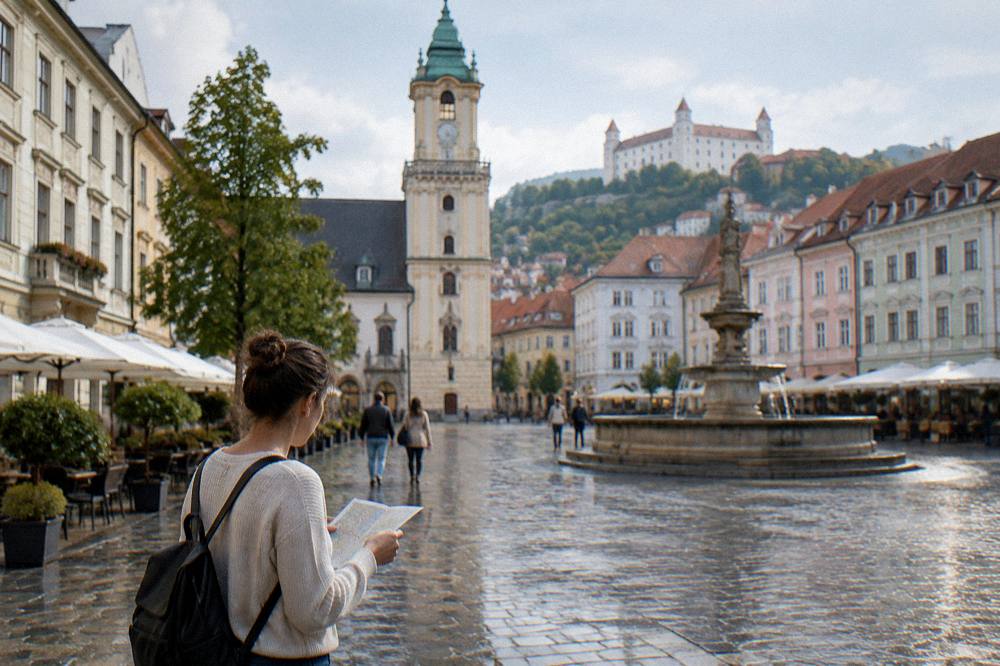
No, nothing in Bratislava requires German or Hungarian from a visitor: Slovak is the official language, English serves the visitor economy, and German vocabulary is a bonus rather than a need, reflecting the city's position near the Austrian border and the German and Austrian presence among its 2024 visitor markets, which were led by Czechia, Germany, Poland, Austria and the UK. Hungarian surfaces regionally toward the Hungarian border, but a Bratislava trip runs entirely on Slovak and English.
The regional logic is worth one paragraph. Czechia was the largest of the 2024 source markets, and Czech and Slovak are mutually intelligible, so the single biggest group of foreign visitors is functionally served by the local language. German and English cover the next tier. None of this requires preparation; it simply explains why an English phrase plus a German loanword occasionally lands faster than either alone in the tourist core.
For day-trip planning the language question inverts: the farther from the capital, the more Slovak does the work. Trips covered on this site, from Devin Castle to Bojnice Castle and the Small Carpathians wine route, are easiest linguistically with a guide who translates signage and cellar talk as part of the service.
Can You Get By In English On Trains, Buses And Taxis?
Yes, the machine layer of Bratislava transport is multilingual: ticket machines and the IDS BK app sell and explain tickets in English, tickets themselves are bought from machines or apps rather than requested in Slovak, and the airport connection is bus 61 or the night bus N61, with the airport-to-main-station ride taking about 25 to 30 minutes. Human interaction, a driver, a conductor, a dispatcher, is where the pocket phrases matter. The mechanics are laid out in the public transport guide.
A standing IDS BK paper single for zones 100 and 101 costs EUR 1.20 for 30 minutes or EUR 1.80 for 60 minutes, with eTicket app singles at EUR 1.09 and EUR 1.60. None of that requires spoken Slovak to buy.
| Situation | Slovak phrase | English |
|---|---|---|
| Buying a ticket | Jedný lístok, prosím | One ticket, please |
| On the bus/tram | Toto je správny spoj? | Is this the right service? |
| Asking to stop | Ďakujem, tu vystúpi | Thank you, getting off here |
| Direction | Kde je hlavná stanica? | Where is the main station? |
| At the platform | Kedy ide vlak do Viedne? | When is the train to Vienna? |
| Taxi | Prosím, do hotela | To the hotel, please |
| Numbers 1 to 5 | jeden, dva, tri, štyri, päť | Counting anything |
| Numbers 6 to 10 | šesť, sedem, osem, deväť, desať | Counting anything |
Rail signage in the region is bilingual or pictographic, and the main station's reconstruction works in autumn 2026 were communicated with changed stopping patterns rather than changed languages, with the S50 starting and ending at Bratislava-Nove Mesto and the R55 to Trnava cancelled between 1 September and 12 December 2026.
Numbers deserve their own sentence in any language kit. Counting to ten in Slovak covers market purchases, platform numbers, party sizes at restaurants and the small change of daily commerce, and Slovak numbers are short and regular, which makes them among the fastest things on the page to retain.
Does Anyone Expect You To Speak Slovak On A Day Trip?
No expectation exists, but usefulness rises sharply outside the capital: guided day trips from Bratislava to castles, wine country and northern Slovakia run in English with a guide handling the Slovak layer, while independent travel by car or train puts you in towns where menus, tickets and cellar doors operate in Slovak, and the same core vocabulary, dobrý deň, ďakujem, prosím, carries the day. A guide is the efficient answer for anything beyond the city.
Two of this site's featured trips illustrate the split. The Bojnice Castle and Banská Štiavnica day trip from Bratislava moves through two historic towns where a guide's translation is part of the value; Check availability on the operator's live listing. The Čičmany, Bojnice, Orava and High Tatras loop is a comparable proposition, covered alongside its alternatives in the day-trip picks below.
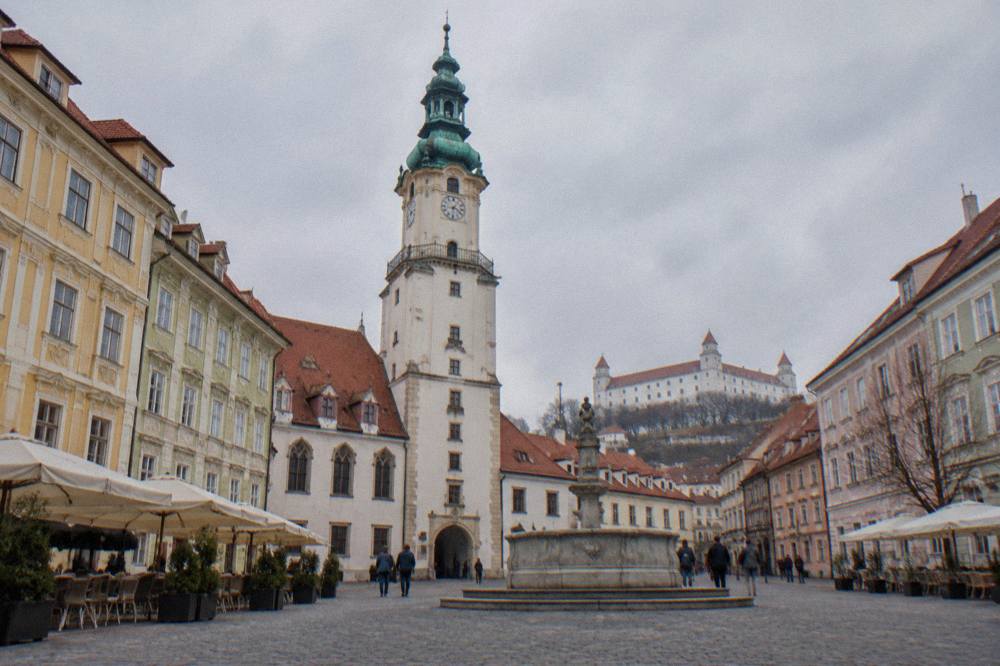
Wine country has its own small lexicon. The Modra and Pezinok pages carry the practical detail.
What About Slovak At Museums, Hotels And The Christmas Market?
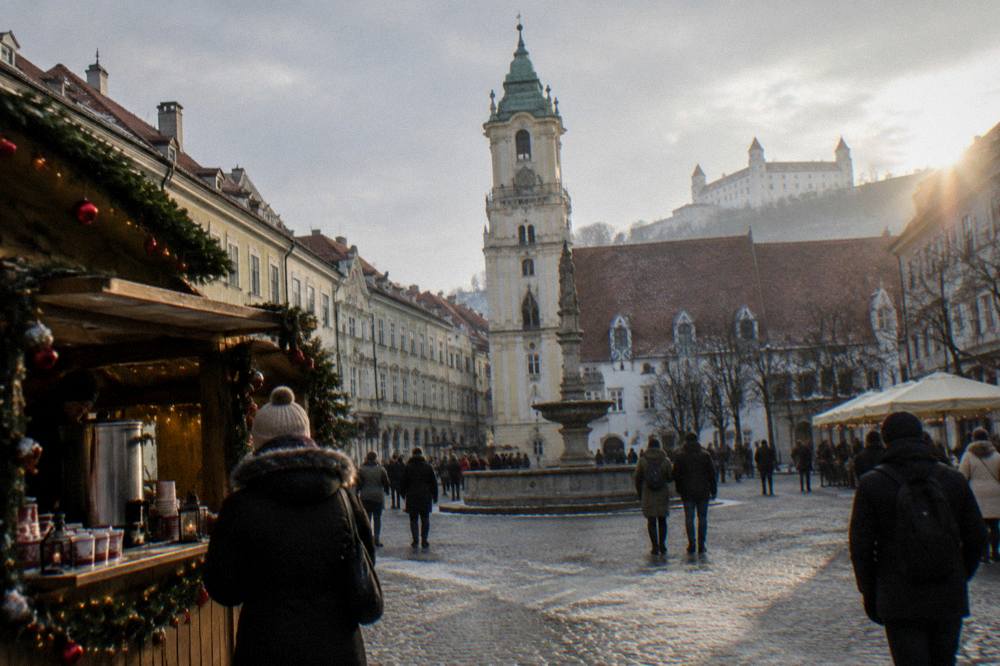
Museums in Bratislava post Slovak signage with English translations at the main sights, hotels in the centre work in English as standard, and the Christmas market on Hlavné námestie and Hviezdoslavovo námestie from 26 November 2026 to 3 January 2027 runs on a stall-and-token system where pointing plus ďakujem completes any transaction. The Slovak you meet at these places is written rather than spoken, which is the easier half of the language problem.
Museum vocabulary is a short list and it recurs across the city's institutions. The Slovak National Museum family of sites and the castle's Museum of History use it on doors and tickets.
| Slovak on the door | English | What it means for you |
|---|---|---|
| Vstupenky | Tickets | Ticket desk |
| Zatvorené / Otvorené | Closed / open | Check before queuing |
| Výstava | Exhibition | What is showing |
| Trvalá expozícia | Permanent exhibition | The main collection |
| Fotografovanie zakázané | No photography | Applies where posted |
| Šatňa | Cloakroom | Coat storage |
| Bez bariér | Step-free access | Accessible route |
| Muzikálne/pohostinstvo signage | Varied | Ask at the desk |
At the Christmas market, the recurring stall words are "vianočný trh" (Christmas market), "punč" (punch) and "medovina" (mead), and the market's daily operation from late November through 3 January, closed only 24 to 25 December, gives a long window to practise them. The Bratislava Christmas market guide carries the full practical detail, and the nightlife and restaurant pages cover the after-dark equivalents.
Common Questions About Languages And Phrases In Bratislava
Is English enough for a trip to Bratislava?
English serves the visitor economy of the Old Town, the main sights, hotels and guided tours, and the machine layer of tickets and transport works in English. Learn hello, thank you and please in Slovak for shops and market stalls, and the trip runs smoothly.
How do you say hello in Slovak?
"Dobrý deň" is the standard greeting in shops and restaurants, and "ahoj" is the informal version used with people you know. "Dobrý večer" is the evening form.
What does "ďakujem" mean?
It means thank you. "Prosím" means please and also serves as the response to a thank you, so the pair covers most courteous exchanges.
Is Slovak hard to pronounce?
Slovak is written phonetically with stable rules: every letter is pronounced, stress falls on the first syllable, and the accented letters soften or lengthen sounds. A dozen letter values make street and menu names readable aloud.
Do I need German or Hungarian in Bratislava?
No. Slovak is the official language and English serves visitors. German vocabulary is a bonus near the Austrian border, and nothing in the city requires either language.
Can I read Slovak menus without speaking Slovak?
Yes. A short vocabulary, soup, main course, water, bill, beer, wine, decodes most menus, and euro prices are printed alongside the dish names.
A final word on method: learn four words, not forty. Dobrý deň, ďakujem, prosím and dovidenia open and close every exchange in Bratislava politely, English carries the rest of the visit in the centre, and a guided tour translates whatever the signs keep in Slovak.