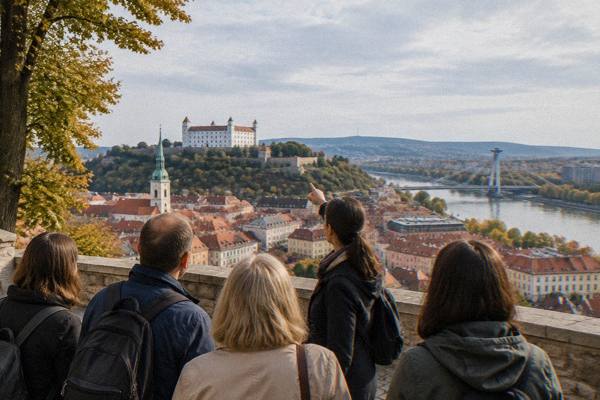
Shopping In Bratislava: Malls, Markets And Local Makers
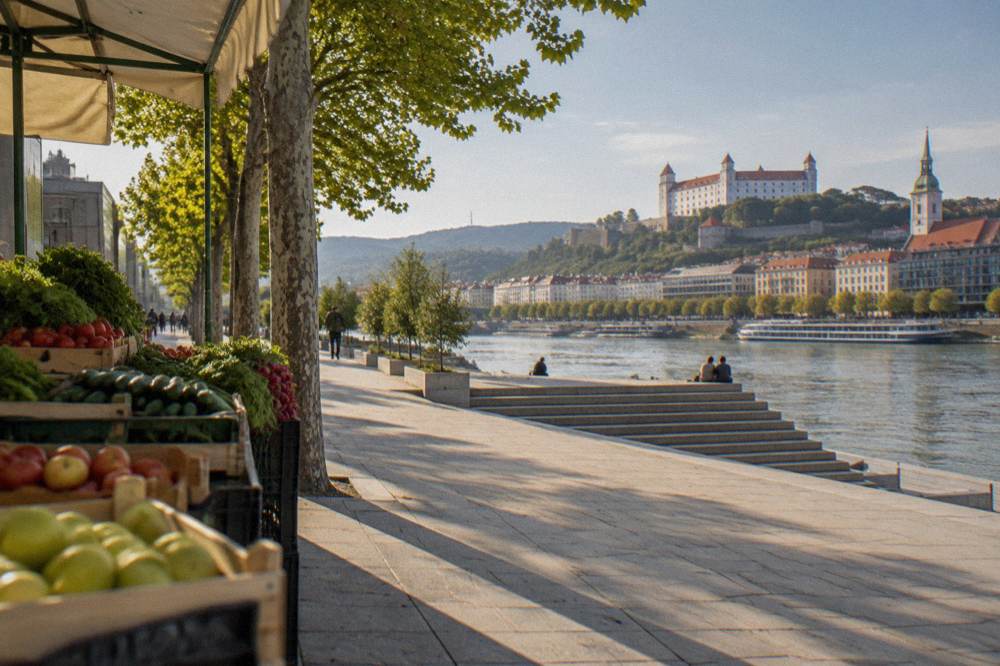
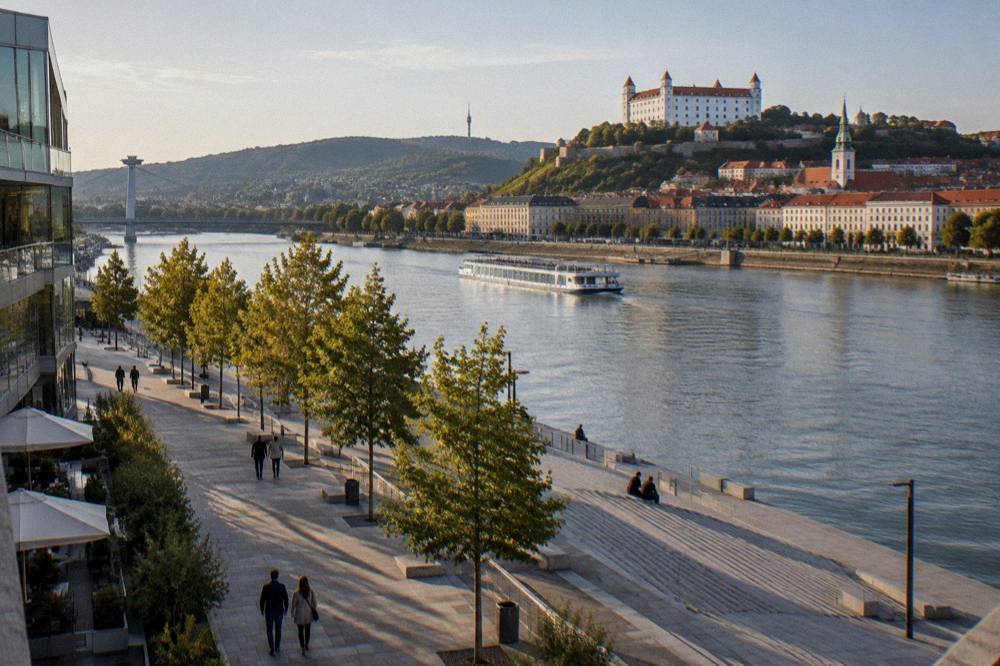
Bratislava, the capital of Slovakia, is an inland city on the Danube where every price tag is in euros, the Old Town is walked rather than driven, and the shopping runs from riverside malls to Christmas stalls on the Main Square.
Short answer
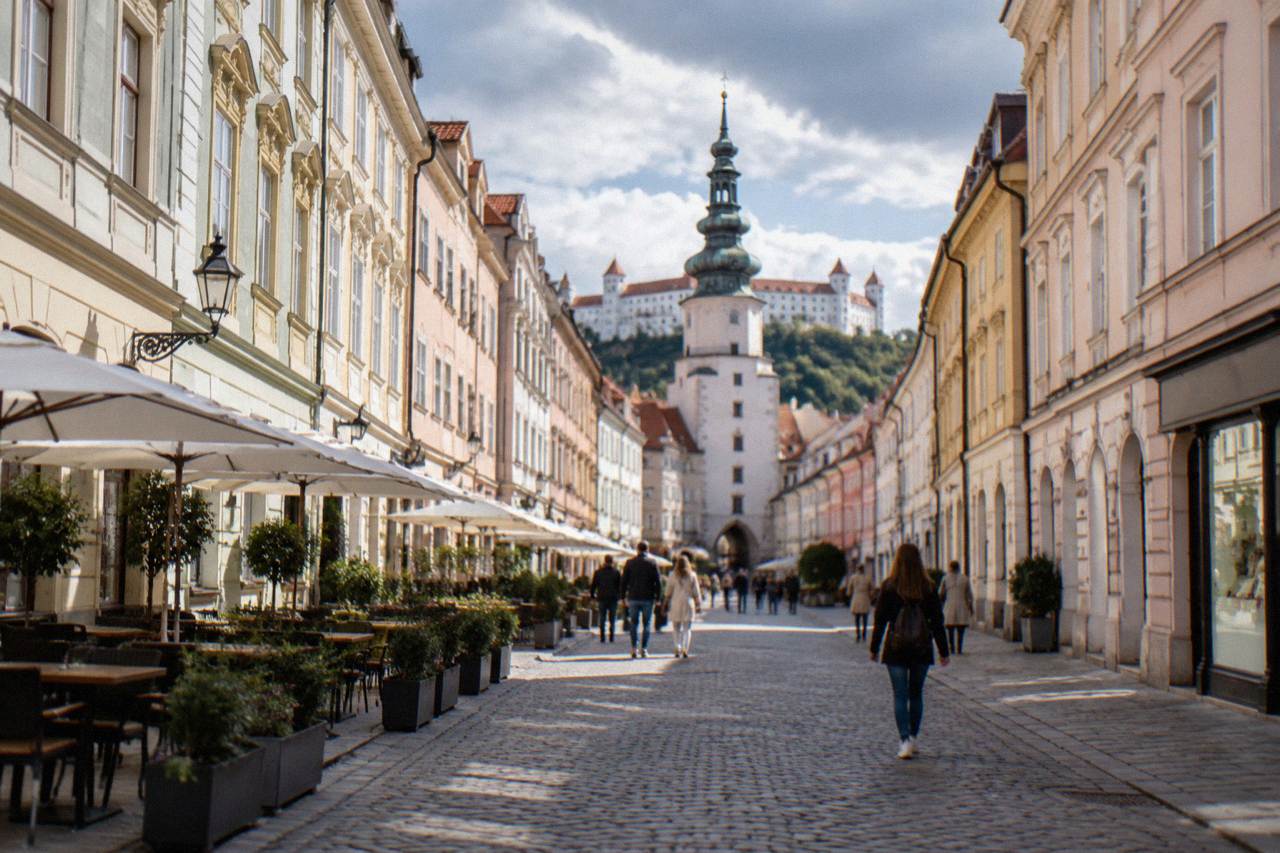
Shopping in Bratislava splits into three layers: covered centres around the riverfront and station, the pedestrian Old Town lanes between Hlavné námestie and Michael's Gate, and seasonal markets, with the main Christmas market on the Main Square from 26 November 2026 to 3 January 2027.
Bratislava, the capital of Slovakia, is a city of about 468,000 residents on the Danube, and it does its shopping in euros: Slovakia adopted the single currency on 1 January 2009, so every price tag in the malls, the market stalls and the small maker shops reads EUR. The retail geography is compact. A pedestrian Old Town holds the lanes around Hlavné námestie and Michael's Gate, newer covered centres sit toward the riverfront, and for a few weeks each winter the Main Square itself becomes a market. This page on Bratislava Travel Guide lays out the practical layer: where the areas sit, what the euro figures are, which days things close, and how the year's calendar shifts what is on the shelves.
What Does Shopping In Bratislava Look Like?
Shopping in Bratislava is a compact, walkable scene split across a pedestrian Old Town, modern covered centres near the river and the station, and seasonal street markets, all priced in euros, with the Christmas market on Hlavné námestie and Hviezdoslavovo námestie running 26 November 2026 to 3 January 2027. The city is small enough that a visitor can cover the Old Town lanes and a riverside centre on foot in a single day.
Three layers define the scene. The first is historic: the lanes between the Main Square and Michael's Gate carry the small shops, galleries and food sellers that sit inside the pedestrian zone, and the whole stretch is walked rather than driven. The second layer is modern retail. The Eurovea development on the riverfront is the modern retail anchor, and the completion of the Živé námestie project in early October 2026 reshaped the Námestie SNP end of the centre, with new tram stops included. The third layer is seasonal: the main Christmas market, organised by BKIS, turns the Main Square and Hviezdoslavovo námestie into stalls from late November into early January.
The three layers also run on three different clocks. The pedestrian zone never closes as a space, the covered centres keep their own long daily hours, and the market layer appears and disappears with the calendar. That last clock is the one worth planning around, because a visit in late November lands in a different city, retail-wise, than the same visit a month earlier. The young wine released from 11 November and the market opening a fortnight later mark the point where autumn browsing turns into winter buying.
For orientation before the detail, the guide to Bratislava markets covers the market side in depth, and the answer to whether Bratislava is good for shopping gives the short verdict.
Where Are The Main Shopping Areas In Bratislava?
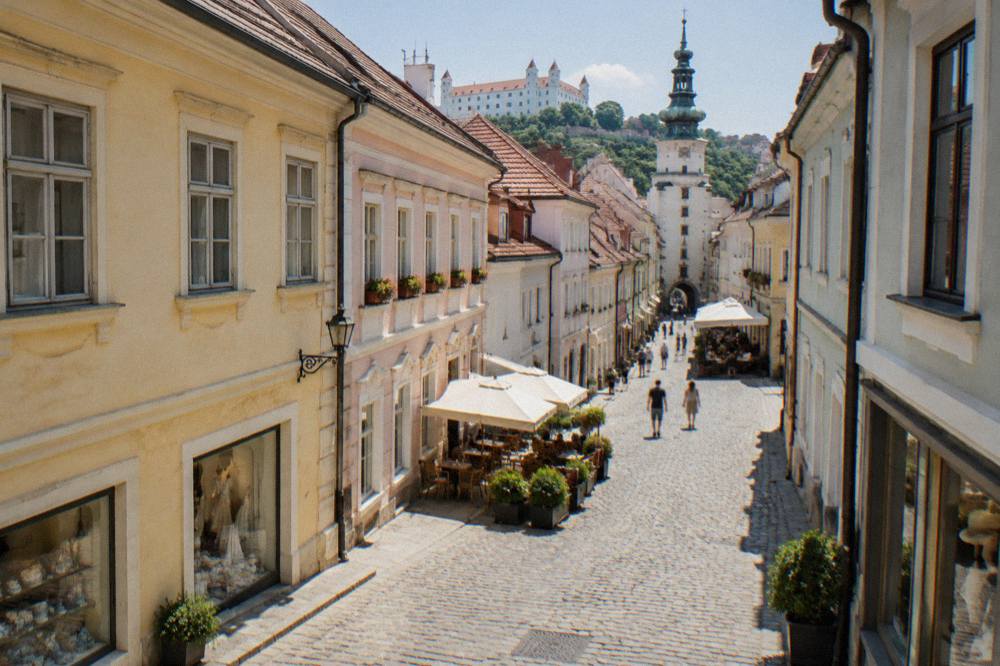
The main shopping areas in Bratislava are the pedestrian Old Town lanes around Hlavné námestie and Michael's Gate for independent shops and souvenirs, the Eurovea riverfront development for covered retail, the reworked Námestie SNP corridor finished in October 2026, and the station quarter for transit-adjacent buying. Each sits within walking or a short tram ride of the others.
The Old Town is the layer that costs nothing to enter. The route from Hlavné námestie toward Michael's Tower is the classic shopping walk, and the tower's own museum charges 6 EUR general admission if the landmark itself becomes part of the day. Michael's Tower is closed Tuesdays and open Monday, which is the opposite of the Old Town Hall across the square, closed Mondays. Anyone planning a shopping day that doubles as sightseeing needs to hold those two days apart.
Eurovea, on the riverfront, is a covered shopping centre, and the things to do in Bratislava roundup gives the wider context around it. The Živé námestie project, finished in early October 2026, rebuilt Námestie SNP, Námestie Nežnej revolúcie and Poštová ulica with new tram stops, so the corridor between the station and the Old Town is freshly rebuilt ground. Alongside it, a new trolleybus line 32 connecting Dlhé diely directly to Trnavské mýto entered service on 3 October 2026, which widens the transit options for reaching the centre from the western residential districts.
One more orientation fact helps with luggage and logistics: the main tourist information line runs weekdays 9:00 to 16:00 on +421 918 573 172, for anyone who prefers to ask about shop hours on arrival rather than guess. The Old Town guide and the castle hill area guide give the street-level geography in more depth.
A guided walk is a reasonable way to anchor the geography before shopping on your own. The walk with castle entry ticket covers the Old Town streets and bundles the castle admission, and Check availability on the operator's live listing before committing to a date.
Is Shopping In Bratislava Cheap?
Shopping in Bratislava is priced in euros, and local figures run modest: a 30-minute public transport single is 1.20 EUR on paper, a 24-hour paper day ticket 5.40 EUR, Old Town Hall museum entry 8 EUR, and the city's tourist tax 3.50 EUR per person per night in the Old Town district and 3.00 EUR elsewhere. Retail prices inside shops vary by brand and are not fixed municipal figures.
The honest framing is that the municipal, verifiable costs around a shopping trip are low and knowable, while shop prices themselves move with brands and seasons. The city publishes its tourist tax rate, the transport operator publishes its fares, and the museums publish theirs. What no source fixes is what a given pair of shoes or a bottle of wine retails for. For budget framing generally, the Bratislava on a budget guide is the dedicated page.
| IDS BK ticket, zones 100+101 | Paper price EUR | eTicket/app price EUR |
|---|---|---|
| 30-minute single | 1.20 | 1.09 |
| 60-minute single | 1.80 | 1.60 |
| 24-hour day ticket | 5.40 | 4.85 |
| 72-hour day ticket | 10.70 | 9.68 |
| 168-hour day ticket | 16.20 basic / 8.10 reduced | app price |
| Network 24-hour | 8.60 | 7.80 |
The transport layer matters to shoppers because the retail areas sit across a walkable but tram-served city, and the public transport guide expands on tickets, validators and the app discount. Buyers of singles through the IDS BK app get a lower price than the paper equivalent on every product in the table, and tickets are also sold at machines, at DPB and Arriva sales points, at ZSSK counters and in some newsagents.
What Opening Days Should Shoppers Know In Bratislava?
The opening-day traps that matter in Bratislava are these: the castle's Museum of History is closed Tuesdays and open Wednesdays to Mondays 10:00 to 18:00, Michael's Tower is also closed Tuesdays, the Old Town Hall is closed Mondays, Devin Castle stays open all winter Tuesdays to Sundays, and several Slovak public holidays that used to shut shops are now working days, so Sunday trading is generally unrestricted.
These details bite hardest on a trip that mixes buying with looking. A Monday in the Old Town means the Old Town Hall museum is shut but Michael's Tower is open. A Tuesday flips it. The castle grounds are open daily 08:00 to 22:00 year-round and free to walk, so the outdoor layer of a sightseeing-shopping day never closes, while the museum inside keeps the Tuesday closure. The Baroque Garden at the castle keeps its own seasonal clock, from 9:00 to 16:00 in January, February, November and December up to 9:00 to 21:00 in June and July, so winter visitors get the shorter window for the outdoor part.
The gallery layer follows the museum pattern. The Slovak National Gallery is closed Mondays, open 10:00 to 18:00 Tuesday, Wednesday and Friday to Sunday, and 12:00 to 20:00 on Thursdays, with free admission for all on the first Sunday of every month under the policy announced on 25 September 2026. The Danubiana art museum downstream is closed Mondays and charges 12 EUR general admission. A wet Tuesday that shuts two museums can still hold both galleries.
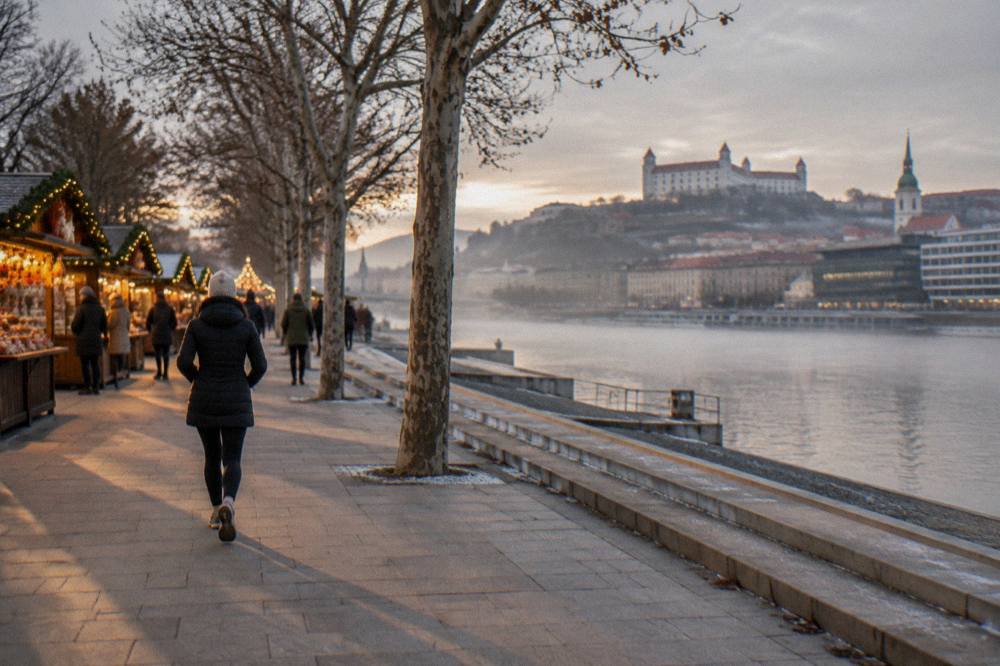
The Christmas period carries the market's own calendar: the main market on Hlavné námestie and Hviezdoslavovo námestie runs 26 November 2026 to 3 January 2027, organised by BKIS, and the dedicated Christmas market guide covers stalls and timing. The 2026 castle and Eurovea Christmas markets have not been announced, so this page states nothing about them.
| Site near the shopping streets | General admission EUR | Closed |
|---|---|---|
| Bratislava Castle, Museum of History | 14.00 | Tuesdays |
| Michael's Tower | 6.00 | Tuesdays |
| Old Town Hall and Apponyi Palace | 8.00 | Mondays |
| Old Town Hall Tower, single | 4.00 | Mondays |
| Primate's Palace | 5.00 | Mondays, hours posted weekly |
| St Martin's Cathedral tourist zone | 5.00 | closes for services |
| Danubiana art museum | 12.00 | Mondays |
| Slovak National Gallery | prices not stated | Mondays, free first Sundays |
Primate's Palace is the one whose hours are posted week by week: for the week of 12 to 18 October 2026 the city listed Tuesday to Thursday, Saturday and Sunday 10:00 to 17:00, Friday 14:00 to 17:00, Monday closed. Check the city page for the week you travel.
What Souvenirs And Local Products Come From Slovakia?
The local products with a story behind them are Slovak wine, including the young St Martin's wine released from 11 November, and folk-craft traditions from the Small Carpathian wine villages, while the food layer of the city is covered by the site's dedicated pages on what to eat and where to drink, all bought in euros with no currency conversion needed.
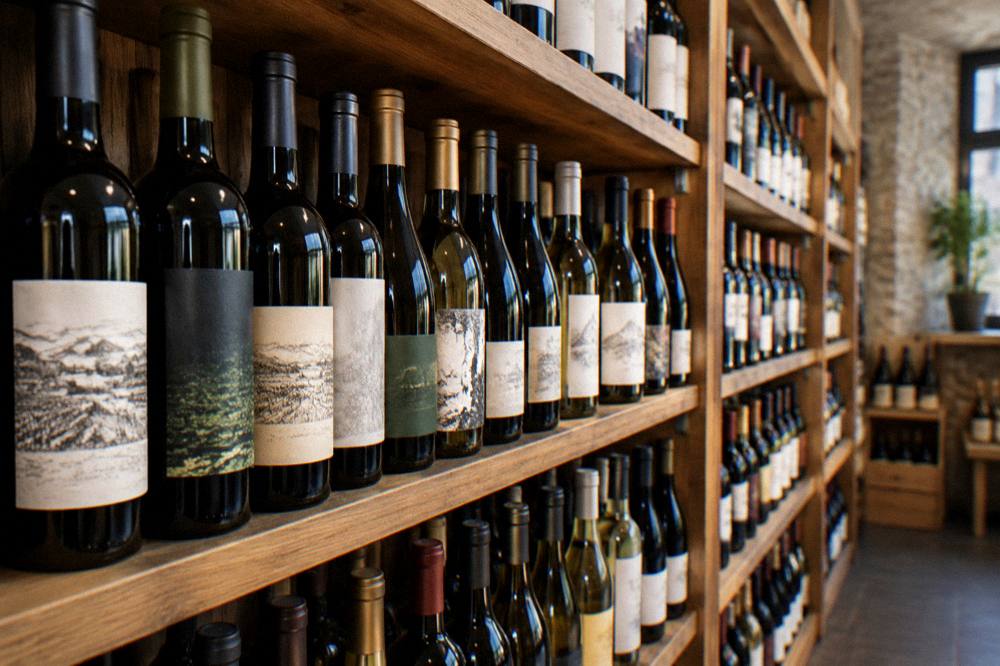
The strongest local buy is wine. The Small Carpathians wine route sits just outside the city, with Modra and Pezinok as the named villages, and the Slovak wine guide covers the bottles worth carrying home. The St Martin's tradition, reported rather than officially confirmed, releases young wine from 11 November each year, which lines up neatly with the Christmas market opening two weeks later. A bottle bought in the wine villages travels home more cheaply than the same bottle bought at home, so treat the advantage as directional rather than priced.
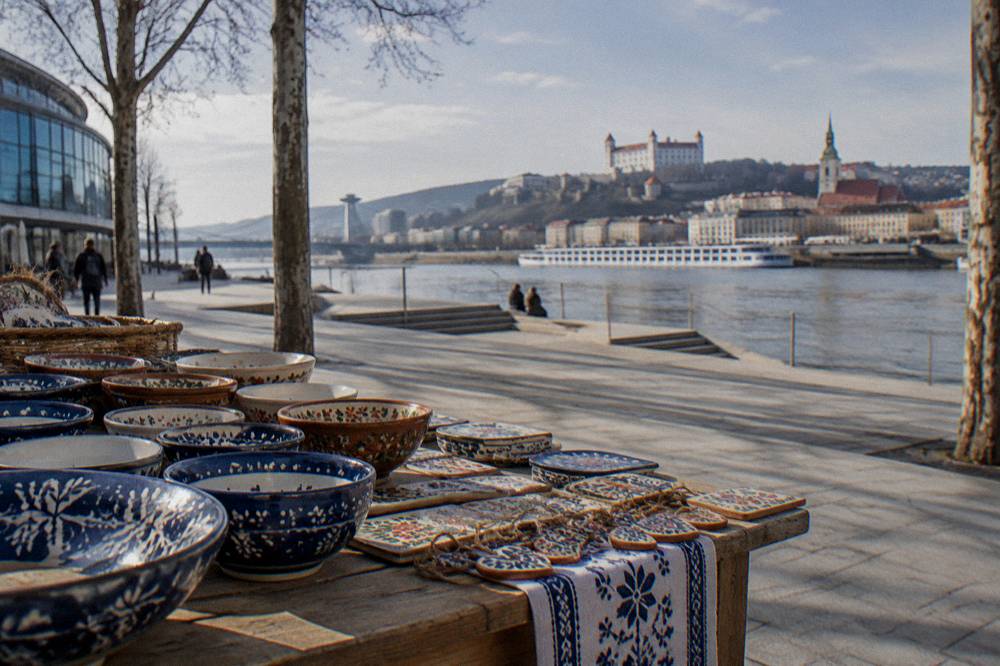
Folk crafts are the second thread. The painted village of Čičmany is one of the stops on a northern day tour, and folk-pattern ceramics and textiles are the souvenirs that carry a Slovak provenance rather than a generic one. Food souvenirs pair with the what to eat in Bratislava guide, the drinks layer belongs to beer and pubs in Bratislava, and the restaurant coverage in the best restaurants guide covers the meals between the buys.
For the practical side of carrying purchases, the euro removes exchange friction entirely, and the where to stay guide helps with choosing a base inside or outside the Old Town, which changes how much walking a loaded shopping day involves. Travellers flying out should note that bus 61 links Hlavná stanica and the airport in about 25 to 30 minutes, a reported journey time that makes a same-day purchase-and-departure run feasible; the Bratislava airport guide has the fuller arrival and departure picture.
When Is The Best Season For Shopping In Bratislava?
The best season for shopping in Bratislava depends on tolerance for weather and appetite for markets: July averages a modelled daily high of 26.3 C with 75.8 mm of rain, January averages 3.0 C highs and -3.1 C lows, and the Christmas market window from 26 November 2026 to 3 January 2027 turns the Main Square into the seasonal retail event of the year.
The climate figures here are modelled ERA5 reanalysis values for the 1991 to 2020 period, not a weather-station record, so treat them as planning normals rather than forecasts. What they show is a genuine four-season city: warm summers, cold winters, and rain distributed through every month, with July carrying 75.8 mm and February 33.4 mm. The city sees about 641.5 mm across a modelled year in total, spread thinly enough that no month runs dry.
| Month | Mean daily high C | Mean daily low C | Rain mm |
|---|---|---|---|
| January | 3.0 | -3.1 | 34.9 |
| February | 5.5 | -2.3 | 33.4 |
| April | 16.0 | 5.7 | 44.0 |
| July | 26.3 | 16.6 | 75.8 |
| August | 26.2 | 16.4 | 66.8 |
| October | 15.0 | 7.3 | 48.5 |
| December | 3.7 | -1.7 | 40.0 |
The seasonal retail calendar follows. Autumn brings the Bratislava Jazz Days, 51st edition, from 23 to 25 October 2026 at Incheba Expo Arena, and the St Martin's young wine from 11 November. Winter brings the main Christmas market. The Bratislava Music Festival's 61st edition ran 23 September to 11 October 2026 and is finished. The best time to visit guide and the weather guide give the fuller month-by-month picture.
| Event, 2026 to 2027 | Dates | Source |
|---|---|---|
| Bratislava Jazz Days, 51st edition | 23 to 25 October 2026 | Confirmed, Incheba Expo Arena |
| St Martin's young wine release | From 11 November 2026 | Reported tradition |
| Main Christmas market, Main Square and Hviezdoslavovo námestie | 26 November 2026 to 3 January 2027 | Confirmed, organiser BKIS |
| Castle and Eurovea Christmas markets | Not announced | Nothing stated |
How Do Day Trips Fit Around A Shopping Stay?
Day trips from Bratislava reach the craft and castle country of western and northern Slovakia, with the Čičmany, Bojnice, Orava and High Tatras tour covering the painted folk village and castle region in one long day, and the three-castles tour to Beckov, Trenčín and Bojnice as the alternative, both booked through the operator's live listing.
The logic for shoppers is simple: the folk-craft traditions that show up as souvenirs in Old Town shops come from places like Čičmany, and a day trip puts the origin in reach. Both tours in the trio below start from Bratislava and return the same day, which keeps a hotel base in the city workable across a longer stay. The Devin day trip guide covers the closest excursion of all, and the Bojnice Castle guide expands the castle thread. Devin Castle itself stays open through the winter months on its Tuesday-to-Sunday schedule, so even the nearest excursion survives the low season.
For a shorter city mix, the one day in Bratislava itinerary balances the Old Town, the castle hill and the riverfront, which is roughly the same footprint as a full shopping day with sights attached. Two- and three-day versions of the same walk exist for stays that stretch beyond a weekend of buying.
What Practical Rules Apply To Shoppers In Bratislava?
The practical rules that hold up in the sources are these: prices are in euros with no conversion, tap water is safe, the city tourist tax is 3.50 EUR per person per night in the Old Town district and 3.00 EUR elsewhere for at most 60 nights a year, tipping is a round-up or 5 to 10 percent for good table service per the reported norm, and emergency numbers are 112 general, 150 fire, 155 ambulance and 158 police.
Payment is card-friendly in the malls and mixed in the market stalls, though the sources here speak to fares and entry prices rather than to card acceptance, so carry some euros for small buys. The tipping norm is reported from tourism guidance rather than an official municipal page, so treat it as a convention rather than a rule. The euro itself is the one certainty: legal tender since 1 January 2009, per the National Bank of Slovakia.
Shoppers staying several days and mixing museums with buying may find the Bratislava CARD pays for itself, since the 24-hour version with transport costs 30 EUR, covers unlimited IDS BK travel across all zones including night lines, grants free entry to 23 sights including the castle Museum of History, Devin Castle, the Old Town Hall and Michael's Tower, and includes a daily 14:00 walking tour of the historic centre with a minimum of two people. One child under 18 travels free with the holder. Whether it beats single tickets depends on the day's museum count, which is a reader's arithmetic, not a promise.
For anyone combining the trip with Vienna, the Vienna to Bratislava guide covers the connections, and the Bratislava train station guide handles the arrival end, including the autumn works that run to 12 December 2026 on the S50 and R55 lines. Municipal elections fall on 24 October 2026 with polling from 7:00 to 20:00, and no visitor impact has been reported for that day.
Common Questions About Shopping In Bratislava
Is shopping in Bratislava cheap or expensive?
The verifiable local costs are modest: a 30-minute transport single costs 1.20 EUR on paper, Old Town Hall museum entry 8 EUR, and the tourist tax 3.50 EUR per night in the Old Town district. Shop prices themselves vary by brand and are not fixed municipal figures.
When does the Bratislava Christmas market run?
The main Christmas market on Hlavné námestie and Hviezdoslavovo námestie runs 26 November 2026 to 3 January 2027, organised by BKIS. The 2026 castle and Eurovea Christmas markets have not been announced.
Which days are museums closed in Bratislava?
The castle's Museum of History and Michael's Tower are closed on Tuesdays. The Old Town Hall is closed on Mondays. Devin Castle stays open all winter, Tuesdays to Sundays. The castle grounds themselves are open daily 08:00 to 22:00.
What currency do I need for shopping in Bratislava?
Euros only. Slovakia adopted the euro on 1 January 2009, so every price in the malls, markets and small shops is in EUR with no conversion needed.
What local products are worth buying in Bratislava?
Slovak wine from the Small Carpathians region, including the young St Martin's wine released from 11 November, plus folk crafts and ceramics from traditions like those of the painted village of Čičmany.
How do I get around Bratislava for a shopping day?
The Old Town is walked rather than driven, and trams and buses cover the rest. A 24-hour paper day ticket for zones 100 and 101 costs 5.40 EUR, with eTicket and app versions cheaper.