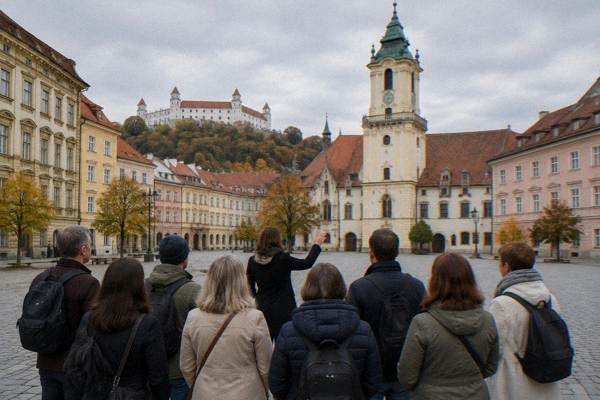
Is Bratislava Good For Shopping?
Is Bratislava good for shopping? An honest, source-based answer covering the Old Town, riverfront malls, Slovak wine, markets and what things cost in euros.
Bratislava, the capital of Slovakia, is not a shopping city in the way Vienna or Budapest are shopping cities, and that is part of its appeal. The destination sits inland on the Danube with roughly 468,000 residents, its historic core is a pedestrian zone, and everything you buy is priced in euros because Slovakia adopted the single currency on 1 January 2009. The shopping here splits into three layers: the small independent shops of the Old Town, the modern riverfront retail at Eurovea, and the Slovak products, wine above all, that you genuinely cannot buy this fresh at home. The city's own Christmas market runs 26 November 2026 to 3 January 2027 on Hlavné námestie and Hviezdoslavovo námestie, which turns the whole centre into an open-air shopping and eating event for five weeks.
For the wider shopping picture, including the malls and districts street by street, the site's dedicated Bratislava shopping guide goes deeper, and the question of whether the city justifies the trip at all is covered in is Bratislava worth visiting. This page answers the headline question directly and sticks to what the published sources say.
Yes, Bratislava is good for shopping if you want a compact, walkable, euro-priced city with a pedestrian Old Town of small independent shops, the Eurovea riverfront development for mainstream retail, and distinctly Slovak buys such as Small Carpathians wine, ceramics and Christmas-market crafts. It is not a fashion capital and it does not have the luxury shopping streets of Vienna, an hour away by train, so shoppers chasing flagship boutiques should treat it as a pleasant bonus rather than the reason to come.
The honest framing matters because Bratislava gets compared, constantly, with its two big neighbours. Vienna is about an hour away on the REX8, Budapest is a separate day trip, and both have far larger retail scenes. What Bratislava offers instead is density: the Old Town core is on foot, the main squares, Hlavné námestie and Hviezdoslavovo námestie, sit minutes apart, and a shopping day here involves almost no transport at all. The question is Bratislava a walkable city answers yes for the centre, and shopping is where that pays off most.
The city has also been investing in its public spaces. The Živé námestie project, covering Námestie SNP, Námestie Nežnej revolúcie and Poštová ulica plus the tram stops there, was completed in early October 2026, which reshaped one of the main commercial arteries in the city centre. The OD Dunaj renovation is ongoing, with an expected opening in spring 2027, so a corner of the Old Town retail scene is in transition this season.
Money questions dominate the practical side, and the published figures are straightforward. Slovakia uses the euro. The city tourist tax is 3.50 EUR per person per night in the Old Town district and 3.00 EUR elsewhere, capped at 60 nights a year, and it is normally folded into the accommodation bill rather than paid in a shop. For the broader cost picture, see is Bratislava cheap or expensive.
| Item | Figure | Note |
|---|---|---|
| Paper single, 30 min, zones 100+101 | 1.20 EUR | Standing IDS BK price |
| Paper single, 60 min | 1.80 EUR | Standing IDS BK price |
| Paper 24 h ticket, zones 100+101 | 5.40 EUR | Cheaper in the app |
| Tourist tax, Old Town | 3.50 EUR per person per night | Max 60 nights a year |
| Tourist tax, other districts | 3.00 EUR per person per night | Same cap |
| Christmas market | 26 Nov 2026 to 3 Jan 2027 | Hlavné námestie and Hviezdoslavovo námestie |
Where Do You Shop In Bratislava?
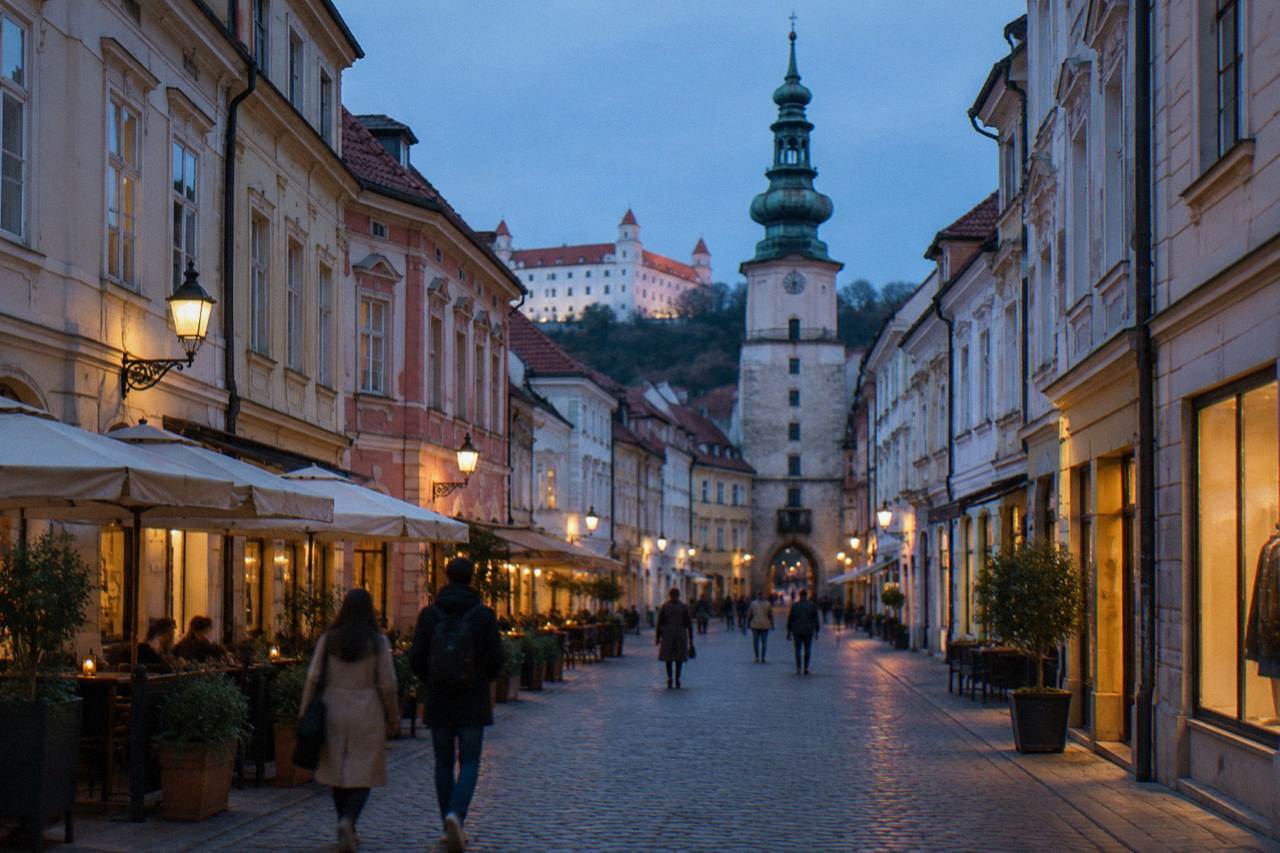
The two main shopping settings in Bratislava are the pedestrian Old Town, where independent shops line the lanes between Hlavné námestie, Michael's Gate and Hviezdoslavovo námestie, and the Eurovea development on the Danube riverfront, which pairs mainstream retail with the waterfront promenade. Beyond the centre, Kamzík, the castle hill and the Small Carpathians wine villages to the northeast are where the shopping turns regional, toward wine and local crafts.
The Old Town is the default. It is car-free, compact and sits under the castle hill, which the site's Bratislava shopping guide covers street by street. Michael's Gate, with the City Museum's weapons exhibition in the tower, sits on one of the main shopping streets: the tower's exhibition is 6 EUR general admission, open Monday and Wednesday to Sunday 10:00 to 18:00, and closed Tuesdays. That Tuesday closure is worth flagging because it is the opposite of what many visitors assume; the Old Town Hall museum complex is the one closed on Mondays.
The riverfront is the second layer. Eurovea sits on the Danube bank, and the Eurovea Tower residential block was completed in 2023; the district pairs shopping with the river promenade that runs toward the UFO observation deck on Most SNP. The UFO deck itself is open daily 10:00 to 23:00, with the adult observation-deck ticket at 11.50 EUR on weekday mornings or 12.50 EUR at other times, so a retail walk along the river can end 95 metres above it.
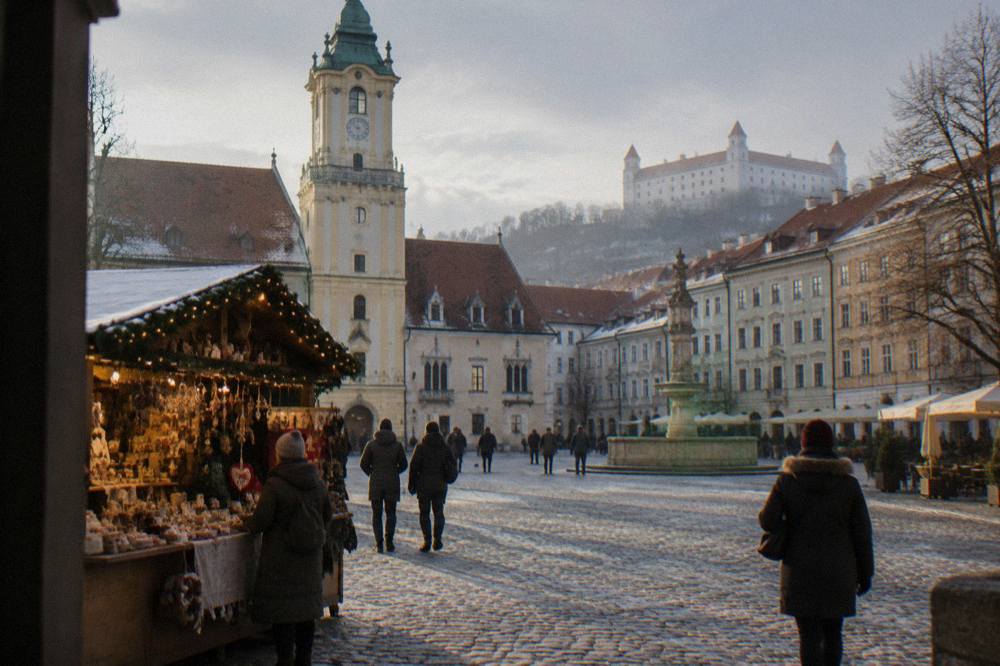
The third layer is the seasonal one. From 26 November 2026 the main Christmas market takes over Hlavné námestie and Hviezdoslavovo námestie until 3 January 2027, organised by BKIS. For crafts and food shopping, that five-week window is the densest the centre gets all year. In November the Small Carpathians wine region holds its open-cellars tradition, and St Martin's young wine reaches venues from 11 November, which makes late autumn the natural season for buying Slovak wine to carry home.
If the shopping day needs a backbone, a short guided walk is the efficient way to learn the layout first. The three castles day trip from the roster above works differently: it trades a shopping afternoon for Beckov, Trencin and Bojnice castles in one day, which suits a longer stay.
What Should You Buy In Bratislava?
The buys that make sense in Bratislava are Slovak wine from the Small Carpathians region, Christmas-market crafts and food during the market window from late November, and the small independent Old Town shops selling design, books and ceramics, all priced in euros. Fashion and electronics are not the bargain category here, and the city's retail strength is regional and seasonal rather than global, so shop for what the country itself produces.
Wine is the headline. The Small Carpathians wine route, with villages such as Modra and Pezinok, sits close to the city, and St Martin's Day on 11 November marks the traditional release of the young wine, served at venues from around that date. The operator roster includes a private tasting at a family-operated winery in Modra, which prints its own price and rating in its listing. For background on the wine itself, see the site's coverage of Slovak wine in the guide library.
The calendar decides a lot. The table below lists the 2026 to 2027 dates for the shopping-relevant events the sources confirm.
| Event | Dates | Relevance for shopping |
|---|---|---|
| Main Christmas market, Hlavné námestie and Hviezdoslavovo námestie | 26 Nov 2026 to 3 Jan 2027 | Crafts, food and gift stalls in the centre |
| St Martin's young wine release | from 11 Nov 2026 | Young Slovak wine at venues citywide |
| Živé námestie public-space project completed | early Oct 2026 | Reworked central shopping streets and tram stops |
| OD Dunaj renovation opening | expected spring 2027 | A Old Town retail corner still in transition |
One honest caveat: the castle's own medieval-style Christmas market and the Eurovea Christmas market were not announced for 2026 in the sources, so plan around the main market on the two squares until an organiser confirms otherwise.
Is Shopping In Bratislava Cheaper Than Vienna?
Shopping in Bratislava is generally cheaper than Vienna for everyday costs, because Slovakia's prices are in euros but at a lower level than Austria's for food, drink and local services, and the city adds a tourist tax of 3.50 EUR per person per night in the Old Town versus Vienna's separately set rates. For branded fashion and electronics the gap narrows to almost nothing, since euro-zone retail pricing converges on identical goods, so the real savings are on what is locally produced, eaten or drunk.
The comparison matters because the two cities sit an hour apart; the REX8 covers Vienna Hbf to Bratislava hlavná stanica in 56 minutes. Day-trippers arrive with that question, and which is nicer, Vienna or Bratislava covers the broader verdict. On shopping specifically, the honest answer is that Bratislava competes on local goods and on the experience of buying them in a walkable centre, not on international brand pricing.
Entry costs illustrate the level. The UFO observation deck is 11.50 or 12.50 EUR depending on time. Primate's Palace, with its free audio guide, is 5 EUR standard admission. St Martin's Cathedral's tourist zone, covering the treasury, crypts and gallery, is 5 EUR. These are sightseeing prices, but they set the tone for what a day in the city costs, and none of them approaches big-city pricing.
Tipping is the one retail-adjacent custom worth knowing. The reported norm in Slovakia is to round up or leave 5 to 10 percent for good table service, which is lower than the expectations in Vienna's café culture. Tap water is safe to drink in Bratislava, supplied from underground sources and only disinfected, which quietly lowers the cost of a long shopping day.
For visitors staying several days, a longer itinerary makes room for both the shops and the region; the question of how many days you need in Bratislava has its own page. Whatever the length, the castles day trip above can be booked at a genuine decision moment, alongside a wine route or a river cruise, with Check availability before committing a day of the trip to it.
Common Questions About Shopping In Bratislava
Shopping in Bratislava raises a small set of recurring questions: what currency applies, whether the centre is walkable, when the Christmas market runs, which day museums close, and how the prices compare with Vienna. Each has a direct answer from the city's own published figures, and the short versions below settle the practical side of a shopping trip without guesswork.
Is Bratislava Good For Shopping?
Yes, for a compact, walkable, euro-priced shopping break built around the pedestrian Old Town, the Eurovea riverfront and distinctly Slovak buys such as Small Carpathians wine and Christmas-market crafts. It is not a luxury shopping destination on Vienna's scale, an hour away by train.
What currency do you shop with in Bratislava?
The euro. Slovakia adopted it on 1 January 2009, so there is no exchange step for euro-zone visitors, and all local prices quoted on this site are in EUR.
When is the best shopping season in Bratislava?
Late November into December. The main Christmas market runs 26 November 2026 to 3 January 2027 on Hlavné námestie and Hviezdoslavovo námestie, and St Martin's young wine reaches venues from 11 November.
Do shops close on public holidays in Slovakia?
Sunday trading is generally unrestricted, and several former non-working days have become working days under recent changes. Verify specific holiday dates for your visit, as shop-closure rules apply only to certain dates such as 25 December.
Is the shopping area in Bratislava walkable?
Yes. The Old Town is a pedestrian zone, the main squares sit minutes apart, and the centre needs almost no transport; a 30-minute IDS BK paper single at 1.20 EUR covers any trip that does leave the core.
The short verdict: Bratislava is a good shopping city for what it actually is, a compact regional capital where the centre is car-free, the wine is local, the market season is long, and the prices run lower than its western neighbour's. Shoppers looking for flagship avenues should keep Vienna on the itinerary too, and let Bratislava Travel Guide handle the rest of the plan.