Entering Slovakia As A US Visitor: Passports, ETIAS And Schengen Days
Slovakia has been in the Schengen Area since 21 December 2007, reported by the national bank's own reference pages, and that single fact shapes almost every entry question a US visitor asks before a Bratislava trip. Knowing what changes at the border, what the planned ETIAS authorisation will and will not do, how Schengen day counting works, and what to sort out in the first hours after arrival therefore matters to that visitor.
Short answer
Slovakia is a Schengen country, so a US visitor arriving for a short stay enters under the common Schengen framework rather than a Slovak visa regime, and the planned ETIAS pre-travel authorisation will apply to visa-exempt nationals once it takes effect. Confirm the exact current terms on official government travel guidance before booking.
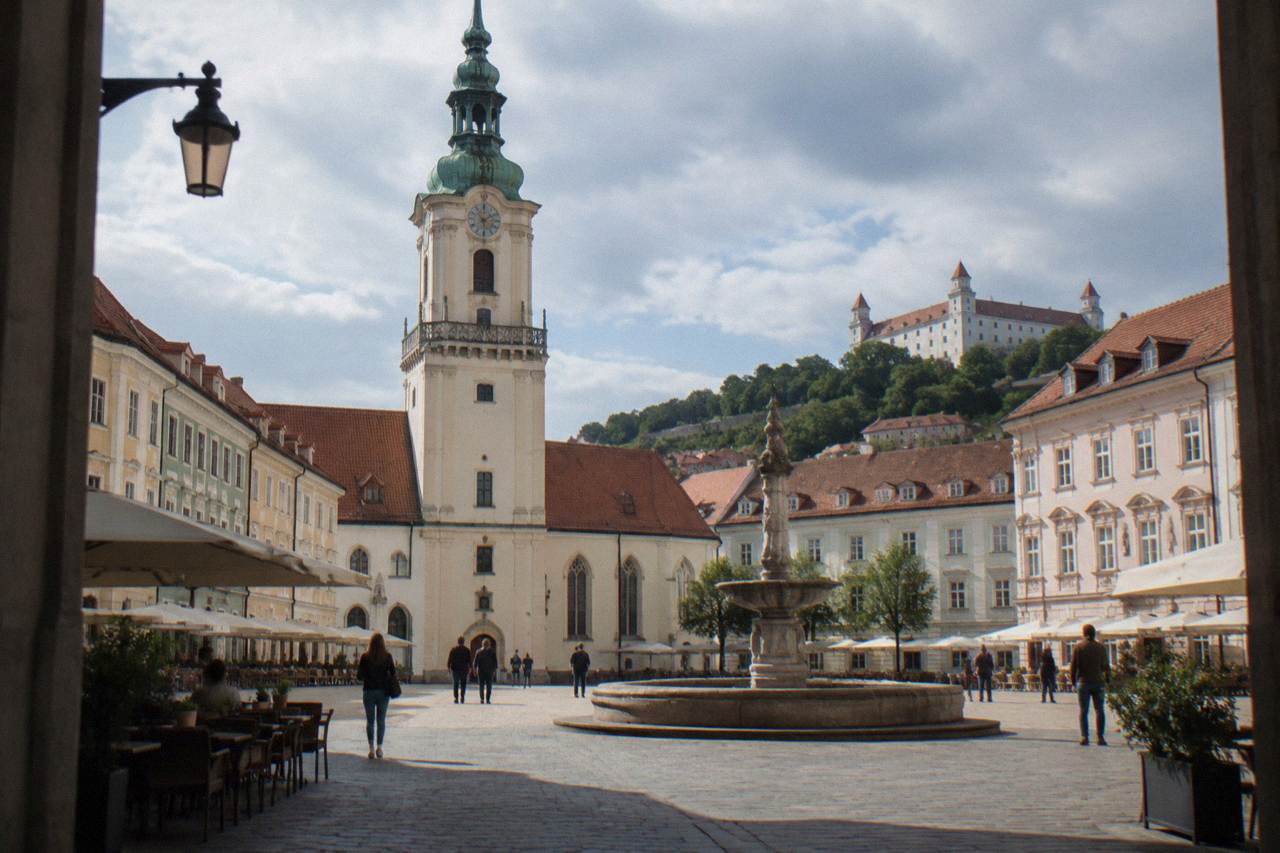
Slovakia sits inside the Schengen Area, a fact reported consistently by the National Bank of Slovakia's own reference material, with membership dated to 21 December 2007, and everything a US visitor needs to sort out before a Bratislava trip flows from that. There is no separate Slovak visa queue tailored to Americans, no Slovak-specific border regime for short stays, and once you are inside Schengen the journey from Vienna or Budapest to Bratislava is an internal move between member states. The questions that remain are the practical ones: what document to carry, what the planned ETIAS authorisation will change, how the Schengen day count limits a long trip, and how the city itself works in the first hours after arrival, from the euro to emergency numbers to the closed days that catch visitors out.
Do US Citizens Need A Visa To Visit Bratislava?
For short stays, US visitors enter Slovakia under the common Schengen visa-exemption framework rather than through a separate Slovak visa, because Slovakia has been a Schengen member since 21 December 2007, a date reported in the National Bank of Slovakia's reference pages. The desk does not restate the exact terms that apply to any one nationality, because those terms are set and amended at the European level, and the binding version lives on official government travel guidance rather than on a travel site.
What can be said plainly is the structure. Schengen is a shared external border and a shared set of entry rules across member states; a traveller admitted at the external border of one member state may move internally to the others without routine passport checks. Slovakia joined on 21 December 2007 according to the reporting on the national bank's pages, and it adopted the euro on 1 January 2009, so the country is both in Schengen and in the eurozone. For an American planning a city break, that means the entry conversation happens once, at the external Schengen border if there is one on the itinerary, and not again at the Austrian or Hungarian internal line on the way to Bratislava.
The specifics, passport validity expectations, permitted stay length for US nationals, and any conditions attached to visa-free entry, are exactly the material a desk should not paraphrase. Rules at this level change on dates driven by EU legislation, and a paraphrase written today can be wrong by the time a trip runs. The working method is simple: read your own government's current travel guidance for Slovakia, read the European Union's official entry pages, and treat those as the only authority. Everything else on this page is the destination-side logistics that those pages do not cover: how Bratislava receives you once you are in.
What Documents Should You Carry When Entering Slovakia?
Carry your passport, the same document you used to enter Schengen, for any journey into and around Slovakia, including the hop from Vienna or Budapest to Bratislava, because internal Schengen borders can be subject to checks even though routine controls were abolished. A national ID card works for EU citizens, but US visitors have one document class that matters, the passport, and it should be on your person rather than in a hotel safe when you are moving between countries.
The internal-border point deserves a plain explanation. Between Schengen member states, the treaty design removed systematic passport control, so the train from Vienna to Bratislava does not pass through a passport hall in the way a flight from New York does. What replaced it is a legal possibility rather than a permanent booth: member states can reintroduce checks at internal borders for limited periods, and police in both Austria and Hungary have used that mechanism in recent years. In practice that means a border officer can board a Vienna-bound or Budapest-bound train and ask for documents, and a traveller without a passport on them has a problem no timetable can solve. Pack it in the bag you keep at your seat, not in checked luggage on flights and not in a suitcase stuck in the coach hold.
Two other documents earn their place. Travel insurance details, policy number and emergency line, matter anywhere, and a printed or offline copy of your first night's address answers the standard arrival question about where you are staying. None of this is Slovakia-specific bureaucracy; it is the standard kit for moving inside Schengen, and Bratislava's position between Austria and Hungary makes cross-border day trips, covered in detail on how to get to Bratislava, a normal part of a visit.
How Does The Schengen 90-Day Count Work For A Bratislava Trip?
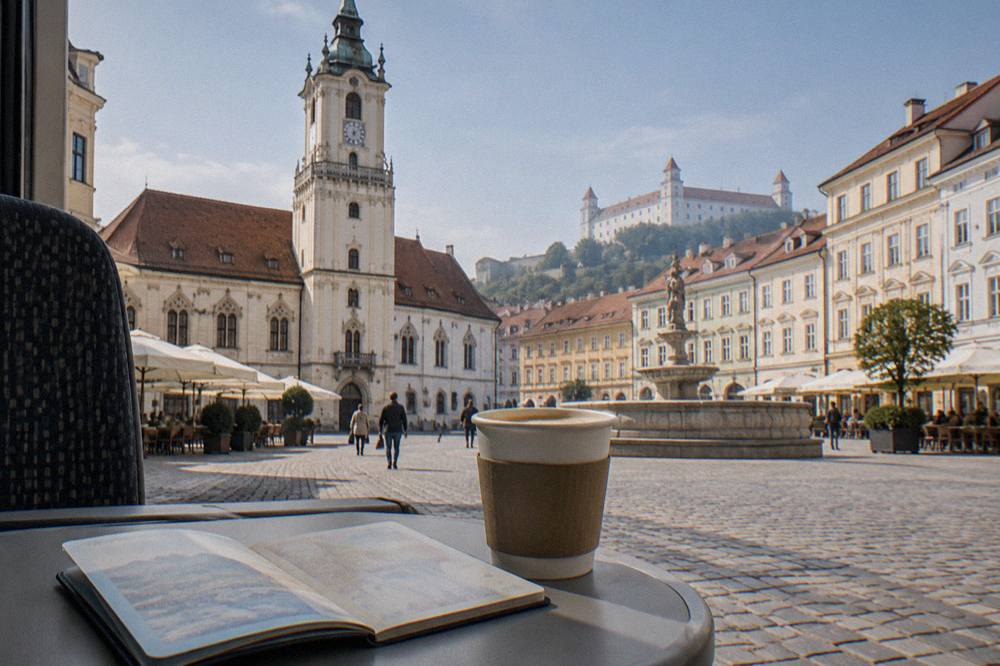
The Schengen clock counts days spent anywhere in the member states against a rolling window, so days in Bratislava, Vienna and Budapest all draw on the same allowance rather than on separate national quotas, and the counting rules are published by the European Union's official entry-information service, which is the source to use for the exact method. The structure is reported here, and the arithmetic is directed to the official calculator rather than to a restatement of terms that apply to a specific nationality.
Why this matters for a Bratislava plan is geography. Bratislava sits close to Vienna, roughly an hour by rail, with the REX8 covering Vienna Hauptbahnhof to Bratislava hlavná stanica in 56 minutes for a fixed 12.70 euro one-way fare, and a common itinerary strings the two capitals together, sometimes with Budapest added. Every one of those days is a Schengen day, because all three cities are inside the area. A traveller who treats "Austria days" and "Slovakia days" as separate budgets is counting wrong; the allowance is shared across the zone. Longer multi-country trips, like the routing sketched in the Bratislava Vienna Budapest itinerary, are exactly the plans where the shared count bites.
The rolling window is the second half of the trap. The count is not reset by leaving and re-entering, and it is not calendar-based; it looks backwards over a moving period. That rewards keeping a simple log of entry and exit dates for every Schengen trip taken in the last few years, because border officers can and do ask. For a one-week city break the arithmetic is trivial, and the count only becomes a live concern for long stays, back-to-back visits, or a season of drifting around Central Europe with Bratislava as one stop. In those cases, run the official calculator before booking, not at the desk in the airport.
Will ETIAS Change How Americans Enter Slovakia?
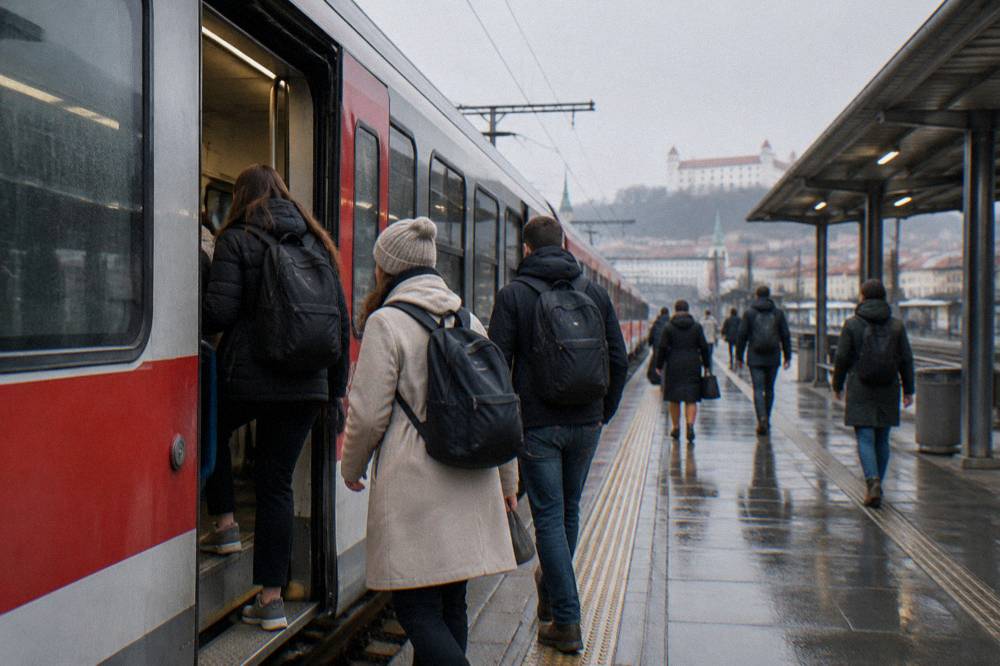
ETIAS is a planned pre-travel authorisation for visa-exempt visitors to the Schengen area, which will include US citizens once it takes effect, and it will be a requirement checked before boarding rather than a visa granted on arrival; its start date has shifted repeatedly, so the live schedule on the European Union's official ETIAS pages is the only reliable source, and no launch date is repeated here. Until it is live, nothing about it changes a trip already booked to Bratislava.
The design is worth understanding even without a date. ETIAS is conceived as an online application submitted before travel, screened against security and migration databases, producing an authorisation tied to the passport. It is not a visa: the visa-exemption framework stays in place, and the authorisation is meant to be a faster, cheaper layer on top of it. For a US visitor, the practical effect when it activates will be one more box to tick during flight booking season, an online form and a fee, done once and valid across the member states including Slovakia. Airlines are the enforcement point, checking before boarding exactly as they already check passport validity.
The honest position on timing is that announcements have moved more than once, and a travel article that prints a date is printing a guess with a lifespan measured in months. The method that works: before an international booking, check the official ETIAS site, and check your government's Slovakia travel page at the same time, since both will state clearly whether the system is live. If it is not live, apply for nothing, pay nothing, and travel as before. If it is, the application is a single sitting at a computer, not a consulate visit.
What Should US Visitors Know About Arriving In Bratislava?
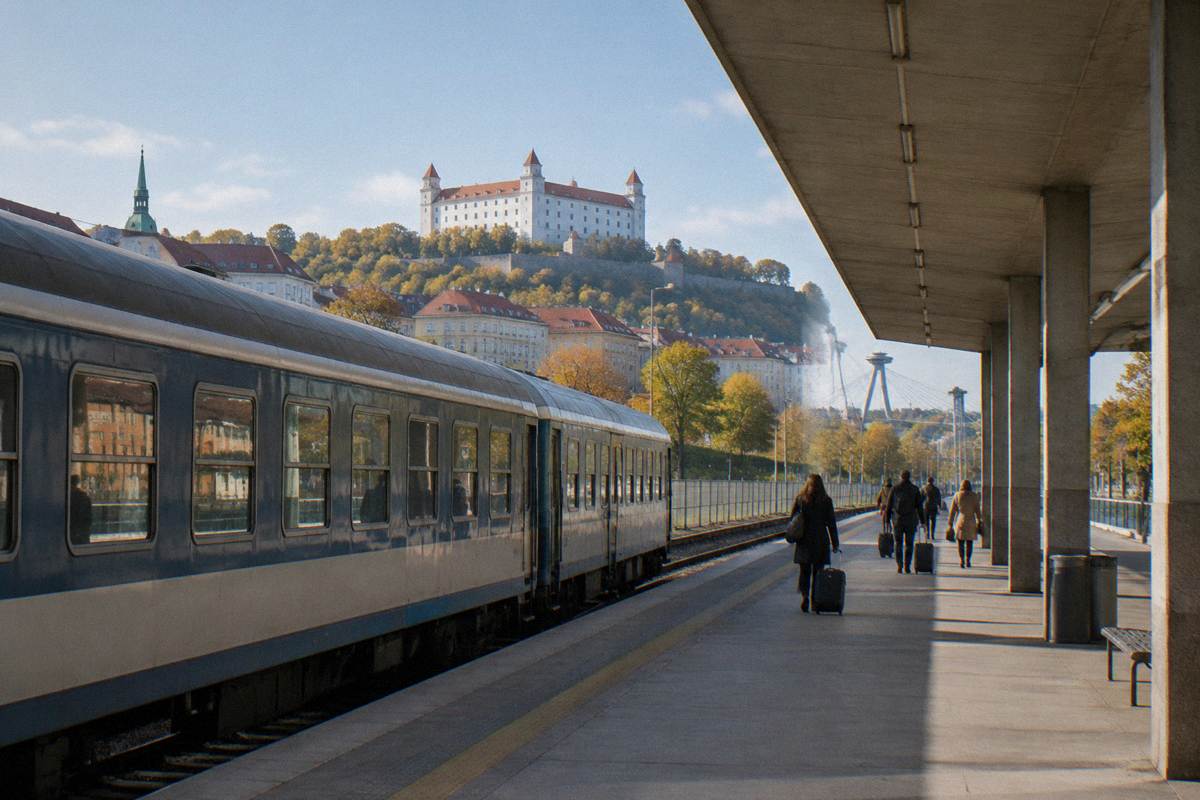
Bratislava receives visitors by air, rail and river: the airport connects to the main station by bus 61 in about 25 to 30 minutes, hourly REX8 trains link Vienna Hauptbahnhof to Bratislava hlavná stanica in 56 minutes for 12.70 euros one way, and the Twin City Liner runs the Danube between Vienna and Bratislava in about 75 minutes during its 2026 season between 20 March and 2 November.
Each route lands you inside the Schengen area already, so there is no passport control to clear on arrival from another member state.
The airport route is the simplest. Bus 61 runs between Letisko, the airport, and Hlavná stanica, the main station, with the journey reported at about 25 to 30 minutes, and the N61 covers the same corridor at night. Fares are the standard IDS BK tickets, a 1.20 euro paper single for 30 minutes or 1.80 euros for 60 minutes in zones 100 and 101, with cheaper eTicket versions at 1.09 and 1.60 euros through the app. The wider set of guides lives on Bratislava Travel Guide.
From Vienna the rail link is the workhorse. The REX8 runs hourly via Marchegg and has taken 56 minutes since electrification of the line, with a fixed 12.70 euro one-way fare and no reservation; a parallel REX6 serves Bratislava-Petržalka via Bruck and Kittsee in 59 minutes. The river option, the Twin City Liner, opened its 2026 season on 20 March with high-season service of three daily departures each way from 1 May to 2 November, and Advent sailings on Fridays to Sundays between 27 November and 20 December. Full route detail sits on the Vienna to Bratislava guide, and the airport-specific pages cover Bratislava Airport and the Vienna Airport transfer.
| Route | Typical time | Standing fare | Notes |
|---|---|---|---|
| Vienna Hbf to Bratislava hl. st. (REX8) | 56 minutes | 12.70 EUR one way | Hourly, no reservation needed |
| Vienna Hbf to Bratislava-Petržalka (REX6) | 59 minutes | 12.70 EUR one way | Hourly via Bruck and Kittsee |
| Twin City Liner, Vienna to Bratislava | about 75 minutes | reported about 34 to 39 EUR economy | Season 20 Mar to 2 Nov 2026 |
| Bus 61, airport to main station | about 25 to 30 minutes | 1.20 EUR paper, 30 min single | N61 at night |
One rail caveat for autumn 2026: reconstruction around Hlavná stanica means that from 1 September to 12 December 2026 the S50 starts and ends at Bratislava-Nove Mesto and the R55 to Trnava is cancelled, though the main station itself stays open. Regional visitors connecting through the suburbs should check current timetables before relying on those two lines.
Do You Need Euros Or Cards In Bratislava?
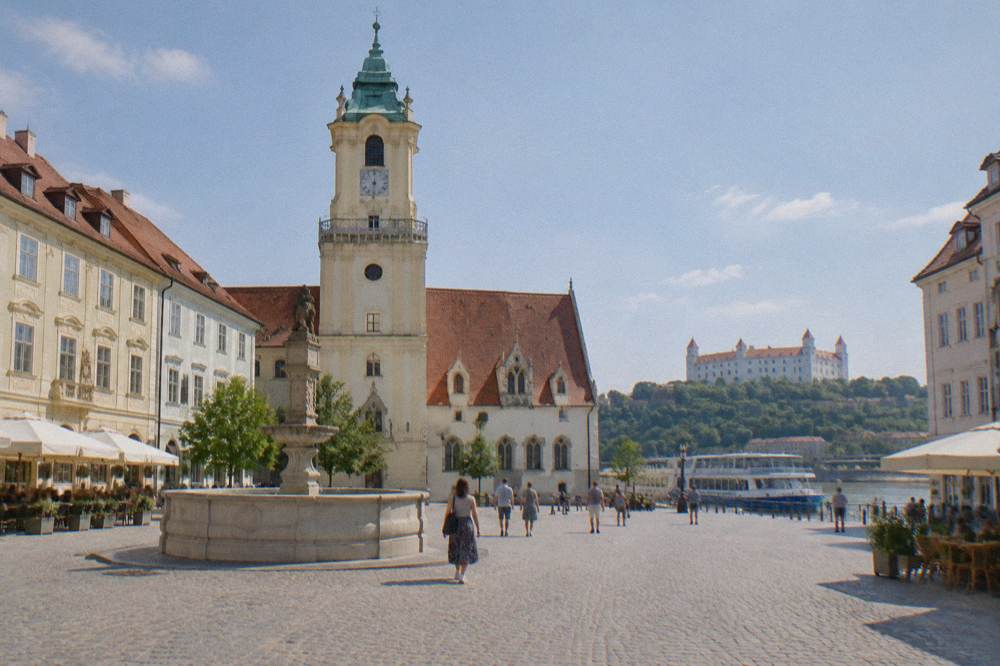
Slovakia adopted the euro on 1 January 2009, and every local cost in Bratislava, transport tickets, museum admission, the tourist tax, is priced in euros with no conversion needed from any other Central European currency; cards are accepted across the city's ticketing and attractions, but small euro cash still has uses at market stalls and for small purchases. US visitors should expect their home bank's foreign transaction terms to apply, which is a question for the bank rather than for the destination.
The local figures give a sense of the price level. A 24-hour paper transport ticket for the city zones costs 5.40 euros, or 4.85 euros as an eTicket; the 72-hour versions are 10.70 and 9.68 euros respectively. The Bratislava CARD, the official visitor pass, is priced at 30 euros for 24 hours with transport included, 36 for 48 hours and 39 for 72 hours, covering unlimited IDS BK travel across all zones, free entry to 23 sights and a daily 14:00 walking tour of the historic centre with a minimum of two participants, and one child under 18 travels free with the holder. The current discount brochure runs until 31 March 2027.
Admission prices at the headline sights are likewise modest and euro-denominated: the castle's Museum of History is 14 euros, Devin Castle is 8 euros in the April-to-October season and 6 euros from November to March, the Old Town Hall exhibitions are 8 euros, and the Danubiana art museum across the river is 12 euros. The full sight-by-sight picture, including the closed days that matter, is on the things to do in Bratislava overview, and the money questions specific to a short stay are worth pairing with a realistic two-day itinerary.
One recurring accommodation cost deserves its own line: the city's tourist tax, in force since 1 July 2023, is 3.50 euros per person per night in the Old Town district and 3.00 euros elsewhere, capped at 60 nights per taxpayer per year. It is normally collected by the property, but knowing the figure keeps a hotel bill from surprising anyone.
| Item | Price (EUR) | Notes |
|---|---|---|
| IDS BK paper 30-min single | 1.20 | Zones 100+101 |
| IDS BK eTicket 60-min single | 1.60 | App purchase |
| Paper 24-hour ticket | 5.40 | eTicket 4.85 |
| Bratislava CARD 24h with transport | 30 | 48h 36, 72h 39 |
| Castle Museum of History | 14 | Free with Bratislava CARD |
| Tourist tax, Old Town | 3.50 per person per night | 3.00 elsewhere |
Is Slovakia Safe And Practical For US Visitors?
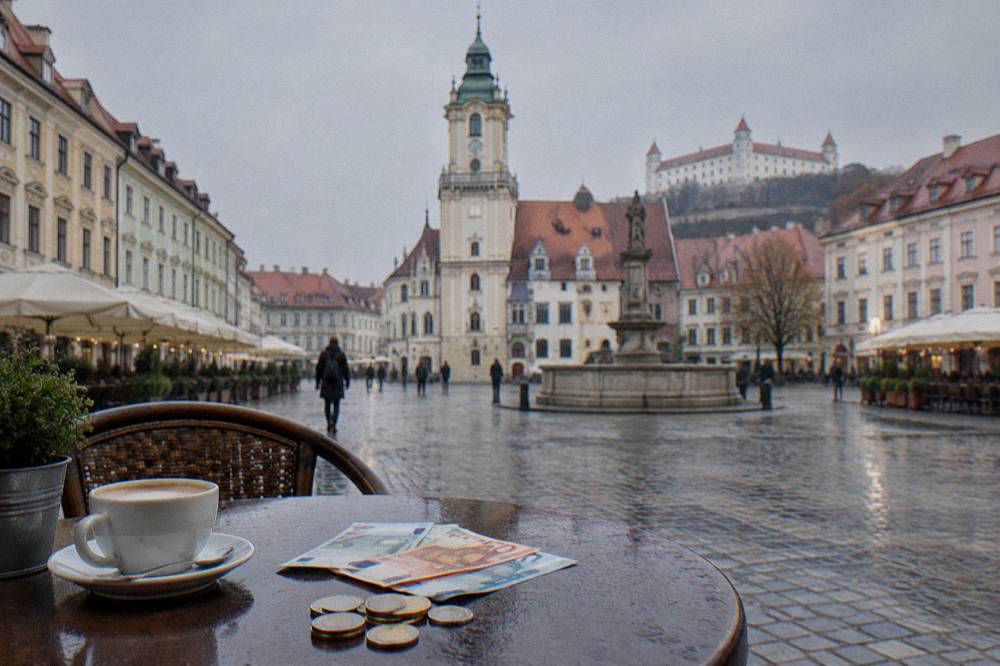
Slovakia's emergency numbers are straightforward: 112 is the universal European emergency line, with 150 for fire, 155 for ambulance, 158 for police and 159 for municipal police, and the tap water in Bratislava is reported safe to drink, supplied from underground sources and disinfected only. The tap water point is carried by the water company's own quality pages, and the emergency numbers by Slovakia's official numbering references, so both can be stated with confidence.
Beyond those basics, the safety picture for an American visitor is an ordinary European one, and the detailed treatment lives on the dedicated page on whether Slovakia is safe for US citizens. The desk adds only what the destination files verify. Bratislava is a city of about 468,290 residents as of 24 June 2026, a figure published by the city for that autumn's municipal elections, and its 2024 accommodation count was 1,188,915 visitors, up 3.2 percent on 2023 and 85 percent of the 2019 record, with 67 percent from abroad and August the peak month at 116,171. Those are the numbers of a city that hosts foreign visitors at scale and has the routines to match.
Two practical notes round this out. First, English coverage in the Old Town's visitor economy is broad enough that monolingual American travellers manage routinely, a point expanded on the site's language pages. Second, the tipping habit, rounding up or leaving roughly 5 to 10 percent for good table service, is reported as appreciated but not compulsory, so a US visitor who tips as at home will not offend. None of this requires advance paperwork; it is the layer of knowledge that makes the first afternoon smoother.
For orientation once you are moving, the city's transport system and its ticket types are covered on the public transport guide, and the seasonal question of when to come is handled month by month on the best time to visit Bratislava.
Which Closed Days Should You Plan Around In Bratislava?
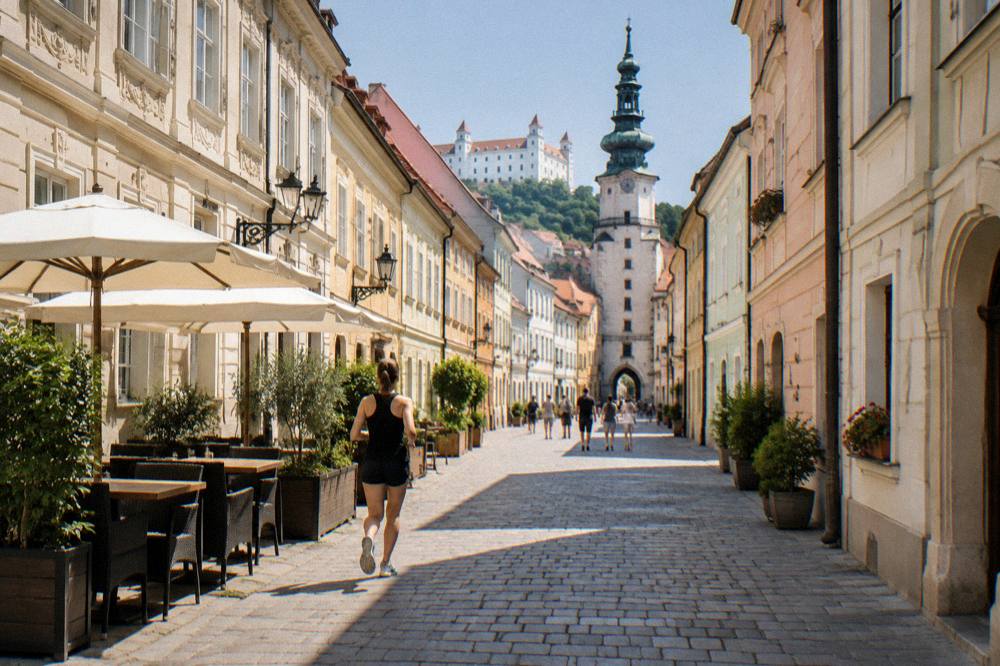
Three closed days matter: the Bratislava Castle Museum of History and Michael's Tower are closed on Tuesdays, while the Old Town Hall is closed on Mondays, and Devin Castle is closed on Mondays but stays open all winter, Tuesday to Sunday 10:00 to 16:00 from November to February with last entry at 15:15. Timing a first day around these is the difference between walking in and standing outside reading a sign.
The details reward attention. The castle's museum keeps hours of 10:00 to 18:00 Wednesday to Monday, last admission 17:00, while the castle grounds themselves are open daily from 08:00 to 22:00 year-round, so a Tuesday visit is not a wasted trip, only a museum-less one. The Baroque Garden shifts by season, 09:00 to 16:00 in January, February, November and December, extending to 09:00 to 21:00 in June and July. Michael's Tower, which holds the city museum's weapons exhibition, breaks the expected pattern in the other direction: it is open on Mondays and closed on Tuesdays. The Old Town Hall follows the conventional museum week, Tuesday to Sunday 10:00 to 18:00, closed Monday.
Devin Castle's winter behaviour is the single most-misstated fact about the destination. It does not close for the season; from November to February it opens Tuesday to Sunday 10:00 to 16:00, with only the interior exposition closed in the winter season, and in March it extends to 10:00 to 17:00. Admission drops to 6 euros in the November-to-March window from the 8-euro summer tariff, with reduced tickets at 4 and 3 euros and family tickets at 18 and 14 for two adults and three children in the two seasons.
| Sight | Closed day | Hours | Admission |
|---|---|---|---|
| Castle Museum of History | Tuesday | Wed to Mon 10:00 to 18:00 | 14 EUR |
| Castle grounds | none | daily 08:00 to 22:00 | free |
| Michael's Tower | Tuesday | Mon, Wed to Sun 10:00 to 18:00 | 6 EUR |
| Old Town Hall | Monday | Tue to Sun 10:00 to 18:00 | 8 EUR |
| Devin Castle, Nov to Feb | Monday | Tue to Sun 10:00 to 16:00 | 6 EUR |
| Devin Castle, Apr to Oct | Monday | 10:00 to 17:00 or later by month | 8 EUR |
The seasonal layer sits on top of the weekly one. Winter schedules for most sights start on 1 November, and the Christmas market on Hlavné námestie and Hviezdoslavovo námestie runs from 26 November 2026 to 3 January 2027, per the organiser's own pages, which reshapes any December arrival. The month-by-month weather picture, from the ERA5 reanalysis climate normals for 1991 to 2020 rather than a station record, belongs to the planning stage and is laid out alongside the seasons on the site's weather pages.
What Makes A Good First Day After Clearing Arrival?
A workable first afternoon is a walking loop of the pedestrian Old Town plus the castle hill, because the Old Town is on foot and the castle is a climb, and a guided walk covers the ground while the arrival fog lifts; the desk's featured pick is the private city and castle tour led by Sebastian, bookable through the operator's live listing, with the open-deck Danube panorama cruise and the northern Slovakia day tour as the natural follow-ons for later days.
All three prices and ratings render on their listings rather than being typed here.
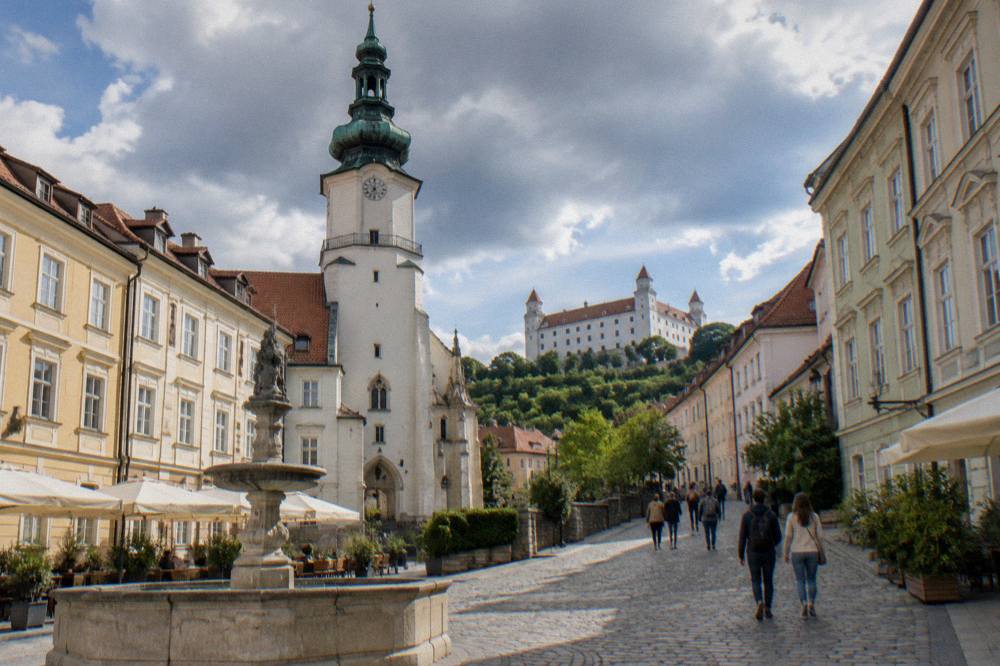
The logic is geographic. Everything a first-timer photographs, Hlavné námestie, Michael's Gate, St Martin's Cathedral, the castle above, sits within a compact walking radius, and a guide absorbs the orientation burden on the day a traveller is tiredest. The Check availability link sits beside the site's own review of that private walk, which covers what the tour includes and how it compares with the city's other guided options. For a second or third day, the river cruise gives the city its Danube perspective, and the long day tour into northern Slovakia rewards visitors who want castles and mountains beyond the capital.
What remains after the walking is done is ordinary arrival admin. Where to sleep is its own question, handled on the where to stay in Bratislava page, and eating is covered from what to eat in Bratislava through the best restaurants and beer and pubs pages. The desk's role ends where the numbers end: entry rules belong to official government sources, and everything after the border belongs to the pages above.
Common Questions About Entering Slovakia
Do US citizens need a visa to visit Bratislava?
For short stays, US visitors enter under the common Schengen visa-exemption framework rather than a Slovak visa, since Slovakia has been in Schengen since 21 December 2007, per reporting on the national bank's reference pages. The exact terms that apply to US nationals are set at the European level and should be confirmed on official government travel guidance before booking.
What is ETIAS and does it apply to Americans visiting Slovakia?
ETIAS is a planned pre-travel authorisation for visa-exempt visitors to the Schengen area, which will include US citizens once it takes effect. Its start date has shifted repeatedly, so the live schedule on the European Union's official ETIAS pages is the only reliable source; until it is live, it changes nothing about a booked Bratislava trip.
Do I need my passport when travelling from Vienna to Bratislava?
Yes, carry it. The Vienna to Bratislava route is an internal Schengen journey with no routine passport control, but member states can reintroduce checks at internal borders for limited periods, and officers can board trains to inspect documents. Keep the passport in the bag at your seat, not in a suitcase in the hold.
How does the Schengen day count work?
Days spent anywhere in the Schengen member states draw on one shared allowance rather than separate national quotas, so days in Bratislava, Vienna and Budapest all count against the same total. The counting method and the official calculator are published by the European Union's entry-information service, which is the source to use for exact arithmetic on long or repeated trips.
What currency does Slovakia use?
The euro, adopted on 1 January 2009. All local costs in Bratislava, transport tickets, sight admission and the tourist tax of 3.50 euros per person per night in the Old Town, are priced in euros with no conversion from another Central European currency.
What are the emergency numbers in Slovakia?
112 is the universal European emergency line, with 150 for fire, 155 for ambulance, 158 for police and 159 for municipal police. The tap water in Bratislava is reported safe to drink, supplied from underground sources and disinfected only.