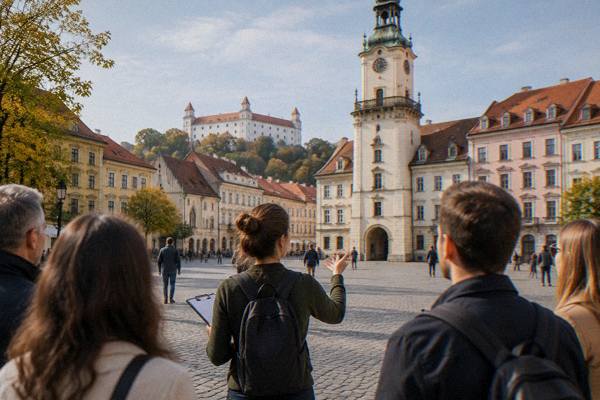
Is Slovakia Safe For US Citizens?
A practical safety answer for US citizens visiting Slovakia and Bratislava: entry basics, emergency numbers, money, tap water and day-to-day practicalities.
Bratislava, the capital of Slovakia, is an inland city on the Danube of about 468,290 residents as of 24 June 2026, according to the city's own published figures. For US citizens the destination works the way most of central Europe works: a Schengen member since, as reported, 21 December 2007, a eurozone country since 1 January 2009, with a single Europe-wide emergency number and a compact, pedestrian historic centre.
What Should US Citizens Know Before Travelling To Slovakia?
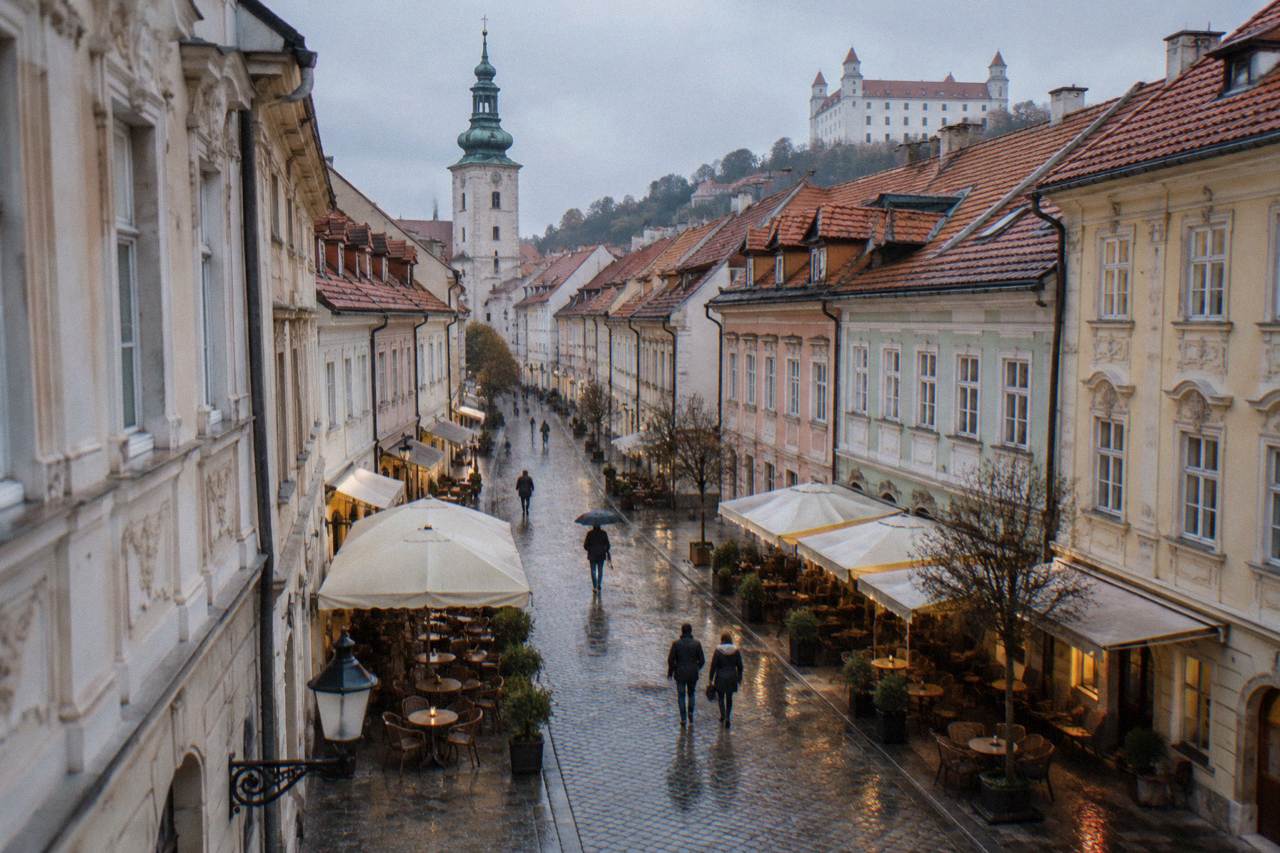
Slovakia is a Schengen and eurozone country, reported to have joined the Schengen Area on 21 December 2007 and to have used the euro since 1 January 2009, and because entry rules can change and nothing here replaces official guidance, US citizens should confirm current requirements with US authorities' own travel information and the Slovak foreign ministry's pages before booking. Within Schengen there are normally no internal border checks, which is why the crossing from Vienna is treated as domestic travel. Nothing on this page replaces official guidance, and entry rules can change, so the US authorities' own travel information and the Slovak foreign ministry's pages are the references to check before departure.
The practical upshot for planning is simple. Distances inside the country are short: Vienna is about an hour from Bratislava by train, with the REX8 covering the route in 56 minutes according to published timetables, so many visitors combine the two capitals. Our Bratislava safety guide covers street-level practicalities in more depth, and the Slovakia entry requirements guide collects the entry paperwork detail in one place.
Day to day, Slovakia runs on familiar European infrastructure. Emergency services use standard EU numbers, tap water is reported safe by the local utility, and local costs are in euros. None of this makes any destination risk-free, but the structural facts, currency, emergency access and a walkable centre, are what an American visitor actually interacts with.
How Safe Is Bratislava For American Visitors Day To Day?
Day-to-day safety in Bratislava rests on ordinary European infrastructure: a single EU-wide emergency number, 112, plus dedicated lines for fire, ambulance and police, all working from any phone, and a compact Old Town where the main squares and sights are reachable on foot. The full set of numbers is 112 for the universal EU line, 150 for fire, 155 for ambulance, 158 for police and 159 for the municipal police. Tap water is reported safe to drink: the local utility the city's water utility states that its supply comes from underground sources, is only disinfected, and is continuously monitored.
| Situation | Number | Notes |
|---|---|---|
| Any emergency, EU-wide | 112 | Works from any phone in Slovakia |
| Fire | 150 | Dedicated fire line |
| Ambulance / medical | 155 | Medical emergency line |
| Police | 158 | State police |
| Municipal police | 159 | City-level police |
Beyond the numbers, the city's layout does a lot of quiet work. The historic centre is pedestrian, centred on Hlavné námestie and Hviezdoslavovo námestie, with Bratislava Castle a climb above it. Public transport runs on the IDS BK network with paper singles at 1.20 EUR for 30 minutes and 1.80 EUR for 60 minutes, so a visitor is not dependent on cars or informal taxis.
Language is rarely a barrier in the tourist core; our page on whether you can speak English in Bratislava covers what to expect. A good way to get oriented on day one is the operator's Sightseeing Walk of Bratislava, a guided walk of the main sights, Check availability.
Is Bratislava Safe At Night For US Tourists?
Night-time safety in Bratislava follows the same pattern as the daytime: the same emergency numbers apply around the clock, the 112 line is the single number to call, and public transport includes night services such as the N61 bus, so a visitor is not stranded after dark. What stands out is infrastructure, not atmosphere: no nightlife venue claims, crowd descriptions or incident statistics appear. The dedicated page on whether Bratislava is safe at night gathers the detail on evening movement around the city.
A few practical anchors help after dark. The IDS BK network runs night lines, and the N61 connects Hlavná stanica with the airport in the late evening and overnight hours, as reported. Taxis and ride-hailing apps are reported to operate in the city. Agree on or check the fare in the app before the ride.
Common sense that applies in any European capital applies here too: keep valuables settled, know your route back to where you are staying, and save 112 in your phone before the first evening out. The Old Town's squares sit close together, which keeps late walks short.
What Practical Details Help US Citizens In Bratislava?
The practical anchors for an American visitor are euros for everything local, a tourist tax of 3.50 EUR per person per night in the Old Town and 3.00 EUR elsewhere, and a public transport system with a 24-hour paper ticket at 5.40 EUR covering the city zones. Slovakia adopted the euro on 1 January 2009, so there is no currency exchange to negotiate inside the country. The city's accommodation tax, in force since 1 July 2023, is capped at 60 nights per taxpayer per year, per the municipal ordinance.
| Item | Figure | Notes |
|---|---|---|
| Currency | EUR | Since 1 January 2009 |
| Tourist tax, Old Town | 3.50 EUR / person / night | Stare Mesto district |
| Tourist tax, other districts | 3.00 EUR / person / night | Max 60 nights per year |
| IDS BK 30 min paper single | 1.20 EUR | Zones 100+101 |
| IDS BK 60 min paper single | 1.80 EUR | Zones 100+101 |
| IDS BK 24 h paper ticket | 5.40 EUR | Zones 100+101 |
| Bratislava CARD 24 h with transport | 30 EUR | Free entry to 23 sights |
The Bratislava CARD deserves a look for a short stay. At 30 EUR for 24 hours with transport, it bundles unlimited IDS BK travel across all zones, free entry to 23 sights including the Castle Museum of History and Devin Castle, and a daily 14:00 walking tour of the historic centre, with one child under 18 travelling free with the holder. Whether it pays off depends on how many of those sights a trip includes. The rest of the planning pages sit on Bratislava Travel Guide.
Museum days matter when planning, because they are not uniform. The castle museum and Michael's Tower are closed on Tuesdays, while the Old Town Hall is closed on Mondays. Devin Castle stays open through winter, Tuesday to Sunday 10:00 to 16:00 from November to February, with only its indoor exposition closed in the winter season.
Does The Weather Or The Season Affect Safety In Bratislava?
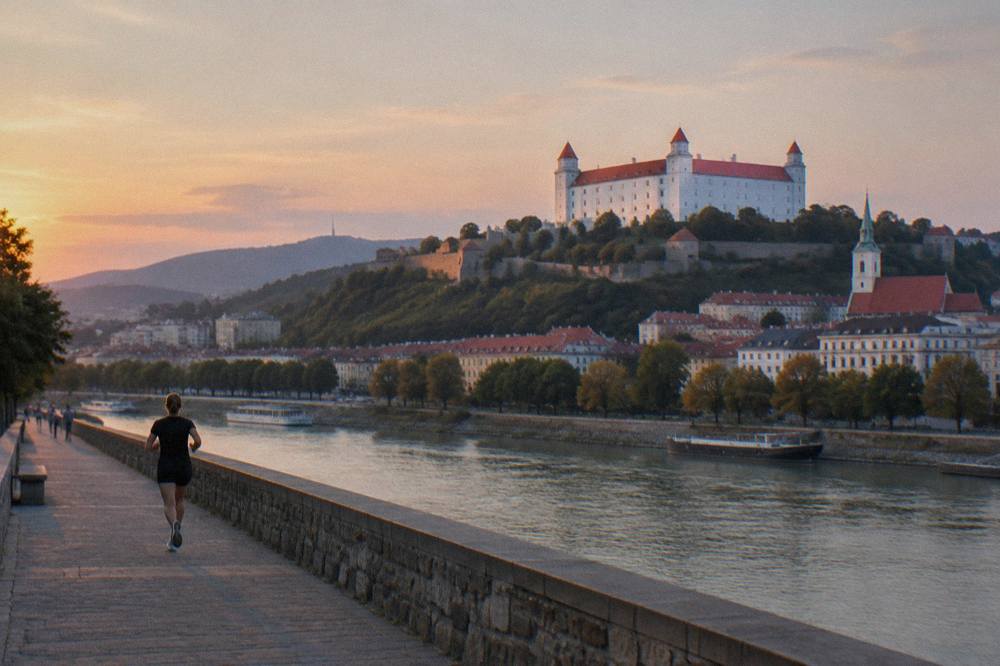
Weather in Bratislava is moderate by central European standards: modelled ERA5 climate normals for 1991 to 2020 put January's mean daily high at 3.0 C and its mean low at -3.1 C, July's high at 26.3 C, and July's rainfall at 75.8 mm, the highest monthly total in the table. These are reanalysis figures for a grid cell, not a station record, so treat them as about-right planning numbers. They matter for safety mainly in winter, when ice on the castle hill's paths and the climb up to it call for proper footwear.
| Month | Mean high C | Mean low C | Rain mm |
|---|---|---|---|
| January | 3.0 | -3.1 | 34.9 |
| April | 16.0 | 5.7 | 44.0 |
| July | 26.3 | 16.6 | 75.8 |
| October | 15.0 | 7.3 | 48.5 |
The city also has indoor options when the weather turns, which is itself a safety valve of sorts. The Slovak National Gallery is closed on Mondays and open until 20:00 on Thursdays, with free admission on the first Sunday of every month announced by the gallery. The UFO observation deck on Most SNP is open daily from 10:00 to 23:00, weather-independent. Our page on what not to miss in Bratislava lists more.
One seasonal note with a safety edge: from 1 September to 12 December 2026, rail reconstruction means the S50 starts and ends at Bratislava-Nove Mesto and the R55 to Trnava is cancelled, so anyone heading out of the city by train should check the live timetable rather than assume the usual pattern.
Is Slovakia Safe For US Citizens?
On the published record, yes in the ordinary European sense: Slovakia is a Schengen and eurozone country with a set of emergency numbers, reported safe tap water, a walkable pedestrian Old Town in the capital, and a modern public transport network priced in euros. No statistic on crime, scams or incidents appears on the published record. The realistic risks for an American visitor are the ordinary ones of any capital city, plus winter ice on the castle hill.
The structural facts stack up as follows. The euro since 1 January 2009 removes exchange risk. Schengen membership, reported since 21 December 2007, simplifies movement between Slovakia, Austria and Hungary, including the Vienna day-trip corridor that brings many US visitors to Bratislava in the first place. Emergency access is a single number, 112, backed by dedicated lines. And the city itself is compact: about 468,290 residents, with the main sights concentrated in and around a pedestrian centre.
For context on the wider question of whether the city rewards the trip at all, see is Bratislava worth visiting, and the Bratislava Travel Guide homepage for the full range of things to do in and around the city. Preparation, not worry, is the right posture: confirm entry rules with official sources, save 112, pack for the season, and the practical side takes care of itself.
Common Questions About Safety For US Citizens In Slovakia
Is Slovakia Safe For US Citizens?
On the published record, Slovakia presents the ordinary safety profile of a Schengen eurozone country: emergency numbers, reported safe tap water and a walkable capital. No crime statistics are quoted. Confirm entry rules with official government sources before travel.
What Is The Emergency Number In Slovakia?
112 is the universal EU emergency number and works from any phone. Dedicated lines are 150 for fire, 155 for ambulance, 158 for police and 159 for the municipal police.
Can You Drink Tap Water In Bratislava?
Tap water is reported safe. The local utility states that its supply comes from underground sources, is only disinfected, and is monitored for quality.
What Currency Does Slovakia Use?
Slovakia adopted the euro on 1 January 2009. All local costs in Bratislava, from transport tickets to the tourist tax, are in euros.
Is Bratislava Safe To Walk Around At Night?
The same emergency numbers apply around the clock, night bus services such as the N61 are reported to run, and the Old Town's squares sit close together. No incident statistics are printed; the dedicated page on night safety gathers further detail.