Bratislava Food Tours: Halusky, Wine And Market Stops
Bratislava food tours walk the pedestrian Old Town through halušky, market squares and Slovak wine stops, and this guide lays out what the products cover, what the dishes are and how the pieces fit together.
Short answer
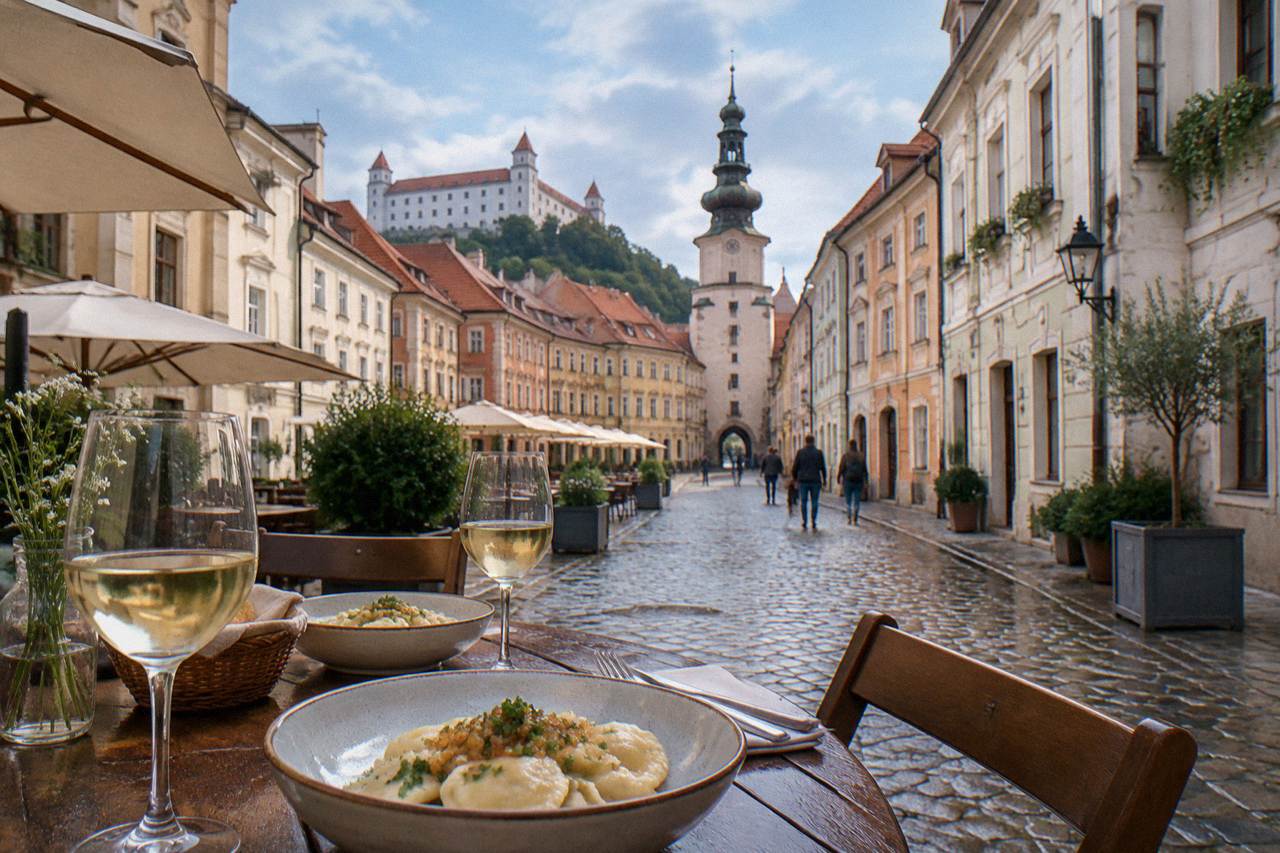
Food tours in Bratislava cover the Old Town on foot with a local guide, stopping for Slovak classics such as halušky and sweet pastries plus wine tastings drawn from the Small Carpathian region; options range from short tasting walks to half-day food circuits and paired city walks, and the seasonal anchor is the Christmas market from late November.
Bratislava, the capital of Slovakia and an inland city on the Danube, has a compact pedestrian Old Town that food tours work through street by street, tying halušky, grilled sausages, sweet pastries and Small Carpathian wine into a walk that rarely needs transport of any kind. The city of about 468,000 residents is small enough that a tasting route can link Hlavné námestie, the side lanes off Michalská and the riverfront on foot, which is the main reason food tours here sit among the most practical first activities a visitor can book. The tours cover the classic dishes themselves, the market stops and how a food walk fits alongside the castle, Devin and a wine region that begins practically at the city edge.
What Can You Expect From A Food Tour In Bratislava?
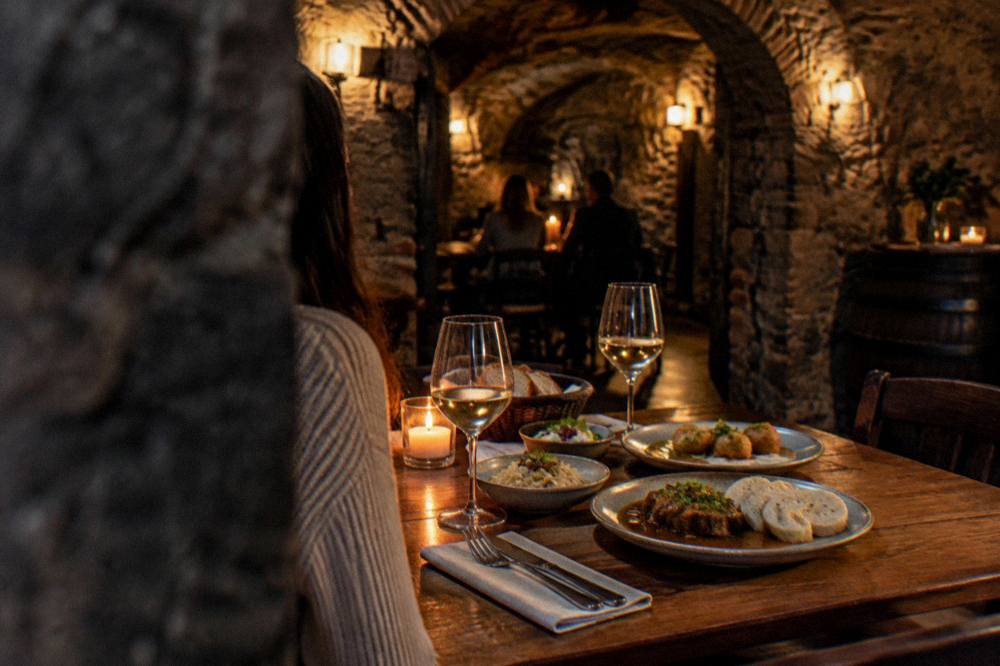
A Bratislava food tour is a guided walk through the Old Town with a series of tasting stops, covering Slovak dishes such as halušky, soups, sausages and pastries alongside local drinks, and it ends on foot where it began because the whole route sits inside the pedestrian core. The roster includes tasting walks in the Old Town, longer circuits with a dozen or more tasters, a craft-beer walk, wine tastings with a sommelier, an audioguided tasting held in complete darkness, and a traditional-food walk that stays inside the city rather than heading to the wine villages. Tour styles overlap heavily, and the honest differences are the number of stops, the group size and whether the focus is food, drink or the city story.
The roster also carries a city and castle walk with locals that pairs the history half with a tasting element, which matters for visitors who want one booking to cover both the castle hill and the plate. Between them, the food-focused products and the hybrid walks cover nearly every angle a first-time visitor asks for: what to eat, where the Old Town's key squares sit and why the wine poured here comes from villages a short drive west.
What no tour can do is put you on the sea, because Bratislava is an inland city on the Danube. River products exist, including a Danube panorama cruise with an open deck, but they are sightseeing, not dining, and the food walks themselves stay on pavement. The table below shows the product families and what each one actually centres on.
| Tour family in the verified roster | What the stops centre on | Setting |
|---|---|---|
| Old Town food walks | Slovak dishes, multiple tasters with a local guide | Pedestrian Old Town lanes and squares |
| Traditional food walk | Classic Slovak plates across several stops | Old Town restaurants and specialist venues |
| Wine tasting with sommelier | Guided tasting of Slovak wines | Indoor tasting room |
| Tasting in the dark | Audioguided tasting without sight | Darkened venue |
| Beer and food walk | Local beer paired with food stops | Pubs and bars across the centre |
| City and castle walk with tasting | History walk with castle section plus bonuses | Old Town and castle hill |
What Do You Actually Taste On A Bratislava Food Tour?
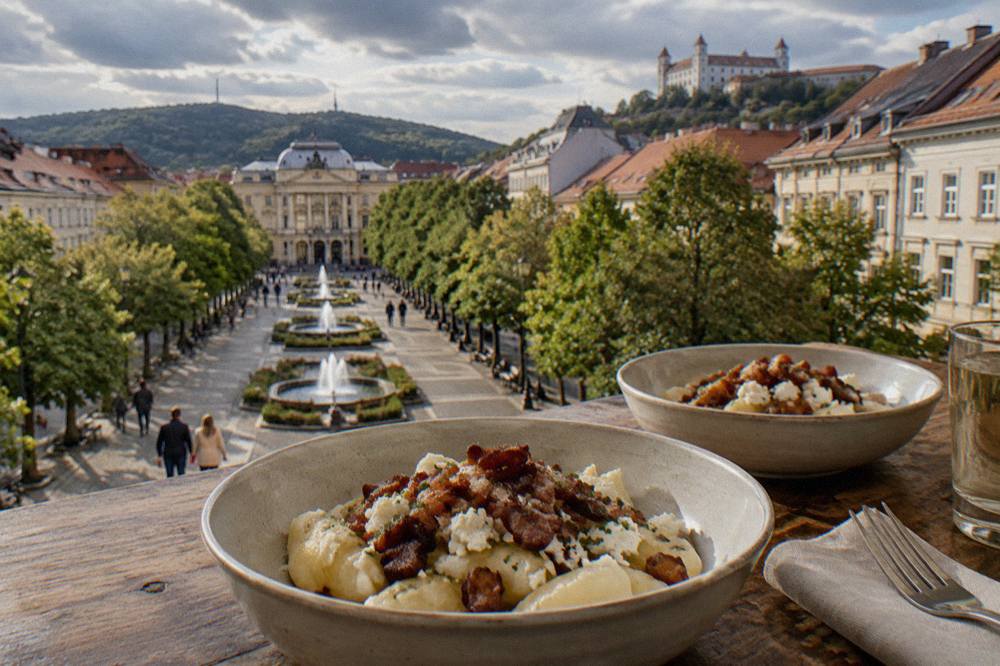
The core dish is bryndzové halušky, potato dumplings served with bryndza, a sheep-milk cheese, and topped with fried bacon, and around it the tours add soups, grilled sausages, bread with lard or pâté, sweet pastries and local wine or beer, with the sweet finish often a pastry filled with poppy seed or jam. Halušky is the national dish and appears on essentially every Slovak menu in the Old Town, which is why a food tour that skipped it would be a strange one. The drinks side leans on white wine from the Small Carpathian hills west of the city and on Slovak lager-style beers, with a growing craft scene reflected in the dedicated beer products.
The deeper answer is on the guide to what Bratislava is famous for food-wise, which walks the dish list in detail, and on the longer what to eat in Bratislava page. In short: the cuisine is Central European, hearty, built around pork, potatoes, cabbage and dairy, and it pairs with wines that seldom appear on a shelf at home, because Slovak wine is produced in small volumes and rarely exported at scale.
A note on wine timing, because it changes what is in your glass: St Martin's young wine is traditionally released on 11 November, reported across local sources, and from that date fresh young whites appear in bars and restaurants around the city. A food tour booked in late autumn or winter may therefore pour something that did not exist as a finished wine a week earlier, which is one of the genuinely seasonal pleasures of the Slovak capital's calendar.
| Classic Slovak item | What it is | Where it typically appears |
|---|---|---|
| Bryndzové halušky | Potato dumplings with sheep cheese and bacon | The anchor dish of most food walks |
| Kapustnica | Sauerkraut soup, often with sausage | Winter menus and Christmas market stalls |
| Grilled klobása | Slovak sausage, grilled and served with mustard and bread | Market stalls and street stops |
| Šúľance or sweet dumplings | Sweet potato or curd dumplings with poppy seed, sugar or chocolate | Dessert stop on traditional walks |
| Poppy-seed and jam pastries | Sweet bakery items from Old Town bakeries | Breakfast and dessert stops |
| Small Carpathian whites | Local dry whites from the wine villages west of the city | Wine tastings and paired stops |
A paragraph of context sits between the picks and the next section, because the trio above is deliberately mixed: the budget-fare Old Town and castle walk is the food-adjacent choice, the Tatras circuit is for visitors stretching beyond the city, and the open-deck cruise is the river angle. Food-first visitors should weight the first of the three and then read the dedicated tasting products below.
How Do You Choose Between The Food Tour Styles In Bratislava?
Choose by stop count and focus: the short tastings in the dark and the sommelier-led wine sessions are single-venue products measured in well under an evening, the Old Town food walks run several stops across the pedestrian core, and the traditional food walk and the beer-and-food walk are the longest commitments, so the decision is how much of the day the plate is allowed to take. None of these figures is typed here, because durations and prices render from the product data in the booking blocks, not from prose. What prose can say is what each style covers and who it suits.
The single-venue products suit a visitor with a packed itinerary, an evening gap or a rainy afternoon, and the tasting-in-the-dark concept is unusual enough that it doubles as an activity rather than a meal. The Old Town tasting walks suit first-time visitors who want the dishes and the geography in one go: the route itself doubles as an orientation, which is why a food walk is often smarter on day one than on the last evening. The longest walks suit travellers whose whole day can revolve around food, and the beer walk suits groups for whom pilsner matters as much as halušky.
There is also a decision about group size and privacy. The roster carries private walking tours with optional beer tasting, and a private traditional-food option sits alongside the shared products. Private versions cost more per head, a fact the booking blocks show, and they buy flexibility on pace and stops, which matters for families with children or for visitors with dietary limits that a shared route cannot bend around.
The foodie tour above is the flagship shared product of this kind on the site: a long Old Town circuit built around many tasters with a local guide, designed to replace a meal rather than precede one.
Where Do The Market Stops Sit On A Bratislava Food Route?
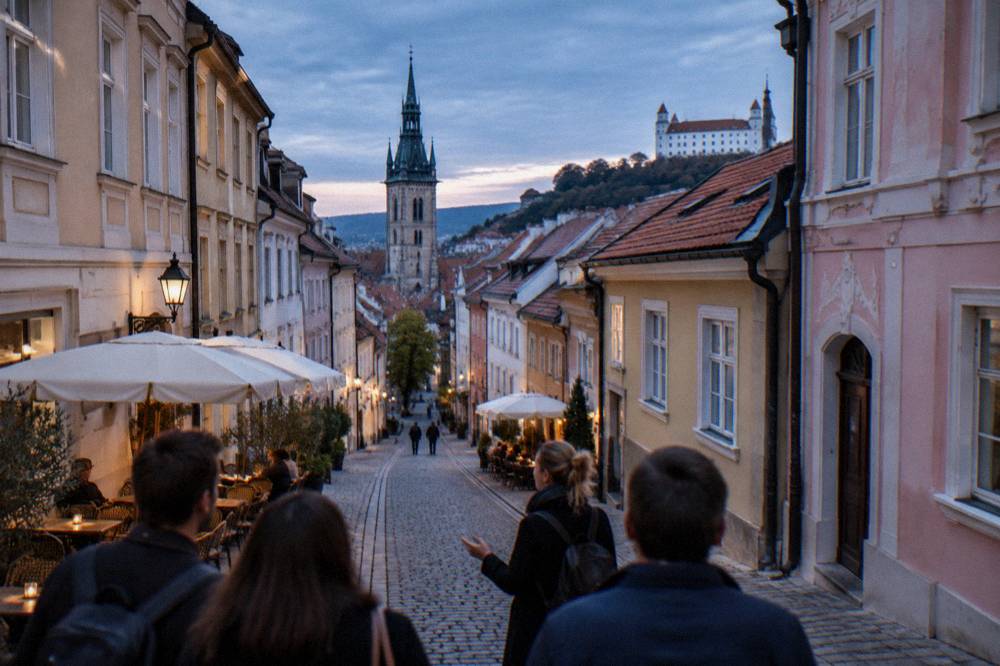
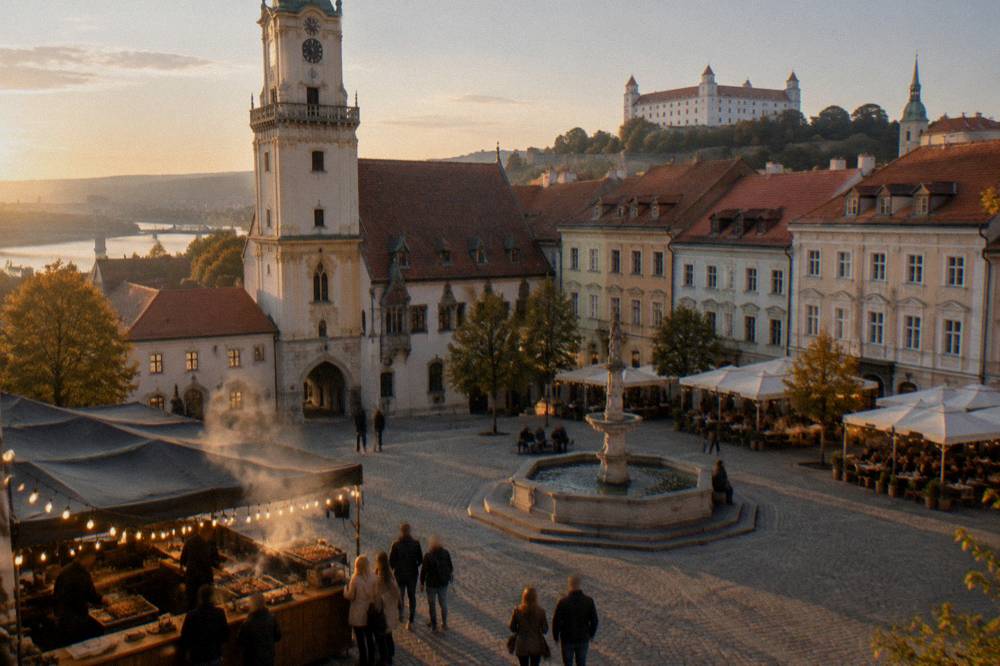
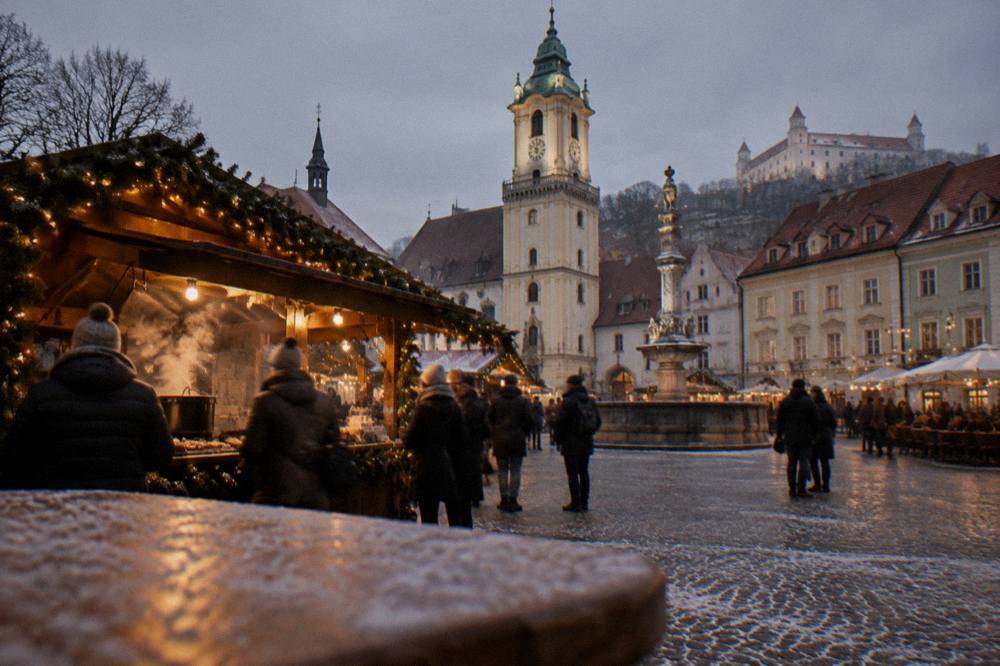
The two squares that anchor a Bratislava food route are Hlavné námestie, the Main Square, and Hviezdoslavovo námestie, both inside the pedestrian Old Town and both holding the main Christmas market from 26 November 2026 to 3 January 2027, with the everyday produce and market culture covered in the site's dedicated markets guide. The Christmas market is the one food event in the city with fixed dates: the organiser is BKIS, the city's cultural body, and the market runs on those two squares across the turn of the year. A food walk in December therefore moves through a working market, and the stalls, not the restaurants, become the tasting stops.
Outside the market season, the "market stops" of a food tour are really the squares and the food-adjacent landmarks around them. Hlavné námestie sits at the heart of the Old Town with the Old Town Hall on its side, and the attractions guide to the Main Square maps what sits where. A few minutes' walk away, Michael's Gate towers over Michalská, the lane most tasting routes use to reach the square, and the detail that matters for planners is the day each museum keeps shut.
| Stop on a typical food route | What it is | Day to watch for |
|---|---|---|
| Hlavné námestie (Main Square) | Central square, Old Town Hall, market site | Open daily |
| Hviezdoslavovo námestie | Square by the Slovak National Theatre, second market site | Open daily |
| Michalská lane | Street of cafés and restaurants under Michael's Gate | Michael's Tower closed Tuesdays |
| Old Town Hall exhibitions | City Museum, Viticulture exhibition | Closed Mondays |
| Bratislava Castle grounds | Free grounds, open 08:00 to 22:00 | Museum closed Tuesdays |
The viticulture exhibition inside the Old Town Hall complex is the one museum stop with a direct food-tour link, because it tells the story of the city's wine trade, and the Old Town Hall's own listing context pairs with it. General admission to the Old Town Hall and Apponyi Palace exhibitions is EUR 8, reduced EUR 4, with a separate EUR 4 tower ticket, figures from the City Museum's own pages, and the museum is closed Mondays, which is the planning detail that catches out visitors who assume Tuesday is the closure day citywide. It is not: the castle museum and Michael's Tower close Tuesdays, the Old Town Hall closes Mondays.
The full markets guide covers the everyday market scene, and the Christmas market guide covers the December version in depth. The short version for food-tour planning: book the walk for any evening in the market window and the route gains a dozen stalls of grilled sausage, kapustnica and mulled wine for free.
Can You Pair Wine Tastings With A Bratislava Food Tour?
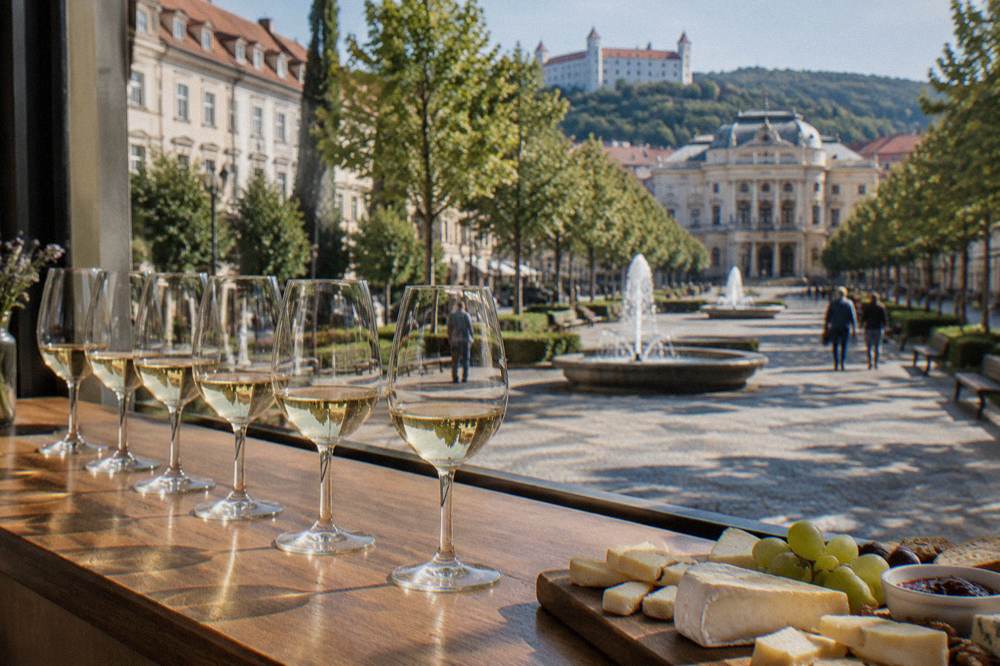
Yes, and the pairing is the city's quiet strength: Slovak wine comes from the Small Carpathian hills immediately west of Bratislava, so the city's tasting rooms pour whites from villages such as Modra and Pezinok that sit close enough for a half-day visit, and the lineup includes sommelier-led tastings, a tasting in the dark and a private winery tasting in Modra itself. The Slovak wine guide covers what is in the glass; the planning point here is that wine in Bratislava splits into three levels: a tasting room in the Old Town, an evening tasting staged in darkness, and a trip out to the wineries.
The tasting-in-the-dark products are the distinctive ones. One is audioguided, one is guided, both are short, and both use darkness to strip the tasting down to smell, taste and texture. They are indoor, evening-friendly and weatherproof, which makes them the food-world equivalent of a museum stop on a wet day. The sommelier sessions cover Slovak wine more conventionally and suit visitors who want vocabulary and region names to take home. Other pages covering the same trip are gathered on Bratislava Travel Guide.
Going out to the source changes the day entirely. The Small Carpathians wine tour from Bratislava covers the wine-village circuit, and the wine route day trip page plus the individual Pezinok guide map the ground. A private tasting at a family-operated winery in Modra is on the roster too, with the figures rendered in its own block rather than typed here. The timing detail that matters: the reported release of St Martin's young wine on 11 November means an early-winter visit lands the freshest possible vintage in the glass.
The tasting walk above is the stop-count champion of the roster, with fourteen-plus tasters and a local guide, and it is the product that most resembles a full meal walked through the Old Town rather than seated in one restaurant.
When Is The Best Time Of Year For A Food Tour In Bratislava?
The calendar points to two peaks: the Christmas market window from 26 November 2026 to 3 January 2027, when the squares fill with food stalls, and the autumn stretch around the reported 11 November release of St Martin's young wine, while the modelled ERA5 climate normals show July averaging 26.3 C daily highs and January 3.0 C, which frames how much of a food walk happens outdoors. The market window is the strongest single answer because it is the one period when the food itself takes over the public space. The young-wine date is the second marker, reported rather than officially confirmed in front of us, and it stacks neatly before the market opens.
The climate figures are modelled, ERA5 reanalysis for 1991 to 2020, not a station record, and they matter because Old Town food walks spend real time between stops. Summer evenings sit warm and winter ones around zero, with rain totals running from 33.4 mm in February to 75.8 mm in July across the modelled year. None of that argues against booking; it argues for checking whether your chosen product is mostly walking or mostly seated when the forecast turns.
| Month (ERA5 1991-2020, modelled) | Mean daily high | Mean daily low | Rain |
|---|---|---|---|
| January | 3.0 C | -3.1 C | 34.9 mm |
| April | 16.0 C | 5.7 C | 44.0 mm |
| July | 26.3 C | 16.6 C | 75.8 mm |
| October | 15.0 C | 7.3 C | 48.5 mm |
| November | 8.9 C | 3.0 C | 46.3 mm |
| December | 3.7 C | -1.7 C | 40.0 mm |
Around the food calendar sit the city's bigger events. Neither is a food event, but both pull visitors into the city in the weeks before the market opens, and an October or November food walk lands between the festival crowds and the market crowds, with the young wine arriving mid-way through.
How Does A Food Tour Fit Into A Wider Bratislava Plan?
A food walk works best as a first-evening or first-morning activity, because it doubles as an orientation to the pedestrian Old Town, and the rest of a Bratislava plan then splits between the castle hill, the river, Devin Castle and the wine villages, with day-long products covering the Small Carpathians or the castles of northern Slovakia for visitors staying longer. The logic is simple: the tasting route passes Hlavné námestie, Michael's Gate and the theatre square anyway, so the walk teaches the geography while it feeds you. The one day in Bratislava and two days itineraries sequence exactly this.
The castle is the obvious half-day partner. The grounds are free and open daily 08:00 to 22:00, the Museum of History inside is EUR 14 and closes on Tuesdays, and the walk up is the climb every guide mentions. The Bratislava Castle attraction page covers it. Food and castle also combine in one booking: the Old Town and castle walking tour that this page features pairs the two halves, and visitors who prefer to go deeper on the plate can book it alongside a tasting rather than instead of one. Check availability if that hybrid shape fits your first day better.
Beyond the city, the pairing options widen fast. Devin Castle sits at the western edge with a round-trip river cruise on the roster, and the Devin Castle page covers admission, which runs EUR 8 in the April-to-October season and EUR 6 from November to March, with winter opening Tuesday to Sunday 10:00 to 16:00. The things to do in Bratislava root page indexes the whole spread, and Vienna sits an hour away by train for visitors building a two-city trip, with the Vienna day trip from Bratislava covering the reverse direction and the Bratislava day tour from Vienna page serving visitors based in the Austrian capital.
What Should You Know Before Booking A Bratislava Food Tour?
Three practical facts shape the booking: local costs are in euros because Slovakia adopted the currency on 1 January 2009, the Old Town is walkable end to end so no tour needs transport, and dietary limits are worth raising before the walk rather than on it, because the classic Slovak menu leans on pork, dairy, wheat and bacon, and a route built around halušky and sausage has to be adjusted in advance for vegetarian, vegan or halal needs. The euro point matters for the cash-in-pocket stops, the walking point matters for footwear, and the dietary point is the one that actually ruins food tours when skipped.
What the desk can verify sits in the tables and dated facts above: market dates from the organiser, museum days and admission from the museums' own pages, climate from modelled reanalysis, and every product's price, rating and duration from its booking block, never from a keyboard.
Booking mechanics are straightforward. Weekend and market-season slots are the ones that tighten first, and a Tuesday visit collides with the castle museum's closure day if a castle add-on is planned, while a Monday visit collides with the Old Town Hall's.
Is A Food Tour In Bratislava Worth It Compared To Eating Alone?
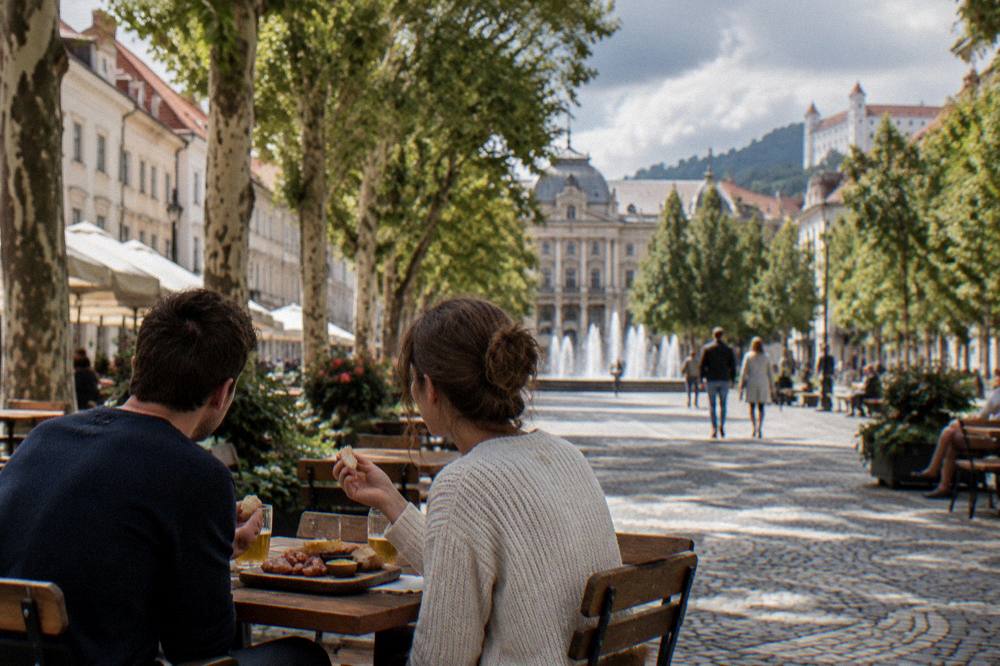
A food tour earns its place by doing three things a solo restaurant crawl cannot: it sequences five or more kitchens in one walk so the dishes arrive with context instead of guesswork, it introduces Slovak wine and beer that rarely appear on export shelves, and it doubles as an Old Town orientation with a guide answering questions, which for a first visit is worth roughly what a guidebook evening costs in trial and error. Against that, eating alone is cheaper per plate and slower per evening, and a confident traveller with the what to eat in Bratislava page open can assemble a good version of the same crawl independently.
The honest middle path is the one many visitors land on: one booked tasting walk on the first evening, then independent eating informed by it for the rest of the stay. The walk names the dishes, the restaurants worth returning to and the wine worth ordering, and the solo meals that follow are better for it. Visitors on a strict budget have a free walking tour option that covers the city story without the food stops, and the Bratislava on a budget guide extends that logic.
One more angle belongs here rather than anywhere else: Bratislava sits close enough to Vienna that the two cities share a weekend in many itineraries, and the food comparison is part of why visitors choose to overnight here rather than day-trip. The Bratislava versus Vienna guide covers that argument, and eating well is one of the pillars of it.
The second trio above is the closing spread: the walk with locals for the food-adjacent first evening, the northern-Slovakia castle and Tatras circuit for the long day out, and the open-deck cruise for the river hour between them.
Common Questions About Food Tours In Bratislava
What food is Bratislava famous for?
The anchor dish is bryndzové halušky, potato dumplings with sheep cheese and bacon, and the wider classic list includes sauerkraut soup, grilled sausages and sweet dumplings with poppy seed, all covered in detail on the dedicated answer page.
Do Bratislava food tours include wine?
Several do, and the city also runs standalone wine tastings with a sommelier and tastings held in complete darkness. Slovak whites come from the Small Carpathian hills just west of the city, and St Martin's young wine is reported to be released each year on 11 November.
How long do Bratislava food tours last?
Durations vary by product and render from each booking block on this page rather than from prose, running from short single-venue tastings to walks that replace a full meal, and the traditional food walk is the longest city-based option on the roster.
Are Bratislava food tours suitable for vegetarians?
Only with advance notice. The classic Slovak menu leans on pork, bacon and dairy, so raise dietary limits with the operator before booking rather than on the walk, and check the listing's terms for how substitutions are handled.
When is the best time for a food tour in Bratislava?
The Christmas market window, 26 November 2026 to 3 January 2027 on Hlavné námestie and Hviezdoslavovo námestie, turns the squares themselves into the food stops, and the reported 11 November young-wine release makes early winter a strong second reason.