Neusiedler See: The Steppe Lake Near Bratislava
Bratislava, the capital of Slovakia, sits on the Danube with no sea anywhere near it, and the Neusiedler See across the border in Austria is the closest thing the region has to a seaside escape.
Short answer
The Neusiedler See is a shallow steppe lake in Austria, reached from Bratislava by travelling west toward Vienna and then south. It pairs naturally with other Austrian-side stops such as Carnuntum and Mikulov itineraries, and it works best as a warm-season day trip.
Bratislava, the capital of Slovakia, is an inland city of about 468,000 residents standing on the Danube, and the nearest large body of water that behaves like a lake shore is the Neusiedler See, a shallow steppe lake on the Austrian side of the border. A Bratislava-based traveller can plan around how the route runs through the Vienna corridor, what the warm months actually deliver according to modelled climate normals, what the day costs next to the sights inside Bratislava itself, and how the lake stacks up against the other day trips this site covers. Figures are stated plainly where a sound number exists; where none exists, the page simply does not print one.
The lake sits west and slightly south of Bratislava, in the same corridor that carries travellers toward Vienna and the Austrian wine country. The site's day-trip coverage treats the Neusiedler See as an Austrian-side outing in the same family as Carnuntum, Hainburg and Mikulov, all of which sit on the map between Bratislava and the wider Austrian and Lower Austrian landscape. Any itinerary that crosses the border should also keep the return in mind: Slovakia is in the Schengen Area and uses the euro, and Austria does too, so no currency exchange and no border formalities complicate the day.
Where Is The Neusiedler See And Why Does It Suit Bratislava?
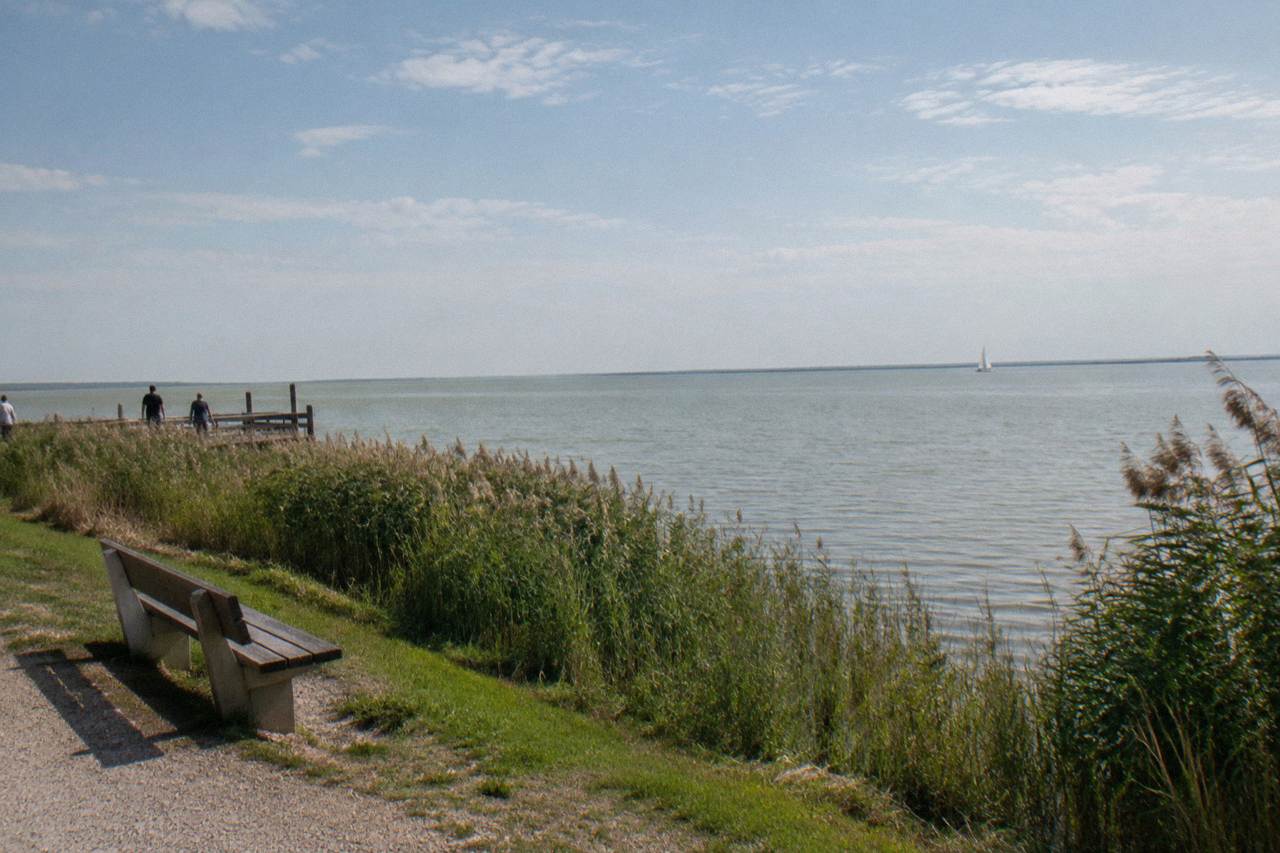
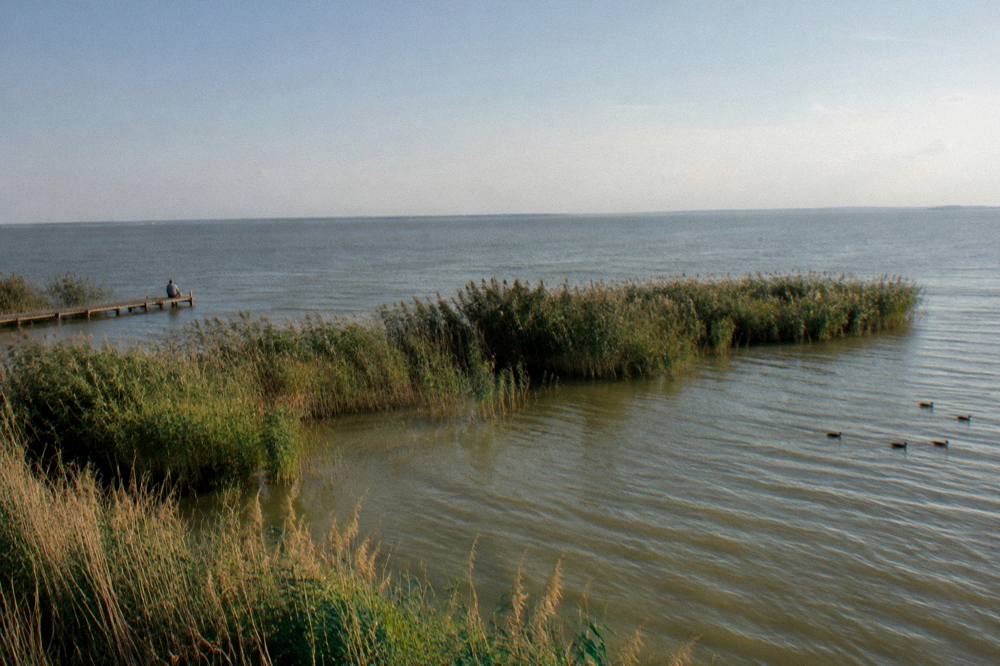
The Neusiedler See is a steppe lake in Austria, west of Bratislava across the border, and it suits a Bratislava day trip because it sits in the same travel corridor as Vienna, roughly an hour onward from the city by rail via the Vienna connection, offering open water, reeds and shoreline walking that landlocked Bratislava cannot supply. The lake is the reason many Bratislava travellers head into Austria at all outside of Vienna itself: the region combines water, wine villages and flat cycling terrain in a way the Slovak capital's immediate surroundings do not.
Bratislava is not on the sea, and this site says so plainly on every relevant page. What the city has instead is the Danube, castle hills and the Small Carpathians. The Neusiedler See adds a genuine shoreline to the regional menu. For a sense of the neighbouring geography, the straight-line distances from Bratislava run as follows, and they explain why the lake, Mikulov and the Austrian border zone cluster into similar itineraries.
| Destination from Bratislava | Straight-line distance |
|---|---|
| Carnuntum | about 19 km |
| Vienna | about 55 km |
| Trnava | about 44 km |
| Nitra | about 75 km |
| Mikulov | about 81 km |
| Bojnice Castle | about 129 km |
| Budapest | about 162 km |
The lake region pairs well with a second stop. Travellers who want a half-Austrian, half-Slovak day can combine the shoreline with the wine country this site covers in the Small Carpathians wine route guide, doing the Slovak side another weekend. The Austrian and Slovak wine regions sit on opposite sides of the same corridor, and the euro pricing on both sides makes cost comparison simple.
How Do You Get From Bratislava To The Neusiedler See?
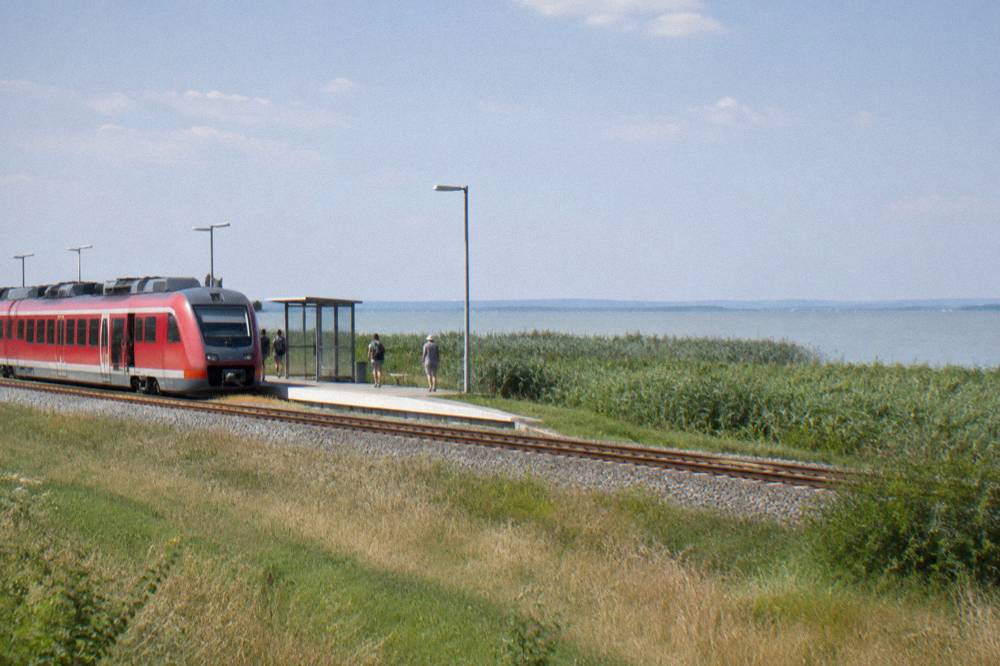
There is no single direct Bratislava-to-lake service, so the practical route runs through the Vienna corridor: the REX8 train covers Bratislava to Vienna in about 56 minutes for 12.70 EUR one way, hourly, and regional Austrian connections from Vienna carry the journey onward toward the lake area, with buses from Vienna starting around 3 to 12 EUR. The rail spine of the region is the Bratislava-to-Vienna line, and every Austrian-side day trip from the Slovak capital hangs off it.
The rail facts for that spine: the ÖBB REX8 runs hourly between Bratislava hl. st. and Vienna via Marchegg, a journey of about 56 minutes since the electrification of the route, with a fixed fare of 12.70 EUR one way and no reservation needed, and the REX6 runs hourly to Bratislava-Petržalka via Bruck an der Leitha and Kittsee in about 59 minutes. A EuRegio return ticket at about 19 EUR includes a Bratislava public transport day ticket, which matters if you plan to move around the city on the day you return. The river adds a third option: the Twin City Liner runs the Vienna-to-Bratislava water route in about 75 minutes, with the 2026 high season running three sailings each way daily from 1 May to 2 November.
One autumn 2026 caveat belongs in any Bratislava rail paragraph. From 1 September to 12 December 2026, reconstruction work around Bratislava hlavná stanica means the S50 train starts and ends at Bratislava-Nove Mesto and the R55 to Trnava is cancelled, though the main station itself stays open. Check the operator's own service pages before locking a tight connection. Within Bratislava before departure, the IDS BK fares below cover the trip to the station.
| IDS BK ticket (zones 100+101) | Paper | eTicket / app |
|---|---|---|
| 30 min single | 1.20 EUR | 1.09 EUR |
| 60 min single | 1.80 EUR | 1.60 EUR |
| 24 h | 5.40 EUR | 4.85 EUR |
| 72 h | 10.70 EUR | 9.68 EUR |
For travellers who would rather have someone else own the route, a guided day trip solves the connection problem entirely, and the picks below include the long-distance option this site features alongside the city walks that fill a pre- or post-trip morning in Bratislava itself.
What Does A Day At The Neusiedler See From Bratislava Look Like?
A realistic day leaves Bratislava in the morning by train toward Vienna, transfers to an Austrian regional connection toward the lake, spends the middle of the day on shoreline walking, cycling or a lakeside lunch, and returns the same evening, with the whole outing fitting inside the daylight window of the warmer half of the year when the modelled normals show mean daily highs above 15 C from April through October. The lake day is a warm-season product by nature: the ERA5 reanalysis for Bratislava, 1991 to 2020, shows April averaging a high of 16.0 C and October 15.0 C, with the months between ranging from 20.4 C in May to 26.3 C in July.
The shape of the day should be built around the transfer. A morning REX8 from Bratislava hl. st. reaches Vienna within the hour, and from there Austrian regional services fan out toward the lake towns. Plan the Austrian leg on the operator's own journey planner once the Bratislava departure is fixed. Allow a full hour of buffer at the Vienna transfer on a day-return itinerary, and buy the Austrian legs as separate tickets rather than assuming the Slovak side's fares carry across the border.
Cycling is the activity the lake region is organised around, with flat terrain on all sides. Travellers who like that idea should also read the site's Bratislava by bike coverage for the Slovak-side contrast, including the note that nextbike Bratislava, which arrived in July 2026 with about 500 bikes on more than 200 stations, is a separate commercial operator and not the city's Slovnaft BAjk scheme. Rental logistics on the Austrian side of the border are a separate matter and are not covered by this site.
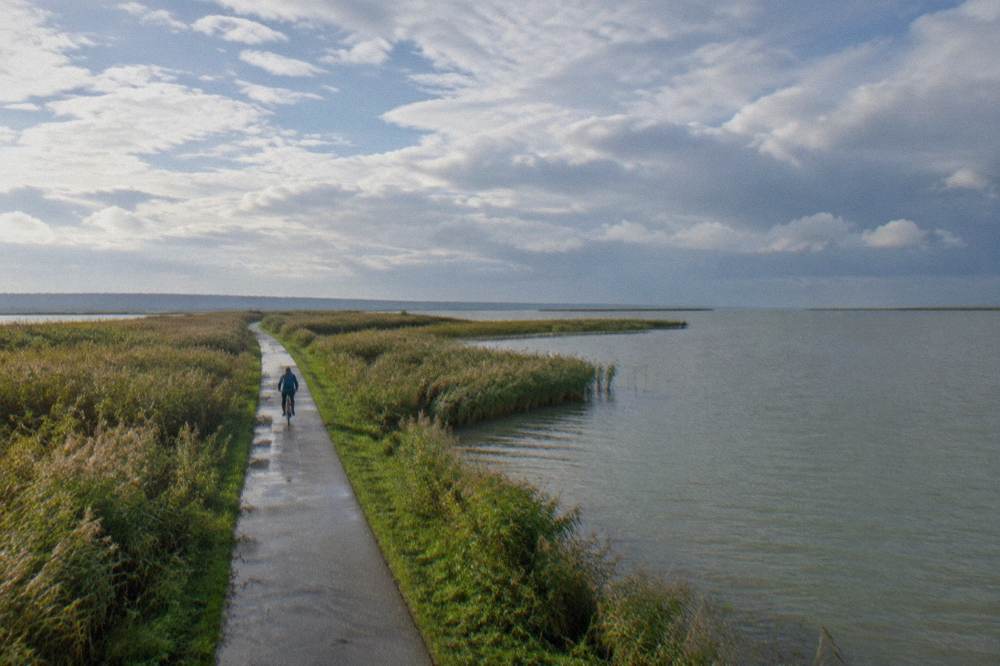
Lunch and wine belong in the plan. The Austrian shore sits in a white-wine region, and the Slovak side of the border answers with the Small Carpathians towns of Modra and Pezinok, both covered in their own guides. Travellers who enjoy the tasting side of the region can also look at the site's wine pages, or join a Bratislava-based tasting before or after the lake day; the sommelier-led options in the city run shorter and the Modra winery visit runs as a half-day-style outing, all rendered with live prices through the tour blocks.
What Does The Neusiedler See Day Trip Cost Next To Bratislava Itself?
A day at the lake costs the round-trip Austrian transport plus whatever lunch and bike rental add, while a day inside Bratislava can be costed precisely: castle museum admission is 14 EUR, Devin Castle is 8 EUR in summer and 6 EUR in winter, the Old Town Hall museums are 8 EUR and the UFO deck is 11.50 to 12.50 EUR, so the lake competes mainly as an outdoor day that needs no admission budget at all. The lake itself is open landscape; the money goes on rails, food and wheels.
For comparison, the Bratislava admission prices sit in the table below. The pattern is clear: a lake day trades museum tickets for transport and rentals, and a city day does the reverse.
| Sight in Bratislava | Adult admission | Notes from the official pages |
|---|---|---|
| Bratislava Castle, Museum of History | 14 EUR | Open Wed to Mon 10:00 to 18:00, closed Tuesdays; grounds free daily 08:00 to 22:00 |
| Devin Castle | 8 EUR Apr to Oct, 6 EUR Nov to Mar | Open year-round Tue to Sun, closed Mondays |
| Old Town Hall and Apponyi Palace | 8 EUR | Tue to Sun 10:00 to 18:00, closed Mondays |
| Michael's Tower | 6 EUR | Closed Tuesdays, open Mondays |
| Primate's Palace | 5 EUR | Under 18 free; weekly hours posted by the city |
| St Martin's Cathedral tourist zone | 5 EUR | Nave free; hours pause 11:30 to 13:00 |
| UFO observation deck | 11.50 to 12.50 EUR | Daily 10:00 to 23:00 |
Two multi-sight options change the arithmetic. The Bratislava CARD with transport costs 30 EUR for 24 hours, 36 EUR for 48 hours and 39 EUR for 72 hours, includes unlimited IDS BK travel across all zones, one child under 18 travelling free with the holder, and free entry to 23 sights including the castle museum and Devin Castle. Discounts of 20 to 50 percent apply at further sites including the UFO deck. The tourist tax is separate and unavoidable: 3.50 EUR per person per night in the Old Town district and 3.00 EUR elsewhere, capped at 60 nights per year.
When Is The Best Time Of Year For The Neusiedler See From Bratislava?
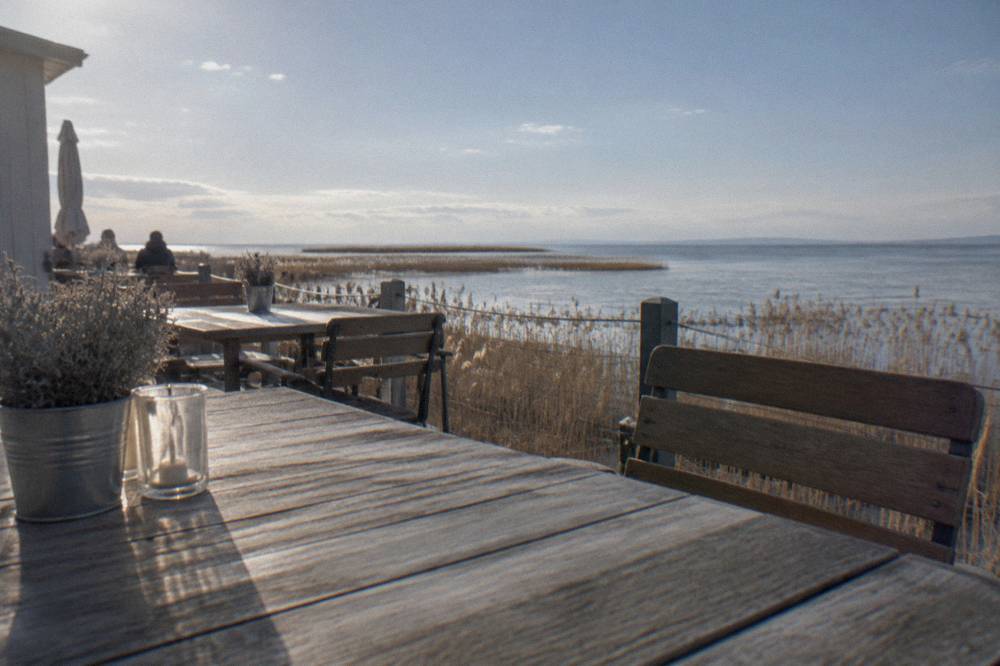
The best window runs from May through September, when the ERA5 reanalysis normals for the Bratislava grid cell show mean daily highs from 20.4 C to 26.3 C and monthly rainfall between 66.8 and 75.8 mm, with July holding the highest monthly rain total at 75.8 mm and February the lowest at 33.4 mm, so the warm months carry both the usable shoreline weather and the bulk of the year's rain. These are modelled figures, ERA5 reanalysis for the 1991 to 2020 period for the grid cell over Bratislava, not a station record, and they describe the corridor the lake sits in.
| Month | Mean high C | Mean low C | Rain mm |
|---|---|---|---|
| Jan | 3.0 | -3.1 | 34.9 |
| Feb | 5.5 | -2.3 | 33.4 |
| Mar | 10.3 | 1.1 | 42.0 |
| Apr | 16.0 | 5.7 | 44.0 |
| May | 20.4 | 10.6 | 69.1 |
| Jun | 24.1 | 14.5 | 73.6 |
| Jul | 26.3 | 16.6 | 75.8 |
| Aug | 26.2 | 16.4 | 66.8 |
| Sep | 20.8 | 12.0 | 67.1 |
| Oct | 15.0 | 7.3 | 48.5 |
| Nov | 8.9 | 3.0 | 46.3 |
| Dec | 3.7 | -1.7 | 40.0 |
The shoulder reading matters as much as the peak. April at 16.0 C and October at 15.0 C are workable cycling months with markedly less rain than midsummer, 44.0 mm and 48.5 mm respectively against July's 75.8 mm. The deep winter months, January at 3.0 C and December at 3.7 C, turn the lake day into a cold-weather outing, and the Twin City Liner schedule reflects the season: high-season frequency of three daily sailings each way runs 1 May to 2 November 2026, with limited Advent-period trips from 27 November to 20 December on Fridays to Sundays.
Travellers using the lake trip as part of a longer Austrian-Slovak swing should also check the site's Vienna day trip page, since the same rail spine serves both and the ticketing logic overlaps. And anyone planning a winter visit to the region around Bratislava should read the site's winter guide, where the city's cold-month options, including the Christmas market that runs 26 November 2026 to 3 January 2027 on Hlavné námestie and Hviezdoslavovo námestie, are laid out with dates.
What Should You Pack And How Should You Plan The Border Crossing?
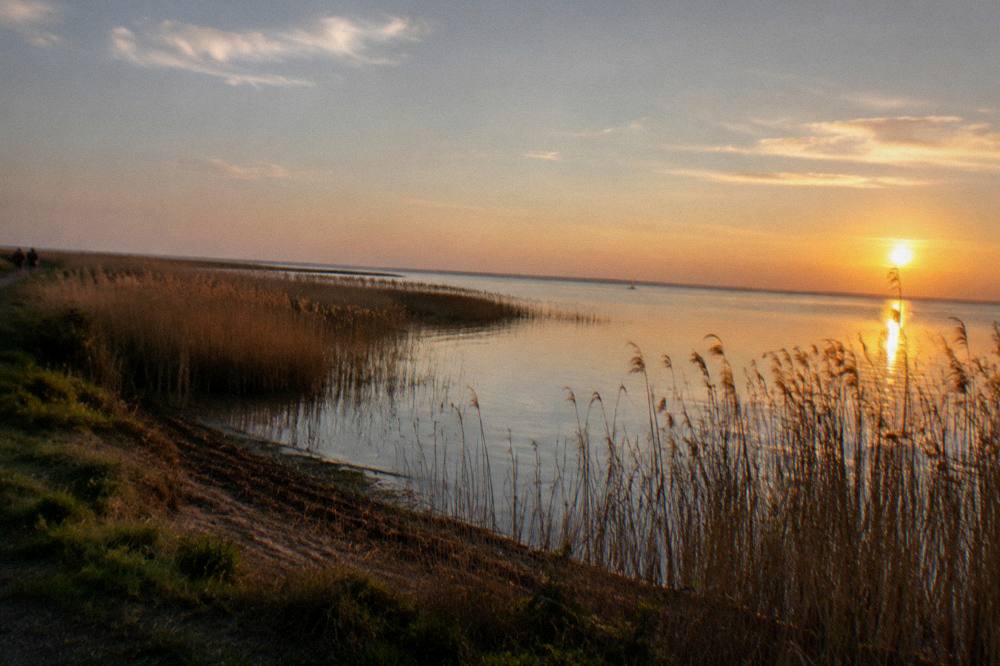
Pack for a flat, exposed outdoor day: sun protection and water for the summer months when highs average above 26 C, layers for spring and autumn when lows sit near 5 to 12 C, and nothing for the border itself, because Slovakia and Austria are both in the Schengen Area and both use the euro, so there is no passport control on the route and no currency exchange. The crossing is administratively invisible; the practical frictions are timetable ones.
Documents still matter in the ordinary way. The site's page on travel documents between Vienna and Bratislava covers the underlying rules: carry the ID your nationality requires for Schengen travel even though checks are not systematic. Emergency numbers also change across the border: 112 works as the universal EU number in both countries, with 158 for police and 155 for ambulance in Slovakia.
Money planning is simple. Everything on the Slovak side is priced in euros, as Slovakia adopted the currency on 1 January 2009, and Austria uses it too. Tipping follows local norms, reported as rounding up or leaving 5 to 10 percent for good table service in Slovakia; Austria's customs are its own and are not covered by this site's research. The one Bratislava-side cost that surprises some visitors is the tourist tax, 3.50 EUR per person per night in the Old Town, which appears on hotel bills rather than at the border.
How Does The Neusiedler See Compare With Other Day Trips From Bratislava?
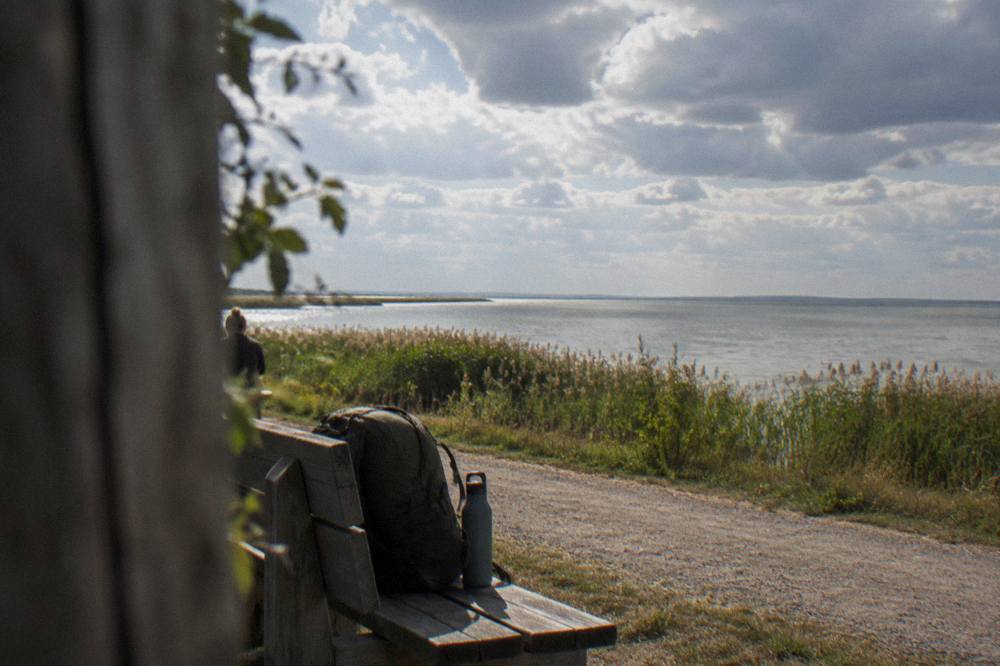
Against its rivals the Neusiedler See is the region's water-and-wheels outing: Devin Castle and the Small Carpathians wine towns are closer and cheaper to reach, Vienna delivers the biggest sights at about 55 km, Mikulov at about 81 km offers the Austrian wine-town alternative, and the lake earns its place when the priority is shoreline, flat cycling and open horizon rather than castles, galleries or cellars. The right choice follows the weather and the mood more than the mileage.
The comparison set breaks into three groups. The near group, Devin Castle at the confluence and the Small Carpathians towns of Modra at about 26 km and Pezinok at about 20 km, costs least to reach and fits a half day. The middle group is Vienna at about 55 km and the Austrian border zone including Carnuntum at about 19 km and Hainburg, all on the same rail corridor the lake trip uses. The far group, Trnava at about 44 km, Nitra at about 75 km, Bojnice Castle at about 129 km and Budapest at about 162 km, asks for an earlier start and a longer day.
| Day trip from Bratislava | Best for | Reach |
|---|---|---|
| Devin Castle | Riverside ruins, shortest outing | Bus or river cruise from the city |
| Small Carpathians wine towns | Cellars and tastings, half day | Closest wine country |
| Vienna | Imperial sights, museums | REX8 rail, about 56 minutes |
| Carnuntum and Hainburg | Roman and medieval stops near the border | Same corridor as Vienna |
| Neusiedler See | Open water, flat cycling, shoreline | Via the Vienna corridor |
| Mikulov | Austrian wine town, castle hill | Border region beyond the corridor |
| Bojnice Castle | Fairy-tale castle, long day | Farthest common outing |
For travellers who prefer to outsource the logistics entirely, the guided options from Bratislava cover the far-flung corners of Slovakia rather than the Austrian lake, which is why this site pairs the lake with independent rail travel and points guided-tour buyers toward the castle-and-countryside circuits. The featured long day trip below covers Čičmany, Bojnice, Orava and the High Tatras, a very different proposition from the lake but the strongest option for travellers who want depth of country in a single guided outing. For the Austrian side, one day in Bratislava from Vienna pages and their reverse cover the corridor in both directions.
Before or after any of these outings, the city itself repays a guided orientation, and the featured High Tatras circuit above can be checked through the operator's live listing, as can the same tour via Check availability for a date that fits. The rest of this site, starting from Bratislava Travel Guide's home coverage, carries the city-side detail: the castle, the Old Town walks and the full day-trip index.
Common Questions About The Neusiedler See From Bratislava
How far is the Neusiedler See from Bratislava?
The lake sits in Austria, west of Bratislava, in the Vienna corridor. Straight-line distances put Vienna at about 55 km, Mikulov at about 81 km and Carnuntum at about 19 km; no specific lake distance is on record, so plan the practical route by rail time instead: about 56 minutes to Vienna on the REX8, then onward Austrian regional connections.
Do I need a passport to travel from Bratislava to the Neusiedler See?
Slovakia and Austria are both in the Schengen Area, so there are no systematic border checks on the route. Carry the ID your nationality requires for Schengen travel, as the site's Vienna travel-document page explains. Both countries use the euro, so no currency exchange is needed.
What is the best month to visit the Neusiedler See from Bratislava?
May through September, when the ERA5 reanalysis normals for the Bratislava grid cell show mean daily highs from 20.4 C to 26.3 C. April and October, at 16.0 C and 15.0 C, are workable shoulder months with less rain than midsummer: July carries the highest monthly total at 75.8 mm.
Can I visit the Neusiedler See and Bratislava in one day?
A lake-focused day with an evening return to Bratislava is realistic in the warm half of the year given the hourly REX8 rail link of about 56 minutes to Vienna. A day that also does Bratislava's sights properly is tight; the site's itineraries, such as Bratislava in one day, are built for city-only days.
Is the Neusiedler See a good day trip compared with Devin Castle?
They serve different days. Devin Castle is the close, cheap outing at 8 EUR summer admission, open year-round except Mondays, reached without leaving the region. The lake is the water-and-cycling day that trades admission tickets for Austrian rail fares and rentals.
Are there guided tours from Bratislava to the Neusiedler See?
The tour roster for this site carries no Bratislava-start lake tour. Guided day trips from Bratislava head to Slovak destinations such as Bojnice, Orava and the High Tatras. The lake is best planned independently on the Vienna rail spine, while Vienna-start guided products to Bratislava exist in the reverse direction.