What Is A Typical Slovak Breakfast?
What a typical Slovak breakfast looks like in Bratislava: bread, cheese, cold cuts, eggs and vegetables on weekdays, cooked plates at weekends, and where the coffee-house pastry fits in.
Bread is the backbone of breakfast in Slovakia, and Bratislava is no exception. The everyday version served in Slovak households is a cold spread: sliced bread with butter, cheese, salami or ham, and raw vegetables such as tomato, cucumber or bell pepper, washed down with tea or coffee. It is quick, it is assembled rather than cooked, and it is built around good bakery bread rather than around a fried plate. That distinction shapes everything else on this page, from the weekday table to the weekend exception, and it connects directly to the wider story of what to eat in Bratislava.
This site, Bratislava Travel Guide, reports what the destination serves rather than what any one visitor tasted, so the descriptions below stick to the general pattern a traveller in the city will meet in bakeries, cafés and hotel breakfast rooms. Prices are deliberately left out, because a dish price is not something this page carries. What the page can do is explain the shape of the meal, name its parts, and show where the cooked exceptions and the pastry tradition fit.
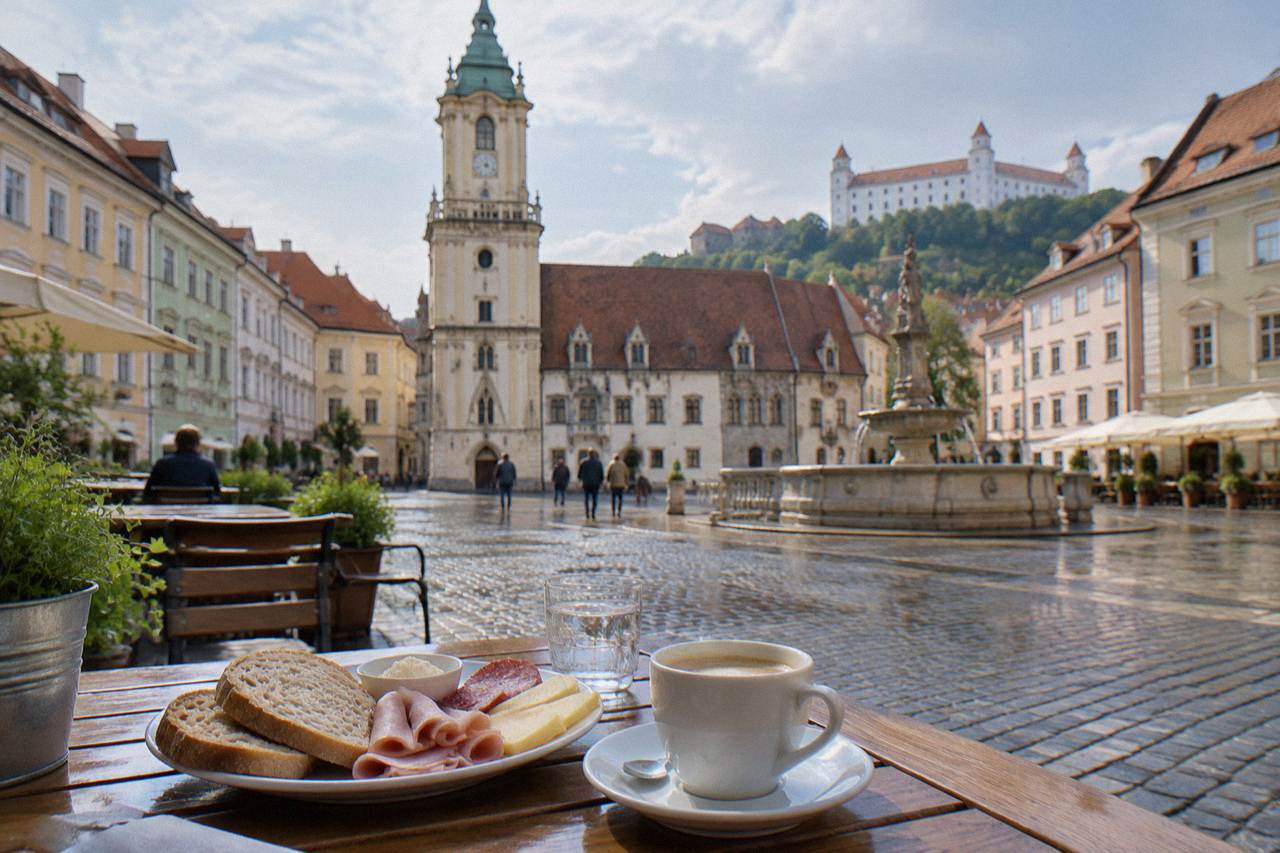
A typical Slovak breakfast is an open-faced bread meal: slices of fresh bread or rolls spread with butter and topped with cheese, salami, ham or jam, served with raw vegetables and tea or coffee. Eggs appear boiled, fried or scrambled, especially at weekends, when the plate becomes a fuller cooked affair. It is a Central European cold-spread tradition rather than a sweet bakery breakfast, though pastries play a supporting role.
The open-faced slice is the unit of the meal. A Slovak breakfast table does not assemble sandwiches from two pieces of bread; each slice is dressed and eaten as it is, which is why the quality of the bakery loaf matters so much to the result. Wheat rolls, rye bread and mixed loaves all appear, and the topping is arranged in thin layers rather than stacked.
Alongside the bread comes the raw-vegetable plate, which is the part that surprises visitors used to a purely sweet start. Sliced tomato, cucumber strips and strips of bell pepper are standard, sometimes with a sprinkle of salt. Fruit joins in season, and yoghurt or milk rounds the plate out for children.
The drink split is generational more than anything else. Coffee dominates for adults, tea is the everyday choice for many families and children, and cocoa remains a childhood standard. Nothing about the meal requires a restaurant; it is assembled at home from a bakery run, which is exactly why finding it in the wild in Bratislava means knowing where to look, a question covered further down the page.
What Goes On The Bread In A Slovak Breakfast In Bratislava?
The standard toppings are butter, hard and spreadable cheeses, salami and ham, boiled ham, jams and honey, with boiled or fried eggs on the side. A soft spreadable cheese and a cream-cheese-and-chive mix are everyday staples, and pastrami-style or cured sausages appear at weekends. Sweet options are jam, honey and sometimes a chocolate spread, kept for children or late weekend mornings.
Cheese carries a lot of the weight. Firm slicing cheeses, a soft fresh cheese eaten with chives, and creamed cheese spreads all sit in the standard rotation, and they are what makes the open slice a full meal rather than a snack. Cured meats are the other pillar: a mild salami is the everyday choice, with better ham and dried sausage saved for the weekend table.
Eggs are the bridge between the weekday spread and the weekend plate. On a workday they may be boiled the night before; on a Sunday they become fried eggs, an omelette or scrambled eggs served with the same bread and vegetables. Sausage, in the style of a cooked Central European plate, belongs to the leisurely version.
| Part Of The Spread | Everyday Examples | When It Appears |
|---|---|---|
| Bread and rolls | Wheat rolls, rye bread, mixed loaf | Every morning, bought fresh from a bakery |
| Fat layer | Butter, occasionally spreadable lard with paprika | Under every topping |
| Cheese | Firm slicing cheese, fresh soft cheese, creamed spreads | Daily staple |
| Cured meat | Mild salami, boiled ham, weekend dried sausage | Daily, better cuts on weekends |
| Vegetables | Tomato, cucumber, bell pepper | Daily when in season |
| Sweet | Jam, honey, chocolate spread | Children and weekend mornings |
| Eggs | Boiled, fried, scrambled, omelette | Weekdays boiled, weekends cooked |
| Drinks | Coffee, tea, milk, cocoa | Coffee for adults, tea and cocoa common |
The table reads as a menu of parts rather than a fixed recipe, which is honest to how the meal works. A household assembles from the columns depending on the day of the week and what the bakery had that morning.
Where Can You Eat A Slovak Breakfast In Bratislava?
Hotel breakfast rooms, Old Town cafés and bakery counters are the three reliable places to meet this meal in Bratislava. A hotel breakfast will lay out the cold spread in buffet form, with bread, cheeses, cold cuts, vegetables and boiled eggs alongside coffee; cafés in the centre serve the egg-and-bread plate and pastries; bakeries sell the rolls and slices that locals carry home to assemble themselves.
The buffet route needs the least Slovak. A standard hotel breakfast in the city reproduces the household table at scale: the same breads, the same cheeses and salamis, the same raw vegetables, plus a hot plate with scrambled or fried eggs. It is the closest a short-stay visitor gets to eating the way the city eats before work.
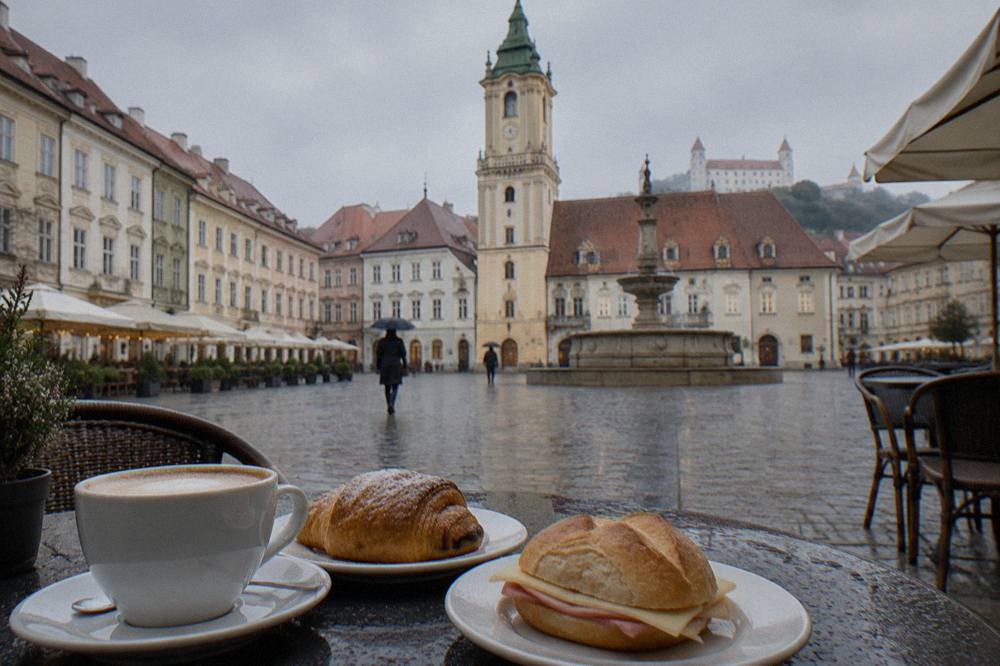
The café route is slower and better for a weekend morning. Bratislava's café tradition runs strong, and the coffee house is where the pastry side of breakfast lives: the croissant-and-coffee option exists, but so do fuller plates built on bread, eggs and ham. A private walk is one way to thread the Old Town's café streets together, and the private walking tour with optional beer tasting pairs a guided circuit with the city's drinking side. Check availability
Counters across the city sell the rolls, loaves and topping pastries that make up the raw material of the breakfast table, and buying them is a morning routine rather than a tourist activity.
How Does A Weekend Slovak Breakfast Differ From A Weekday One?
The weekend version turns the cold spread into a cooked plate: fried or scrambled eggs, better ham or sausage, and more time, often eaten later in the morning. Sweet baked goods move up from a supporting role to the centre, with coffee, and the whole meal stretches toward brunch length. On weekdays the same table is assembled in minutes and eaten fast.
Time is the real ingredient. A weekday breakfast in Slovakia is deliberately simple because the day starts early; the bread-and-topping format exists precisely so nothing has to be cooked. On Saturday and Sunday the format loosens: the pan comes out, the eggs are fried rather than boiled, and the better cuts of ham that were saved appear on the board. Other pages covering the same trip are gathered on Bratislava Travel Guide.
The sweet half of the repertoire belongs to the weekend too. Where a weekday morning might manage a roll with jam, a weekend one can support a proper pastry with coffee, eaten slowly. Sweetness in the Slovak breakfast tradition is an occasional pleasure, not the default, which is the clearest difference from the sweet-bakery breakfast a visitor might arrive expecting.
There is also a seasonal rather than weekly exception worth naming: around 11 November, the St Martin's Day young wine is reported to appear in the region's bars and cellars, an event reported rather than centrally organised. It belongs to the calendar more than to breakfast, but it is part of how Slovak food traditions mark time, and it is covered in the site's guide to Slovak wine.
What Do Slovak Breakfast Foods Have To Do With The Rest Of Slovak Cooking?
Slovak breakfast foods share their ingredients with the rest of the national cooking: the same breads, cheeses, cured meats and vegetables that anchor the midday and evening meals appear at breakfast in simpler, colder form. The heavy dishes the country is known for, such as halušky, are lunch or dinner food, not breakfast food, which keeps the morning meal light by comparison.
The continuity is the point. A visitor who learns the breakfast table has effectively learned the larder of Slovak home cooking, because the cheese, the salami and the vegetables reappear at dinner as a cold plate, and the bread accompanies everything. What changes between the meals is preparation, not ingredients.
The famous cooked dishes sit elsewhere in the day. Potato dumplings with sheep cheese, and roast pork with dumplings, are the dishes a restaurant menu will suggest, and they are the answer to a different question, the one this site answers in full on the page about what food Bratislava is famous for. Expecting them at breakfast would be like expecting a Sunday roast at seven in the morning.
For visitors, this mapping is useful in the other direction: a hotel buffet that looks plain by international standards is in fact serving an accurate cross-section of the national everyday diet. The plainness is fidelity, not neglect.
What Slovak Words Help At A Bratislava Breakfast Table?
A handful of words cover the whole meal: chlieb for bread, rožok for a roll, syr for cheese, šunka for ham, saláma for salami, vajce for egg, maslo for butter, džem for jam, čaj for tea and káva for coffee. Knowing these ten words is enough to read a bakery counter and assemble the standard spread anywhere in Bratislava.
| Slovak | English | Where You Will See It |
|---|---|---|
| chlieb | bread | Bakery counter |
| rožok | roll | Bakery counter |
| maslo | butter | Buffet, café |
| syr | cheese | Buffet, deli counter |
| šunka | ham | Buffet, deli counter |
| saláma | salami | Deli counter |
| vajce | egg | Café menu, buffet |
| paradajka | tomato | Buffet plate |
| uhorka | cucumber | Buffet plate |
| paprika | bell pepper | Buffet plate |
| džem | jam | Breakfast table |
| med | honey | Breakfast table |
| čaj | tea | Café menu |
| káva | coffee | Café menu |
English gets a long way in the city centre, a question this site covers separately under whether you can speak English in Bratislava, but the bakery counter is where a few Slovak words earn their keep fastest, because the goods are behind glass and pointing has limits. The greetings come in useful too, and the site keeps a short answer on how to say hi in Slovak.
The word for breakfast itself is raňajky, and it appears on café boards and hotel signage across the city. Its daily presence on menus is the simplest confirmation that the meal described on this page is a served thing in Bratislava, not only a household habit.
How Does The Slovak Breakfast Compare With Its Neighbours?
The Slovak breakfast sits inside a shared Central European pattern: the bread, butter, cheese and cold-cut spread found in Austrian and Czech households is the same tradition, with local ingredients marking the differences rather than the structure. The cooked weekend plate and the pastry-with-coffee custom also cross the borders. What reads as distinctively Slovak is the vegetable side and the specific cheeses and cured meats used.
Vienna is under an hour from Bratislava by train, and the two breakfast tables show it. The rolls-and-toppings format, the boiled egg, the weekend leisure plate: none of it stops at the border.
The differences are in the nouns. The soft fresh cheese with chives, the local salamis, and the habit of a full strip of raw pepper beside the bread are the Slovak accents on the shared sentence. They are also the accents that carry into lunch and dinner, which is why the breakfast table is a fair introduction to the national cooking as a whole.
None of this makes the meal difficult for a visitor. If anything the opposite: an open slice of bread with cheese and ham is the least language-dependent, least cutlery-dependent cooked-adjacent meal a traveller can be served, and every hotel in the city can lay it out without interpretation.
Common Questions About A Typical Slovak Breakfast
What Is A Typical Slovak Breakfast?
An open-faced bread meal: fresh bread or rolls with butter, topped with cheese, salami or ham and jam, served with raw vegetables such as tomato, cucumber or pepper, and tea or coffee. Eggs, usually boiled, fried or scrambled, complete the plate, especially at weekends.
Do Slovaks eat a sweet breakfast?
Sweet items such as jam, honey and pastries appear regularly but usually as one column of the spread rather than the whole meal. Pastries with coffee are more of a café or weekend habit, and the weekday standard is savoury and assembled, not baked.
Is the Slovak breakfast the same as the Austrian one?
The two traditions share a Central European structure: bread, butter, cheese, cold cuts and eggs. The differences are in the specific cheeses, cured meats and the raw-vegetable side that marks the Slovak table, not in the format itself.
Can you find a typical Slovak breakfast in a Bratislava café?
Yes. Hotel buffets reproduce the household spread at scale, Old Town cafés serve the bread, egg and ham plates, and bakery counters sell the rolls and loaves the meal is built from. A full rundown sits further up this page.
What do Slovaks drink at breakfast?
Coffee for adults, tea for many families and children, with milk and cocoa as childhood standards. Nothing about the meal requires alcohol, and the young-wine custom reported around 11 November belongs to the day's later hours.
The short version stands: expect bread, butter, cheese, cold cuts, raw vegetables and eggs, expect the weekend plate to be cooked and slower, and expect to recognise the whole tradition from Vienna to Bratislava with only the ingredients changed.